
 3 weeks ago
48
3 weeks ago
48
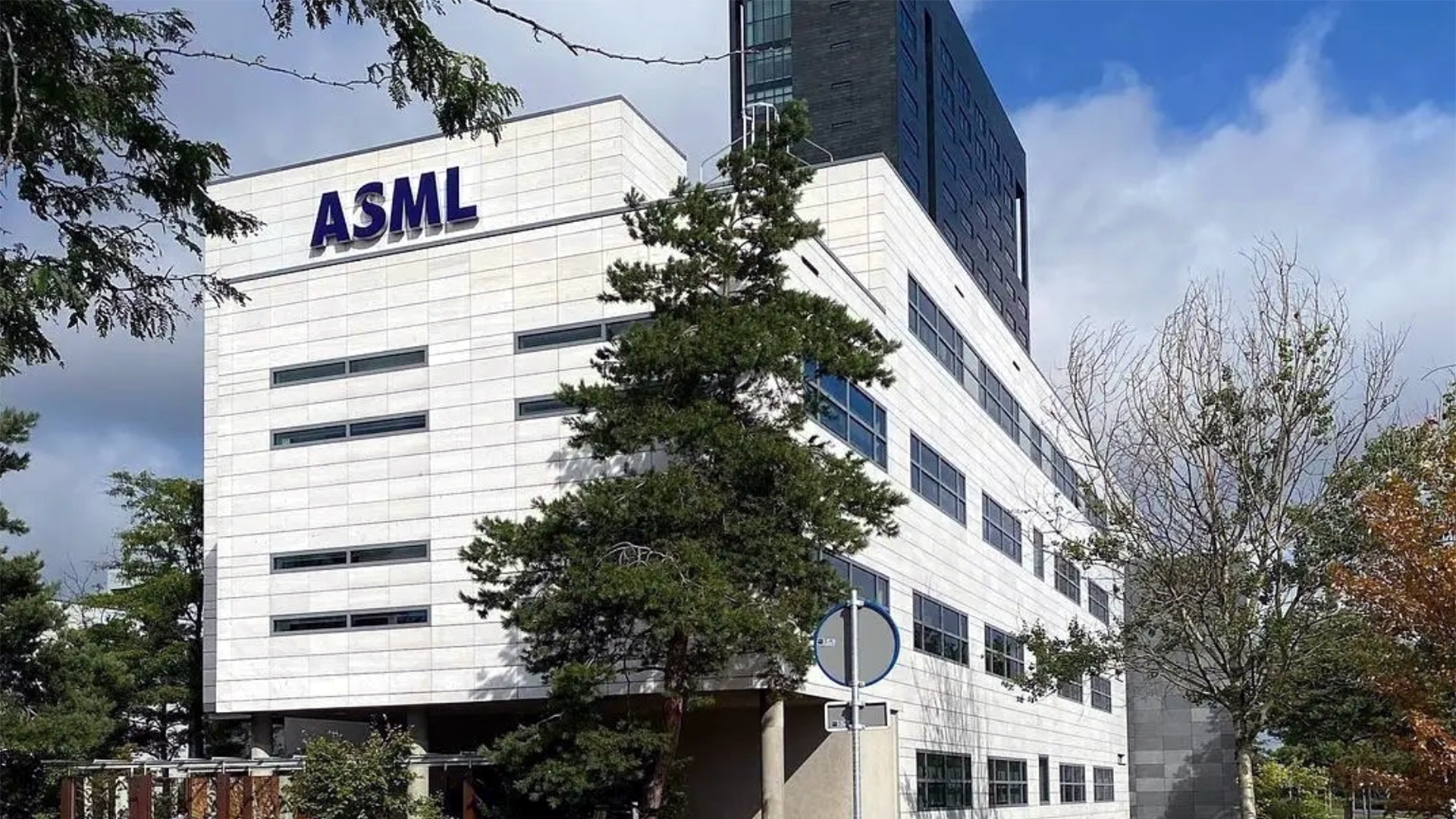
As the semiconductor industry increasingly relies on ASML's EUV lithography tools both for logic and memory production, ASML is considering increasing prices of these systems as they deliver greater productivity and better value for its customers. However, with 2027 production nearly sold out and substantial 2028 orders already booked, meaningful increases may primarily affect systems delivered from late 2028 onward. Nonetheless, the idea has already angered TSMC, ASML's largest client, reports The Information.
Tom's Hardware Premium Roadmaps
"When it comes to Low-NA [EUV tools] pricing, of course, you know that we keep on increasing the productivity of the Low-NA tool, [which] gives us a pretty strong runway for potential price improvements going forward," said Roger Dassen, chief financial officer of ASML, during the company's quarterly earnings call. "Given the long order lead times that we have, that... doesn't translate into pricing effects tomorrow."
Value-based pricing set to persist… in a new way
ASML has long followed what it calls value-based pricing and gradually increased its quotes based on output, patterning costs, power consumption, and other benefits its new tools offer to clients.
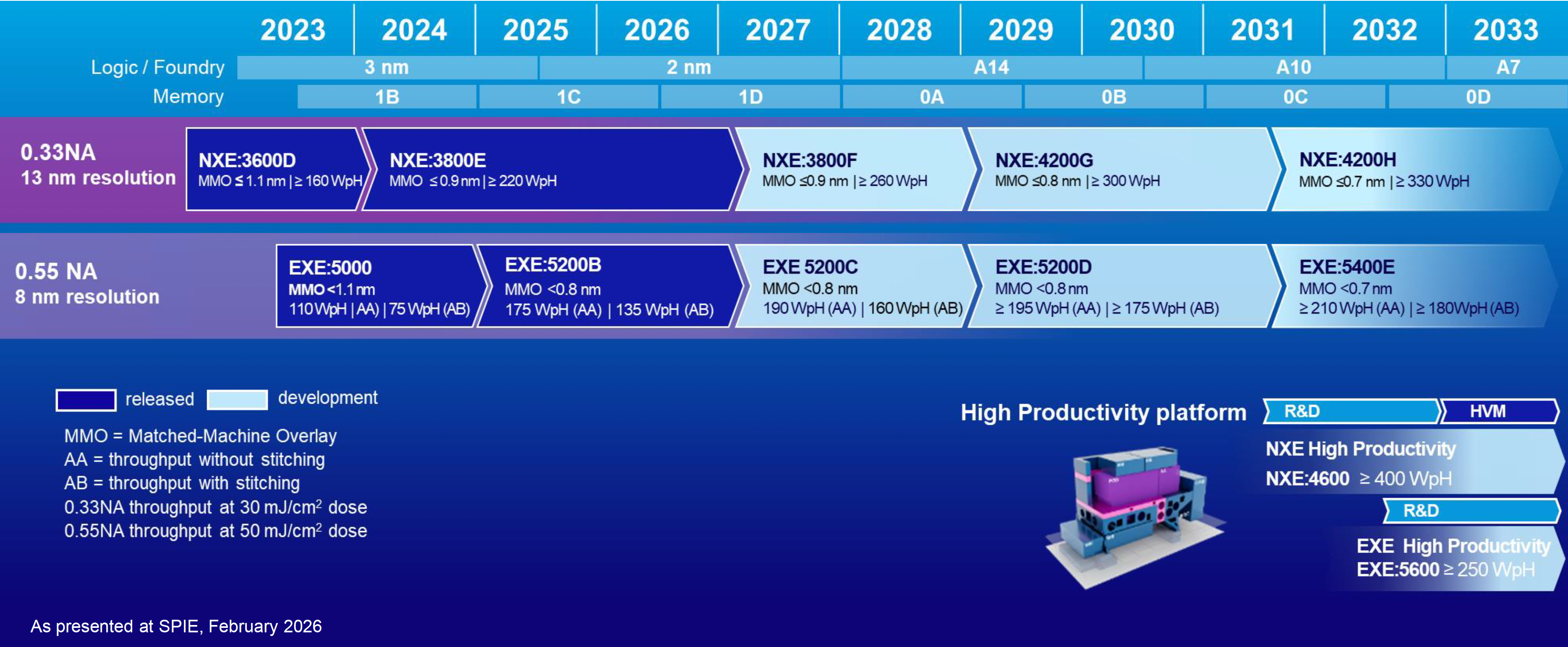
Usually, this involved increasing prices once in a while. For example, if early Twinscan NXE Low-NA EUV systems cost roughly €100 million – €120 million ($115 million–$137 million), the more advanced are priced starting at €170 million ($195 million. It is still well below rumored quotes for High-NA EXE scanners that exceed €350 million ($400 million). At the same time, Low-NA productivity has risen from 160–170 wafers per hour (WPH) and ≤1.1nm matched-machine overlay to 220 WPH/260 WPH with NXE:3800E/NXE:3800F at 0.9nm. Future NXE:4200G/NXE:4200H systems are expected to exceed 300 WPH and improve overlay to ≤0.8nm–≤0.7nm.
"Clearly, the environment that we live in today, with the value that our products bring to customer — it's substantial— of course, gives us flexibility on pricing, more so than what you would have seen in the past," Dassen said. "Of course, we are executing on that as well."
However, later during the call, Dassen emphasized that ASML intends to maintain its value-based approach even in the current environment of high demand and limited supply in the semiconductor world. Yet, he stressed that from now on, ASML might want to charge for things beyond just productivity.
"We have always been able to show customers not just productivity upgrades, but also the value from better imaging, the value of better overlay, etc.," Dassen said. "[But] you got this very strong correlation between throughput improvements and ASP. That is just the way things panned out," he said, suggesting that ASML shares value with its clients.
No price hikes in the short term
ASML will be unable to hike prices of Low-NA EUV systems for another couple of years. Since orders that are in ASML's backlog already carry a sales value, subject to inflation adjustments, prices for much of the 2027 and early 2028 output may already be contractually determined. Unless existing contracts can be renegotiated, higher pricing could therefore primarily apply to 2028 shipments and beyond, or for new orders that somehow get squeezed in in 2027. The NXE:4200G, due in 2029, should naturally lift average selling prices anyway as it gets major performance improvements.
TSMC is upset
For TSMC, however, the issue is strategic. The foundry's leading-edge roadmap through 2030 relies on extending Low-NA EUV with better masks, computational lithography, and multipatterning. Until then, TSMC's strategy has always been avoiding High-NA EUV until at least its 10A-class (1 nm-class) technology. If ASML hikes prices of its future Low-NA EUV lithography systems, it will likely affect all of TSMC's plans for the next several years.
TSMC already operates the world's largest Low-NA EUV fleet and needs many more scanners for fabs in Taiwan, the U.S., and Japan as it executes its global expansion strategy. Consequently, even modest increases beyond TSMC's projections could add billions to capital spending, reduce the economic advantage of postponing High-NA, and ultimately raise its manufacturing costs. Moreover, accepting higher prices now could establish the baseline for dozens or hundreds of future systems, which will allow ASML to capture a larger share of the economic value created by increasingly productive lithography equipment.
Can this force TSMC to transition to High-NA EUV tools earlier than planned? Moving to High-NA EUV requires not only €350-million-plus scanners but also new resists, masks, pellicles, metrology, design rules, and computational lithography flows, which are likely not ready at TSMC.

Follow Tom's Hardware on Google News, or add us as a preferred source, to get our latest news, analysis, & reviews in your feeds.



 English (US) ·