


Published Aug 16, 2026, 6:00 AM EDT
Ben is a Senior Writer on the New TV team at Screen Rant. He graduated from the University of Central Lancashire with a First Class B.A. Degree in English Literature and History.
Born and raised in Ireland, Ben has always had a love for storytelling in all forms of media and operates multiple projects under the name Benjamin Blogs. Ben is a comic book writer and podcast host, in addition to his work as an entertainment journalist. He has worked as both a writer and editor for Screen Rant, Collider, and other media outlets across various departments, including features, news, reviews, and interviews.
Sign in to your ScreenRant account
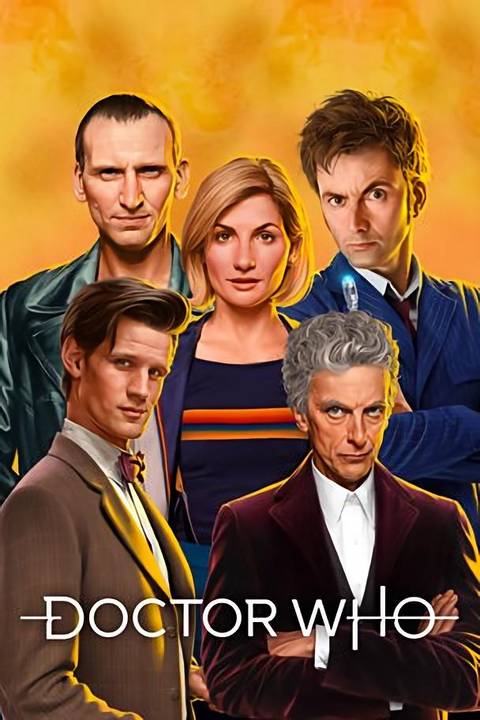
Since Doctor Who was revived in 2005, I have been an enormous fan of the show, but I'd be lying if I said the show didn't have some gaping flaws that I would love to see changed. When a series has been going on for a long time, it's bound to encounter some issues, whether that is down to continuity, unpopular story arcs, or challenging castings.
However, while I have made a solid effort to dive into the backlogs of Doctor Who and watch as many episodes from the 1963 original run as possible, my area of expertise and passion is certainly more aligned with everything that has come since the show was revived by Russell T Davies in 2005.
With that in mind, these are some of the things that I believe were the biggest weaknesses and stumbling blocks to the series' success in modern Doctor Who history.
Martha Being In Love With The Doctor

After the incredible emotional story that played out between Rose Tyler and the Doctor, which all culminated in a heartbreaking goodbye in "Doomsday," it was always going to be a challenge to bring on a new companion and have audiences fall in love with them. Unfortunately, having Martha yearn for the love of the Doctor was not the path forward.
Sure, the romantic element that blossomed between Rose and the Doctor was meaningful, and it evolved into something that many people enjoyed, but the Doctor is not actually the most appealing being to become a romantic lead. For one, he's an extraordinarily old alien. And for another thing, he's not really equipped to explore romantic relationships in any sort of traditional sense.
So, it's a massive shame that such an intelligent, brave, and courageous companion was reduced to someone who desperately wanted the Doctor to love her back, instead of exploring how extraordinary she could be. After all, Martha saved the Doctor's life more than most companions, and she spent a great deal of time as his companion alone.
From becoming his servant when the Doctor was in human form thanks to the Chameleon circuit, to being separated on planet Messaline in the middle of a generations-long war, to spending more than a year roaming the Earth alone while the Master kept the Doctor imprisoned in the sky, Martha earned her spot as a cherished companion, but the unrequited love story tends to overshadow all of that.
Moffat's Confusing "Silence Will Fall" Arc

I won't lie, Steven Moffat is absolutely my favorite Doctor Who writer and showrunner of all time. But, that being said, he has also had a few misses over the course of his time with the Doctor. Namely, the extended story arc that revolved around the words, "Silence will fall."
While I enjoyed a multi-series narrative arc with big twists and turns along the way, this one concept kind of consumed the entirety of Matt Smith's time as the Doctor. With numerous elements, like the cracks in time and space, the introduction of the Silence, the name of the Doctor, Trenzalore, and the introduction of River, there was just a little too much going on all at once.
This made it confusing when prophecies were being tossed around, and when the Doctor was killed multiple times, and when it felt like the entire arc was overtaking the opportunity for any single episode to just play with these fascinating characters without pointing to something bigger and more ominous.
The Timeless Child
However, a far worse narrative plot that has completely shaken up the entire franchise has to be the reveal of The Timeless Child during Chris Chibnall's era of Doctor Who. Initially, Chibnall tried to avoid spending too much time connecting with the show's past, focusing on new characters and new stories to be told. But Chibnall certainly pulled a 180 on that tactic.
In subsequent seasons of Chibnall's era, not only did he bring back some of the most iconic characters and monsters from across the franchise, but he also built up a narrative that culminated in the reveal that the Doctor was not actually a Time Lord, but the originator of the Time Lords as we now know them, referred to as The Timeless Child.
This mysterious being fell from the sky above Gallifrey, and when the early Gallifreyans discovered it, they witnessed the child regenerate from one form to another. From there, the Gallifreyan scientists experimented on the child and unlocked the secrets of regeneration, transforming them into an almost new species.
Now, years after this bit of lore was dropped, the show has yet to make more sense of it, or to unravel the mystery of The Timeless Child, and unfortunately, it has irreversibly changed everything about the show's past, present, and future in a way that some fans just can't get past.
Doctor Who: Flux's Overarching Storyline

Another gem of the Chibnall era was the Flux series. An entire season of Doctor Who that had a subtitle, Flux, and revolved around what seemed to be a universe-destroying development known as the Flux. In some ways, this took the bad parts of the "Silence Will Fall" massive arc and transformed it into a concentrated and muddled mess that wasted an entire season of Doctor Who.
Flux wasn't engaging; it wasn't captivating, and it just became this silly little blip in the show's history that had minimal impact and continued to sully the reputation of the series. That isn't to say there weren't any positive moments from this series, but unfortunately, it did squander some great characters, and underdelivered a story that was always going to end with the Doctor on top.
Of course, Doctor Who can explore connected stories, and a double or even triple episode has been known to become some of the most enduring adventures in the show's recent history. But six episodes of a dull outline that never properly raised the stakes was immensely forgettable, and it just didn't fit with the rest of this stunning series.
Bi-Generation

When David Tennant returned as the Doctor at the end of Jodie Whittaker's regeneration, fans were equally excited and confused. Then, when we had confirmation that Tennant was indeed playing the Fourteenth Doctor, it added to the confusion, because we also had confirmation about Ncuti Gatwa being cast as the Fifteenth Doctor.
Then, in a three-episode holiday special, we saw Tennant take back the reins of the TARDIS and rekindle some of the magic of Doctor Who, but things went kind of sideways with the introduction of bi-generation. Not because of the political statements tied to this idea, but more so because of the way it broke the legacy of Doctor Who.
Similar to The Timeless Child reveal, learning that the Doctor could regenerate and still exist in a previous form, and then for RTD to come out and say that maybe earlier versions of the Doctor still existed somewhere, just didn't make sense with the show's lore.
Yes, it's a work of science fiction, and everything is imaginary, but it also adhered to a certain set of rules that fans were familiar with and comfortable with. But now, to have another Doctor who ignores every conflict and crisis, with another TARDIS (which he just magically hammered out of the original, by the way), is incredibly confusing.
Ruby Sunday Being Another 'Mystery Girl' Companion

Finally, Doctor Who in the modern era has been in the tiresome habit of making almost every female companion into some super special person whose fate is tied to the Doctor and the fate of the universe. From Rose Tyler, the Bad Wolf, to Bill's transformation into an immortal companion to The Pilot, and all of the many others who've come between, this tradition has gotten stale.
In an effort to play off of this, it seems as though RTD tried to create a subversive storyline which set Ruby Sunday up to be this brilliant and extraordinary person whose life was tied to the Doctor in some powerful way, before the show eventually revealed that she was just an ordinary girl. Her being normal is fine; it was the fact that it was built up, and the audience was ultimately betrayed, that became an issue
RTD's instincts to end the "Mystery Girl" trope were probably exactly what the show needed, but he made it into something else by devoting so much time to that idea, only to pull the rug out from under everyone at the last minute.
Clearly, Doctor Who has had some rough patches, and it's not out of the woods yet with the show currently up for tender, but if whoever takes over next can avoid major pitfalls like the above, hopefully the future can be a little brighter than what has come before.
Release Date 2005 - 2022-00-00
Directors Graeme Harper, Euros Lyn, Douglas Mackinnon, Jamie Magnus Stone, Charles Palmer, Rachel Talalay, Joe Ahearne, James Strong, Jamie Childs, Saul Metzstein, Toby Haynes, Wayne Che Yip, Nick Hurran, Richard Clark, James Hawes, Daniel Nettheim, Colin Teague, Keith Boak, Azhur Saleem, Adam Smith, Andrew Gunn, Nida Manzoor, Lawrence Gough, Paul Murphy
Writers Steven Moffat, Russell T. Davies
-

Jodie Whittaker
The Doctor
-







 English (US) ·