
We’re just days from NASA’s first launch attempt for the much-anticipated Artemis 2 mission. Here are the key numbers to know as the space agency gets ready to send astronauts around the Moon for the first time in over 50 years.
NASA is hoping to launch its megarocket on April 1, sending a crew of four astronauts on a 10-day mission around the Moon. There’s a lot to unpack with Artemis 2, so I’m breaking it down the simplest way: by the numbers.
19,420 days
Assuming Artemis 2 launches on April 1, it will have been 19,474 days since humans last left low Earth orbit (I had to tack on an extra day because Orion won’t depart for the Moon until the second day of the mission). That’s the time between Apollo 17—the final Moon mission of the Apollo program in 1972—and NASA’s next attempt to send astronauts past the Van Allen belts. So, yeah, it’s been a minute—28,042,560 to be exact—since humanity last ventured beyond the protective bubble of Earth’s magnetosphere and set course for the Moon.
8,800,000 pounds
Exerting 8.8 million pounds of thrust at liftoff, NASA’s Space Launch System (SLS) is currently the most powerful operational rocket in the world (with all due respect to SpaceX’s Starship, which is not yet fully operational).
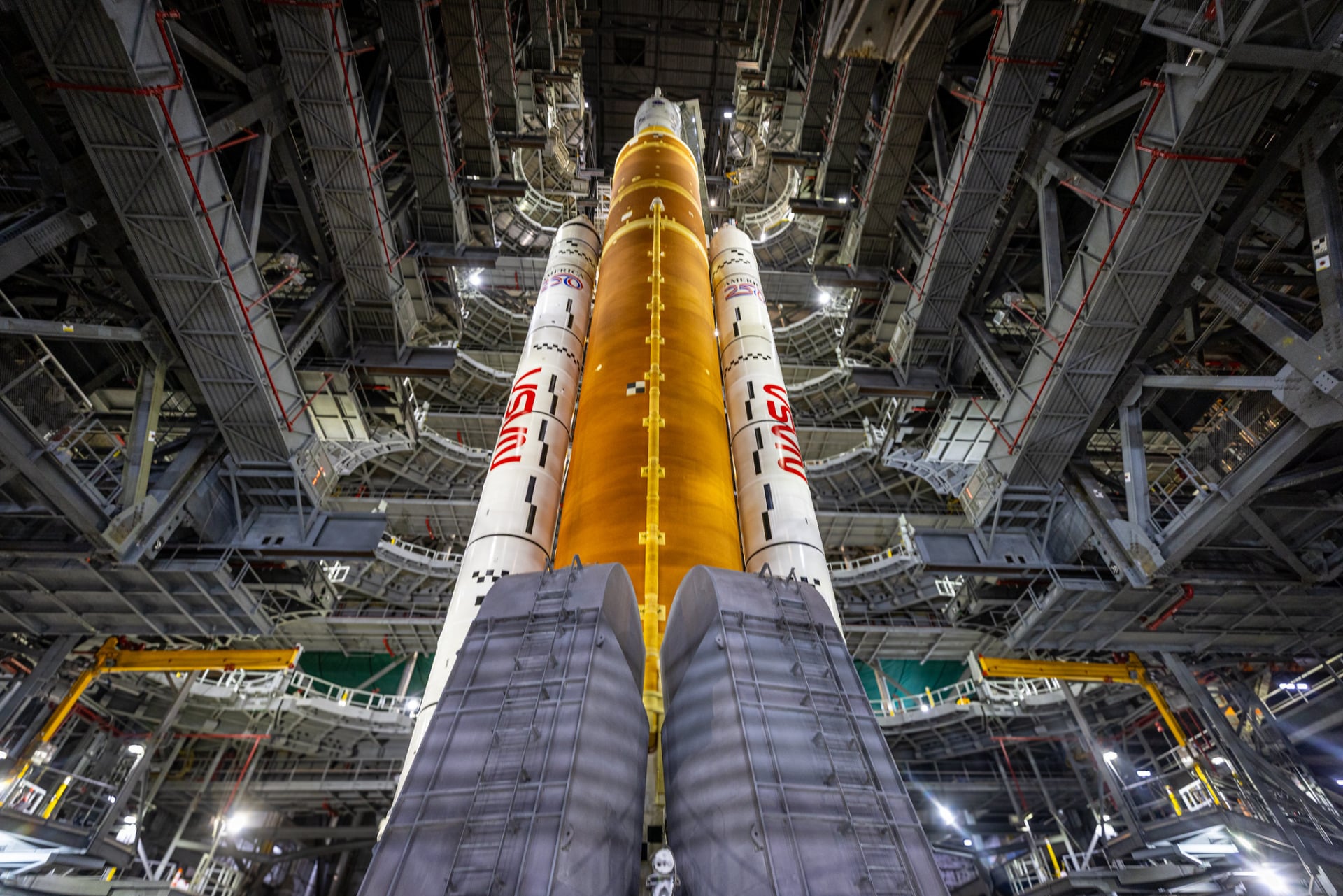 NASA’s Space Launch System (SLS) inside the agency’s Vehicle Assembly Building, January 17, 2026. © NASA
The 5.75-million-pound rocket features a core stage powered by four RS-25 engines, each producing about 512,000 pounds of thrust. SLS’s two solid rocket boosters (SRBs) combine to produce roughly 7.2 million pounds of thrust. The megarocket has flown only once so far, during the uncrewed Artemis I mission in 2022, when its immense thrust caused significant damage to the launch platform, including the destruction of an elevator.
733,000 gallons
The rocket’s core stage needs a lot of propellant—733,000 gallons (2,775,000 liters) of super-cooled liquid hydrogen and liquid oxygen. It’s a tricky mixture to work with and hard to contain.
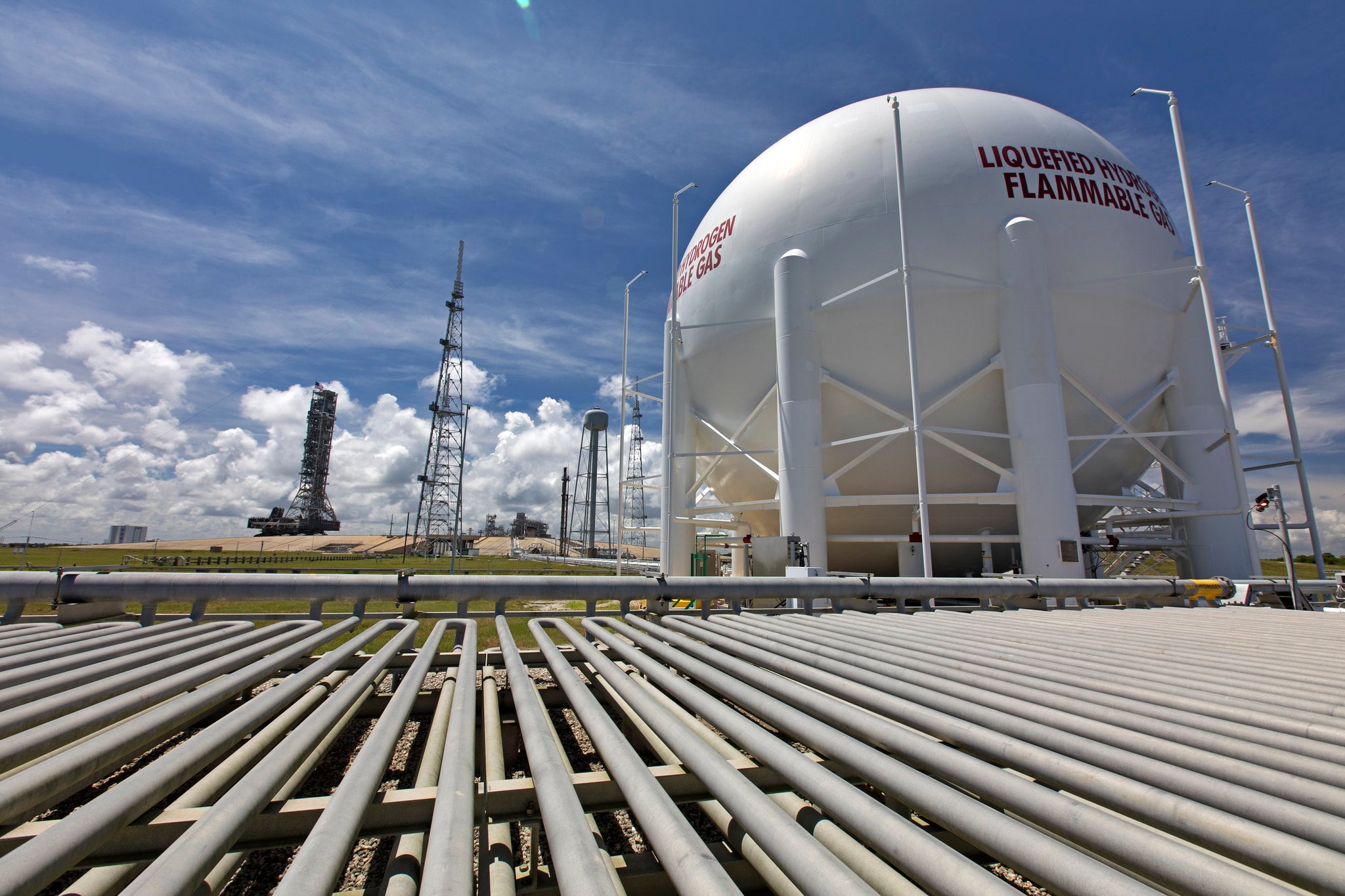 A liquid hydrogen storage tank at Kennedy Space Center, as captured on August 31, 2018. © NASA
Ground crews struggled with leaks during the lead-up to Artemis 1 and during the first Artemis 2 wet dress rehearsal conducted on February 3. SLS is old-school tech, largely based on Space Shuttle architecture (fun fact: three of the four RS-25 engines fitted to this rocket previously flew on space shuttle missions). These days, many new rocket designs are shifting to liquid methane, which is more manageable than the hydrogen-oxygen mixture.
$4,200,000,000
An eye-watering report from NASA’s Office of Inspector General (OIG) in 2023 declared that the cost of a single SLS flight had climbed to at least $4.2 billion. This number had been steadily rising for years. Chronic delays, cost-plus contracts, and other factors caused roughly $6 billion in overruns linked to the rocket’s propulsion systems, according to the OIG. These ballooning expenses have pushed per-launch costs far beyond NASA’s original projections, raising uncomfortable questions about the program’s long-term affordability—and viability.
685,000 miles
The mission will last for 10 days, during which the four astronauts—NASA’s Reid Wiseman, Victor Glover, and Christina Koch and the Canadian Space Agency’s Jeremy Hansen—will travel a total of 685,000 miles (1.1 million kilometers).
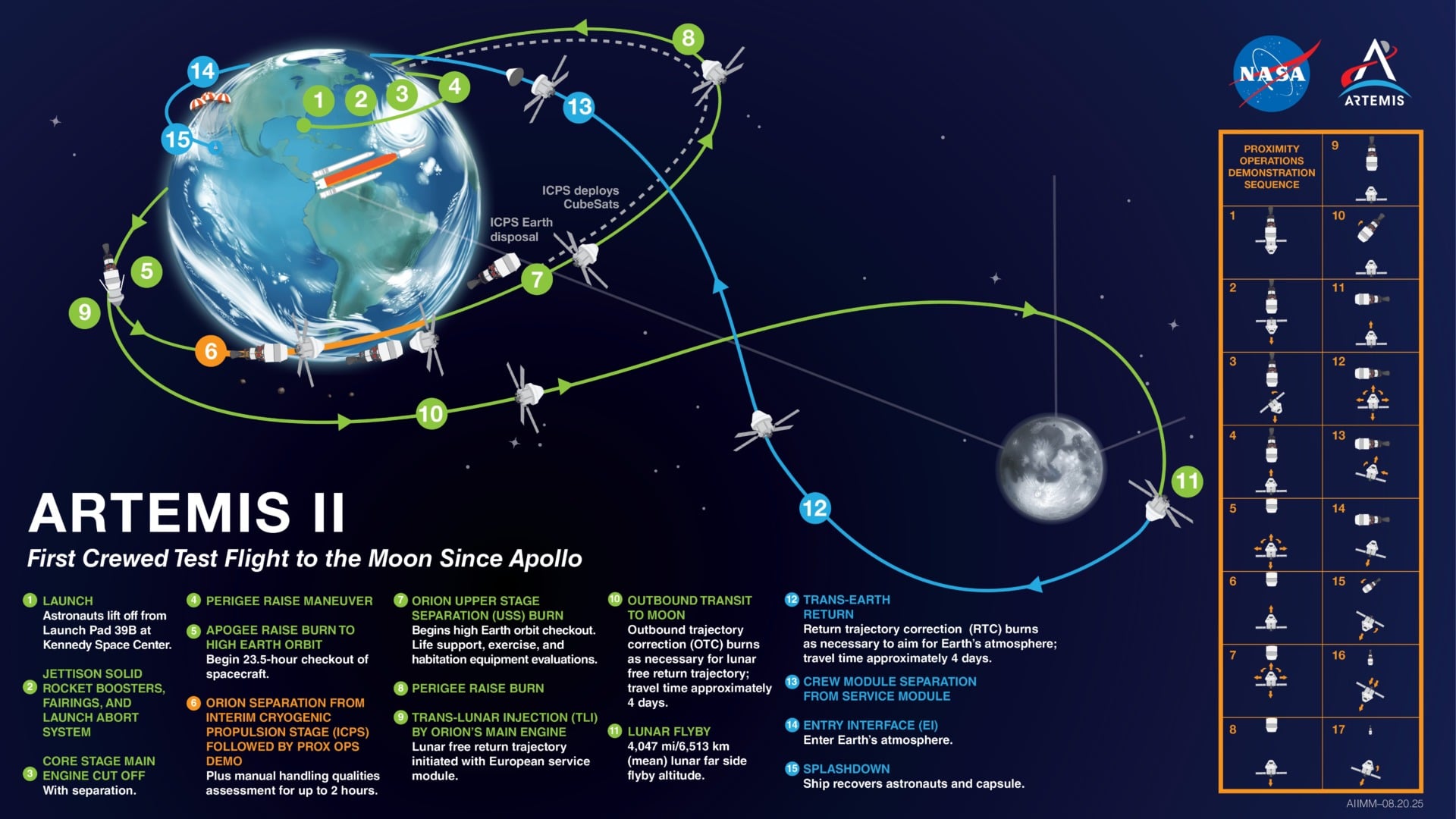 © NASA
Their trajectory will follow a figure-8 pattern around the Moon, sending the Orion spacecraft some 4,600 miles (7,400 km) beyond the lunar far side before looping back toward Earth. Orion is expected to reach a maximum distance of 250,000 miles (400,000 km) from Earth, breaking the distance record set in 1970 during Apollo 13.
714 days
Combined, the Artemis 2 astronauts have already accumulated a total of 714 days in space working aboard the International Space Station.
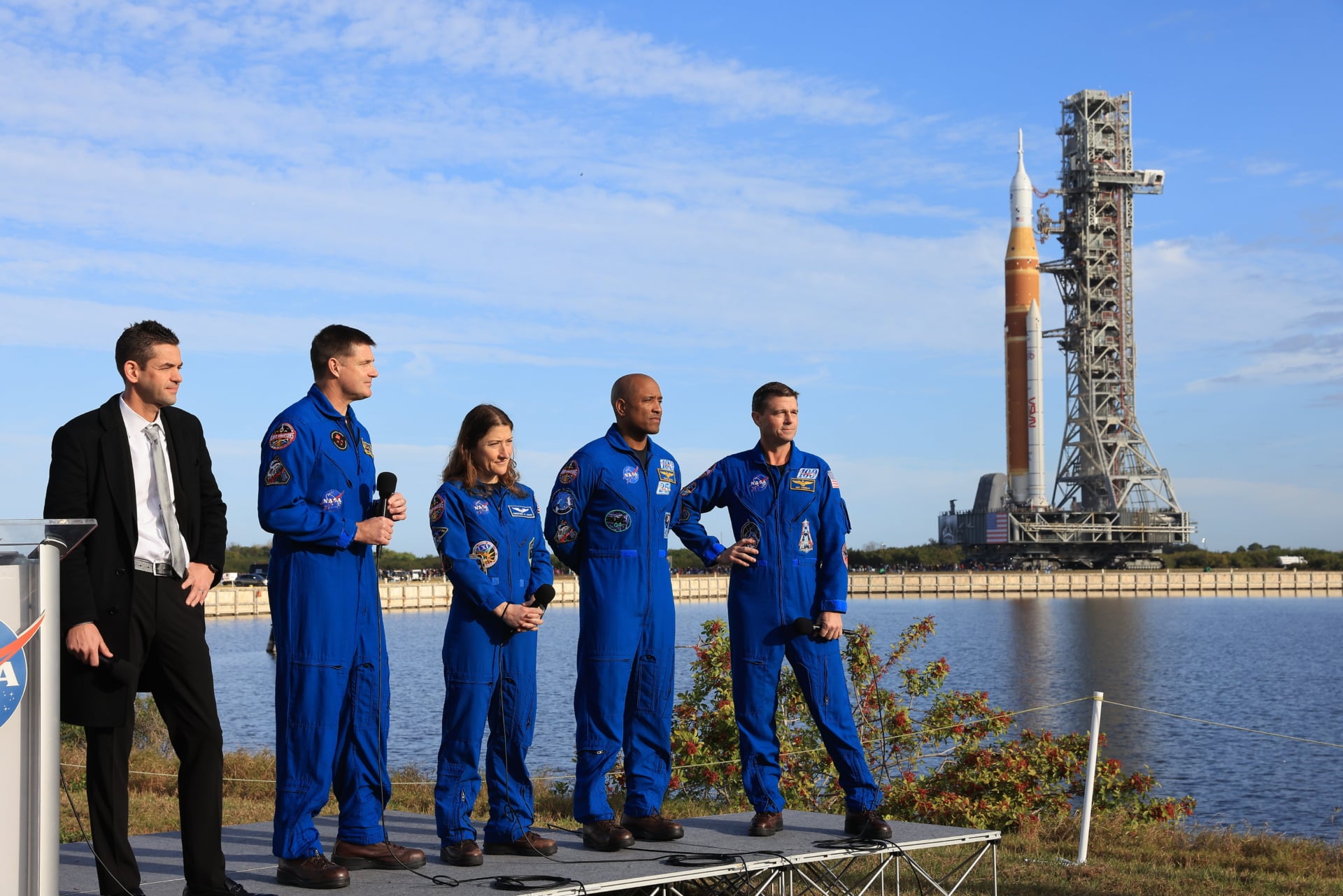 From left to right, NASA Administrator Jared Isaacman, Artemis 2 NASA astronauts Reid Wiseman, commander; Victor Glover, pilot, and Christina Koch, mission specialist, and CSA (Canadian Space Agency) Jeremy Hansen, mission specialist. And of course, SLS in the background. © NASA
Broken down, Reid Wiseman has spent 165 days in space, Victor Glover 167, and Christina Koch 328 (she holds the record for the longest single spaceflight by a woman to date). As for CSA astronaut Jeremy Hansen, he’s never been to space—but that’s about to change, and in a big way.
30 millisieverts
Each Artemis crew member could be exposed to as much as 30 millisieverts (mSv) of radiation during the mission, or as little as 20 mSv, according to NASA. In the unlikely event of a powerful solar particle storm, Orion’s design would limit crew exposure to less than 150 mSv. That said, all of these amounts fall below NASA’s imposed 600 mSv career limit for astronauts, so the expected radiation exposure during the Artemis 2 mission shouldn’t pose a problem.
50 minutes
As the Artemis crew flies behind the Moon, they’ll lose communication with Earth for up to 50 minutes—or as little as 30—depending on when the rocket takes to the skies. This temporary blackout will happen as a result of the Moon blocking Orion’s radio signals. The spacecraft will be on autopilot, but if something goes wrong, the astronauts will have to manage unexpected issues on their own and without support from mission control.
33 engines
Orion’s service module is equipped with a whopping 33 engines, all critical for navigating deep space and successfully completing the Artemis 2 mission.
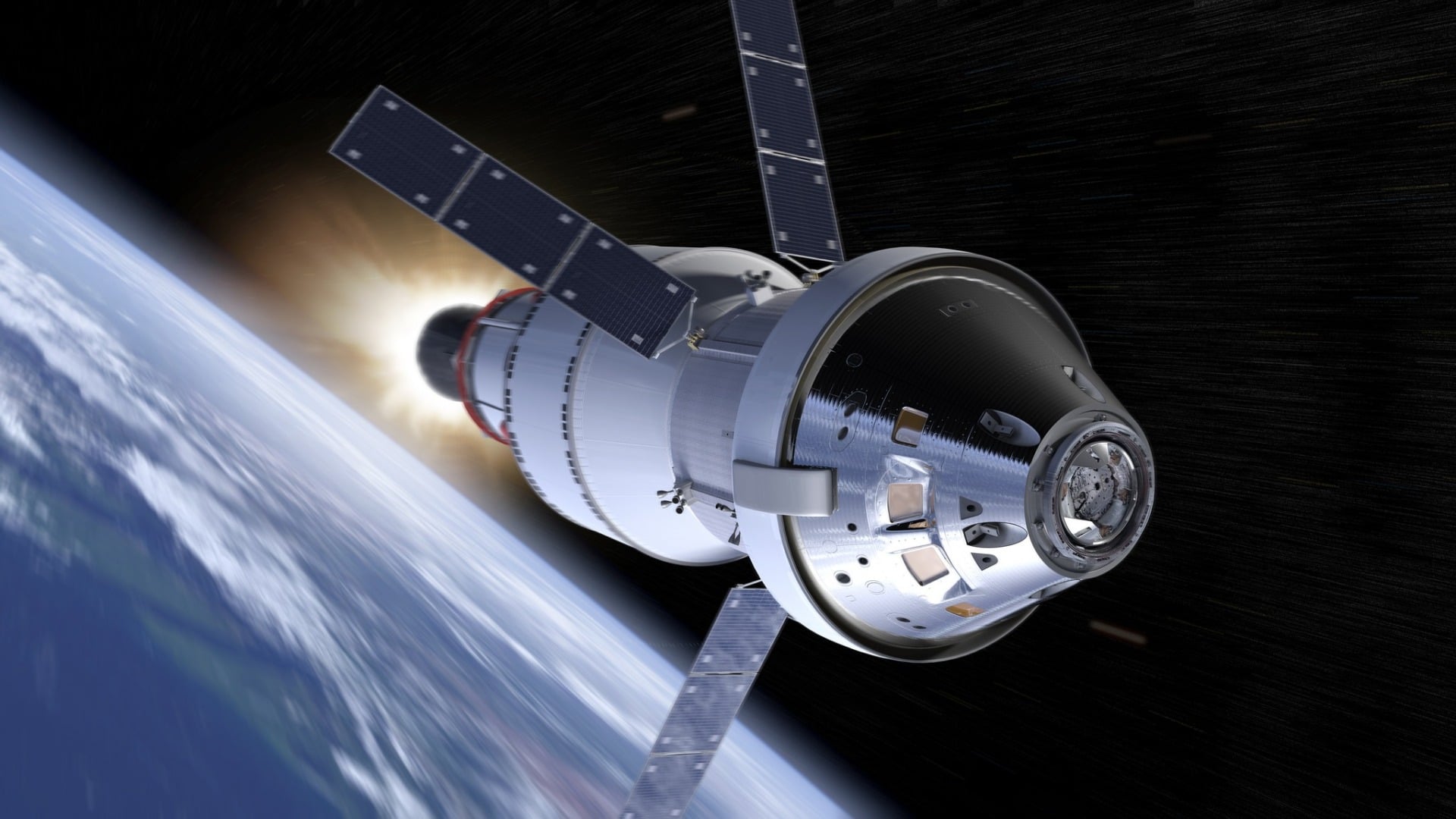 Artistic conception of Orion. © NASA
These include a single main engine, eight auxiliary engines, and 24 reaction control thrusters, which handle everything from major lunar maneuvers to fine attitude adjustments. As an aside, the crew module itself has a dozen thrusters that will control the capsule’s orientation during reentry, keeping the heat shield properly aligned.
0 crewed Moon landings
Artemis 2 will feature a total of zero lunar landings. The mission will serve as an important stepping stone for Artemis 4, tentatively set for 2028, during which NASA astronauts will finally land on the lunar surface after an exceptionally long wait. The lack of a crewed landing doesn’t mean Artemis 2 won’t be exciting or without risks. Plenty of goosebumps await; for many people across the globe, it’ll be the first time seeing humans operate beyond Earth orbit.
3,000 degrees Fahrenheit
Things will get hot upon the mission’s return. Hitting Earth’s atmosphere at speeds reaching 25,000 miles per hour (40,000 km/h), Orion’s heat shield will have to endure temperatures reaching more than 3,000 degrees Fahrenheit (1,650 degrees Celsius).
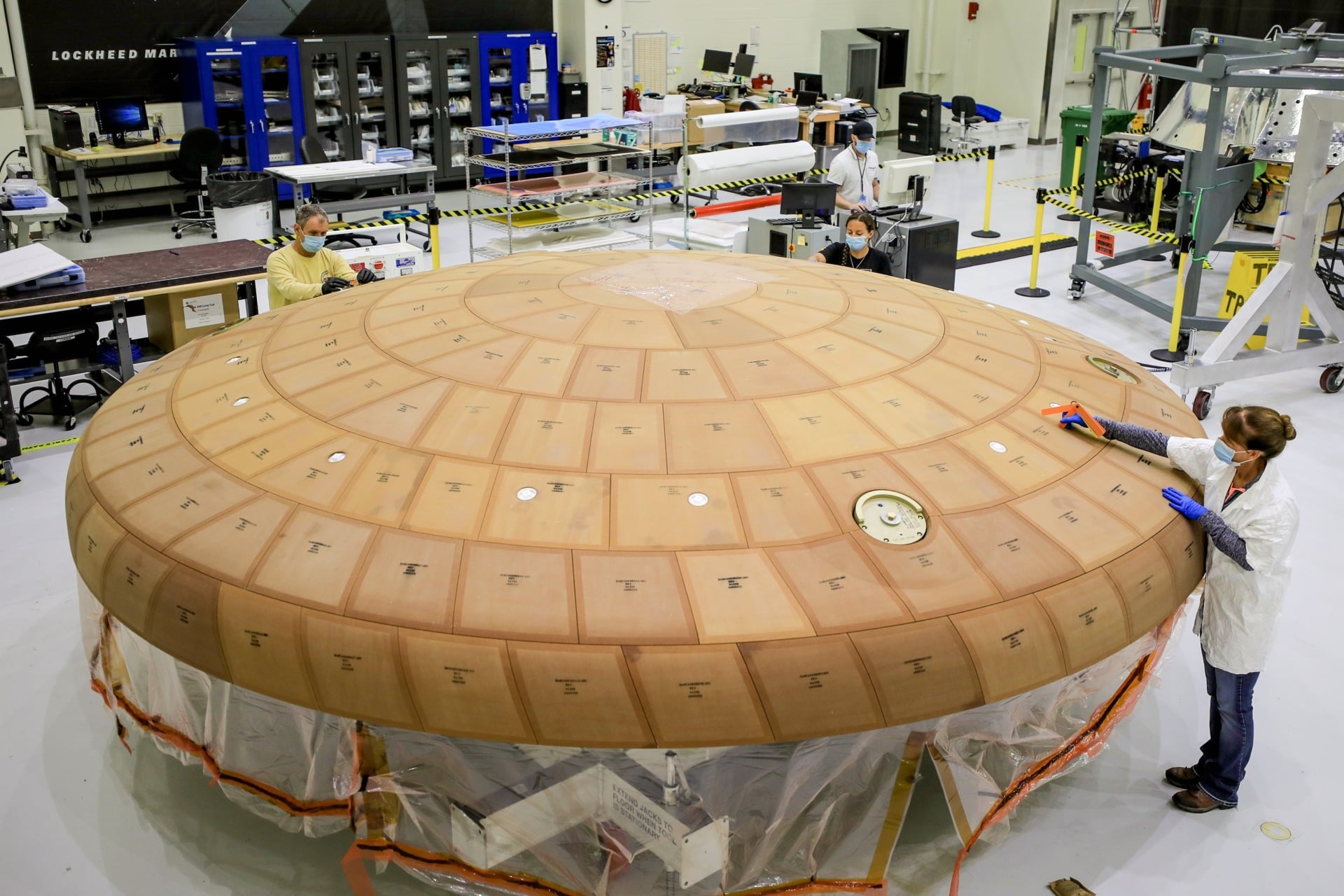 Orion’s heat shield during assembly. © NASA/ASA/Isaac Watson
NASA is putting its faith in the heat shield, despite a surprising amount of charring seen during Artemis 1. According to Lockheed Martin, the spacecraft’s prime contractor, Orion’s heat shield is designed to withstand temperatures up to 5,000 degrees F (2,760 degrees C) and reentry speeds of 24,700 mph (39,750 km/h). That assurance aside, reentry is, in my mind, the most precarious part of the mission.
20 minutes
Orion will slow from Mach 32 to zero in just 20 minutes. That’ll be made possible by Orion’s full 11-parachute landing system, starting with a pair of 23-foot (7-meter) drogue parachutes that will deploy at 23,000 feet (7,010 meters), slowing the spacecraft to 307 mph (494 km/h).
Three pilot chutes will then pull out the 116-foot-wide (35-meter-wide) main parachutes at 9,500 feet (2,900 meters). Those mains will then bring Orion down from about 130 mph (209 km/h) to 17 mph (27 km/h) for a reasonably gentle splashdown in the Pacific Ocean off the coast of California.






 English (US) ·