
With any adaptation, there are concerns about whether or not new creators are “respecting” the source material. Fans of the Resident Evil series have been skeptical of Zach Cregger’s new (apparently very good) film for taking liberties with Capcom’s games, showrunner Craig Mazin has bastardized the very basis of The Last of Us in the HBO live-action series, and Paramount nearly put a horrifying gremlin creature in theaters for the Sonic the Hedgehog movie before its main character was changed to more closely resemble the speedy hedgehog from the games. Sometimes these concerns are well-founded; at other times, especially in the era of manufactured culture-war outrage, they are suspect.
Marvel’s Wolverine is getting a little bit of both kinds as Insomniac tries to do an X-Men storyline without the X-Men and fans debate whether or not the studio did right by its characters. With a medium like comic books, which regularly features rebooted timelines and remixed origin stories and where the fabric of reality can completely shift on a whim, what is the line dividing “a new spin” from a “disrespectful rewrite”?

To get some of the disingenuous shit out of the way early, the culture-war vultures are trying to spin Wolverine as some sort of gay love story between Logan and long-time archnemesis Sabretooth because narrative director Walt Williams told The Washington Post that the two former allies felt a moment of “yearning” during the game, as their “family” in the mutant squad Team X had been torn apart after its members have a catastrophic falling out.
“Logan feels that yearning and he gets scared and pulls away,” Williams told the Post. “Sabretooth feels that yearning and it makes him hurt and want to lash out to exert that hurt outward.”
Because being obtuse and conspiratorial requires you to forgo all context and disregard the meanings of a word like “yearning” that contradict the narrative you’re trying to spin, the culture-war outrage machine spun this as a romantic yearning, which Insomniac community director James Stevenson flatly denied. But still, the faintest whiff of any imagined homoeroticism has people getting real dramatic about some pretty innocuous post-fight bonding dialogue between Sabretooth and Logan.
The line where Sabretooth says “That’s my Wolverine” makes sense in context, as the two have been a bit on the outs for a chunk of the game following Logan’s departure from Team X, and Sabretooth is looking for any indication that the good ol’ days are not completely behind them. For those who are angry on principle that destined rivals Sabretooth and Logan are chummy in roughly the first half of the game, especially considering just how violent and hateful their relationship has been in the past, this is where the game’s new origin story comes into play. In this version of events, Logan, Sabretooth, the shapeshifting Mystique, and telepath Nathanial Essex were all part of Team X, rather than starting off on opposing sides of the X-Men and Brotherhood of Mutants as they commonly do in most Marvel media.
Wolverine does make its way to pitting them against each other in grand fashion by the end, and the post-credits scene heavily implies that this rivalry is going to play out on a much larger scale in a hypothetical sequel, but even those teases are riffing on X-Men concepts that usually don’t go hand-in-hand. Sabretooth has never joined the Horsemen of Apocalypse in any continuity, and that’s an example of Insomniac taking old characters and plotlines and remixing them.
That’s where the more good-faith conversations begin. How much can you change something before it is effectively something brand new masquerading as something else? Wolverine doesn’t have the X-Men in it, but it has characters who were, in various iterations, defined by that history, and as some characters gesture toward the typical setup of downtrodden mutants finding a place of belonging under Team X, the disparities between these incarnations of familiar characters and the versions that fans know from comics, television, and movies become more stark.
“As a big fan of Marvel comics, playing this game feels like a bizarre thought experiment where I’m constantly like, ‘well I guess the characters MIGHT do all of these things, if they had completely different lives leading up to this point, which apparently, they do,’” Mothership editor-in-chief Maddy Myers writes on Bluesky. “Very strange choice.”
 © Marvel / Kotaku
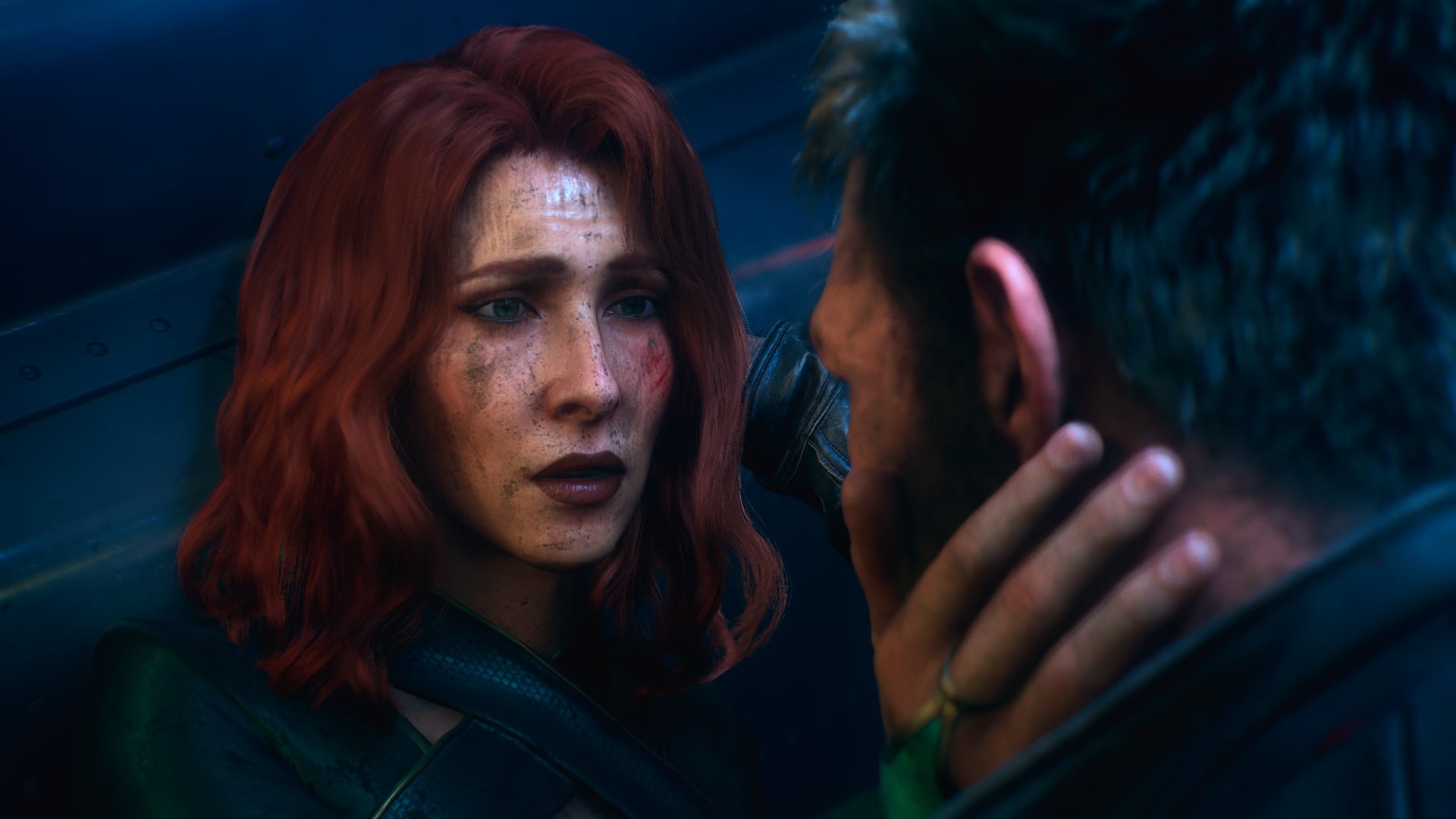
The question becomes, is the problem that Insomniac’s versions of the characters are “different,” or are these versions actually “worse?” One of the big contentious figures in Wolverine is Jean Grey, the telepathic mutant and Logan’s love interest. In most X-Men media, the tension between them is complicated by the presence of Scott Summers, with the three forming a love triangle, but since there’s no X-Men here, Jean and the laser-eyed mutant never met. Without Cyclops coming between the two, their relationship is played somewhat straightforward as far as “they are obviously romantically entangled,” but it also rewrites both Logan’s and Jean’s pasts to make room for their relationship, which spans centuries as Logan is immortal and Jean is reborn multiple times. In one of these lives, Logan is manipulated into killing Jean, which leads to him eventually going mad until his memories of his past life are erased.
Though it’s a little reductive to call Jean merely a prop to hold Logan’s pain, it’s not that reductive, actually. I actually liked the premise of their relationship in a shlocky, tragic romance kind of way, but if you’re a fan of Jean, I wouldn’t blame you if you found the tropes Wolverine indulges in tiresome.
“They fucked Jean over THAT BAD???” a fan writes on Reddit. “Wow…I don’t mean to sound like an idiot, but that’s GOTTA be misogyny or some shit bro- They boiled down Jean Grey AND THE FUCKING PHOENIX, of ALL THINGS the motherfucking PHOENIX to Logan’s dramatic tragic love story??? I’m not even that much of a Jean fan and still that’s just…absurdly wild.”
Logan himself is also being held to some scrutiny, though I’d argue that, again, the details of his new backstory make some of his differences from the original character understandable. His memories were erased, he has been essentially “raised” as a member of Team X, and his typical rage is mostly only unearthed as his memory comes back. That rage, too, has a different origin this time around, as he was once the Horseman of Death for Apocalypse long before he met Essex and the rest of the crew. But even then, his occasional gentle nature, especially towards young characters like Leech, remains here, a pretty standard aspect of the character in most interpretations.
“Wolverine is, at his core, an embodiment of the ‘monster with a heart of gold’ trope,” a fan writes. “He should come off as rude and closed off but having a soft side for those who can reach it. We can see that in his many mentorships of younger X-Men in the comics, such as with Kitty Pride or Laura. They have translated this into the movies as well, with him having this dynamic with Rogue and again, Laura in Logan. A fundamental aspect of his character, his duality, is lost if he’s not somewhat kind at times.”
Ultimately, whether these changes work for you is going to be…well, up to you, but comic-book characters have been interpreted and reinterpreted so many times that identifying the most important aspects of each can sometimes depend on the context in which you first met them. Adapting characters this many times over can feel like a game of telephone where different eras and inspirations can inform what a writer thinks are the most important pieces of a person. In the case of Wolverine, I try not to be particularly precious, especially because Insomniac is clearly forgoing a lot of the typical X-Men foundations that led to the original heroes’ lived experiences. Still, the variety of reasons why people take issue with Insomniac’s versions of these mutants does, at the very least, open up wider discussions about where the lines are between adaptations that result in still-recognizable riffs on the source material and those that just borrow superficial elements from the source without understanding why people care about them in the first place.






 English (US) ·