
 3 weeks ago
35
3 weeks ago
35
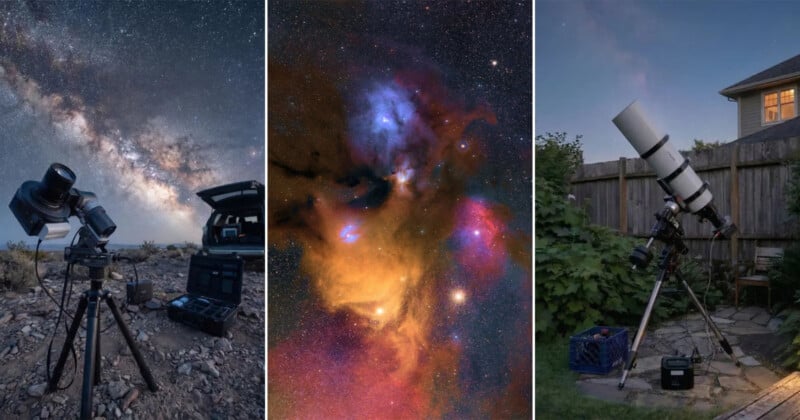
The ArcBlue C42 is the world’s first smart full-frame astrophotography system. It is coming soon to Kickstarter and features specs and features sure to excite enthusiastic astrophotographers.
A smart astrophotography system offers distinct advantages for novices, enabling people without extensive experience to easily capture night-sky photos. One of the biggest limitations of astrophotography, especially deep sky astrophotography, is its complexity. To capture sharp, detailed space photos at the longer focal lengths, photographers need an equatorial mount. This precisely moves the camera setup to compensate for Earth’s rotation, ensuring sharp photos again and enabling extended exposure times.
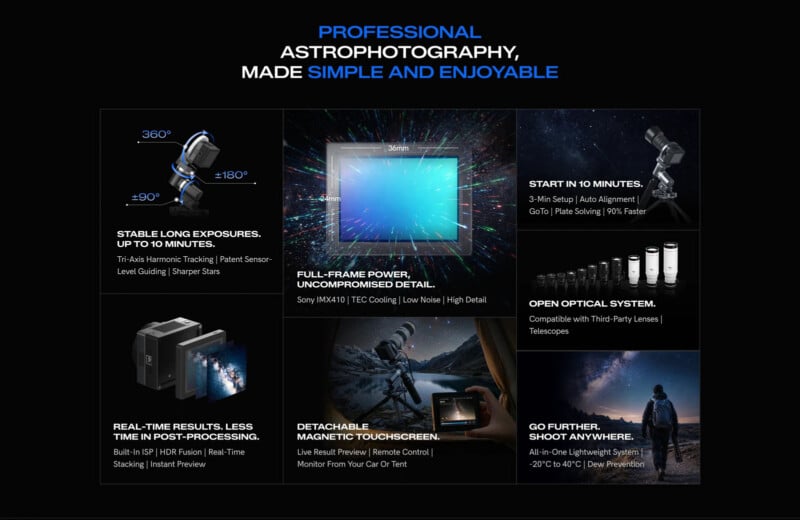
In the case of the ArcBlue C42, the tracking and guiding system is entirely automated. Photographers level the camera setup, point it North, and then use an accompanying touchscreen to choose their celestial target and camera settings. The ArcBlue C42’s onboard computer and mount do the rest.
This is far from the first automated, intelligent astrophotography system on the market. There are plenty of smart telescopes out there that make many of the same usability promises, including excellent offerings from DwarfLab, Unistellar, and Vaonis. What sets the ArcBlue C42 apart from these, besides being a camera rather than a telescope, is that it features a large, full-frame image sensor that promises superior image quality.
Specifically, the ArcBlue C42 features a 24-megapixel Sony IMX410 back-illuminated full-frame CMOS image sensor. As ArcBlue explains, a full-frame image sensor delivers a wider field of view and a higher signal-to-noise ratio than a smaller sensor, all else equal. This sensor, initially introduced in 2018, is used in a ton of cameras from a diverse range of manufacturers, including Sony, of course, Nikon, Panasonic, Leica, Blackmagic, and more. It’s a tried-and-true chip.
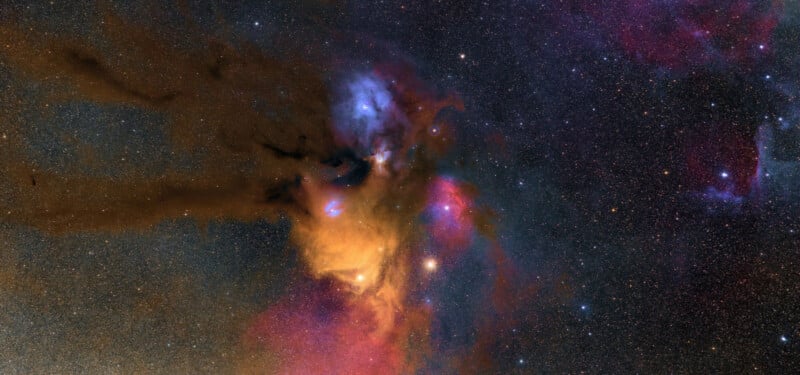 Rho Ophiuchi Cloud Complex
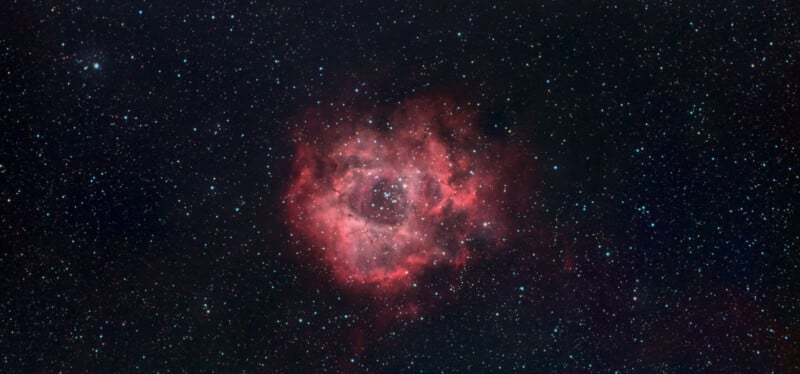 Rosette Nebula
“Deep-sky imaging is a battle against noise,” ArcBlue says. “C42 uses active TEC cooling to reduce sensor temperatures by up to 30° C below ambient, dramatically lowering thermal noise before it reaches your image. Combined with ultra-low read noise, it delivers cleaner skies, richer shadow detail, and more recoverable nebula structure.”
A significant part of any great astrophotography is processing. Getting the best deep-sky photos requires image stacking, and achieving detailed, colorful nebulae requires extensive processing. The ArcBlue C42 features a range of in-camera processing options to deliver better night-sky photos, including HDR and stacking. Post-processing is performed in-camera in real time, though photographers can, of course, edit and process their RAW files on their own after the fact.
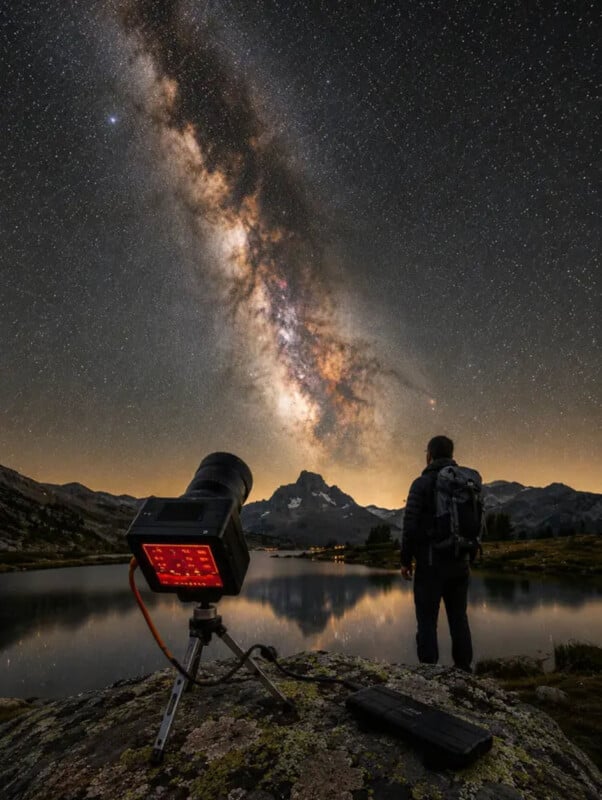
Astrophotography also requires great optics. The C42 features a native Sony E-mount that easily accepts Canon EF and Nikon F lenses with autofocus and electronic communication, as well as telescope systems via industry-standard adapters. ArcBlue says the C42 works seamlessly with ultra-wide lenses all the way up to 2000mm telescope optics. The ArcBlue C42 also emphasizes an open platform approach, meaning it can integrate into some existing astrophotography telescopes and rigs that photographers already use and trust.
While ArcBlue showed off the C42 at NAB in April, the device is still not yet quite ready for showtime. The company plans to launch the ArcBlue C42 on Kickstarter soon for an undisclosed price. Prospective customers can sign up on ArcBlue’s website to access the lower price and potential beta testing opportunities.
Image credits: ArcBlue
Disclaimer: Although the ArcBlue C42 is not yet available on Kickstarter, it will launch there. Make sure you do your own research into any crowdfunding project you’re considering backing. While we aim to only share legitimate and trustworthy campaigns, there’s always a real chance that you can lose your money when backing any crowdfunded project. PetaPixel does not participate in any crowdfunding affiliate programs. Coverage of a Kickstarter campaign is not an endorsement of any campaign, company, or product.
To hold projects accountable, all crowdfunding campaigns on which PetaPixel reports are financially backed with the lowest tier option in order to give the publication visibility into all backer-only communications. If a campaign owner acts in a manner inconsistent with its promises, PetaPixel will share that information publicly.





 English (US) ·