
 3 weeks ago
31
3 weeks ago
31
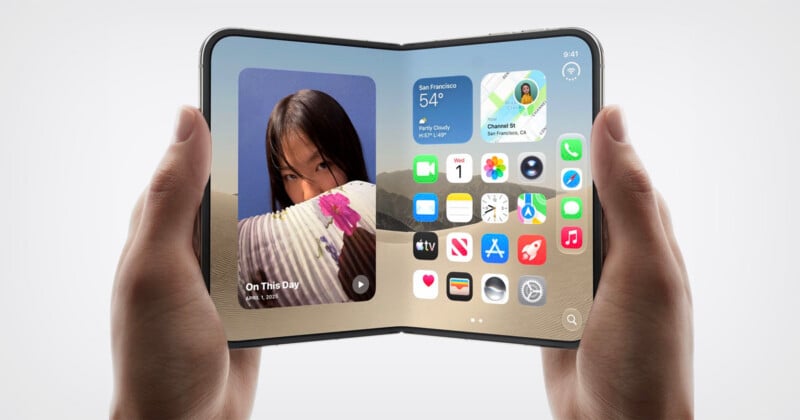
Apple has finally unveiled its first foldable phone, the iPhone Duo. It features a book-style design, a relatively small outer display, and an expansive 7.6-inch inner display.
‘The Most Transformational Change to iPhone Since the Original’
The iPhone Duo has been a very long time coming, with rumors percolating about its existence for multiple years. The foldable smartphone market has grown significantly in recent years, although it remains the playground of premium flagships, and that’s precisely what the Duo is: premium. The foldable phone starts at $1,999.
“Others have created foldables that feels like two phones awkwardly stuck together,” Apple’s new CEO, John Ternus, says.
“iPhone Duo is the most transformational change to iPhone since the original. With an entirely new design and intuitive experiences, it shows what’s possible when hardware and software are engineered together and redefines what it means to use a foldable phone. With the largest display ever on iPhone that still fits easily in your pocket, combined with the power of A20 Pro, iPhone Duo helps you stay more immersed and productive wherever you go, whether you’re enjoying content, multitasking across apps, or gaming,” Ternus continues.
Apple wanted to start with an iPad-like experience and then find a way to make it work in a sleek, thin foldable smartphone design. iOS 27 has been redesigned and rethought from the ground up for the iPhone Duo’s outer and inner screen design. This includes making apps work well in a new, larger footprint and adding multitasking support.
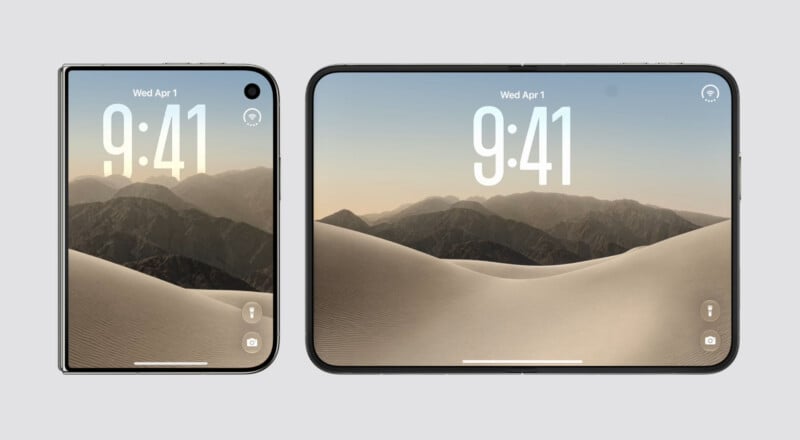
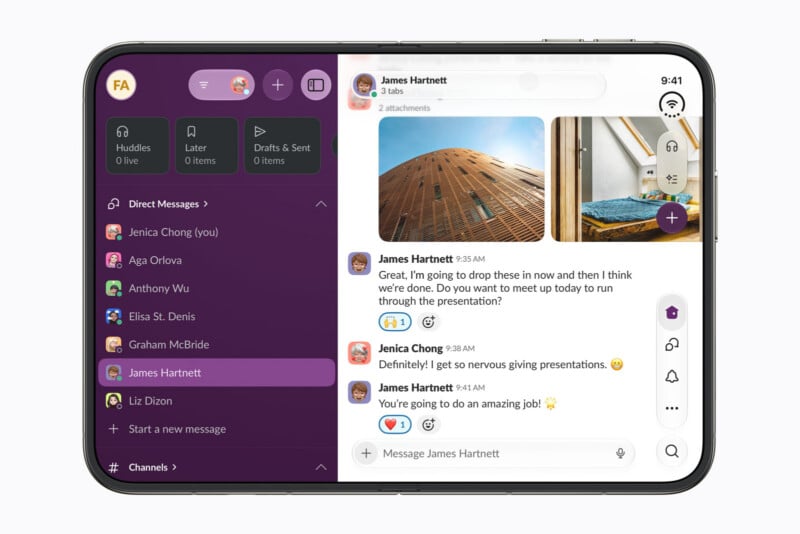
iPhone Duo is about the size of a passport, and Apple says it’s comfortable to use with a single hand. When opened, there is one large, continuous display, the largest iPhone display ever.
When opened, iPhone Duo is the thinnest iPhone ever. The camera plateau houses not only the phone’s cameras but also other core components.
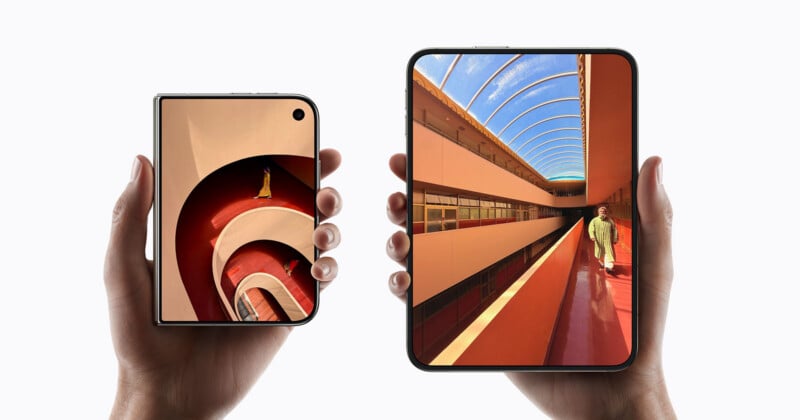
The 7.6-inch inner display is 80% larger than the display on the iPhone 18 Pro. The outer display is 5.4 inches, which is 90% of the iPhone 18 Pro’s screen area. Both displays share the same aspect ratio and deliver up to 3,000 nits of peak outdoor brightness.
Addressing the “distracting crease” of other foldable phones has been a huge focus for Apple. By leveraging its Nano Texture display technology, as seen on high-end Mac and iPad products, Apple says the crease is virtually imperceptible. The hinge below the display has over 100 tiny components.
Apple notes that later this year, Apple Pencil support will arrive on iPhone Duo on both the outer and inner displays.
The front-facing inner camera is hidden below the display, making it nearly invisible when not in use.
Touch ID is integrated into the side button. To accommodate different ways users might hold it, they can enroll multiple fingers.
The Apple iPhone Duo comes in two colors: Sky White and Night Sky, a beautiful dark blue. It is built from grade-five titanium, and Apple promises a rigid, durable frame that will withstand daily use and many folding and unfolding cycles. It has a Ceramic Shield on the back and Ceramic Shield 2 on the front. It has IP68 dust and water resistance.
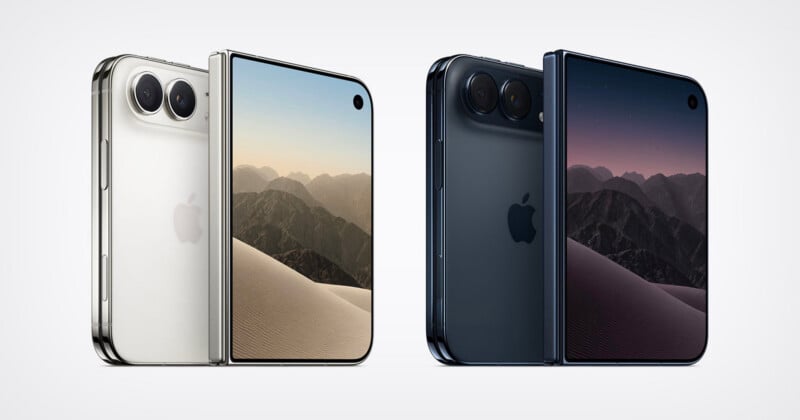
The iPhone Duo is powered by the A20 Pro, like the iPhone 18 Pro and iPhone 18 Pro Max. Apple promises up to 44 hours of video playback when using the outer display and up to 24 hours when both displays are used equally. The iPhone Duo also supports fast charging up to 50 percent in around 20 minutes or 30 minutes when charging wirelessly.
iPhone Duo is eSIM only to maximize internal space and battery capacity.
iPhone Duo Cameras Aren’t Quite In iPhone Pro Territory
The iPhone Duo has a 48-megapixel Fusion Main Camera and a 48-megapixel Fusion Ultra Wide camera, the same as in the iPhone 18 Pro.
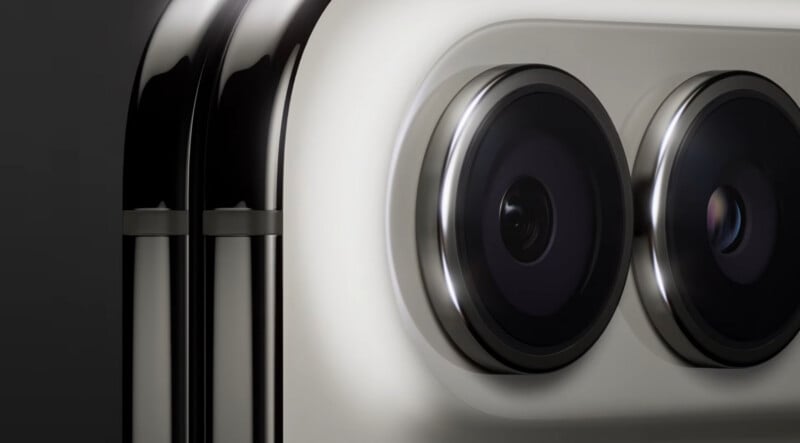
The 48MP Fusion Main camera is not the brand-new one in the iPhone 18 Pro, so there’s no variable aperture here. There’s also no dedicated telephoto camera. Apple notes that users can get 2x “optical quality” photos by capturing a cropped 24MP image, which is what Apple has previously said about iPhone models without a dedicated telephoto camera.

Apple touts that the folding phone’s design is like a smart tripod. Since the Duo folds, users can set it up and then get in the frame for selfies. The Camera app can automatically snap photos once people are posed.
It’s also possible to record from both rear and front-facing cameras when the iPhone Duo is unfolded, and people can see a preview of the framing via the outer display.
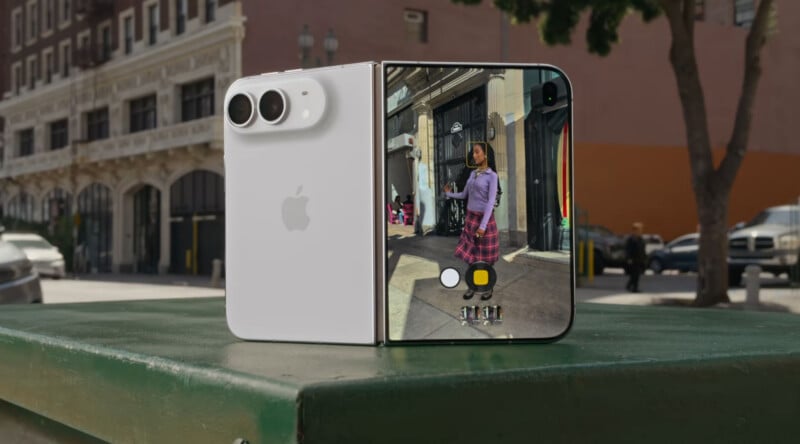
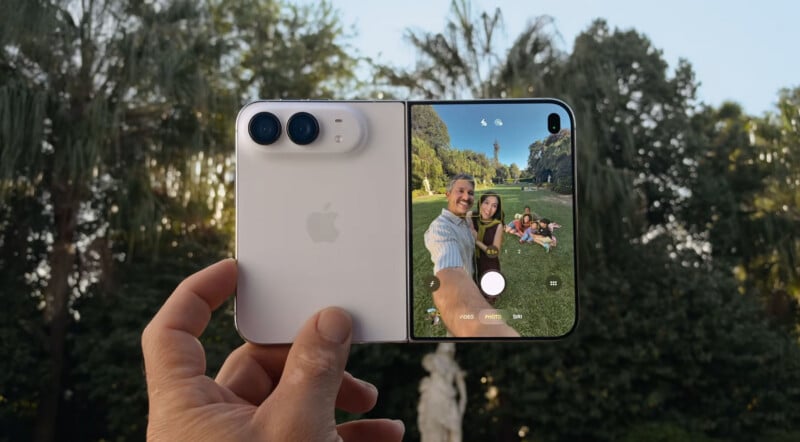
“The foldable design with dual displays unlocks camera experiences that are not possible on any other iPhone,” Apple says.
As for video, the iPhone Duo can record 4Kp120 video in Dolby Vision with its 48MP Fusion Main Camera, including Cinematic effects, which can be applied after capture at up to 60 frames per second.
Pricing and Availability
iPhone Duo starts at $1,999 with 256GB of storage. Preorders start on October 16, and availability begins on October 23.
Image creditsApple






 English (US) ·