
 22 hours ago
13
22 hours ago
13
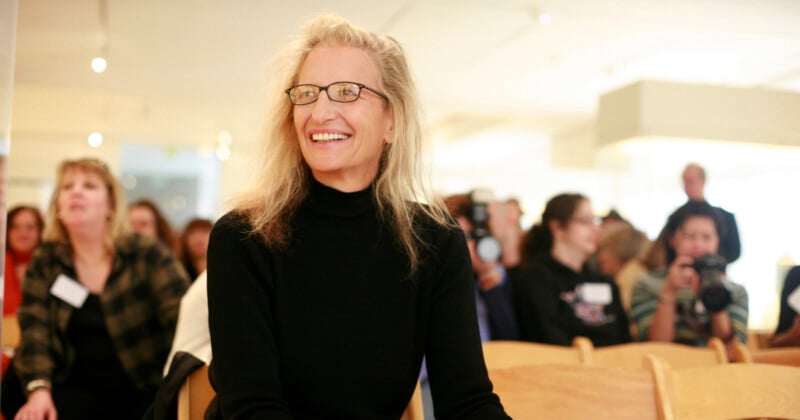 Annie Leibovitz photographed by Robert Scoble | Wikimedia Commons (CC BY 2.0)
Photographer Annie Leibovitz has sued a website for allegedly using her photograph of Justin and Hailey Bieber without permission, seeking “substantial damages.”
The famed photographer has filed a lawsuit against Observer Media — which owns Observer.com — for copyright infringement in Manhattan federal court last week, according to a report by Rolling Stone. Leibovitz is seeking damages of up to $150,000 for each alleged “unauthorized exploitation” of her photo.
The dispute centers on a portrait taken of the then-newlywed Biebers by Leibovitz for Vogue magazine in 2019. In the image, Justin and Hailey are seen reclining on sun loungers, while wearing matching polka dot Dolce & Gabbana pajamas.
According to Leibovitz’s lawsuit, the news website Observer.com published her image of the Biebers without consent in an article about the couple’s relationship in May 2020. Four years later, in May 2024, after discovering the alleged infringement, Leibovitz’s team sent Observer.com a letter demanding that the image be removed from the website.
However, Leibovitz’s team got no response from the news outlet over the alleged copyright infringement. Further attempts to reach a representative for the online publication were not immediately successful and Liebovitz’s team has now taken legal action over the unauthorized use of her image.
According to court documents cited by Rolling Stone, the Leibovitz claims that the copyright infringement by the Observer.com qualifies as “willful, intentional and malicious.” She is seeking disgorgement of profits attributable to the alleged misuse and damages of up to $150,000 per “unauthorized exploitation.”
“Leibovitz is a world-renowned photographer acclaimed for capturing celebrity portraits with profound intimacy and insight, including the likes of John Lennon, Bill Clinton, Clint Eastwood, Queen Elizabeth, and many more,” the nine-page lawsuit states. “Plaintiffs have suffered and will continue to suffer substantial damages to their business in an amount to be established at trial.
The lawsuit comes months after an appeals court revived Annie Leibovitz’s agency’s copyright lawsuit against an online magazine over its use of her photographs from the Star Wars movie set. The case centers on whether Annie Leibovitz’s licensing agency Great Bowery Inc. had the right to sue an online publication for allegedly using her Star Wars set photographs without permission. Great Bowery sued Consequence Sound LLC in 2022, arguing that it held an exclusive license to license and promote the images after Leibovitz granted those rights to its subsidiary Trunk Archive in 2014. However, a lower court dismissed the lawsuit, ruling that Great Bowery lacked standing because Leibovitz still retained certain rights to the photographs and Vanity Fair publisher Condé Nast had its own publication rights.
But in May, the 11th U.S. Circuit Court of Appeals overturned that decision, finding the lower court had misunderstood copyright law. The appeals court ruled that copyright ownership can be divided among multiple parties and that Leibovitz retaining some rights did not prevent Great Bowery from being an exclusive licensee with the ability to bring an infringement claim. The latest decision highlight a key issue in copyright law: the distinction between owning a copyright and holding specific exclusive rights that allow a licensee to enforce those rights in court.






 English (US) ·