
Ichthyosaurs weren’t dinosaurs, although they were certainly large and scary-looking enough to inspire awe and curiosity in people who encountered their remains. Until now, the earliest known instance of human interest in ichthyosaurs was in 1699, but a peculiar discovery pushes that timeline way back—all the way to the Roman era.
Around the third quarter of the 2nd century CE, someone living in modern-day Colchester, U.K., found a fossilized spinal bone of an ichthyosaur. This individual picked up the bone and added it to their collection of pottery, Roman toilet spoons, and other trinkets. Then, 1,800 years later, a team of paleontologists uncovered the pit left behind by this long-dead individual from Roman Britain. This discovery represents the oldest known instance of a human deliberately collecting ichthyosaur fossils, according to a paper on the discovery, published recently in Britannia.
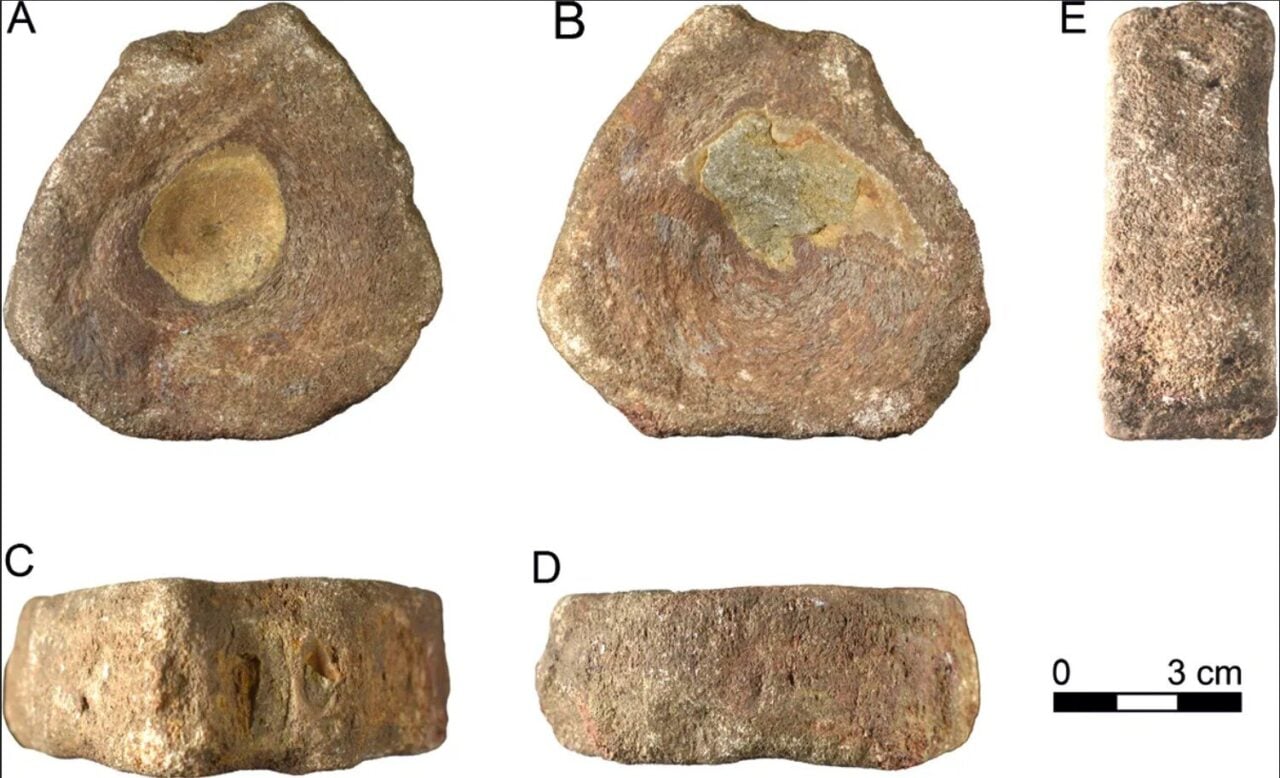 The ichthyosaur bone found in Colchester, U.K. © Spencer et al., 2026
Currently, it’s unclear why exactly the fossils ended up as part of this pit, Patrick Spencer, the study’s lead author and an archaeologist at Colchester Archaeological Trust in the U.K., told Phys.org.
The paleontologists of antiquity
Paleontology, as the study of Earth’s life through fossil records, has technically existed for a long, long time. For instance, some scientists believe that large animal fossils played a role in shaping ancient Greek myths about giants, heroes, and gods and that Greeks collected fossils as early as the late Bronze Age (between 1550 and 1200 BCE). Specifically, the Greeks believed large fossilized bones represented the remains of mythological heroes and monsters.
In 2023, another team reported a similar discovery in which a fragment of a plesiosaur spinal bone was found within a Roman pit, with the researchers telling the BBC that the pit was likely “curated by an avid Roman fossil fan.” The ichthyosaur pit possibly was born from similar intentions, and it’s probably no coincidence that the discoveries happened so close to each other, Spencer told Phys.org. The fossils in the two pits were also remarkably well-preserved, suggesting that whoever collected them saw some value in the remains.
Left to the imagination
However, there is much left to the imagination for both findings. For one, the pit discovered in 2023 has a rather large age window and could have been created anytime between the mid-2nd century and the late 4th century CE, so it’s still possible that the plesiosaur bone is (very slightly) older than the ichthyosaur bone.
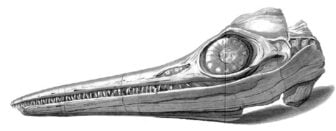 Drawing of the skull of Temnodontosaurus (originally Ichthyosaurus) platyodon found by Joseph and Mary Anning. © Everard Home via Wikimedia Commons
Still, the latest findings are certainly much older than the first official description of the ichthyosaur fossil by British paleontologist Mary Anning in 1813 or, even older, British paleontologist Edward Lhwyd’s (mis)characterizations of ichthyosaurs as fish in 1699.
Then again, it’d be hasty to call this person a paleontologist. Andrew Greef, a researcher involved in the 2023 discovery, told the BBC that there’s “evidence to show the Romans found these things, but you can only imagine what they might have thought they had.” Spencer expressed similar sentiments to Phys.org, adding that it’s entirely possible that this reflects the common human urge to “pick up strange and appealing objects.” The area hosted a Roman quarry shipping greensand building stones, so perhaps the individual was someone who worked there and found the fossil while on the job, he added.








 English (US) ·