
 3 hours ago
10

Follow us
Add us as a preferred source on Google
Subscribe to our newsletter
Two prominent voices within AMD agree that the company didn’t design its new Zen 6 family, codenamed Venice, explicitly for agentic AI in a clear shot at Nvidia and Arm, who’ve both described their latest data center CPUs as “agentic” in nature. In separate talks, AMD’s chief Zen architect Mike Clark and corporate VP Madhu Rangarajan said that the company didn’t predict the agentic wave when Zen 6 development started.
Go deeper with TH Premium: CPU
We just wrapped up testing AMD's Venice CPUs, which you can read more about in our Zen 6 benchmarking article.
CPU development cycles are measured in years, and given that the agentic frenzy around CPUs hit around March of this year, it’s unreasonable to expect that anyone has developed silicon specifically for agentic AI, much less a general-purpose data center CPU. And still, Nvidia claims its Vera CPU was “purpose-built” for agentic AI, while Arm says its AGI CPU was “designed for the demands of agentic AI.”
“We think that the EPYC 9006 CPU is the best CPU for the agentic era, and spoiler alert, we didn’t magically know four years ago that agentic was going to be a thing and purpose-built something for agentic,” said Rangarajan in a session with media. “The reality is an agentic workflow is a diverse set of tasks… and in order to execute those tasks well, you need compute that is able to handle a diverse set of workloads with a full portfolio.”
Introducing the Zen 6 microarchitecture, Mike Clark agreed with the sentiment: “I’m not going to mislead and act like I knew agentic computing was coming, or we knew it, but we did strongly believe that the CPU would always have a place in the software ecosystem of AI… And as agentic [has] blown up, we [are] able to now deploy that for agentic compute workloads.”
As AMD rolls out its next-generation microarchitecture with Venice CPUs, it’s targeting the messaging from Arm and Nvidia, which have posed the most direct threat to AMD’s continued rise in the data center on the back of agentic workloads. And indeed, there are performance vectors where Nvidia’s Vera looks strong for agentic workloads, as you can see in our Nvidia Vera testing. AMD’s argument, however, is that agentic AI calls for a broad range of CPUs just as general-purpose workloads do, pushing back on the single-SKU approach of Nvidia and Arm.
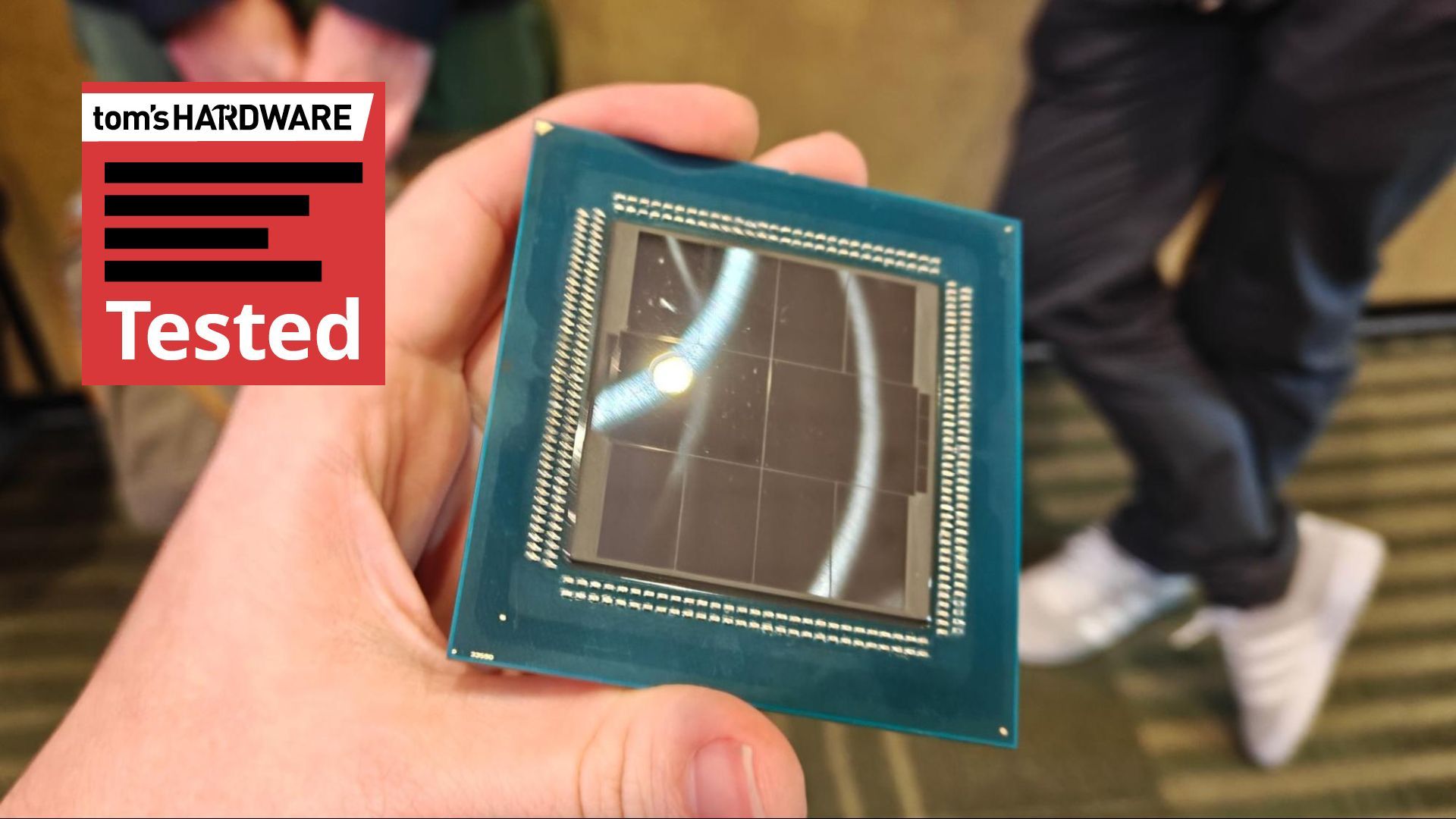
Our testing of two AMD Venice chips supports that argument, as well, with the dense EPYC 9996 with its 256 cores and 512 threads offering peak throughput performance, while the frequency-optimized EPYC 9686F goes toe-to-toe with Vera in the role of an AI host node. AMD is launching two additional ranges next year, with Venice-X targeting HPC with its 3D-stack cache, and Verano going directly after Vera as an AI host node with an LPDDR5X memory system.
Get Tom's Hardware's best news and in-depth reviews, straight to your inbox.
Although the workload characteristics of agentic AI are still in the process of being defined, we have a better understanding of how those loops work now than we did at the beginning of the year. And like all complex topics, the answer to what is important in a CPU for agentic AI is the always-disappointing “it depends.”
As we break down in our early testing procedure for agentic AI, the workload characteristics and demand on the CPU/memory are defined by what the agent is doing, and in the data center, what several agents are doing at high concurrency when sandboxed. A coding agent will generally call more tools that are taxing on the CPU than a web browsing agent, for example, while an agent that queries a database may call for strong memory performance.
Of course, there are some vectors of performance that can’t be addressed with different SKUs (such as that strong memory performance). However, the potential diversity of agentic workloads certainly makes an argument for CPU variety. At a most basic level, an agentic loop allows the LLM to understand functions you’ve defined, and then pass arguments to those functions to execute them. We’re talking about a workload as broad as what you can define in a function in languages like Python and Rust.

Follow Tom's Hardware on Google News, or add us as a preferred source, to get our latest news, analysis, & reviews in your feeds.






 English (US) ·