
 2 hours ago
8
2 hours ago
8
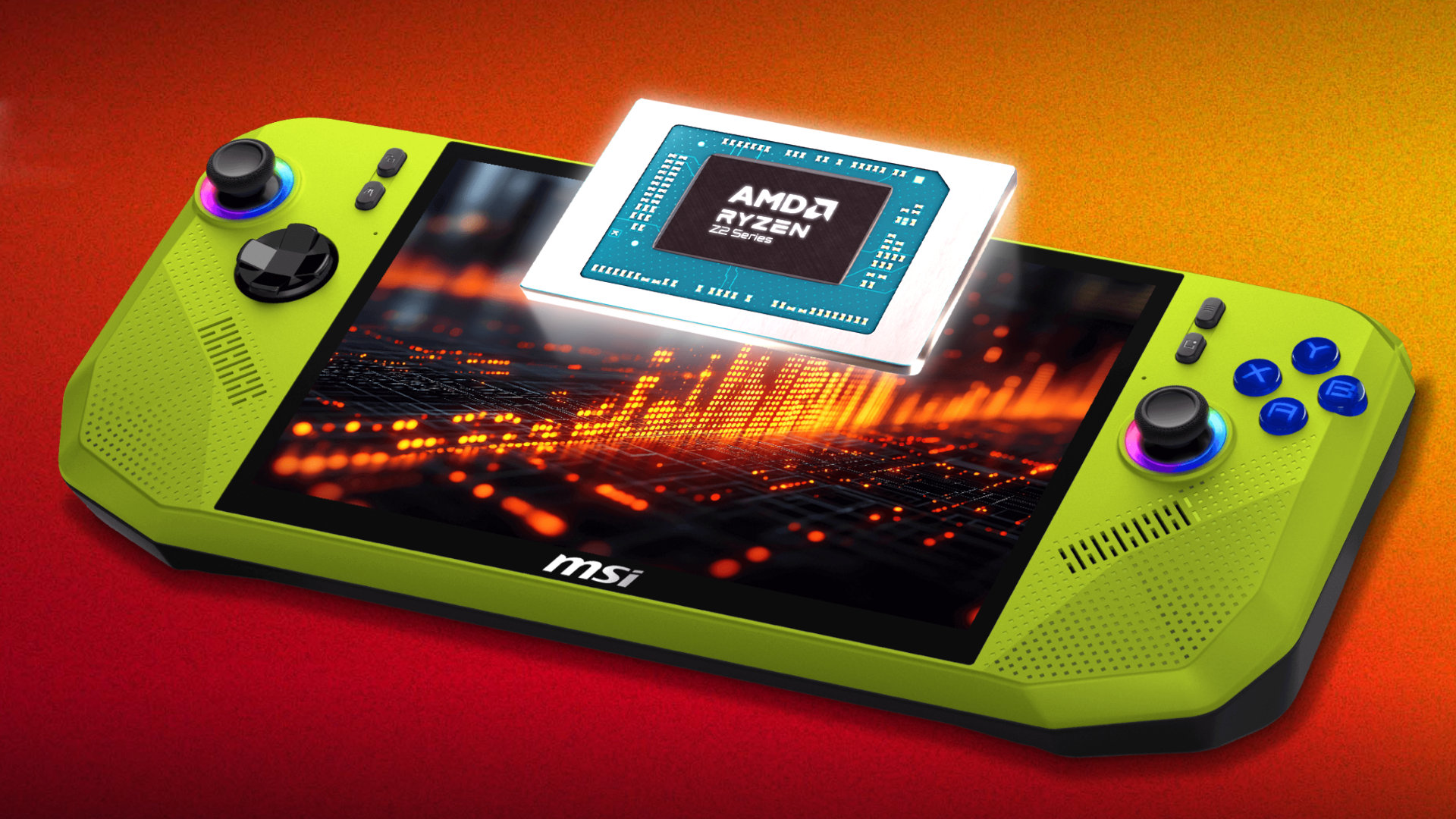
Like all the major players in the PC industry, AMD had a big presence at Computex 2026, and all its top staff were busy conducting interviews with the press and media. In one such case, the senior confirmed that there are no current plans to bring AI-powered FSR 4.1 upscaling and frame generation to RDNA 3.5 GPUs. However, this prompted another figure to step in and declare that no such decision had actually been made.
Let's start at the beginning. Yesterday, HardwareLuxx reported on various discussions it had with David McAfee, AMD's corporate vice president and general manager of its client division, while at Computex. When they got on to the subject of FSR, McAfee reportedly said that the company had no current plans to bring its all-singing, all-dancing FSR 4.1 to GPUs based on the RDNA 3.5 architecture.
You won't find those chips inside graphics cards; these are integrated GPUs housed in certain Ryzen AI 300/400/Max processors and AMD's latest Ryzen Z2 Extreme APUs for handheld gaming PCs. As things currently stand, they have to use FSR 3.1, which is entirely shader-based and doesn't have anything like the quality of FSR 4.
Changing the code so that it could run on such GPUs would mean sacrificing some of the performance gains from using its AI-generated upscaling and frame generation, as the architecture doesn't sport the same level of matrix processing as RDNA 4. But given the capabilities of the smaller RDNA 3.5 chips, it would probably be too much of a performance drop to be worth using.
So when Frank Azor, who handles AMD's client and graphics marketing, stepped in via X to respond to Digital Foundry's report on HardwareLuxx's interview, I expected him to say much the same thing.
I wasn't there to hear the exact words said however I will share that no such decision as being reported and implied here has been made. We are not ready to speak to any other potential future product plans at this time. We continue to listen to our customers and we hear you.June 4, 2026
Except he didn't: "I wasn't there to hear the exact words said however I will share that no such decision as being reported and implied here has been made. We are not ready to speak to any other potential future product plans at this time. We continue to listen to our customers and we hear you."
Depending on who you want to believe, AMD either does or doesn't have any plans currently in place for giving RDNA 3.5 GPU owners a slice of FSR 4.1 goodness.
AMD has confirmed that it is working on bringing official FSR 4 support to RDNA 3 GPUs sometime in July and RDNA 2-based products in early 2027, so why not RDNA 3.5? Looking at the ISA (instruction set architecture) reference document, there's nothing that immediately stands out as being a barrier when comparing it to the same information for RDNA 3.
However, Jack Hynh, general manager of computing and graphics, specifically mentioned Radeon RX 7000-series graphics cards, and that rather confirms my suspicions that FSR 4.1 will not be an option for any iGPU, purely because they don't have enough horsepower to run the AI algorithms at the required speed.
As a lifelong gamer, I spend a lot of time thinking about how to push gaming experiences forward across CPUs, GPUs, software, and games.My team and I have been working hard to evolve @AMD FSR 4 and bring it to more cards.We power over 1 billion gaming devices worldwide. It’s… pic.twitter.com/91Z3vXpQapMay 14, 2026
Which is perfectly understandable, because there are relatively few Ryzen AI Max-level iGPUs out in the wild, which probably could cope with FSR 4.1, compared to those in laptops and handheld APUs. Why AMD doesn't just simply come out and say this, instead of mincing its words, and having its staff contradict each other and confuse the picture, really puzzles me.
The thing is, that's exactly what HardwareLuxx says David McAfee told it: "During our conversation, we discussed FSR 4.1 on RDNA 3, and it was mentioned that there are currently no plans to implement it on RDNA 3.5. This surprised us as well, so I inquired further, since many PC handhelds would particularly benefit from it. Technical aspects were then explained, such as the lower processing power of the integrated solutions and the memory bandwidth, which have implications for FSR 4.1."
So who to believe? I think there's only one viable solution: Put McAfee and Azor in a ring and have them battle for tech glory. Whoever's left standing is the one we put all our upscaling and frame generation hopes and dreams on. I've got a fiver on McAfee.








 English (US) ·