
In 96 years, the Academy Awards have gone from a 15-minute ceremony with about 200 people to the foremost award for the best of the year in film. The Oscars are always in flux, changing awards, rules, voting bodies, etc., to stay up with the times. But in looking at the films themselves, cinephiles can see the shifting of film history. Certain trends stay the same—for example, the Oscars have always loved their historical biopics and grand epics—but the winners for Best Picture, in particular, show the constant changes within the film industry. The filmmakers 95 years ago probably couldn't fathom the likes of Everything Everywhere All at Once or Oppenheimer, and who knows if they'd even like either of these films if they were released back then.
That all being said, the Best Picture winners also include some of the greatest films ever made, and while sometimes the Academy gets it wrong, for the most part, many of the winners are among the year's best movies. It's easy to remember the times they got it wrong, but there are also plenty of masterpieces throughout film history that have won this highest honor. But which Best Picture winner is the absolute best? Is there any that truly stands out above the others? Turns out, there might be.
98 'The Broadway Melody' (1929)
Who Should’ve Won: 'In Old Arizona'
 Image via MGM
When it was released in 1929, The Broadway Melody was Hollywood’s first all-talking musical and even featured a Technicolor sequence—which, unfortunately, has only survived in its black-and-white iteration. Coming so soon after sound began to take off in cinema, all The Broadway Melody really needed to be successful was to film singing and dancing in a film, and that’s really all Harry Beaumont’s film has going for it.
The Broadway Melody exists in this weird in-between state, where films were still figuring out how to utilize this new technology while also shaking off the way of doing things in the silent era, and boy, does it feel like it. The songs are bland, the story is cringy, and the performances are over-the-top. In 1929, The Broadway Melody must’ve been a sight to behold, but nearly a century later, even its innovations don’t warrant giving this one a watch.
97 'Crash' (2005)
Who Should’ve Won: 'Brokeback Mountain'
 Image via Lionsgate Films
Okay, okay, no, Crash isn’t the worst Best Picture winner; it's the second worst. Yes, Paul Haggis’ Crash was the worst nominee in its year, and yes, this is a film of interconnected stories about people in Los Angeles who are waiting for the smallest possible provocation to spew the absolute worst racist stuff they’ve clearly been waiting for an opportunity to say. The message of Crash is basically, “Racism is bad, but…we’re all a little racist, right?”
The ever-reliable Sandra Bullock decides not to be so judgmental when her housekeeper helps her after she falls, like, four steps. Matt Dillon apparently isn’t such a garbage person because he doesn’t let the woman (Thandiwe Newton) he felt up earlier in the film blow up in a car crash. Ludacris is a hero because he doesn’t let a van full of immigrants get sold. BUT all that being said, Crash is at least an interesting mess, and the way these stories weave into each other is at least occasionally well done. Plus, Michael Peña is innocent here, likely because he’s the only character not extremely racist, and he gets a moment to show his layers that aren’t entirely centered on race. Crash is by no means a good film, but it’s not without some merits.
96 'Cimarron' (1931)
Who Should’ve Won: 'The Front Page'
 Image via RKO Radio Pictures
There may not be a better example of how the reception to certain Best Picture winners changes over time than with Wesley Ruggles’ 1931 film, Cimarron. The first Western to win Best Picture, Cimarron was originally praised for its scope and the lead performances by Richard Dix and Irene Dunne (both nominated as well). Now, Cimarron is mostly remembered as an extremely dated film, full of racist stereotypes, and considered one of the more unfortunate winners in this category.
Yet while an uncomfortable watch at times full of pacing issues, the scale that Cimarron attempts in adapting Edna Ferber’s story of the Oklahoma land rush and spanning several decades is still spectacular for the time. Five-time nominee Dunne, who never won an Academy Award, also gives a strong performance despite the film’s many problems. Even though only a handful of Westerns have ever won Best Picture, Cimarron remains the worst, a problematic example of cinematic tropes that has aged worse than most winners.
95 'The Great Ziegfeld' (1936)
Who Should’ve Won: 'Mr. Deeds Goes to Town'
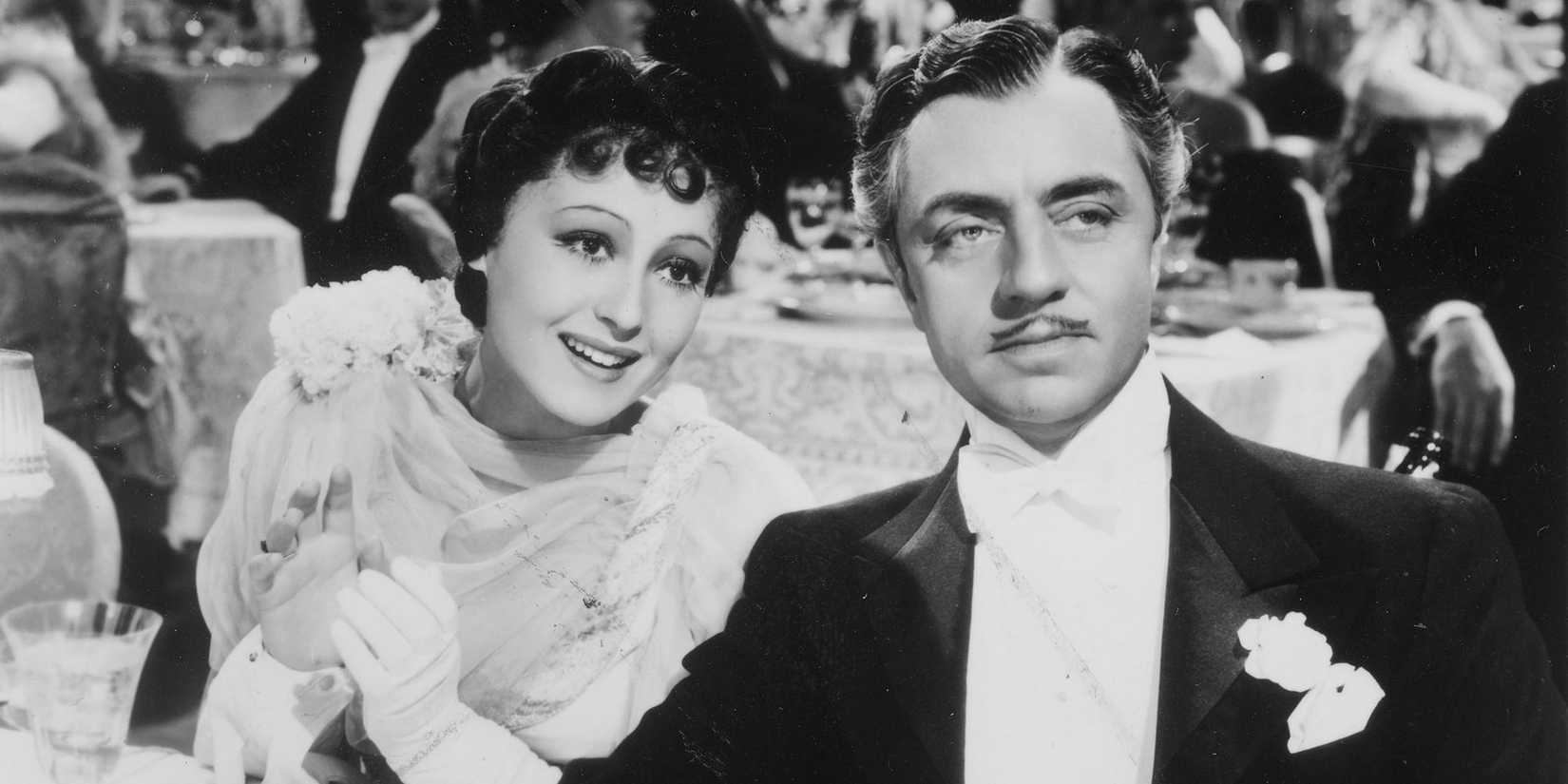 Image via Loew's, Inc.
Everything about The Great Ziegfeld is extravagant. One set cost almost $5 million in today’s dollars; the movie employed over a thousand people throughout its filming, and at the time of its release, it was the longest-talking film ever made. But nearly ninety years later, what matters the most is how The Great Ziegfeld feels even longer than three hours, an exhausting experience full of technical marvels that doesn’t hold up anymore.
This story of the man behind the Ziegfeld Follies proves that the Academy has always loved its bloated biopics, even though William Powell does his best as the title character. It’s understandable how it would’ve been a marvel at the time of its release, but today, The Great Ziegfeld is merely a showcase for how far cinema has come since the mid-1930s.
94 'Tom Jones' (1963)
Who Should’ve Won: 'How the West Was Won'
 Image via United Artists
Director Tony Richardson made a name for himself in the 1960s British New Wave with films like A Taste of Honey and The Loneliness of the Long Distance Runner. Meanwhile, John Osborne was part of the “angry young men” writers who were coming up around the same time. While their films often focused on the gritty stories of modern everyday life, their team-up for Tom Jones—an adaptation of a 1749 Henry Fielding novel—was a complete 180 from the norm for them.
One of the most puzzling Best Picture winners, Tom Jones is a wild, horny comedy where the titular character (Albert Finney) basically screws his way around England. The film’s narration begins with the statement that Tom was a bastard “born to be hanged,” and Richardson’s film never dissuades viewers from the idea that that’s exactly how this story will—and probably should—end. Tom Jones is a strange social satire that became oddly popular in the U.S., but it also likely won Best Picture because it was a relatively weak year in the category. For its time, Tom Jones is a quirky, often unhinged film that screams of 1960s British humor, but it’s also far too weird and surprisingly bland in large chunks to deserve this honor.
93 'Green Book' (2018)
Who Should’ve Won: 'Roma'
 Image via Universal Pictures
Coming between Best Picture wins for the unconventional, daring films The Shape of Water and Parasite—which showed the Oscars’ voting group was expanding—Green Book came along to remind that, while things were changing, the old guard was there to make their presence known. Green Book is the story of Tony Lip (Viggo Mortensen), a farcical Italian stereotype of a man driving a superb pianist, Don Shirley (Mahershala Ali), into the Deep South for his tour in the 1960s. But basically, it’s the story of a racist white man becoming friends with a black man, and isn’t that nice?
Directed by Peter Farrelly (yes, the Peter Farrelly behind Dumb and Dumber and There’s Something About Mary) and co-written by Farrelly, Brian Hayes Currie, and Tony Lip’s son, Nick Vallelonga, Green Book didn’t even bother to check with Shirley’s family, who stated that the film misrepresented him—a shame, considering he’s absolutely the interesting half of this duo. Mortensen and Ali elevate this hacky story with their performances, but it’s embarrassing that Green Book won Best Picture against films like BlacKkKlansman, The Favourite, and Roma.
92 'The Life of Emile Zola' (1937)
Who Should’ve Won: 'A Star Is Born'
 Image via Warner Bros. Pictures
Released after the Nazi Party had risen to power in Germany, The Life of Emile Zola was widely praised at the time. However, further research into the production’s history shows some questionable changes made, including taking the word “Jew” out of the screenplay, as well as references to antisemitism.
Since the film largely focuses on Emile Zola (Paul Muni) and his involvement in the Dreyfus Affair, which explored antisemitism in late 19th-century France, this change is unfortunate, especially considering the timeliness of the story. But also, William Dieterle’s film takes its time getting to Zola and the Dreyfus Affair, when this period should’ve probably been the focus. Despite some moments that seem to speak out against the rise in fascism, The Life of Emile Zola could’ve—and should’ve—been so much more than it is.
91 'Out of Africa' (1985)
Who Should’ve Won: 'The Color Purple'
 Image via Universal Pictures
Out of Africa is, without a doubt, a gorgeous-looking film, with Sydney Pollack and David Watkin deserving the Best Director and Best Cinematography Oscars, respectively. But Out of Africa is also a long bore, based on Danish author Karen Blixen’s book about her decision to move to Africa at the beginning of the 20th century. The best parts of Out of Africa focus on the romance between Blixen (Meryl Streep) and Robert Redford's Hon. Denys Finch Hatton and their budding romance along the African plains.
But whenever it gets away from this central relationship, Out of Africa simply becomes a waiting game until Streep and Redford are back on the screen together again. Both Out of Africa and The Color Purple were nominated for eleven Oscars this year, and while Out of Africa won seven, The Color Purple won zero, making it one of the biggest losers in history—an absolute shame considering how tedious Pollack’s film often is.
90 'The Greatest Show on Earth' (1952)
Who Should’ve Won: 'High Noon'
 Image via Paramount Pictures
Cecil B. DeMille always loved a spectacle, and considering he was one of the first renowned directors of American cinema, it makes sense that the Academy would award one of his extravaganzas at some point. The Greatest Show on Earth, DeMille's penultimate film, is all pageantry.
The film's ensemble cast includes Charlton Heston as a ringleader, James Stewart in a scene-stealing role as a clown with a dark past, a cast that was made to learn and perform their own acts at the circus, and even features the real Ringling Bros. and Barnum & Bailey Circus. The Greatest Show on Earth is also a lot of flash without much substance—another trait of DeMille’s work. At the very least, The Fabelmans did show that the film had a major impact on Steven Spielberg at a young age and made him want to become a director, so at least it has that going for it.
89 'Around the World in 80 Days' (1956)
Who Should’ve Won: 'Giant'
 Image via United Artists
When looking at the other Best Picture nominees at the 29th Academy Awards—which included Giant, The King and I, and The Ten Commandments—it becomes clear that the Academy was all about awarding extravagant films at this time. But in 1956, no film could hold a candle to the absolutely bonkers Around the World in 80 Days. Michael Anderson’s globe-trotting film is packed with excess, filmed in 13 countries, included a cast that (including extras) numbered over 68,000 people, and featured the most costumes for a Hollywood film.
This is a film that starts with Edward R. Murrow explaining Jules Verne and cameos that include everyone from Peter Lorre, Buster Keaton, Frank Sinatra, and many, many more. Around the World in 80 Days is an almost unthinkable production that throws everything and the kitchen sink into this adaptation. As expected, it’s also a bit of a mess, overlong, and hasn’t aged particularly well, but it’s hard to completely discount a picture going as all-in as this one does.






 English (US) ·