
 Image via Toho

Published Feb 16, 2026, 8:04 AM EST
Jeremy has more than 2300 published articles on Collider to his name, and has been writing for the site since February 2022. He's an omnivore when it comes to his movie-watching diet, so will gladly watch and write about almost anything, from old Godzilla films to gangster flicks to samurai movies to classic musicals to the French New Wave to the MCU... well, maybe not the Disney+ shows.
His favorite directors include Martin Scorsese, Sergio Leone, Akira Kurosawa, Quentin Tarantino, Werner Herzog, John Woo, Bob Fosse, Fritz Lang, Guillermo del Toro, and Yoji Yamada. He's also very proud of the fact that he's seen every single Nicolas Cage movie released before 2022, even though doing so often felt like a tremendous waste of time. He's plagued by the question of whether or not The Room is genuinely terrible or some kind of accidental masterpiece, and has been for more than 12 years (and a similar number of viewings).
When he's not writing lists - and the occasional feature article - for Collider, he also likes to upload film reviews to his Letterboxd profile (username: Jeremy Urquhart) and Instagram account.
He has achieved his 2025 goal of reading all 13,467 novels written by Stephen King, and plans to spend the next year or two getting through the author's 82,756 short stories and 105,433 novellas.
Sign in to your Collider account
Godzilla has always been the king of the monsters, or the king of the monster movies, but this is a king who’s also had multiple reigns. Godzilla debuted in 1954, and what might've once seemed like a one-off monster movie became so much more, because in the 70+ years since that movie first came out, there have been almost 40 Godzilla films. And that’s not counting short films, TV shows that Godzilla’s been a part of (like Monarch: Legacy of Monsters or Godzilla Singular Point), nor any of the appearances in media outside the worlds of film and television. Godzilla is endlessly engaging and a timeless monster/series, and looking at Godzilla and his (in effect) eras is a good way to highlight how and why he’s endured.
It’s not that every series is entirely distinct from the others, or, like, that one era is all serious, and one era is all goofy, because it tends to be a bit more complicated than that. But some of the eras do effectively tell a whole and coherent story about a particular version of Godzilla, while some eras are made of movies that have a thematic tie. And then a couple show some kind of character arc for Godzilla, too, which can be neat to see. It can be fun to try to decide which era of Godzilla is the best one, even if it’s ultimately going to be quite a subjective endeavor. There are four official Japanese eras, with one still ongoing, but the anime films that belong to that ongoing era have been counted as their own era/series/thing below, for present purposes. Then, there’s one American era of Godzilla that’s not exactly called an era, but it functions like one, and that, as of 2026, is also ongoing. The one big Godzilla film that fits into no era is Godzilla (1998), which is terrible and didn’t deserve to be an era-starting thing. It’s a good thing there weren’t any movies within that particular continuity (though it did spawn the two-season-long animated Godzilla: The Series, which is admittedly viewed more favorably than the 1998 film).
6 The Anime Trilogy/Era (2017–2018)
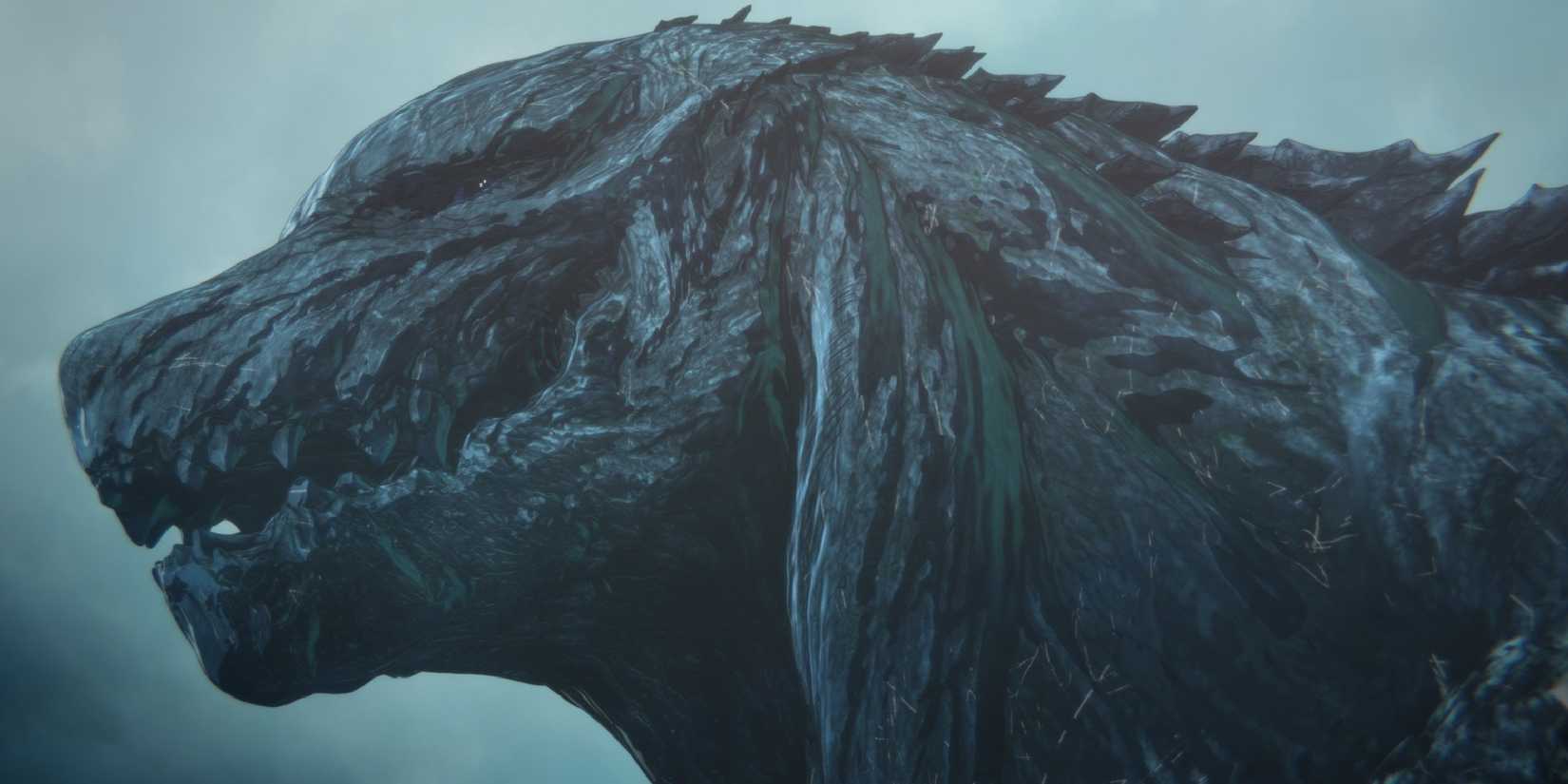 Image via Toho
Since this one isn't really an official era, and also because it’s made up of films that aren’t very good, let’s just keep things brief while going over the Godzilla anime movies. Truthfully, they get off to an almost promising start, because 2017’s Godzilla: Planet of the Monsters has a good prologue that involves humans being kicked off Earth, basically. Monsters reign supreme, and Godzilla does indeed reign supreme over the monsters. But then most of the movie becomes about the survivors of humanity going back to Earth to reclaim it.
This trilogy squanders a newly massive Godzilla, and also potentially interesting new takes on Mechagodzilla and King Ghidorah.
Once they arrive back on Earth, things slow down and weaknesses start showing, quality-wise. Still, you get an ending where an even larger Godzilla emerges, being the biggest shown in any movie or show up until that point, but then the two next films, Godzilla: City on the Edge of Battle and Godzilla: The Planet Eater (both released in 2018) squander this massive Godzilla. They also waste potentially interesting new takes on Mechagodzilla and King Ghidorah. Other than some promising parts in the first movie, you're best off just pretending this trilogy doesn’t exist, even if you're a huge Godzilla fan. It’s disconnected narratively, thematically, and stylistically from the Reiwa era, though sometimes included as part of it, but this ranking’s going to count the Reiwa era (and the live-action films within it) as its own thing.
5 The Monsterverse (2014–)
There was always going to be a healthy amount of skepticism surrounding the announcement of a new American Godzilla movie, since that aforementioned one in 1998 was not very good (to put it mildly). But 2014 did bring with it a new blockbuster-sized (and English-language) Godzilla movie, again just called Godzilla, and it was pretty good. It might've gone a little far in teasing the king of the monsters more than actually showing up, but when something spectacular or action-focused went down, the goods were indeed delivered.
Since then, the series that’s followed has been dubbed the MonsterVerse, and it’s been fun, if a little shallow. King Kong got in on the action, and so the last two MonsterVerse movies have had the pair sharing the title(s): Godzilla vs. Kong (2021), and Godzilla x Kong: The New Empire (2024). It’s still going, and Godzilla x Kong: Supernova is planned for 2027. The MonsterVerse is a nice contrast to the also ongoing Japanese Reiwa era of Godzilla movies. Not as good or classy, no, but able to deliver the goofier side of the Godzilla series pretty reliably, and most of the films have been decently fun, at least to date.
4 The Millennium Era (1999–2004)
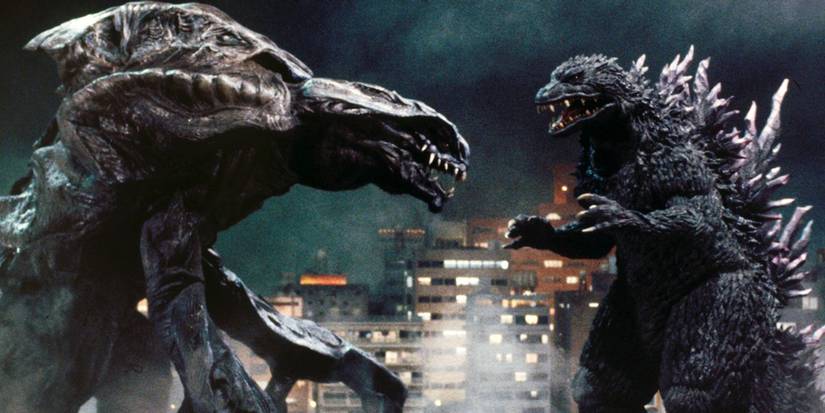 Image via TOHO
The Millennium era of Godzilla has probably been the messiest, and is almost definitely the hardest to define. That’s kind of by design, because the goal here, for each movie, was to do something different with the titular character and not really follow events from film to film. Millennium era movies do, however, acknowledge some of the older Japanese Godzilla movies (usually at least the first), and then there were two Millennium era films that told one continuous story: Godzilla Against Mechagodzilla (2002) and Godzilla: Tokyo S.O.S. (2003).
Still, when the Millennium films were great, they were worthy of being considered among the all-time best Godzilla movies, or maybe even just some of the best giant monster films, generally speaking. 2001’s Godzilla, Mothra and King Ghidorah: Giant Monsters All-Out Attack is especially phenomenal and hard to fault, putting fantastical elements at the forefront, having Godzilla be truly menacing, and featuring King Ghidorah in a heroic role. More divisive is the absolutely gonzo Godzilla: Final Wars, which concluded the Millennium era while also being a celebration of the first half-century of Godzilla movies. It’s so very messy, but also a blast, and quite possibly the most relentlessly-paced and action-packed kaiju film ever made.
3 The Reiwa Era (2016–)
 Image via Toho
Again, discounting those anime films, there’s the least that can be said about the Reiwa era, since it only really (at the time of writing) includes two movies. At the time of writing, though, there is also Godzilla Minus Zero in development, with a scheduled release for near the end of 2026, which is exciting, since it’s going to be a sequel to 2023’s excellent Godzilla Minus One. That one revitalized the series, even though the series had been going pretty strong throughout the 2010s and early 2020s… so maybe it’s better to say that it very clearly demonstrated how much fuel there was left in the tank that is Godzilla.
But the Reiwa era also started quite fantastically, with 2016’s Shin Godzilla, which was intentionally very different (and arguably more striking) than 2014’s Godzilla. The Reiwa era is two for two, for now, as far as the live-action Godzilla movies are concerned, and if Godzilla Minus Zero can be of a comparable quality to Godzilla Minus One, then placing the Reiwa era in this spot ranking-wise could be seen as underrating/under-appreciating it.
2 The Showa Era (1954–1975)
 Image via Toho
Obviously, if historical significance mattered more than anything else, then you'd have to crown Godzilla’s Showa era as the best one, since it was the first, and it all kicked off with that beyond important 1954 film. It’s also significant for being, at the time of writing, the longest era in the history of the Godzilla series, running for over 20 years all up. Also, it easily has the most entries within any era of Godzilla, with 15 in total (so honestly not too far off from one film per year).
The Showa era has a great arc for Godzilla as well, even if it might not have been intended at the time. Godzilla’s a tragic villain in the original 1954 film, and then becomes a hero by around about the mid-1960s, and is then something of a (mostly) kid-friendly defender of the Earth for the last few films in the Showa era. You get Godzilla being terrifying here, and then also, you get him at his cuddliest (well, not literally, but he is pretty adorable-looking in Godzilla vs. Megalon, for example). And yet it all works and mostly impresses as a series/era, even if there are a couple of Showa era films that aren’t particularly good on their own (looking at you, stock footage-heavy All Monsters Attack).
1 The Heisei Era (1984–1995)
 Image via Toho
The Heisei era of the Godzilla series has the most by way of continuity, with The Return of Godzilla kicking off a story that does indeed end very memorably 11 years later, with Godzilla vs. Destoroyah. All up, there are seven movies in this era, and none are outright misses, even if technically, Godzilla vs SpaceGodzilla isn't amazing. But honestly, that one’s not even bad, and even if it were, it wouldn’t do much to take away from the greatness of all-timers like Godzilla vs. Biollante and the aforementioned grand finale that is Godzilla vs. Destoroyah.
The arc for Godzilla might not be as dramatic here, as it was in the Showa era, but Godzilla does go from being destructive and somewhat villainous to more of an anti-hero as things progress. The Heisei era also benefits from having certain human characters show up in more than one movie, so that adds to the sense of continuity, as does the inclusion of Godzilla Junior, who’s introduced in 1993’s Godzilla vs. Mechagodzilla II, grows more in Godzilla vs. SpaceGodzilla, and is then not far off full-size in Godzilla vs. Destoroyah, during which Godzilla Junior plays a very important narrative role. Everything’s well-balanced throughout the Heisei era, and though there are so many other great Godzilla movies that exist outside this particular string of films, if you're judging each era or collection of movies as its own thing, then the Heisei era is likely the strongest overall (Reiwa’s looking good, though, so it could well rise up the rankings after enough time… we shall see).

The Return of Godzilla
Release Date December 15, 1984
Runtime 103 minutes
Director Koji Hashimoto
Writers Fred Dekker, Akira Murao, Hideichi Nagahara, Ryûzô Nakanishi, Shin'ichi Sekizawa, Tomoyuki Tanaka, Hiroyasu Yamaura
-

Keiju Kobayashi
Prime Minister Seiki Mitamura
-




 English (US) ·