

Published Nov 23, 2026, 2:30 AM EST
Dhruv is a Lead Writer in Screen Rant's New TV division. He has been consistently contributing to the website for over two years and has written thousands of articles covering streaming trends, movie/TV analysis, and pop culture breakdowns.
Before Screen Rant, he was a Senior Writer for The Cinemaholic, covering everything from anime to television, from reality TV to movies.
After high school, he was on his way to become a Civil Engineer. However, he soon realized that writing was his true calling. As a result, he took a leap and never looked back.
If Father Time had a morbid sense of humor, he would turn humanity's futile attempts to escape mortality into a mind-bending Netflix series. There lies the premise of an enthralling sci-fi show on Netflix. Although not created by Father Time himself, the series uses both time travel and humor as solid narrative devices. Then, it unfolds a harrowing story about how time can be both a prison and a sanctuary.
Created by Natasha Lyonne, Leslye Headland, and Amy Poehler, Netflix's Russian Doll is not a simple time travel TV show about rewinding the clocks and fixing the past. It follows the familiar Groundhog Day loop. Characters are forced to live the same day on repeat. However, what begins as a cycle of waking up and dying soon turns into a hard-hitting exploration of loneliness and trauma.
Watching Russian Doll is like listening to a nostalgic vinyl record. The needle keeps looping back to the same starting point. However, every time it traces the same grooves, it is hard not to feel a new set of emotions. The incredible time travel show is almost like a cosmic treadmill that hides a lot of existential questions in its main character's snarky humor and charm.
Russian Doll Season 1 Is A Masterclass In Time Loop Storytelling
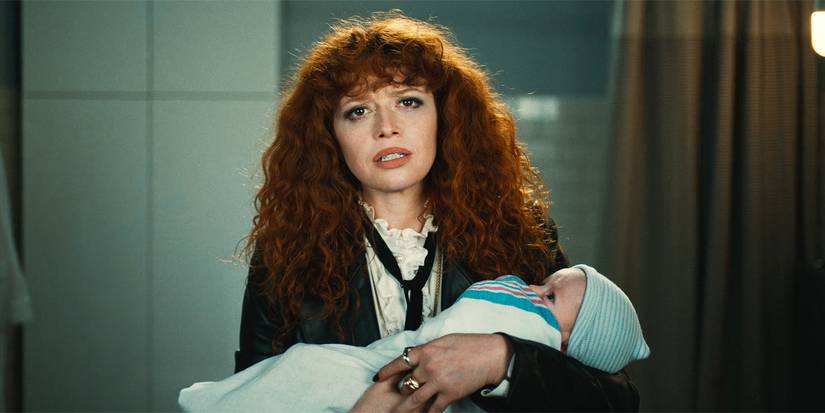
Natasha Lyonne plays Russian Doll's main character, Nadia, who is hilariously grumpy and quick-witted. Much to her amusement, she gets stuck in a time loop on her 36th birthday. After a few stirring cycles of hitting replay, she starts embracing the loops with complete recklessness and curiosity. Curiosity always kills the proverbial cat. Hitting repeat, though, allows her to conquer death itself.
However, Russian Doll soon establishes that not all time loops are the same. With every reset, there is decay and entropy. There lies the rub. It puts a ticking clock over Nadia's head and raises the stakes of her journey to escape. The show takes an even more fascinating turn when Nadia runs into a man, Alan, experiencing the same loops.
This leads to an unlikely team-up where two strangers with contrasting personalities set out to save each other and themselves. Somewhere along the way, however, Netflix's Russian Doll takes a dark turn before becoming pitch black with its themes. Nadia's sarcasm and fierce independence become a representation of her coping mechanism towards her unstable childhood.
Meanwhile, Alan's desire for extreme control reflects his fear of rejection.
Nadia and Alan are worlds apart. However, as a viewer, it is hard not to see yourself in them and their struggles to break their redundant cycles of self sabotage. With this, the show's Möbius strip of a story turns into a tragic and relatable portrayal of the recurring cycles we all find ourselves in without being stuck in actual time loops.
Russian Doll Season 2 Brilliantly Evolves Its Own Time Travel

Russian Doll season 1's ending is fairly conclusive. On paper, another season of the series made little sense. It even took years for the follow-up to materialize and see the light of day. Somehow, though, Russian Doll evolves its time loop story from season 1. It turns it into something even more profound in season 2.
It introduces ancestral time travel, allowing Nadia to physically embody her mother and later her grandmother in the past. As anyone would, she sees it as an opportunity to fix the past and ease her pain in the present. She even tries to "raise" her infant self on her own, only to realize she cannot self-parent herself out of trauma.
With this, Russian Doll becomes a hard-hitting portrayal of how healing requires acceptance. Time travel can only give a glimpse of the lessons learned from the past. It changes nothing. True change only lies in the present, in one's ability to confront what hurt them in the past.
These cathartic lessons hidden in the Netflix time travel series' comedy drama make it truly worthwhile, ensuring there are no dull moments in its 16-episode runtime.







 English (US) ·