Alex Garland's Civil War is now streaming free on Pluto TV and Tubi
3 weeks ago
31
Published Jul 9, 2026, 12:30 PM EDT
"What kind of American are you?"
Image: A24
A lot of movies and TV shows have aged very strangely during the second Trump presidency. Movies where Trump has a cameo — like Home Alone 2: Lost in New York— suddenly transform from vaguely silly to a bit ominous compared to back when he was a mere real estate tycoon. The HBO comedy Veep also feels very different. While it's still funny, the unfiltered comments of Selina Meyer (Julia Louis-Dreyfus) suddenly seem quaint when compared to a president who just recently promised Iran that their “whole civilization will die tonight.”
Yet one recent thriller has only become more relevant during Trump’s second term, and that’s Alex Garland’s 2024 dystopian political thriller Civil War, which is free to stream on Pluto TV and Tubi as of July 1.
Civil War is about a team of photojournalists traveling from New York City to Washington D.C. during America’s second Civil War. They must navigate through various warring sections of the country to interview and photograph the president (Nick Offerman), a despot who has refused to leave office and has only deepened the country’s divide by using the military against his own people.
The main character in Civil War is Lee Smith (Kirsten Dunst), a veteran photojournalist who has grown a bit desensitized over the years, not just to the violence that surrounds her, but to the idea of helping others. She’s particularly resistant to tutoring eager young photojournalist Jessie Collin (Cailee Spaeny), and Lee’s gradual softening towards Collin represents the film’s central emotional arc.
The most memorable scene — and performance — in the movie comes from Dunst’s real-life husband Jesse Plemons. During their travels, the photojournalists come across a group of soldiers lording over a mass grave. The leader is a soldier (Plemons) wearing fatigues and a distinct pair of bright red sunglasses and holds what looks like a heavily modified assault rifle. When the photojournalists explain that they’re American, Plemons’ unnamed character asks with an eerie calm, “What kind of American are you?” While it lasts just a few minutes, the scene, which is seething with racism from Plemons’ character, epitomizes the lawlessness and sectionalism of a divided America.
Image: A24
While Civil War received generally positive reviews upon its release, there were certain choices made by writer/director Alex Garland that seemed to play things a bit safe at the time, perhaps to avoid coming down on any one political side. For example, the movie never addresses what caused the civil war depicted in the film. The words “Democrat” and “Republican” are also never said, making it impossible to say with any certainty who is on which side of the divide. Also, the two big secessionists mentioned in the movie are Texas and California, two states that, in real life, are generally on the opposite sides of any political matter, making the dividing lines in the movie especially vague.
In fairness to Garland, he wrote the film in 2020, towards the end of the first Trump administration, but before January 6. At the time, the fault lines for our current divide had all been drawn, but they hadn’t quite burst open the way they did when Trump commanded his followers to storm the Capitol Building (though he had plenty of time before the movie was released to account for that).
Image: A24
It could be argued that the point of the movie was not about right-wing and left-wing. Instead, it was about what it's like to be a photojournalist in a war zone. It was also about what it's like to be living under the rule of an authoritarian, and the movie seems to want to capture that experience without getting into the weeds of the leader’s ideology (especially since the president occupies very little screen time in the film). Except, when you’re releasing a movie called Civil War during one of the most divided times in American history, people are inevitably going to read into it.
Two years later, the once-vague dividing lines in Civil War seem to be coming into focus.
Whether President Trump is joking or not — and many people on both sides don’t believe he is — his continued threats that he’s going to run for a third term in 2028 bear more than a passing resemblance to the unnamed president played by Offerman, who is in his third term in the film. While Offerman’s character doesn’t seem quite as bombastic as Trump is, it's impossible not to make the comparison, no matter the seeming difference in temperament.
More pervasive than all of that, though, is the violence in the film, which is illustrated by lawlessness and active battle scenes between warring factions of Americans on ordinary American streets. While America is nowhere near that kind of chaos in 2026, certain actions taken by Trump’s administration and his supporters could easily be setting the groundwork for it. January 6, for example, is one of the most shocking examples of lawlessness in American history. Also, Civil War’s depiction of militaristic violence being inflicted on ordinary Americans feels a lot like the ICE raids that have claimed the lives of multiple protesters. And, Trump has deployed National Guard troops to U.S. cities like Washington D.C., Los Angeles, Memphis, Minneapolis, and Chicago to tamp down protests. Those extreme measures could very well lead to the kind of divide Garland depicts in his film.
Image: A24
Suddenly, the once too-safe Civil War seems like it's more relevant than ever. It doesn’t even need to say who the Democrats and Republicans are, because viewers will inevitably map today’s political conflict onto the movie in ways that felt less immediate in 2024. While the state alliances in the film still don’t make any sense, far too much of the movie feels like it's only a few years off, especially if it turns out that Trump isn’t joking when he talks about running for a third term.
The irony is that Garland was criticized for refusing to predict exactly how America would fracture. Instead, he made a movie about what it feels like when citizens stop believing their institutions will protect them. Two years later, that emotional landscape feels a lot less speculative.

 3 weeks ago
31
3 weeks ago
31

 Image: A24
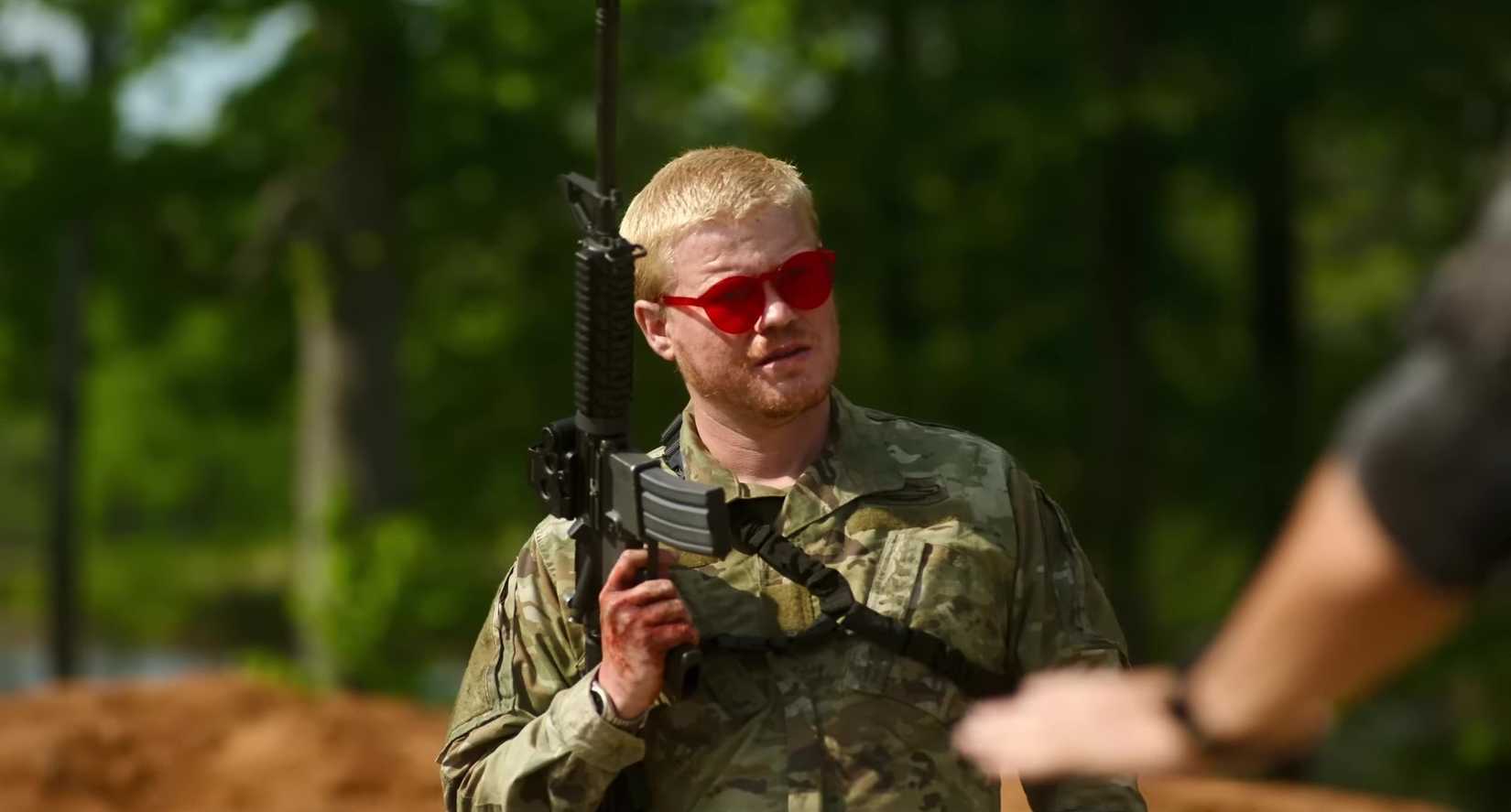 Image: A24
 Image: A24
 Image: A24





 English (US) ·