
 Image via Julia Terjung; Starz; Everett Collection
Published Aug 6, 2026, 2:58 PM EDT
Jen Vestuto is a TV Features Writer for Collider. A born and raised New Yorker, she started her career on set as a production assistant for shows like Law & Order: SVU and Person of Interest. In LA, she worked in the writers' rooms for The Vampire Diaries and Nancy Drew. Along with her writing partner, she joined the writing staff of Nancy Drew in Season 2 and stayed on the run of the show, which ended in 2022 with Season 4.
Jen grew up on Long Island in a loud Italian family. She's been writing creatively since she was in elementary school and would often make her younger sister act out scenes from her favorite movies with her. Jen is also a massive sports fan and was an athlete herself growing up.
Writing features for Collider gives her the opportunity to share her passion for great storytelling and compelling characters.
Sign in to your Collider account
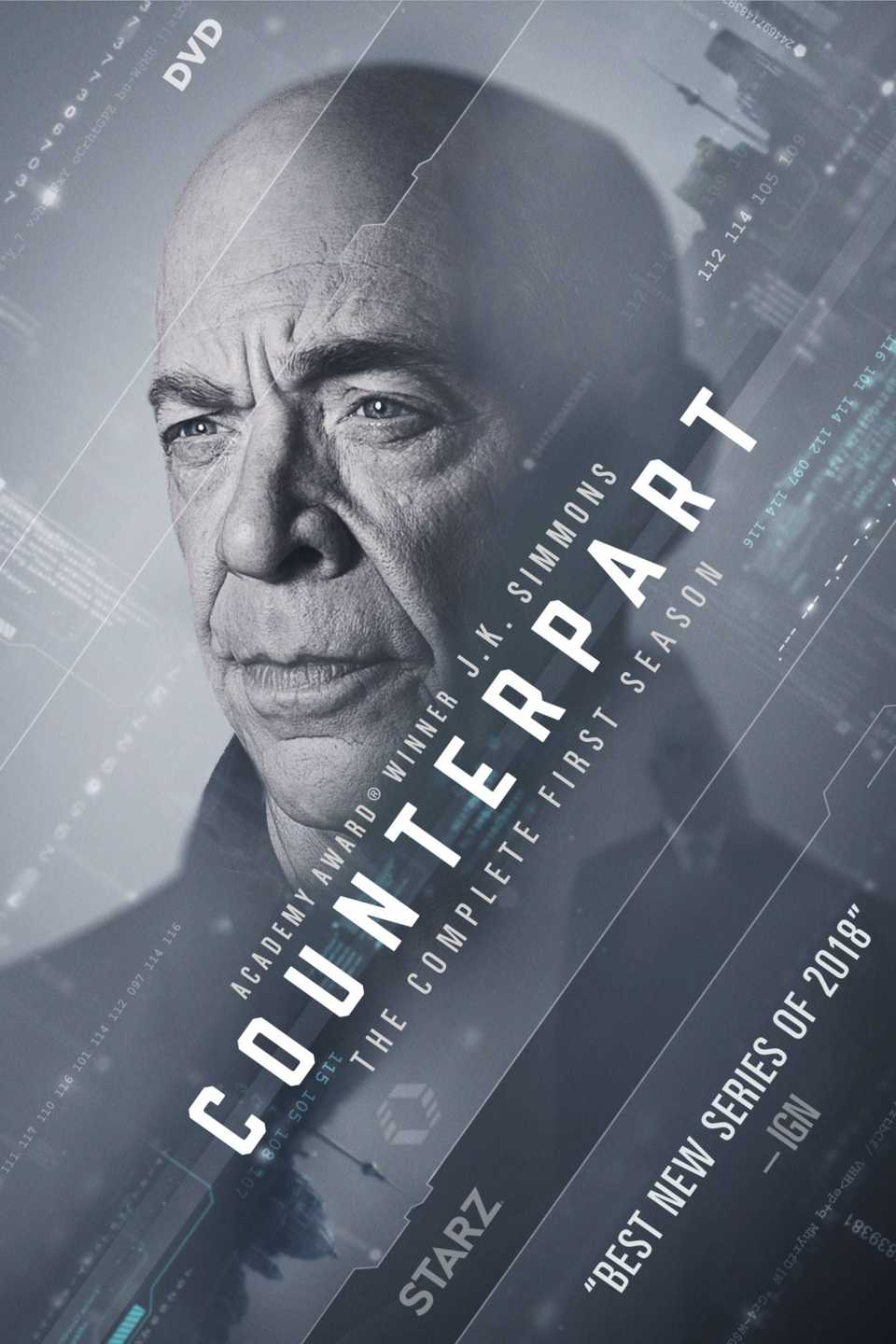
Dark Matter premiered in May 2024 on Apple TV and garnered praise from both critics and audiences for its intriguing themes about identity, alternate realities, and the power of choice. But while fans are waiting for Season 2 to drop, which is finally set to premiere on August 28, they should check out this dark sci-fi series that ran on Starz for two seasons. In 2017, writer Justin Marks, most recently lauded for co-creating the Emmy-winning series Shōgun, created an original sci-fi espionage thriller called Counterpart.
The show explores the idea of two parallel Earths after a Cold War experiment went wrong. The parallel universe, known as the Prime World, started as a replica of the original, or Alpha World, which included a "counterpart" of each person. But, as time went on, small changes in Prime caused rifts between the two worlds. Actor J.K. Simmons plays Howard Silk, a gentle and kind man who works at the Office of Interchange. Although he's been working there for 30 years, he admits in the pilot that he doesn’t truly know what they do there, which ultimately leads to him meeting Howard Prime, the version of him on the other side. Just like Joel Edgerton does in Dark Matter, J.K. plays both Howards, and the two men could not be more different.
What Is 'Counterpart' About?
While Dark Matter delves more into the quantum physics behind alternate realities, Counterpart leans more into the sci-fi espionage genre and generates drama from that aspect of the story. Counterpart takes place in the city of Berlin, a city historically notorious for being divided. Only a select few high-ranking people at the Office of Interchange on the Alpha side know that the Prime side exists. One of them is Peter Quayle (Harry Lloyd), a coworker of Howard's, who pulls him into the tight inner circle. It turns out that there are members of a terrorist cell known as "Others" who have come over from the Prime World to wreak havoc in the Alpha World. They are seeking vengeance for the millions of lives lost since the mid-'90s due to a flu pandemic that struck the Prime side, which they believe the Alpha side was responsible for.
Collider Exclusive · Sci-Fi Survival Quiz Which Sci-Fi World Would You Survive? The Matrix · Mad Max · Blade Runner · Dune · Star Wars
Five universes. Five completely different ways the future went wrong — or sideways, or up in flames. Only one of them is the world your instincts were built for. Eight questions will figure out which dystopia, galaxy, or desert wasteland you'd actually make it out of alive.
💊The Matrix
🔥Mad Max
🌧️Blade Runner
🏜️Dune
🚀Star Wars
TEST YOUR SURVIVAL →
01
You sense something is deeply wrong with the world around you. What do you do? The first instinct is often the truest one.
APull on every thread until I understand the system — then figure out how to break it. BStop asking questions and start stockpiling — food, fuel, weapons. Questions don't keep you alive. CKeep my head down, observe carefully, and trust no one until I know who's pulling the strings. DStudy the patterns. Every system has a rhythm — learn it, and you learn how to survive it. EFind the people fighting back and join them. You can't fix a broken galaxy alone.
NEXT QUESTION →
02
In a world of scarcity, what resource do you guard most fiercely? What we protect reveals what we believe survival actually requires.
AKnowledge. If you understand the system, you don't need resources — you can generate them. BFuel. Everything else — movement, power, escape — runs on it. CTrust. In a world of fakes and informants, a truly reliable ally is rarer than any commodity. DWater. And after water, information — the two things empires are truly built on. EShips and credits. The galaxy is big — you survive it by being able to move through it freely.
NEXT QUESTION →
03
What kind of threat keeps you up at night? Fear is useful data — if you're honest about what you're actually afraid of.
AThat reality itself is a lie — that everything I experience has been constructed to keep me compliant. BA raid. No warning, no mercy — just the roar of engines and then nothing left. CBeing identified. Once someone with power decides you're a problem, you're already out of time. DBeing outmanoeuvred — losing a political game I didn't even know I was playing. EThe Empire tightening its grip until there's nowhere left to run.
NEXT QUESTION →
04
How do you deal with authority you don't trust? Every dystopia has a power structure. Your approach to it determines everything.
ASubvert it from the inside — learn its rules well enough to weaponise them against it. BIgnore it and stay out of its reach. The further from any power structure, the better. CAppear to comply while doing exactly what I need to do. Visibility is the enemy. DManoeuvre within it carefully. You can't beat a system you refuse to understand. EResist openly when I have to. Some things are worth the risk of being seen.
NEXT QUESTION →
05
Which environment could you actually endure long-term? Survival isn't just tactical — it's physical, psychological, and very much about where you are.
AUnderground bunkers and server rooms — cramped, artificial, but with access to everything that matters. BOpen wasteland — brutal sun, no shelter, constant movement. At least the threat is honest. CA dense, rain-soaked city where you can disappear into the crowd and nobody asks questions. DMerciless desert — extreme heat, no water, and something enormous living beneath the sand. EThe fringe — backwater planets and busy spaceports where the Empire's attention rarely reaches.
NEXT QUESTION →
06
Who do you want in your corner when things fall apart? The company you keep is the clearest signal of who you actually are.
AA tight crew of believers who've seen behind the curtain and have nothing left to lose. BOne or two people I'd trust with my life. Any more than that and someone talks. CNobody, ideally. Alliances are liabilities. I work alone unless I have no choice. DA community bound by shared hardship and mutual survival — people who need each other to last. EA ragtag team with wildly different skills and total commitment when it counts.
NEXT QUESTION →
07
Where do you draw the line — if you draw one at all? Every survivor eventually faces a moment that tests what they're actually made of.
AI won't harm the innocent — even the ones who'd report me without hesitation. BI do what I have to to protect the people I've chosen. Everything else is negotiable. CThe line shifts depending on who's asking and what's at stake. DI draw a long-term line — nothing that compromises my people's future, even if it'd help now. ESome lines, once crossed, can't be uncrossed. I know which ones they are.
NEXT QUESTION →
08
What would actually make survival worth it? Staying alive is one thing. Having a reason to is another.
AWaking others up — dismantling the illusion so no one else has to live inside it. BFinding somewhere — or someone — worth protecting. A reason to keep moving. CAnswers. Understanding what I am, what any of this means, before time runs out. DLegacy — shaping the future in a way that outlasts me by generations. EFreedom — for myself, for others, for every world still living under someone else's boot.
REVEAL MY WORLD →
Your Fate Has Been Calculated You'd Survive In…
Your answers point to the world your instincts were built for. This is the universe your temperament, your survival instincts, and your particular brand of stubbornness were made for.
The Matrix
You took the red pill a long time ago — probably before anyone offered it to you. You're a systems thinker who can't help but notice the seams in things.
- You're drawn to understanding how the system works before figuring out how to break it.
- You'd find the Resistance, or it would find you — your instinct for spotting constructed realities is the machines' worst nightmare.
- You function best when you have access to information and the freedom to act on it.
- The Matrix built an airtight prison. You'd be the one probing the walls for the door.
Mad Max
The wasteland doesn't reward the clever or the well-connected — it rewards those who are hard to kill and harder to break. That's you.
- You don't need comfort, community, or a cause larger than the next horizon.
- You need a vehicle, a clear threat, and enough fuel to outrun it — and you're good at all three.
- You are unsentimental enough to survive that world, and decent enough — just barely — to be something more than another raider.
- In the wasteland, that distinction is everything.
Blade Runner
You'd survive here because you know how to exist in moral grey areas without losing yourself completely.
- You read people accurately, keep your circle small, and ask the questions others prefer not to answer.
- In a city where humanity is a legal designation rather than a feeling, you hold onto something that keeps you functional.
- You're not a hero. But you're not lost, either.
- In Blade Runner's world, that distinction is everything.
Dune
Arrakis is the most hostile environment in the known universe — and you are precisely the kind of person it rewards.
- Patience, discipline, and political awareness are your core strengths — and on Arrakis, they're survival tools.
- You understand that the long game matters more than any single victory.
- Others come to Dune and are consumed by it. You'd learn its logic and earn its respect.
- In time, you wouldn't just survive Arrakis — you'd begin to reshape it.
Star Wars
The galaxy far, far away is vast, loud, and in a constant state of violent political upheaval — and you wouldn't have it any other way.
- You find meaning in being part of something larger than yourself — a cause, a crew, a rebellion.
- You'd gravitate toward the Rebellion, or the fringes, or whatever pocket of the galaxy still believes the Empire's grip can be broken.
- You fight — not because you have to, but because standing aside isn't something you're capable of.
- In Star Wars, that willingness is what makes all the difference.
↻ RETAKE THE QUIZ
The series really hits its stride when Howard meets Howard Prime, a much more ruthless and cold version of himself. Howard Prime is seeking to infiltrate Howard's life to track down the "Others" and to protect his wife, Emily (Olivia Williams), who is in a coma after being hit by a car. Howard is shocked to learn that Emily is a target for the "Others," and it's revealed that she is a counterintelligence agent herself and has been in contact with the other side. As more and more secrets are revealed, the two sides are forced to work together to stop the worlds from crumbling, which creates such rich drama and compelling character moments.
Like 'Dark Matter,' 'Counterpart' Explores How the Choices We Make Can Change Everything
In Dark Matter, there are multiple versions of Jason (Edgerton), but the first two that are introduced have very different lives based on one decision that changed everything. In one reality, Jason is happily married to his wife Daniela (Jennifer Connelly), with who he shares a son. The "other" Jason, however, was too obsessed with his work and told Daniela to get an abortion, which sent him down a much different path, ultimately leading him to create the box.
In Counterpart, the same theme of identity is explored. The different circumstances that the characters face ultimately change who they are and who they become. For example, Howard and Emily in the Alpha world lost a child, but are still married. On the Prime side, they're divorced but have a daughter, Anna. In both cases, Emily is a spy, but it's only in the Prime World that Howard finds out and confronts her about it. While Howard Alpha keeps the peace and stays quiet about his suspicions, Howard Prime goes down a different path, becoming a cold and violent operative. All of this is happening under the umbrella of this dangerous world they're living in, which is how two people who started the same can change in such drastic and consequential ways.
The theme of the power of choice is especially highlighted in a stand-alone episode in Season 2, Episode 6 "Twin Cities", written by Marks. This is where the parallel worlds, and the crossing between the two, are created. Scientist Yanek, played by Samuel Roukin, creates the Prime World, and the two versions of Yanek experiment on each of their worlds. However, tragedy strikes in the Alpha world, sending Yanek into a grief spiral and sewing distrust between the two Yaneks. Even though they are the same person, yet again a small decision changes everything, and Yanek's fears, anxieties, and insecurities bubble to the surface, which ultimately leads to more devastation. This is such a fascinating concept to explore and Counterpart executes it perfectly in this brilliant episode.
J.K. Simmons and Olivia Williams Are Brilliantly Cast in 'Counterpart'
 Image via Starz
Every actor in Counterpart who has to play two versions of themselves does a great job of depicting each one. Hands down though, J.K. Simmons has the most difficult job playing both Howards. It's incredible how his performance differs between the sad sack, gentle Howard Alpha, and the cold, badass Howard Prime. His subtle changes in physicality and demeanor actively demonstrate which Howard you're watching. It's clear why Marks and his team chose Simmons to play this role; just by looking at his filmography, from Juno to Whiplash, it's easy to see his talents and range, which makes the show as strong as it is.
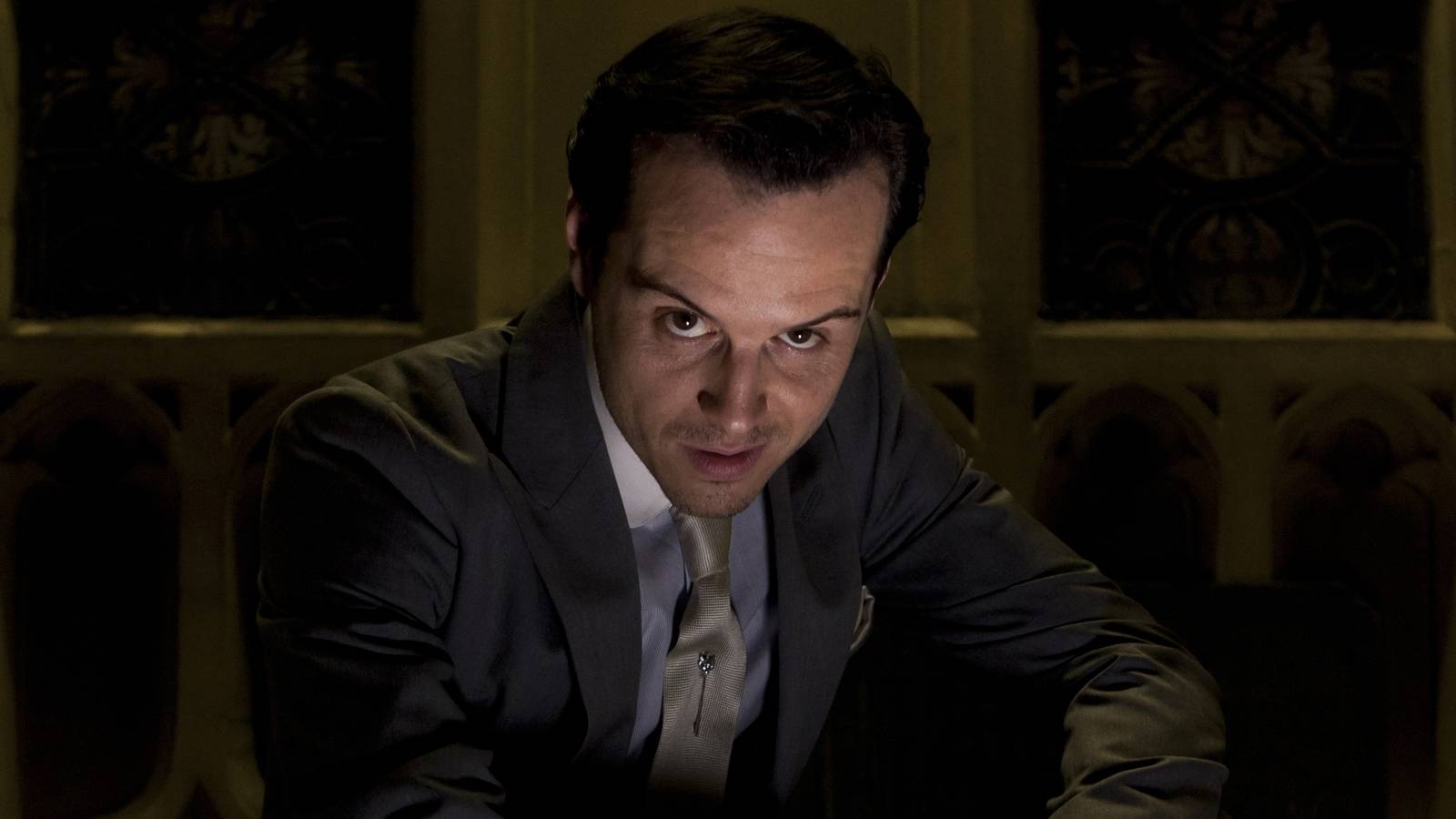
J.K.'s talents are fully on display in Episode 8 of Season 1, "Love to Lie," written by Amy Berg. After both Howards have been spending time in opposite worlds, they confront each other. Howard Alpha, although essentially looking in the mirror, is disgusted by what he sees, shouting at Howard Prime, "Is there any truth to you?" It also must be a little terrifying to him, knowing that he himself has the capacity to be violent and awful the way that Howard Prime turned out to be. Simmons puts on a masterclass in this scene as the two hurl insults at each other. The writing, editing, and, of course, the performance make this scene one of the show's best and most compelling, even if it's just two guys sitting across from each other.
Opposite J.K. for most of the show is Olivia Williams, who plays Emily with a quiet grace and a few of her own badass moments thrown in. Williams was also given a scene where Emily and Emily Prime confront each other in Episode 9 of Season 2, "You to You," written by Gianna Sobol. The changes in Emily are subtle, but there is an underlying sadness in Emily from the loss of her daughter. It's a heartbreaking scene that Olivia plays with humanity and empathy. Overall, her performance of these flawed women is the perfect compliment to J.K.'s performance as the Howards and truly made Counterpart a show worth watching.
Like all great sci-fi stories, Counterpart asks questions and explores themes about what makes us human, and it made audiences care deeply about what happened to these characters. Unfortunately, Counterpart was cancelled after Season 2, which meant that Marks and his writing staff couldn't see the story through to the end. Still, Counterpart is a solid watch that sci-fi fans, as well as John le Carré fans, are bound to love while waiting for Dark Matter Season 2 to premiere on August 28.
Release Date 2017 - 2019-00-00
Counterpart is available for purchase on Amazon Prime in the U.S.







 English (US) ·