
I recently visited the High End Show in Vienna, where the world's top audio companies show off their latest and greatest creations. The show mostly focuses on ready-to-sell products — of the kind that we chose in our Best in Show at High End Vienna 2026 Awards — but it's also where interesting new audio components makers show off what they're making to other companies, to use in their creations.
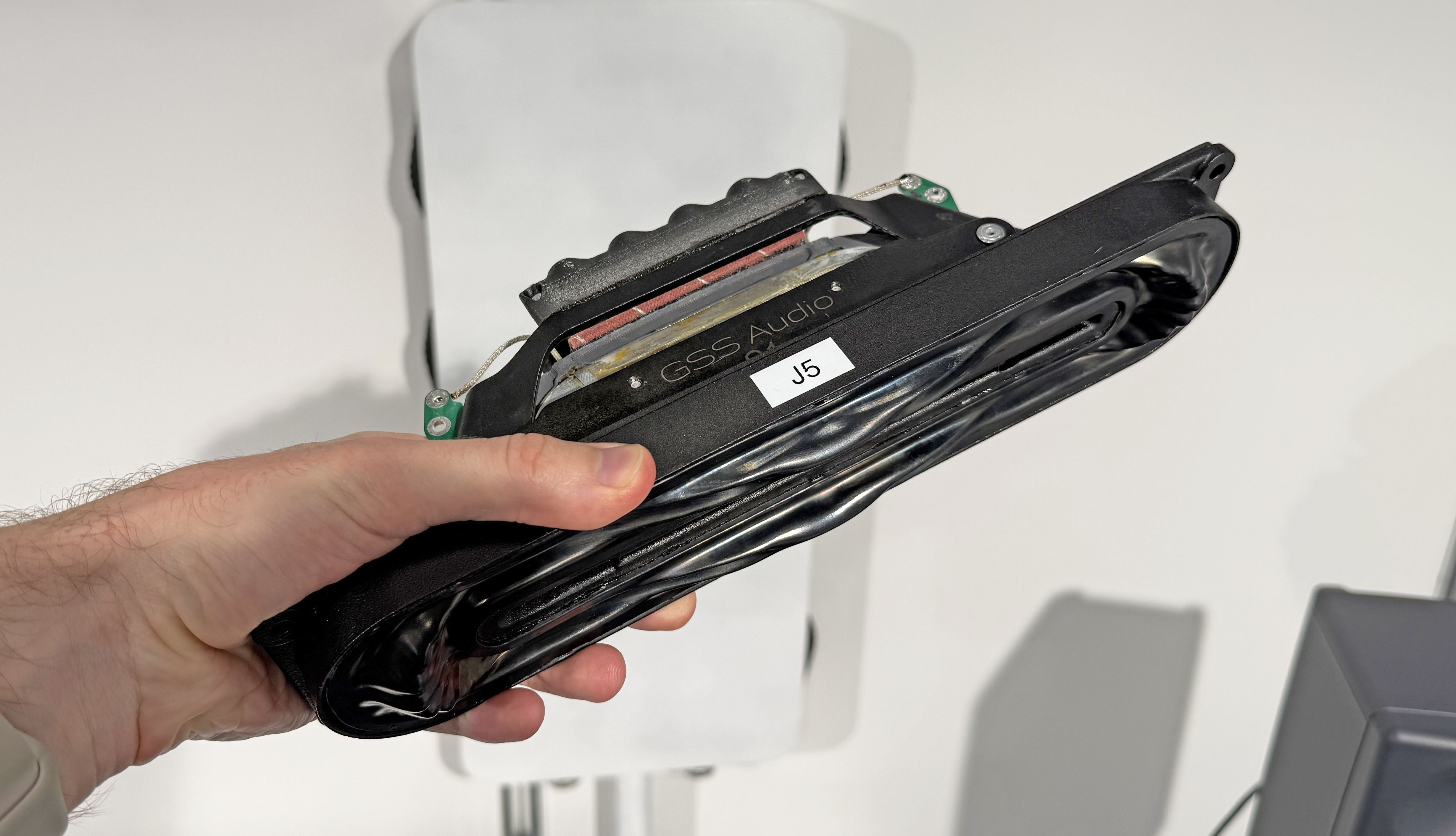
One of these companies at the 2026 show was GSS, showing off a new bass driver called the Model S1. It's a very slim transducer, just 62.5mm tall and 299mm wide, and is capable of operating in a box with a volume of just 1.75 liters.
This means that you can put two of them, in a force-cancelling configuration, in a sealed box that's around 65mm tall, 310mm wide and 200mm deep — and that's exactly what I got to hear at the show.
I'll go into the experience in a moment, but the short version is that this small box sounds like a subwoofer that's much larger — GSS Audio says that specifically its system is capable of delivering the bass of something six times the size.
There's no exact way to say what this should be the equivalent of, because of variations in driver design, but the easy way to think of it is this: it's an 8-inch or 10-inch subwoofer squeezed into a box the size of a chunky hardback book.
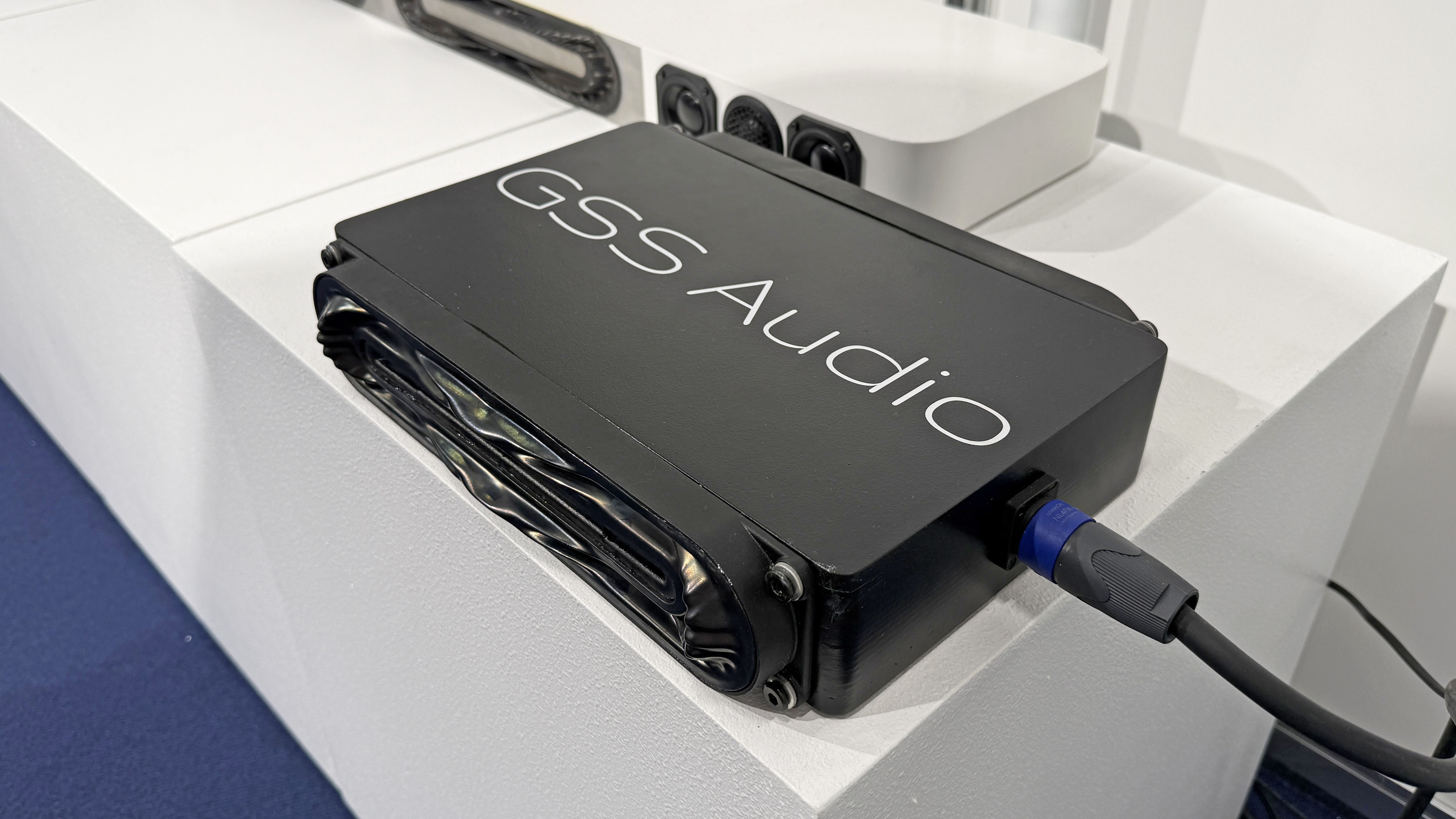
The magic trick here is the level of excursion (i.e, how how far forwards and backwards the diaphragm can move). In this transducer, it's capable of moving 17mm in each direction, for a total movement of 34mm — that's how it can displace so much air to match larger drivers.
The diaphragm is very elaborate in order to make this possible — it's full of ridges and spirals. We've seen this on a lot of smarter woofer drivers; it's basically a way of managing the amount of surface area of the transducer, so that it can extend as far as it does, but delivers consistent performance across the full movement range.
GSS Audio also says it's put some special sauce into the configuration of the magnets, as well as the spider (the suspension system that holds the magnet in place, even as it moves).
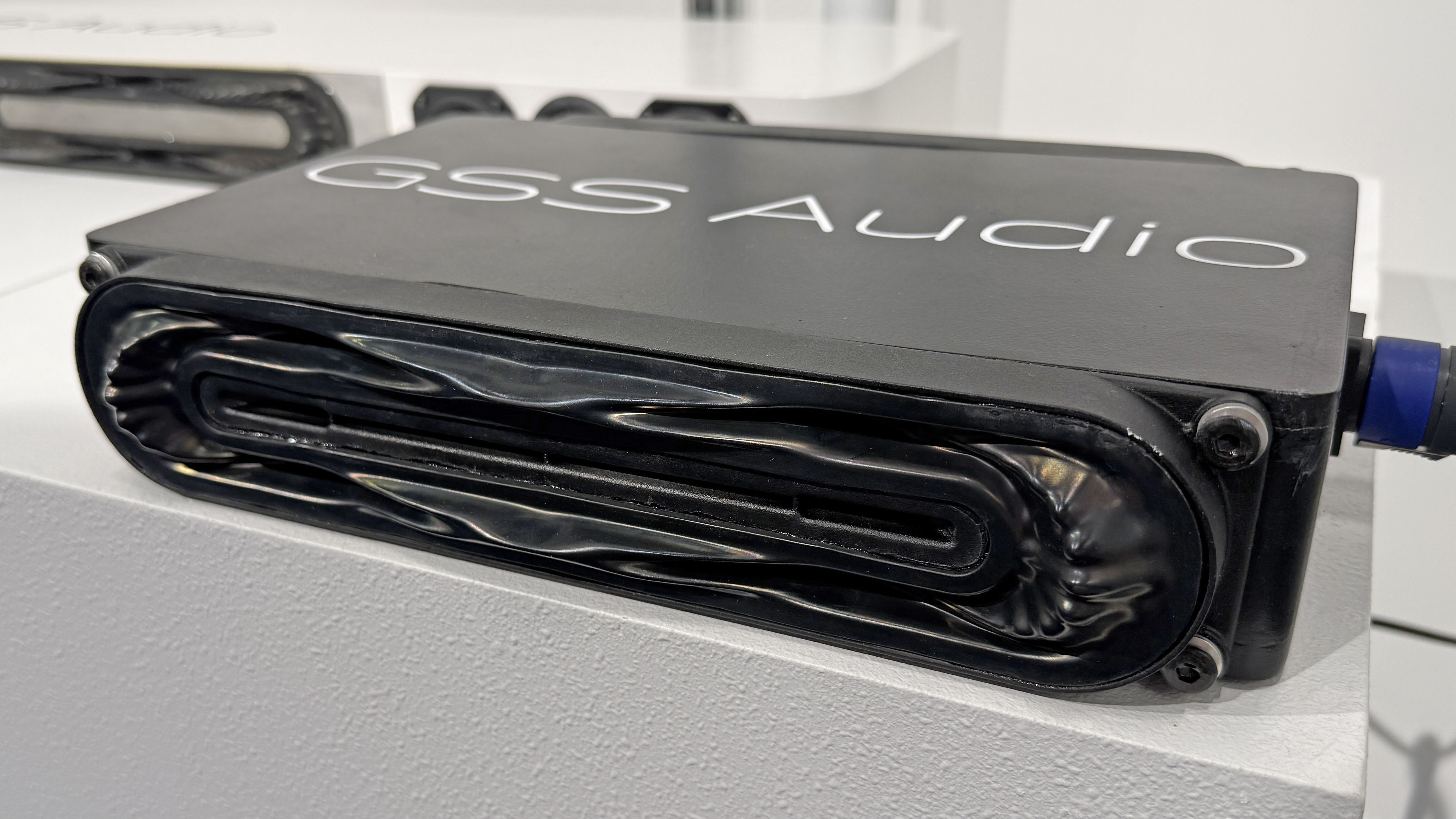
Enough preamble — let's talk about the experience of listening to it. GSS had two of its little boxes (each with dual drivers) set up, each of which was connected to a two-way Neumann studio monitor speaker, so a stereo configuration with a double dose of bass.
The boxes deliver absolutely thumping bass that's capable of punching you in the torso as great low-end should (if you want it to), but it's also super-controlled — powerful but tight as a drum (or a drum machine, as the case may be if you making the most of this for music).
What really jumped out to me (as much as something you feel inside your bones can jump out at you) was the deep sub-bass. It's not pushing down to deeper frequency artificially and setting your teeth on edge as a result; I threw on Sugar Kingdom by Nikki Nair, which is a song that bad woofer can really screw up, but I could've just lived in the sub-bass here, bobbing and bouncing along.
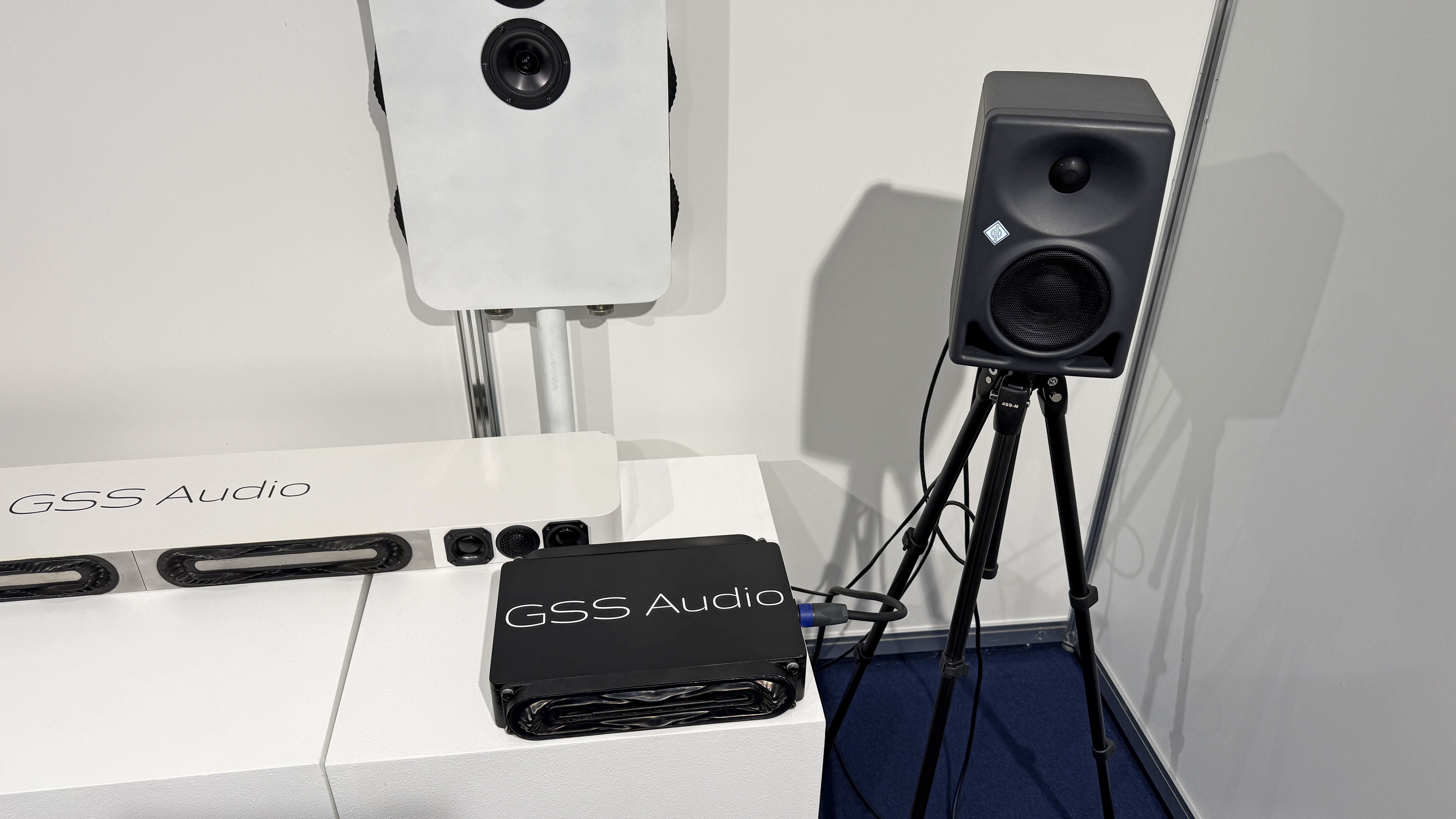
Something to note is that this was borderline a near-field listening environment — I wasn't quite at desktop distance from the Neumann speakers, but I was closer than a standard listening or home theater room, and the bass boxed performed great for this kind of setup, which is now how I'd think of using a larger sub.
Of course, while GSS demo'd it with music and stereo speakers, the company really seems to expect its biggest use to come in speakers where bass is wanted by space is at a premium.
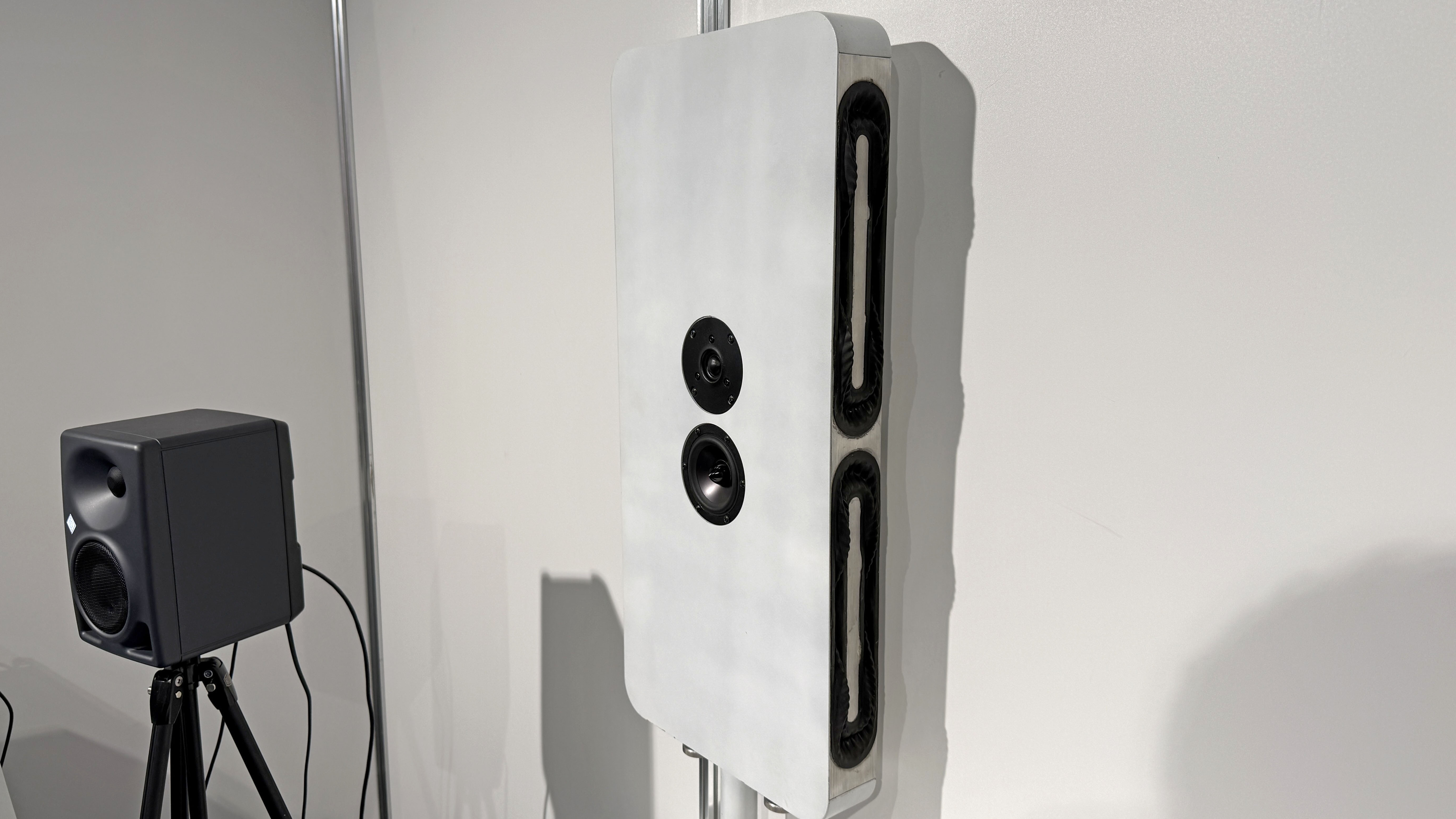
At its booth, it had prototypes of a soundbar with two of the Model 1 drivers in, and a wall-mounted speaker with four(!) of them in — the latter is a fascinating idea for a home theater setup, where your surround speakers would also act as a diffused subwoofer system, saving you a load of space and wiring.
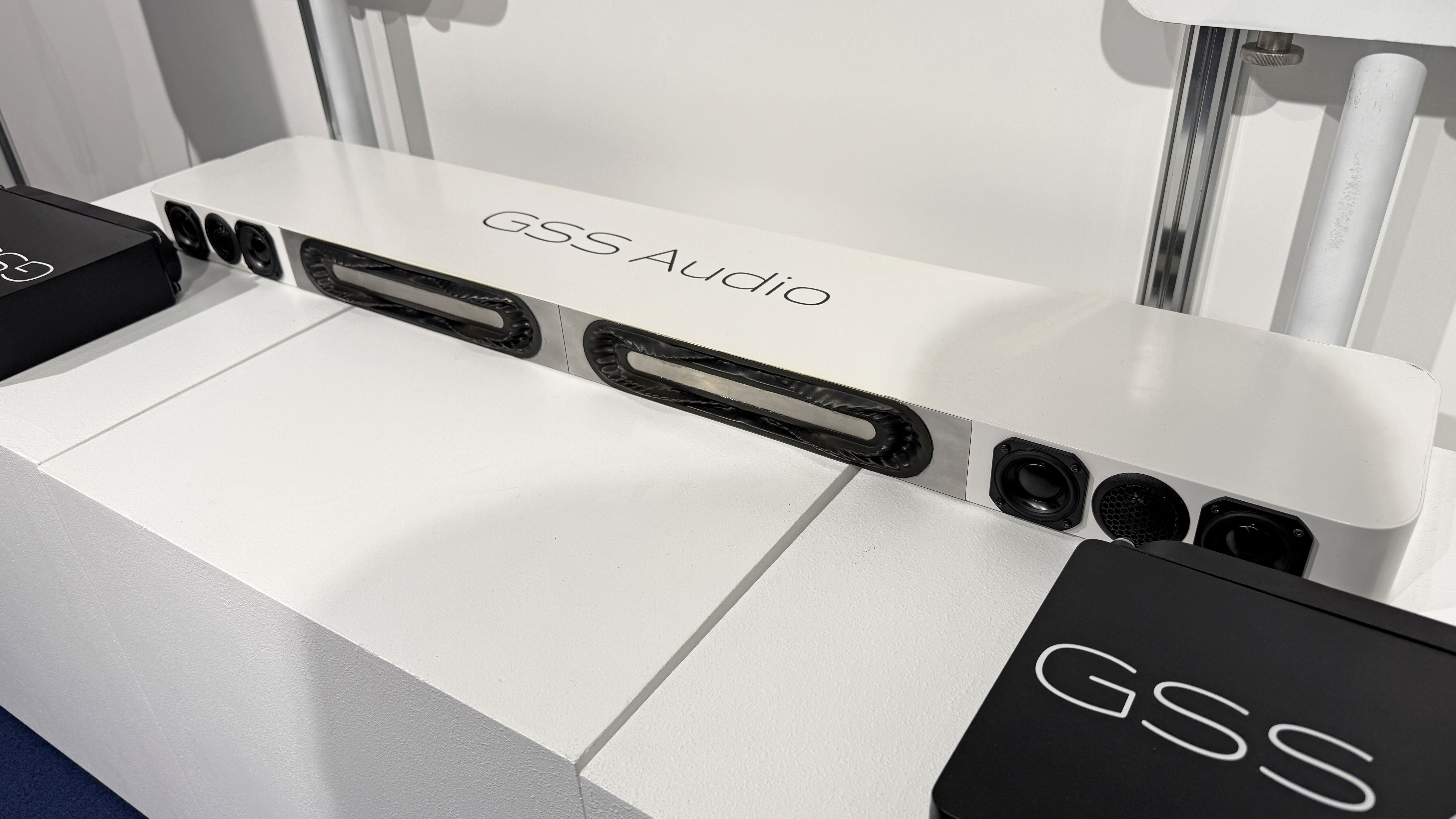
I didn't get to hear these in action, and I don't know when we can expect actual products to appear, but GSS did say it had some partners planning to use its products (but obviously it wouldn't may about who that might be).
I can't wait to see a real product with this tech built-in though — I think it could be a total gamechanger for big bass in a small space.
The GSS Model is the latest in a line of impressive compact subwoofer tech we've seen over the last few years — it's an impressive area of innovation. A little while back, we were blown away by the bass of the Brane X wireless speaker, and its compact true subwoofer that uses a smart magnet system to overcome the air compression problem most small sub designs have.
And there's the Sonos Sound Motion tech, which is used in the Sonos Arc Ultra. Sound Motion mean Sonos could replace an array of dedicated woofers with a single driver that operates in two directions at once, so it actually functions as its own force-opposed system. You can read my interview with Sonos about the development of Sound Motion here.

Follow TechRadar on Google News and add us as a preferred source to get our expert news, reviews, and opinion in your feeds.








 English (US) ·