
 Image via MGM
Published Jul 14, 2026, 5:42 AM EDT
Quentin Tarantino is more than just one of the most acclaimed directors of his generation; he's also a passionate and often vocal student of cinema. His work often proudly bears the fingerprints of the films he admired growing up, speaking the language of filmmaking rather than mere mimicry. But his passion often goes beyond his own work; he frequently shares his opinions on the films he loves in interviews, and continually singles out one group of movies — which have just arrived on Prime Video.
1964's A Fistful of Dollars was the first in Sergio Leone's Dollars Trilogy, followed by For a Few Dollars More, and The Good the Bad and the Ugly. In addition to popularizing the idea of the spaghetti Western (distinctly American films being made by Italian filmmakers and cast), the trilogy shifted the whole notion of what a Western could be. The trio of Leone, composer Ennio Morricone, and star Clint Eastwood came together to take one of cinema's most storied genres and shake up every element, giving it style and swagger that established a new standard.
'A Fistful of Dollars' is Sergio Leone's Masterpiece
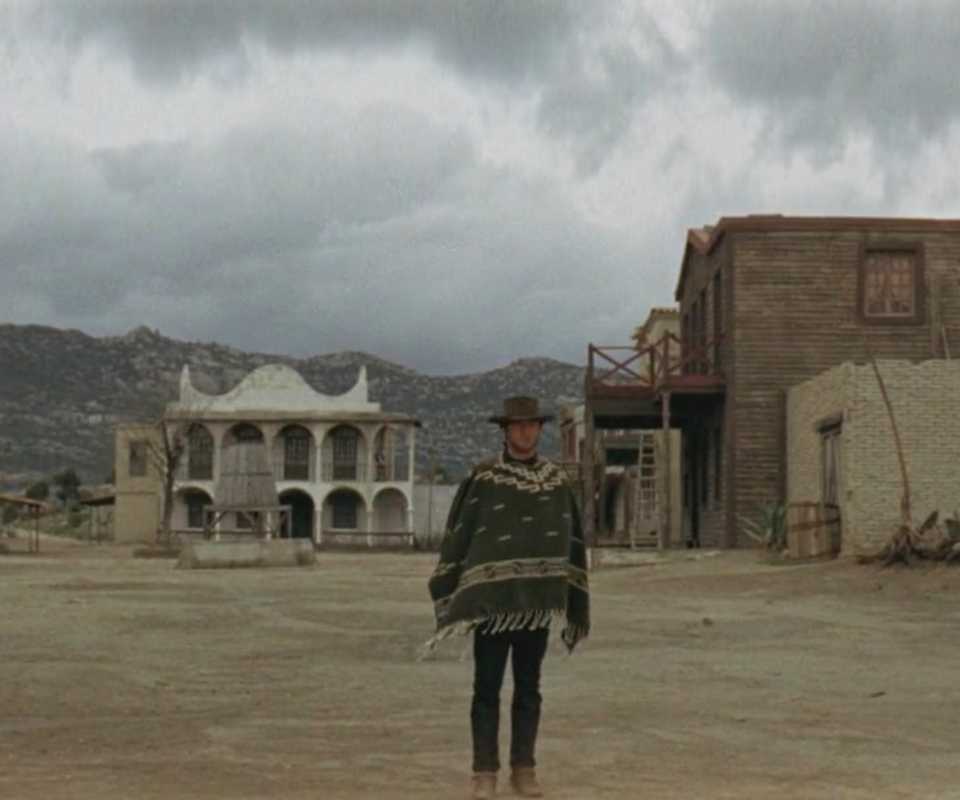
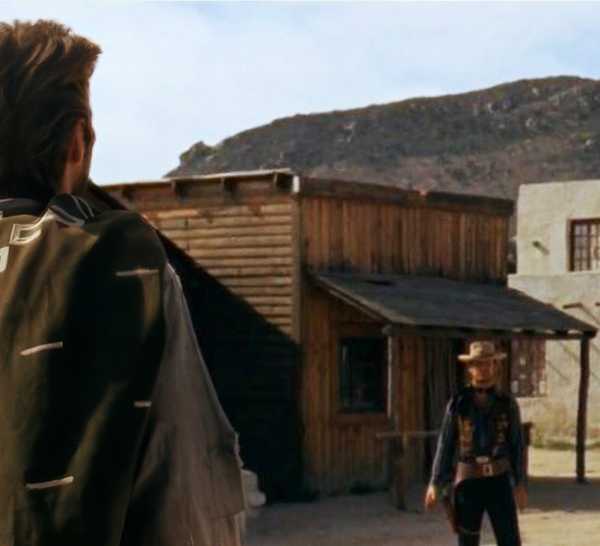
Based on the Akira Kurosawa film Yojimbo (1961), A Fistful of Dollars stars Eastwood as a mysterious, unnamed stranger who rides into the border town of San Miguel. The place is ravaged by violence and corruption, as two warring families fight for control. Seeing an opportunity for profit, the Man with No Name plays one side against the other, in a plan that will leave him either dead or rich.
Speaking on the 50th anniversary of the movie at Cannes, Tarantino described the film as "the birth of what we now call modern filmmaking." He enthused, "Every director who ever took genre pieces actually had the grandiose idea to present them larger than life. That started 50 years ago." Such a grand statement has merit, as the Italian maestro took visual storytelling and moral dynamics in a whole new direction, making movie magic.
On the screen, close-ups and slow, tense showdowns gave every moment an operatic feel that would become the vocabulary of the genre — and genre cinema itself — for years after. It also brought a new code to the West. Previously, the heroes and villains were neatly categorized in movies that mythologized the frontier, but Leone's film found something more interesting in the shadows.
Clint Eastwood's Anti-Hero Created a Western Icon
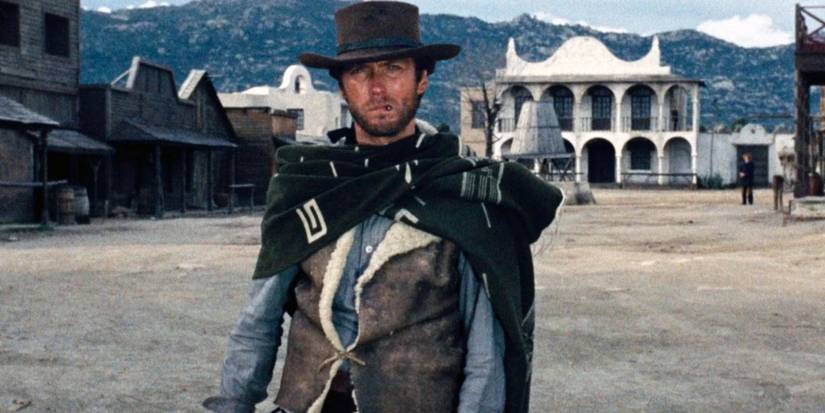 Image via United Artists
Historically, the leads of Western movies were just as grand and praise-worthy as the landscapes they explored. John Wayne became the archetype — strong, principled, forthright, willing to go the extra mile to do what's right. After six decades of these rigid standards, however, Eastwood's Man with No Name offered something different. He's a survivor, and one of the ways he manages that is through being as unreadable as possible. Rather than stating his intentions or signaling his beliefs, the character very seldom talks, shows little-to-no emotion, and becomes a foreboding presence on-screen.
He's not as villainous as the people he is manipulating, but neither is he a hero of the frontier. His good deeds are incidental, and only occur if they also happen to align with his plans. The ambiguity is endlessly fascinating, carving a template for heroes of many genres in the future. Escape From New York's Snake Plissken, Mad Max, John Wick, The Mandalorian and more could be said to contain the DNA of that performance. A hero who isn't heroic, just utterly compelling, knowing that the less he says, the more you lean forward in your seat.
Ennio Morricone's Score Made Music the Star

While Leone set the visual language, composer Ennio Morricone changed the way music was used in movies. The score was not simply incidental — it followed, or even led, the action unfolding on the big screen. The haunting sounds of rhythmic whistles, cracking whips, and faceless cries turned San Miguel into someplace mythological, adding drama at every turn and mirroring exactly how the viewer was feeling in that moment. Gunfights choreographed themselves to the soundtrack, and emotional beats were heralded audibly rather than through dialogue. There were no gimmicks, nothing frivolous, just the knowledge that the score, performance, and direction must be equal to make a low-budget Western feel like the center of the world.
Prior to the Cannes anniversary appearance, Tarantino heralded the Dollars trilogy as "the greatest achievement in the history of cinema." For a Few Dollars More and The Good, the Bad, and the Ugly would continue the legacy that A Fistful of Dollars began, but there's nothing like experiencing the origin of Leone's masterwork, seeing cues that are now part of cinematic history play out for the first time. 62 years on from its release, the movie feels revolutionary even in the face of all its imitators. It's no wonder Tarantino, and so many film fans like him, hold it in such high regard.

A Fistful of Dollars
Release Date January 18, 1964
Runtime 99minutes





 English (US) ·