
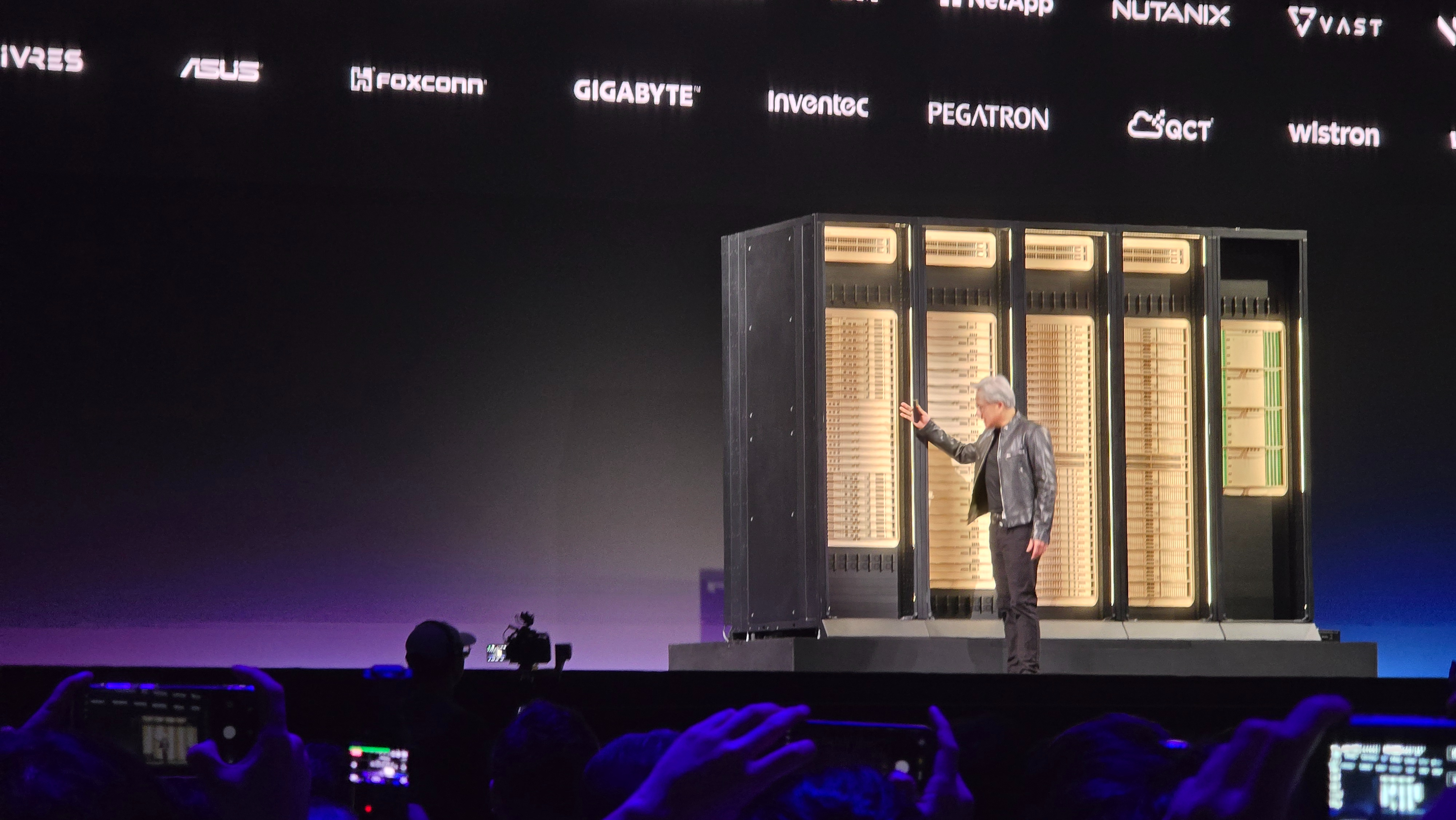
- Nvidia's market cap tanked a mammoth 6% following weaker-than-expected guidance from rival chipmaker Broadcom
- The stock erased $330 billion in Nvidia market cap, effectively losing its $5 trillion market cap crown briefly before regaining it in the same session
- The behavior is in line with how high beta, or more volatile, chip and AI-linked stocks, respond to earnings
Nvidia remains the largest stock in the market with a $5 trillion market cap, but recent movements in the market, linked to another stock market darling, Broadcom, may have shaken the belief of some of its key proponents in a market increasingly wary about AI's lofty valuations in 2026.
Broadcom's recent earnings report underscored strong performance with in-line forecasts that reaffirmed its positioning as one of the most important chipmakers in a market that continues to pivot resources towards AI.
Despite this, Broadcom's softer-than-expected forecast for future chip sales might have raised eyebrows in a market expecting back-to-back earnings beats, even as investors continue to look sideways for the next AI-centric winner, with SpaceX, OpenAI, and Anthropic shaping up to be key IPOs to watch.
A hitch on the road or a deeper fault line?
NVIDIA fell 6% in a single trading session on Friday, wiping out nearly $330 billion in market cap, even as its peers (AMD, Micron, and Qualcomm) saw drawdowns of more than 9% amid investor rotation out of chip stocks.
While this is a far cry from the 19% Broadcom lost over 2 sessions, it does reflect increased concerns that AI growth rates will eventually taper off, even for the king of the hill.
The punishment for Nvidia ironically comes from Broadcom offering guidance of $16 billion in AI chip sales for Q3, versus a Wall Street consensus of $17.2 billion, and while some might reason that weaker sales could indicate a stronger product for Team Green, which has been selling its chips hand over fist the past few years, often being backordered months, if not years for its highest-end offerings.
There are external factors also in play here: while Nvidia initially shrugged off Broadcom's price action, the situation was compounded by a hotter-than-expected May 2026 jobs report, gutting hopes of near-term Federal Reserve rate cuts — with some traders beginning to price in the possibility of a hike — and the combination of macro pressure, an impending Senate hearing on chip sales to China even as the US-Iran war continues to occupy global attention.
Mixed investor sentiment
Nvidia did recover somewhat in the following trading session, trading up 1.7% on Monday before moving down slightly on Tuesday, and continues to be down in pre-market trading at the time of writing on Wednesday as investors continue to look for a direction even as SpaceX's IPO launches soon.
Nvidia reports its annual earnings on August 26 2026, and while investors have high hopes from what many unequivocally consider the bulwark of the AI industry, much like Broadcom's earnings affecting the entire sector, Nvidia's own reporting earnings could shape investor sentiment for the entire segment.
This could affect billions, if not trillions, of dollars in current and future investments in a sector that increasingly demands ever more accelerants to sustain its growth narrative, even as Chinese AI competitors continue to eye a larger slice of the pie.

Follow TechRadar on Google News and add us as a preferred source to get our expert news, reviews, and opinion in your feeds.








 English (US) ·