
 1 week ago
96
1 week ago
96
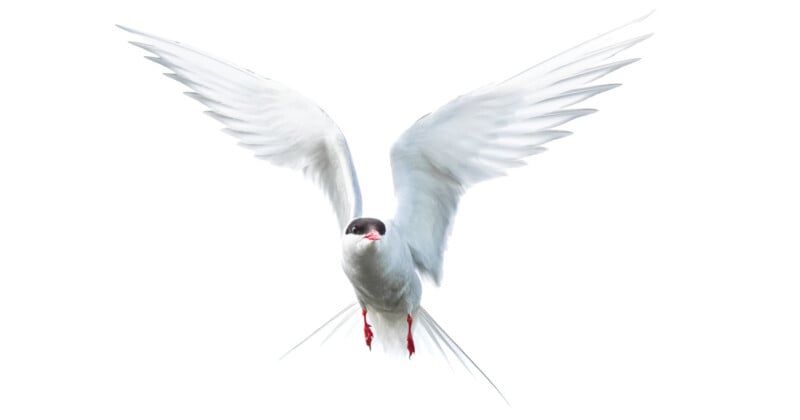
Bird photography is one of the most rewarding and yet challenging genres of photography. Here are some tips for better avian photos, along with why photographing birds is good for you.
In the last article, we looked at some of the basic techniques for bird photography. This time, I am expanding on that and diving deeper into the practicalities and ethics.
Focusing Strategies for Better Bird Photos
Focus system selection plays a crucial role in success rates. Shooting with DSLRs when using the viewfinder, and many mirrorless cameras use phase-detection autofocus (PDAF). It operates significantly faster than contrast detection (CDAF), which makes it the preferred choice for bird photography. However, some advanced mirrorless cameras use a hybrid system that combines the speed of PDAF with the greater accuracy of CDAF. If you are in the market for a camera and want to take up bird photography, then this is something you should consider.
Bird Detection
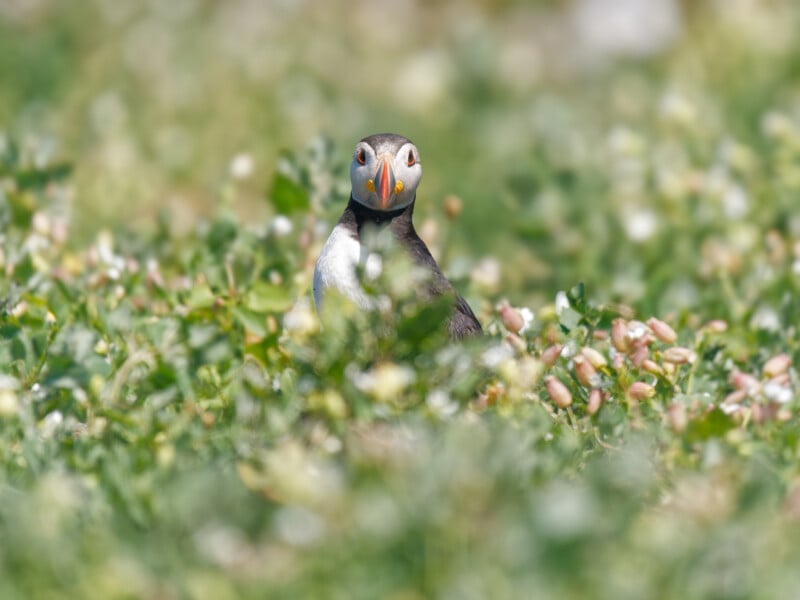
As I touched on last time, some cameras have subject detection, and some of those have a dedicated bird detection mode. That has revolutionized the capture of images of birds, allowing the camera to snap onto distant birds and those partially obscured by foliage. However, sometimes birds are almost completely hidden, and only one eye is showing. In that case, selecting continuous autofocus, with the option to override it with manual focus, is useful. Focus peaking, which outlines the in-focus area with a color, is helpful then.
Background selection significantly impacts both focus accuracy and image quality. Besides creating visually distracting images, cluttered backgrounds can confuse autofocus systems. Clean backgrounds help cameras lock onto the intended subject and produce more professional-looking results.
Exposure Controls: A Different Approach
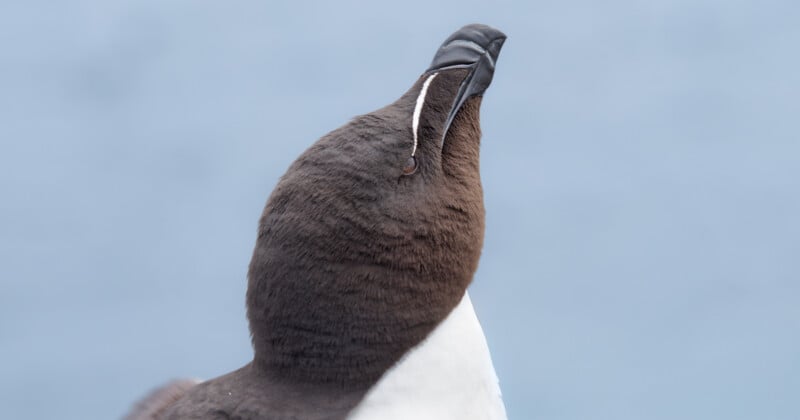
Last time, I suggested I use a different approach to many photographers who use shutter priority or manual mode. However, I usually take a different approach. Instead, I use aperture priority mode. First, I set the ISO to automatic, with a maximum value that matches my camera’s acceptable noise performance. I use ISO 25,600, but you may need a lower setting for older models. Next, I go into the main menu and set a minimum shutter speed. That may vary depending on the subject and its speed. I’ll typically choose 1/2500 for gulls or 1/4000 for smaller birds if they’re close to me.
If there is insufficient light to achieve that speed at the base ISO, then the ISO increases automatically. When the ISO reaches my defined maximum (ISO 25,600 on my camera), the shutter speed will start to drop.
The depth of field varies with the subject’s distance. Therefore, in aperture priority mode, if I want the entire bird in focus, I can quickly reduce the aperture as it gets close to me. The shutter speed and ISO take care of themselves.
I find this a much faster way to react to changing light, as the camera is doing the heavy lifting. It also allows the camera to use a faster shutter speed than the minimum I set.
Burst Mode
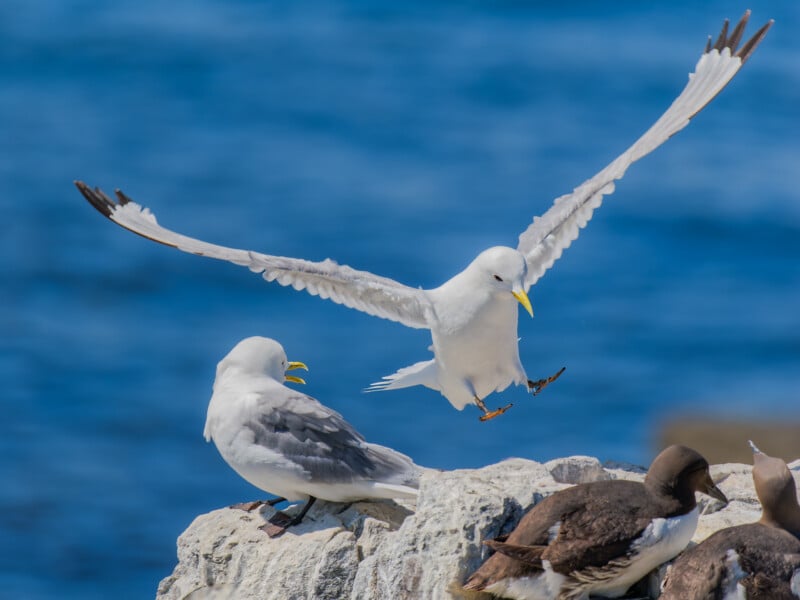
Burst mode, also called sequential shooting, captures multiple frames with a single press of the shutter release button. Working like the motor drives on film cameras, it increases the likelihood of obtaining sharp images. You are also more likely to capture birds in ideal positions.
However, many cameras experience reduced autofocus performance in burst mode or operate at lower frame rates when refocusing and metering are required between frames.
Burst mode also requires substantial memory card capacity. I hardly ever use my camera’s 120 frames per second shooting rate, dropping it to 20 or 25.
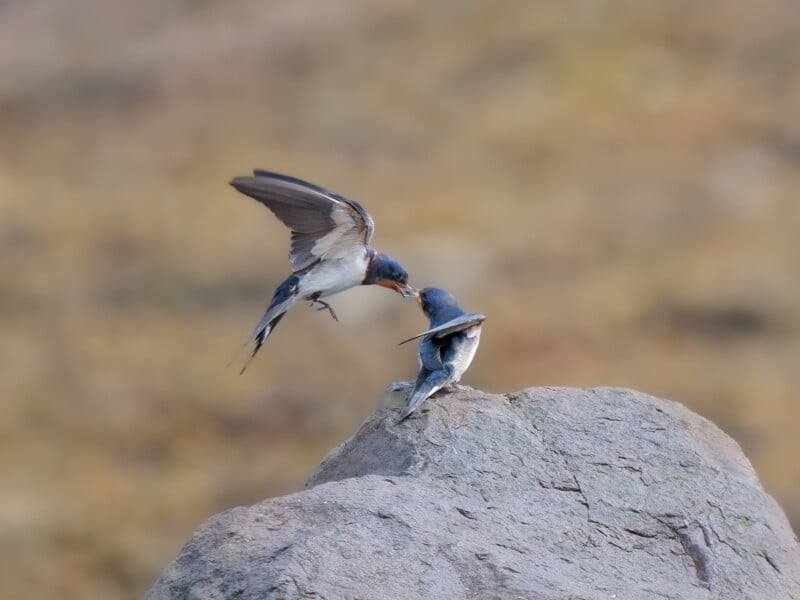
Do You Struggle Tracking Birds in Flight?
Some people find tracking birds in flight an issue. If you do, in the first instance, try turning off image stabilisation, as that can make the camera’s aim fall behind the subject as you try to follow it.
I find that keeping both eyes open while shooting — with my dominant right eye looking through the viewfinder – helps me spot birds entering the frame and improves my tracking. However, if you are left-eyed and cannot shoot with your non-dominant eye, this is less advantageous; the camera body and your right hand will block the view.
Some people I know benefit from using a dot site. This small device sits atop the hot shoe. Instead of using the viewfinder, you look through the sight. When it’s switched on, it contains a small target you can calibrate to the distance your birds will be. The calibration eliminates parallax error from looking above the lens. Because the device gives you a much wider field of view than your telephoto lens, it is easier to align your subject with it.
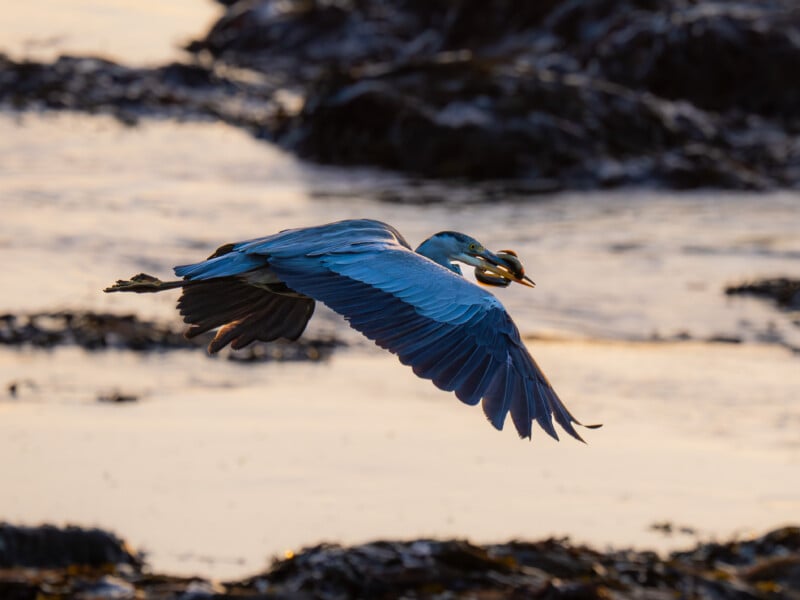
How Much Zoom Should You Use?
Your Lens selection and usage require strategic thinking. Some telephoto zoom lenses perform optimally in the middle of their focal range rather than at maximum zoom. Many entry-level long lenses are unacceptable when zoomed all the way in.
Additionally, zooming out slightly provides more opportunity to keep birds in frame and reduces the effects of camera shake. A small amount of cropping during the development and editing process isn’t usually an issue. Sometimes I like to zoom out to show the environment and add context to the image.

Learning Bird Behaviors
Understanding bird behavior provides a substantial advantage. For example, birds usually fly into the wind when taking off or landing. Many species exhibit predictable actions before flight; geese usually make a lot of noise before taking off.
Learning their patterns allows photographers to anticipate action and position themselves accordingly.
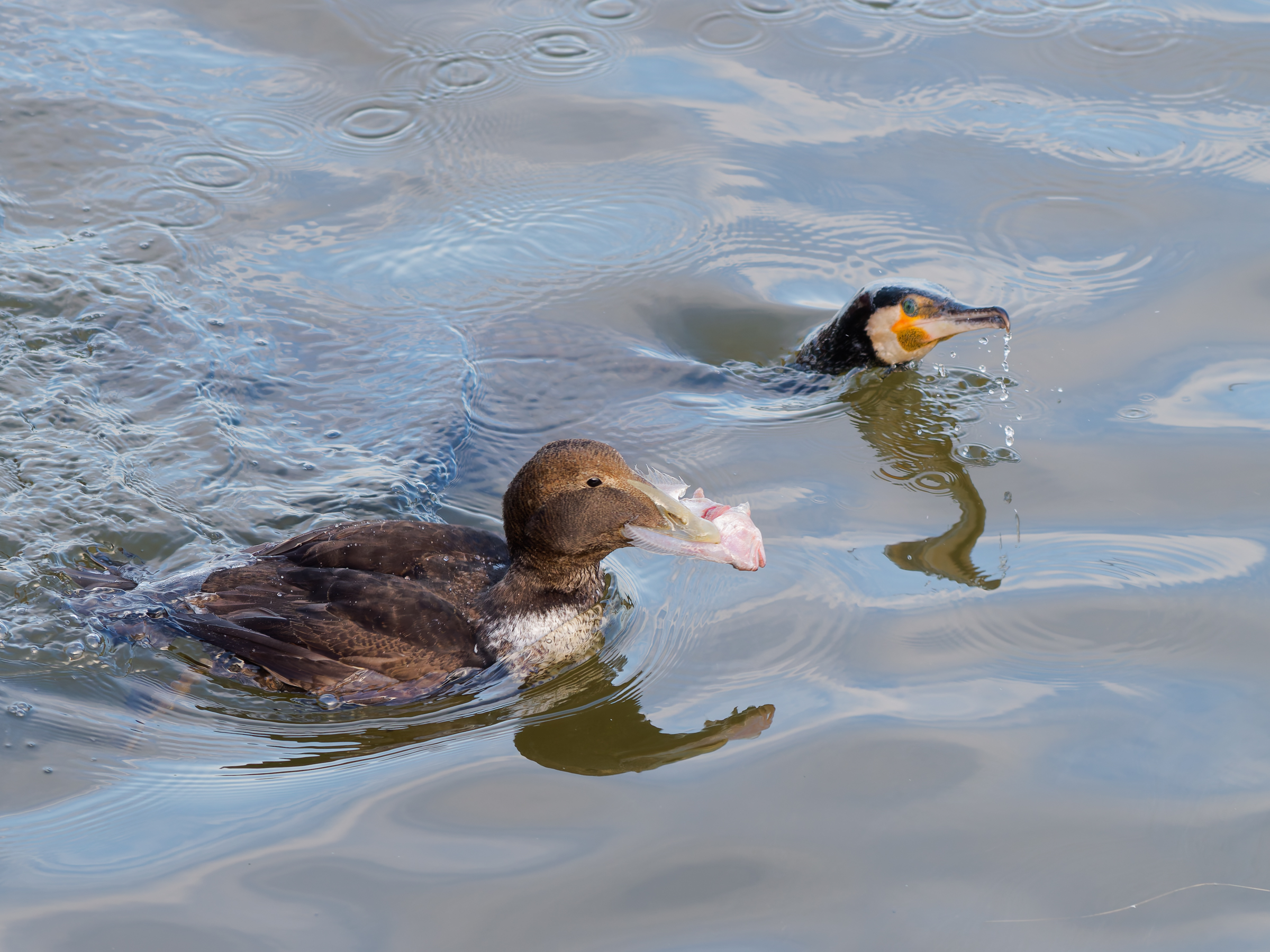 Although I could not get down to eye level, I was still pleased with this shot of a cormorant that surfaced just after the immature male eider that had beaten it to the fish discarded from a fishing boat. When it saw the much larger cormorant surface, the eider made a quick exit.
Positioning Yourself for the Shot
Lighting conditions and direction affect the image’s feel.
If possible, I position myself so that the sunlight illuminates the eye nearest the camera. That creates more engaging and lifelike portraits. Without the “catchlight” reflection, birds’ black eyes can appear dull and lifeless.
 The lack of sunlight on this day meant the puffin’s eyes lacked reflected light.
Shooting at the same level as the bird’s-eye view creates more engaging images, even if it requires lying down for ground-feeding species. Filling the frame with the subject creates impact.
Photographers should understand when subjects are too small in the frame to produce quality images, even with post-processing cropping. Despite my camera system’s very long reach, there are times when I don’t release the shutter because the bird isn’t close enough.
 Sanderling
Other Practical Shooting Considerations
Composition awareness extends to avoiding distracting elements, such as branches crossing the bird’s body.
When using a portable photography hide, allowing several days for birds to acclimate to the new structure helps to draw them closer to you.
Timing and Environmental Factors
Light quality significantly impacts results. The golden light of early morning and late afternoon often produces the most appealing wildlife photographs. However, birds typically roost in the evening, making feeders less effective during these periods. In those circumstances, consider wider environmental shots of flocks interacting with their habitat to add variety.
Learning From Our Mistakes
In my first article, I suggested learning by practising with the common birds around your home. That will make you more aware of general bird behavior before you set out to capture images of more unusual species. Nevertheless, every photographer makes mistakes, and those mistakes help us learn what not to do next time.
 Although I liked the shape the bird formed, the distractions in the water and the foreground, the reflection cut off, and half the eye being obscured by the wing made me abandon this photo.
Analysing every photograph, including unsuccessful attempts, provides valuable learning opportunities. Understanding what worked and what could be improved guides future shooting sessions and supports your technical development.
Conservation Ethics
Most importantly, conservation must always take precedence over photography. Wild birds operate on efficiency margins essential for survival.
Consequently, any disturbance wastes precious energy. Photographers should minimize their impact on subjects and environments.
Never disturb nesting birds. Furthermore, consider keeping rare migrant sightings private. That will prevent delicate ecosystems from being overwhelmed by excessive footfall.

Some use unethical practices to attract subjects to the photographer. Those can disrupt feeding patterns and territorial behavior, potentially harming breeding success.
When appropriate, attracting birds with high-quality food can provide excellent photographic opportunities. However, I recommend research to ensure such practices don’t harm the subjects. Here in the UK, garden bird feeders have had a huge positive effect on the populations of blue tits. Sadly, their success gave them an unfair competitive advantage. As their populations boomed, they took over other small cavity nests, thus displacing populations of other birds, such as nuthatches, that cannot use bird feeders.
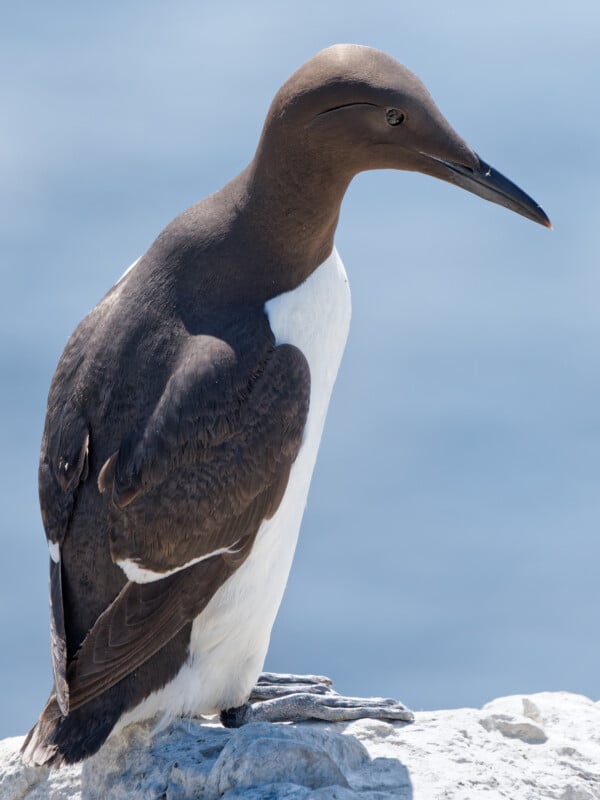
Poorly thought-out baiting of some birds has led to vehicles hitting them or increased the risk of predation.
However, feeding the birds isn’t always a bad thing. Some photographers carry out properly controlled conservation projects. For example, Jari and Kaisa Petlomaki in Finland collect roadkill and take it to their bird hides. That attracts golden eagles away from the roads and to a clearing deep in the forest. There, photographers can capture the eagles in a safe, undisturbed environment for the birds. In Finland, much of the forest has been harvested and replanted, so trees are young and lack the holes that small birds can nest in. So, revenue from the bird hides goes to creating thousands of nest boxes.
 One of the many shots of the golden eagles I saw with Jari Peltomäki of Finnature a couple of years ago
Where I am, the big attraction is shorebirds. Sandpipers, plovers, snipes, and a host of others feed on the shoreline and mudflats. Many of these are migratory and need to spend all their time feeding to replace body mass. Total body mass can increase by 70-100% before a migration. Then, after migration, which could be 4,000 to 11,000 km, it’s all lost, and they need to recover. Recovery includes regrowing digestive organs that atrophied just before departure. Therefore, constant feeding is essential.
After people walking dogs, photographers are the biggest factor in shorebird disturbance. The last thing any of us wants is to degrade bird populations.
The best time to photograph them is to wait two hours after low tide, then sit further up the beach near the high tide mark. The incoming tide will push the birds much closer to you over the next couple of hours. Using this method, I have had birds within touching distance. But don’t touch!
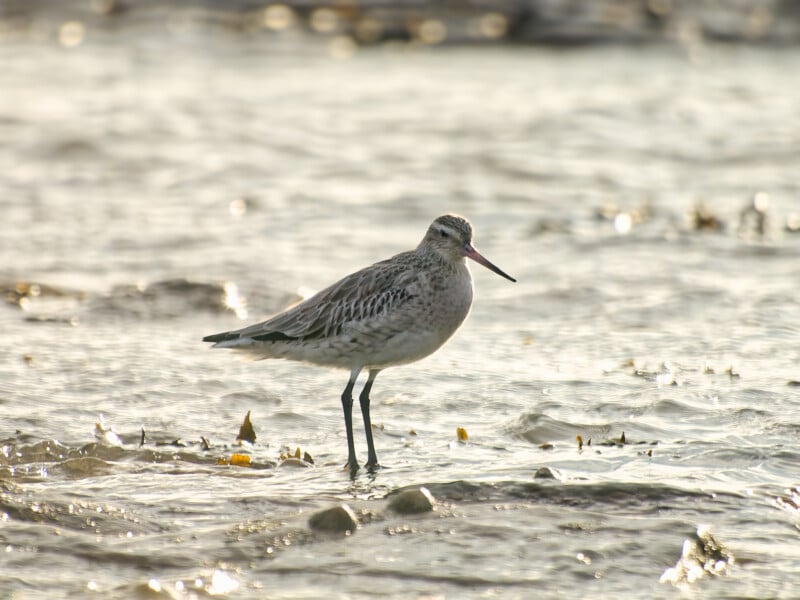 Shot years ago with a 10MP Olympus E-510 using the entry-level Zuiko 70-300mm f4-5.6 lens. Just sitting still and waiting for the tide to push this bar-tailed godwit toward me paid its dividends. The E-510 is now 19 years old, and it shows that, if you are on a tight budget, you can still get good results with old gear.
Some Good News
Inevitably, when we photograph birds, we want to find out more about them. We take an interest in their behaviors, learn their behaviors, and can identify their calls.
That is good for our health on several levels. A peer-reviewed study found that hearing and seeing birds uplifted our mood for several hours. Observing birds for 30 minutes or more also reduces anxiety, decreases feelings of isolation, and lowers stress. Other studies show that birding naturally induces mindfulness, which also supports emotional regulation and decreases stress.
 Watching and photographing birds brings us many benefits.
Furthermore, several recent studies have shown that birding experts have denser brain tissue and build up “cognitive reserve.” That is a beneficial structural brain change that helps protect against ageing and damage. Those changes persist into old age, suggesting long-term protection against cognitive decline.
Bird watching is cognitively demanding as it requires attention, pattern recognition, memory, and perceptual discrimination. In doing so, it engages the brain in a complex skill-learning process and can mitigate age-related cognitive decline.




 English (US) ·