
 Image via Aufible

Published Nov 17, 2026, 1:52 PM EST
Diego Pineda has been a devout storyteller his whole life. He has self-published a fantasy novel and a book of short stories, and is actively working on publishing his second novel.
A lifelong fan of watching movies and talking about them endlessly, he writes reviews and analyses on his Instagram page dedicated to cinema, and occasionally on his blog. His favorite filmmakers are Andrei Tarkovsky and Charlie Chaplin. He loves modern Mexican cinema and thinks it's tragically underappreciated.
Other interests of Diego's include reading, gaming, roller coasters, writing reviews on his Letterboxd account (username: DPP_reviews), and going down rabbit holes of whatever topic he's interested in at any given point.
Sign in to your Collider account
Audiobooks were technically born as far back as 1877, with Thomas Edison's invention of the phonograph. However, it wasn't until 1932 that the American Foundation for the Blind officially named them "Talking Books," introducing them as a medium for visually impaired people to enjoy literature as an alternative to Braille. Throughout the entire 20th century, and even well into the 21st, many classics have been turned into audiobooks so phenomenal that they're arguably even better than the original book.
Audiobooks and physical books are, of course, vastly different media that fulfill vastly different purposes, so comparing them can feel a bit like comparing apples to oranges. Still, sometimes, an audiobook is so good that it becomes entirely reasonable to say it provides a better experience than the original. These are audiobooks that anyone who enjoys classic literature should consider essential listening material. "Classic" is defined for the purposes of this list as any book that was originally published before the 21st century.
'Bram Stoker's Dracula' (2026)
 Image via Audible Originals
Folkloric vampires predate Bram Stoker's Dracula by hundreds of years. Inspired by such stories, as well as by Irish folklore and historical figures like Vlad the Impaler, Stoker wrote the 1897 classic that is nowadays widely remembered as the most foundational pillar of modern vampiric fiction. It's undoubtedly one of the best horror books of all time, which made the announcement of an original Audible audiobook-slash-audio-drama all the more worthy of skepticism.
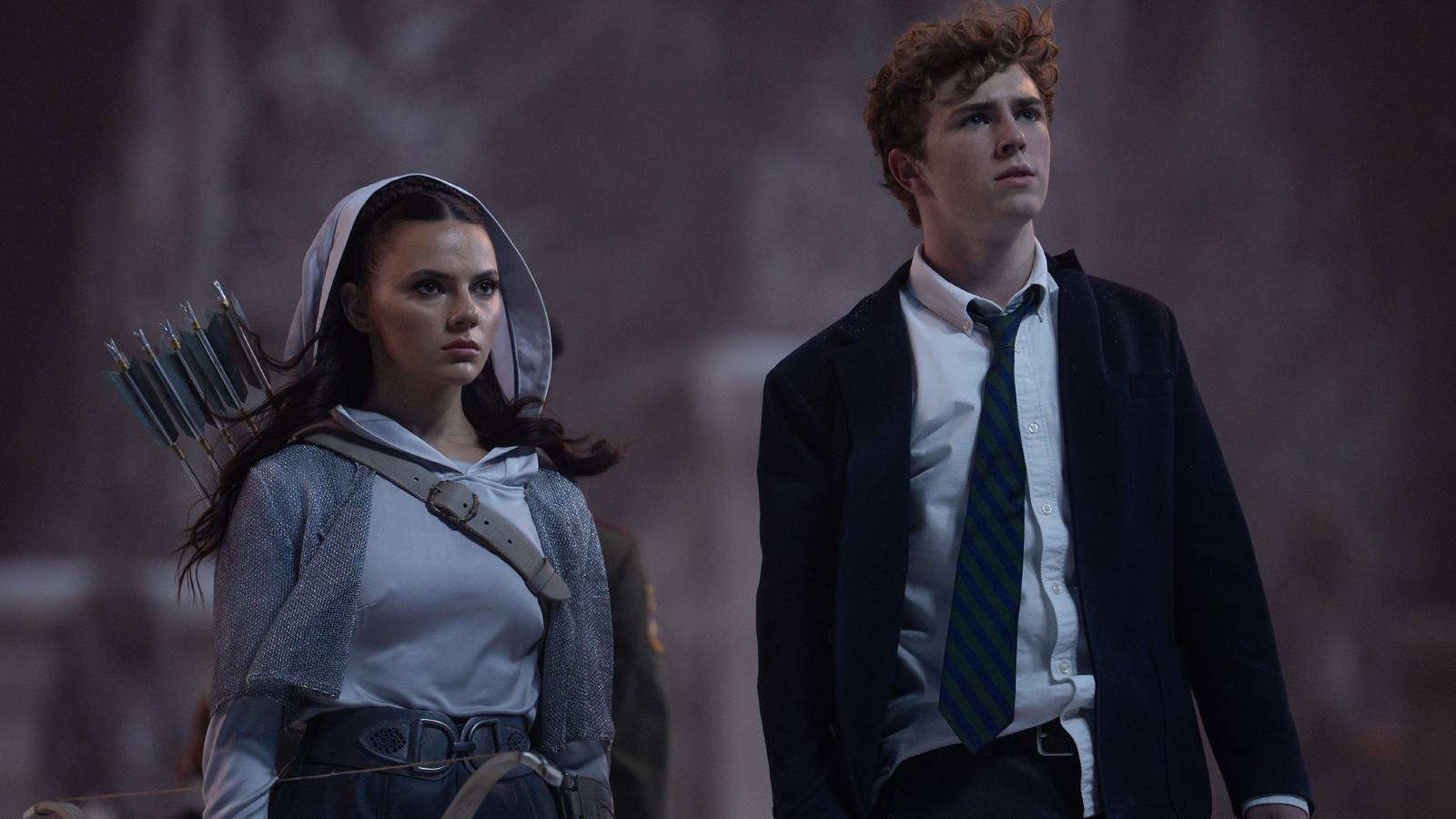
In the end, however, Bram Stoker's Dracula ended up being one of the greatest horror audiobooks that readers have been treated to in years. With a stacked cast that includes the likes of Ella Purnell, Jonathan Bailey, and Aimee Lou Wood, the audiobook takes the classic epistolary novel and makes it feel even more immersive, cinematic, and well-paced. It's worth noting that it's an abridged audio drama rather than a full reading of the original novel, which is not ideal, but those interested in such a concept should love it.
'Anna Karenina' (2016)
 Image via Audible Studios
Originally serialized between 1875 and 1877, Russian author Leo Tolstoy's Anna Karenina is widely regarded as one of the most foundational pieces of world literature in history, a must-read masterpiece whose daunting 1,000-page length shouldn't deter anyone from considering it essential reading. Since it was one of her favorite books of all time, Maggie Gyllenhaal agreed to narrate an Audible original audiobook that really does justice to one of the best epic books of all time.
Tolstoy's novel was such a monumental artistic achievement that the author was notoriously drained and exhausted by the whole experience by the time he was done, and reading such a vast book can itself also be a massive undertaking. With the raw immediacy and many emotional variations of Gyllenhaal's narration, listening to Anna Karenina can be a far more engaging and far less tedious experience than many may initially think. At over 30 hours long, it's definitely a time commitment, but oh so worth every minute.
'Harry Potter and the Philosopher's Stone' (1999)
 Image via Pottermore Publishing
Upon publication back in 1997, J. K. Rowling's Harry Potter and the Philosopher's Stone (published in the US as Harry Potter and the Sorcerer's Stone) was an immediate commercial and critical hit, kicking off one of the biggest multimedia franchises in history. The book's first audiobook version came out in 1999, and the performers varied by region. Whereas Jim Dale narrated the book in the US and Canada, it was Stephen Fry's voice that was heard in the British and international releases. If there is any one Harry Potter book that's better heard than read, it's Fry's performance of Philosopher's Stone.
As a whole, this is one of the most essential fantasy books to read before kicking the bucket, but there's nothing quite like hearing it through Fry's rich, velvety baritone voice. On the page, Philosopher's Stone is beautifully imaginative and cozy, but at times feels like an overly simple debut novel in terms of Rowling's prose. Fry elevates every word and makes the entire story feel like a wonderful fairy tale being told by the fire on a cold weekend night outdoors.
'Pet Sematary' (2018)
 Image via Simon & Schuster Audio
One of Stephen King's first novels was 1983's Pet Sematary, published before he had fully established and cemented himself as the true King of Horror. Fans had been begging for an audiobook for years, and once the project finally materialized, it was Michael C. Hall of Dexter fame who publisher Simon & Schuster picked as the right voice to narrate the story. The result is one of the best Stephen King audiobooks to date, and considering just how many great ones there are, that's saying a lot.
Pet Sematary was already absolutely legendary well before 2018, widely regarded by many—including King himself—as the author's most genuinely terrifying work. However, once the horror aspects really pick up steam after a relatively slow-burning first few pages, Hall makes it hit even harder. Getting an actor well-known for projects as death-related as Six Feet Under and Dexter to narrate a horror novel all about death and grief was not only brilliant meta-casting, but also hugely beneficial for the story as a whole.
'East of Eden' (2011)
 Image via Penguin Audio
Multiple books are almost always brought up when the endless debate of what "The Great American Novel" is gets brought up, but John Steinbeck's East of Eden is the most noteworthy. This family saga was likely key to Steinbeck being awarded the Nobel Prize in Literature in 1962, and it more than lives up to its reputation as one of the most perfect American books ever written. The first audiobook version of the classic ever recorded was narrated by respected character actor Richard Poe.
East of Eden was already widely recognized as one of the most perfectly written masterpieces of all time, and it's definitely a must-read, but there's something about the way Poe complements the narrative that makes his version arguably even more unforgettable. Steinbeck wrote East of Eden in such a sweeping, almost Biblical voice that it almost feels like the narration of a legend, and Poe's resonant yet deeply human voice allows that narration style to feel all the more intimate and personal.
'To Kill a Mockingbird' (2014)
 Image via Caedmon
The book that earned Harper Lee a Pulitzer Prize was 1960's To Kill a Mockingbird, one of the most essential and widely discussed American classics of the 20th century. Though certain elements of its narrative are undeniably dated by modern standards, its heart will forever be in the right place, with its critiques of racial prejudice and systemic injustice being as timely and hard-hitting today as they were back in the '60s. In 2014, legendary actress Sissy Spacek was tasked with narrating the audiobook version of the story.
The reasons why this is one of those great books that are even better as audiobooks are aplenty, and even though the Pulitzer-winning original remains absolutely foundational, Spacek brings a level of nuance and authenticity to the book that feels like a much-welcome sense of modernity. The actress' beautifully melodic Texan drawl makes the small-town Alabama setting feel all the more evocative and atmospheric, and the way she flawlessly captures Scout's personality as both a child and an adult is incredible.
'It' (2016)
 Image via Simon & Schuster Audio
Stephen King's 22nd book was 1986's It, still remembered by many as the author's best and most iconic work to date. At over 1,100 pages in length, it's an absolute brick of a horror novel, but its epic scope still works marvelously all these many years later. To narrate the 2016 audiobook, Simon & Schuster decided to go for an actor who already had a pre-existing tie to the Stephen King universe: Steven Weber, who played Jack Torrance in the 1997 three-part miniseries version of The Shining.
It was already one of those horror books where every chapter is perfect—something quite admirable for such a thick novel—but Weber took that literary doorstop and somehow turned it into an even bigger, more immersive 45-hour juggernaut of an audiobook. The actor gives each of the Losers a distinct voice both in their child and adult versions, and he goes all in on Pennywise without ever teetering too far into distracting camp. Perfectly paced and intense to the core, It is a must-listen-to audiobook through and through.
'I Know Why the Caged Bird Sings' (2011)
 Image via Penguin Random House Audio Publishing Group
American poet, essayist, and civil rights activist Maya Angelou was a towering figure in modern American literature, completely reshaping how Black American identity was expressed in the written word. The first of her seven published memoirs, 1969's I Know Why the Caged Bird Sings, broke new ground and became one of the first major autobiographies by an African American woman to achieve global bestseller status. When an audiobook version was released in 2011, it was Angelou herself who narrated it.
Taking one of the best memoirs of all time and turning it into an audiobook worthy of its legacy was always going to be a tough task, so who better to achieve it than the author herself? By having Angelou narrate her own story with her unmistakably theatrical contralto voice, I Know Why the Caged Bird Sings feels even more honest and intimate than it already does on the page, balancing poignancy and humor to absolute perfection.
'The Hobbit' (2020)
 Image via Recorded Books
Well before he wrote what many still consider the greatest and most influential fantasy epic of the 20th century, J. R. R. Tolkien published the fantasy children's classic The Hobbit, almost inarguably the most perfect fantasy novel of the 1930s. There are multiple audiobook versions of The Hobbit available, but one reigns supreme as perhaps the audiobook that most elevates the experience of the original text: the 2020 version narrated by Andy Serkis.
It's easily one of the best audiobooks of all time, with Serkis not only delivering a much-expected powerhouse performance as Gollum, but also giving each of the other characters a distinct voice that makes them even more memorable than they are on paper. The Hobbit is also filled with songs and poems, and Serkis brings them to life in a way that reading the physical book simply can't match. In Serkis' voice, The Hobbit really does feel like the wonderful myth that it was always meant to be.



 English (US) ·