
If there is one theme that tends to terrify audiences, it is the idea of being trapped. Especially when there are unknown forces on the other side of the wall. These classic tropes have dominated horror and thrillers for decades, and they've become a central presence in Netflix's latest tormenting treat, The Last House. Directed by Louis Leterrier and written by Matthew Robinson, the science fiction thriller follows a family of four who find themselves inexplicably sealed inside their home by a mysterious, water-controlling environmental force as a global crisis unfolds outside. The ordeal, which spreads over a shockingly long time, emerges as a story of family and survival, doing whatever it takes to make it to the next day.
Starring Greta Lee and Wagner Moura, there hasn't been a more claustrophobic film in quite some time. If you loved The Last House and are eagerly seeking thrillers of the same nature, the films on this list are destined to do the trick. From alien invasions taking over the planet to humans terrorizing helpless homeowners, these movies will certainly get your heart racing and the adrenaline pumping. And like The Last House, there may be a twisted moral to the invasion. So, check the doors and windows before you turn on your TV in case you're so scared you need an escape plan!
'10 Cloverfield Lane' (2016)
 Image via Paramount Pictures
If there is one perfect creature double feature to pair with The Last House, it's most certainly 10 Cloverfield Lane. The second film in the franchise, the sci-fi horror thriller follows Michelle (Mary Elizabeth Winstead), a young woman who wakes up in an underground bunker after a severe car crash. The bunker's owner, Howard (John Goodman), claims he saved her from a devastating chemical or nuclear attack that has left the Earth's surface uninhabitable. Alongside another local named Emmett (John Gallagher Jr.), Michelle notices strange and controlling behavior from Howard, realizing he may have caused her crash and is holding them captive. She must figure out if Howard is telling the truth or is a dangerous kidnapper. 10 Cloverfield Lane masters psychological suspense as the audience is left completely unsure of the truth until the bitter end. A story about paranoia versus reality, 10 Cloverfield Lane traps its viewers alongside its protagonist.
The premise of being trapped in a bunker with an unsettling extraterrestrial treat looming outside is horrifying in and of itself, but then to question whether escaping one monster to face another is worth the fight allows the film to operate on an extraordinary level. 10 Cloverfield Lane functions as a claustrophobic psychological thriller anchored in extreme uncertainty. Like The Last House, the film is set in a singular locale that evokes what it would be like to be completely trapped with no escape. The film grows more intense as the script forces you to question whether the captor is telling the truth about an apocalypse or is just a dangerous liar. Thanks to Goodman's career-best performance, the ease in which he flips from warm and folksy to explosive and chilling is utterly terrifying. He gives you no reason to not believe the survivalist, but his unpredictability and menacing behavior become increasingly sinister until Michelle gets her wits about her. A film about fighting to escape the confines, 10 Cloverfield Lane is a smart, high-intensity masterpiece.
'A Quiet Place' (2018)
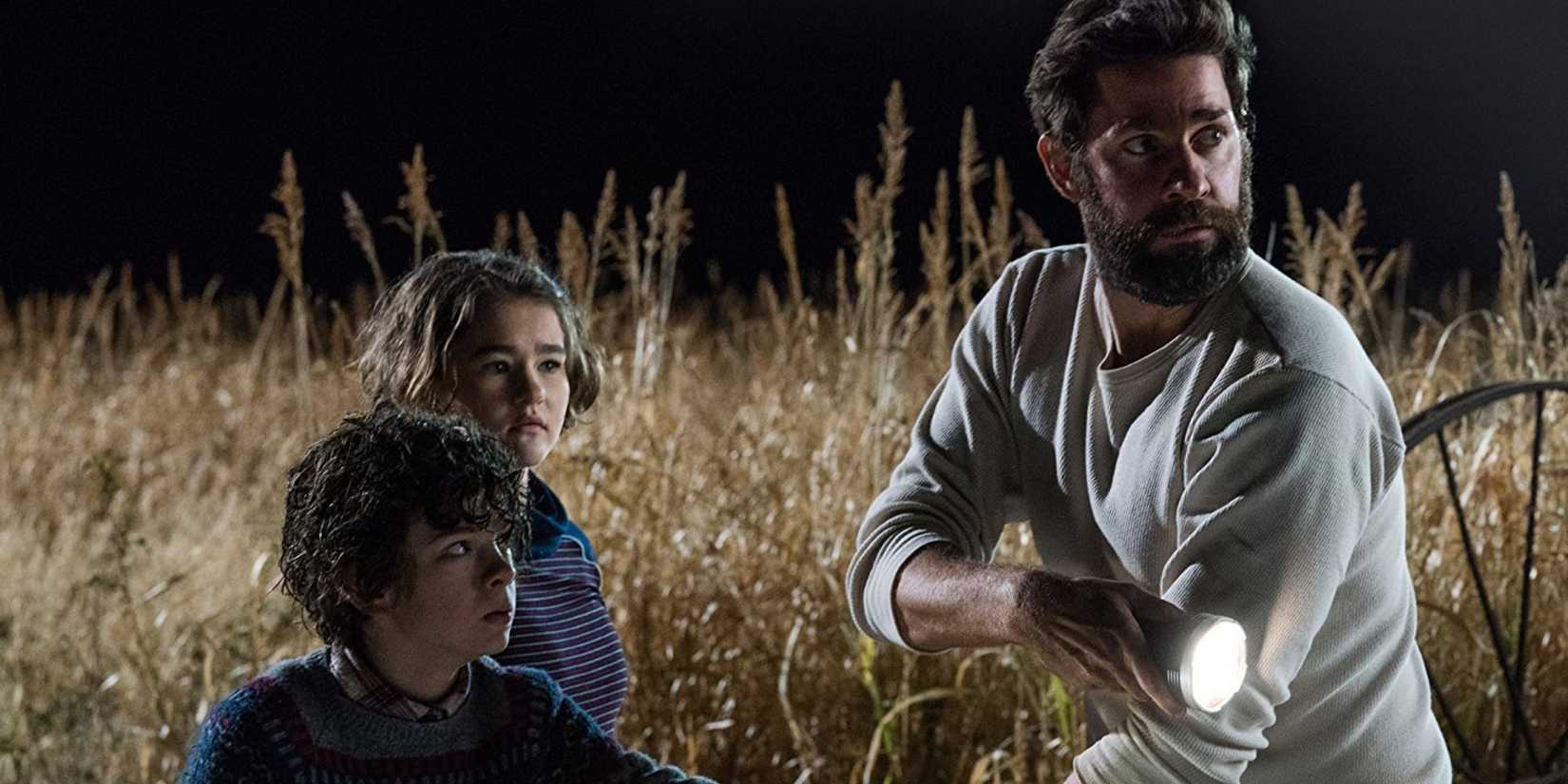 Image via Paramount Pictures
Like The Last House, one of modern horror's greatest family survival thrillers is A Quiet Place. Directed by John Krasinski, A Quiet Place follows the Abbott family trying to survive in a world taken over by blind alien monsters that hunt using super-sensitive hearing. If you make even a tiny sound like a whisper or a footstep, the creatures attack and kill you right away. After a noisy toy kills the youngest son, Beau (Cade Woodward), the family is left with heavy grief and fear. Lee and Evelyn (Krasinski and Emily Blunt) try to keep their children safe while looking for a way to fight back, using American Sign Language and walking barefoot on paths of sand to achieve total silence. The stakes are instantly raised when Evelyn becomes pregnant, but an unintentional noise becomes their greatest weapon. At its core, A Quiet Place explores the extreme lengths parents will go to protect and raise their children in a hostile world.
A Quiet Place uses a simple gimmick of absolute silence to embark on a journey of intense suspense. The thriller turns everyday sounds into life-or-death dangers while telling a moving story about a family's love and sacrifice. The sound and audio design is exceptional in the film. Every tiny rustle, drop, or breath carries lethal consequences. Thus, the design shifts between dead quiet and sudden, deafening noises, putting the audience on high alert. Yet, when it cuts out entirely or becomes a deep, muffled hum to mimic the experience of the deaf daughter, Regan (Millicent Simmonds), it provides another harrowing feeling. Like The Last House, the story turns the home, a traditional place of safety, into a high-stakes fortress where stepping outside or letting the outside in spells disaster. Transitioning from the atmospheric, barricaded dread of The Last House into the sound-sensitive thrill of A Quiet Place maintains the survivalist momentum alive through different claustrophobic lenses. A Quiet Place may be a stressful watch, but it was such a hit, it spawned a franchise.
'Bird Box' (2018)
 Image via Netflix
Sometimes we take our senses for granted. In A Quiet Place, we lost our voice. In Bird Box, it was our sight. Directed by Susanne Bier and based on the novel by Josh Malerman, the story follows Malorie Hayes (Sandra Bullock) as she tries to survive a post-apocalyptic world where unseen supernatural entities drive people to instant suicide upon visual contact. Told across two timelines, the story tracks Malorie's initial shelter with strangers during the outbreak and the perilous river journey five years later. A unique high-concept premise, Bird Box forces its characters to navigate a terrifying world blindfolded, creating a masterful sensory-deprivation thriller.
Though we can see what we can't, the character's sight restriction builds incredible claustrophobia and tension during routine survival tasks and outdoor escapes. Through a grounded performance by Bullock, she pulls at your heartstrings as a fierce mother fighting to protect her children against impossible odds. By never showing the actual creatures, you are, in a sense, in a similar position to the characters as you don't know what you're supposed to be avoiding. Bird Box relies on imagination and paranoia. It's psychological terror at its finest. Like The Last House, Bird Box captures what it's like to be trapped by a mysterious supernatural threat. Though Malorie and her family are in the wide-open wilderness, the inability to see provides a similar experience to being trapped in a small space you can see. Both films represent Netflix's signature high-concept survival sub-genre, allowing them to operate as a perfect "Are you still watching" double feature.
'It Comes at Night' (2017)
 Image via A24
One of the most underrated psychological horror thrillers of the last 10 years is It Comes at Night. Directed by Trey Edward Shults, the film follows a small family—Paul (Joel Edgerton), Sarah (Carmen Ejogo), and their teenage son Travis (Kelvin Harrison Jr.)— trying to survive a devastating, highly contagious global pandemic. Living in an isolated, boarded-up home in the woods, their fragile routine is tested when a desperate second family—Will (Christopher Abbott), Kim (Riley Keough), and their son Andrew (Griffin Robert Faulkner)— arrives seeking refuge. An uneasy alliance forms between the two households, but mounting suspicion, fear of contamination, and paranoia slowly destroy the sense of remote safety. It Comes at Night captures how absolute fear can erode human compassion, morality, and ethics, revealing that the most terrifying monster is often other people.
It Comes at Night, like The Last House, examines the psychological toll of extreme self-quarantine and the brutal choices protective parents face when forced to choose between empathy and survival. The film effectively trades cheap jump scares for a suffocating atmosphere of paranoia, grief, and deep distrust. Horror is grounded in human behavior and tribalism rather than supernatural entities. The deliberate pacing keeps the audience at constant uneasiness. A terrifyingly raw survival thriller, It Comes at Night traps its characters in a localized, rural environment where the home shifts from a safe haven into a psychological pressure cooker. The Last House externalizes the nightmare via literal home invaders who trap their victims, while It Comes at Night internalizes the dread, showcasing how fear of an outsider can rot a family from within. As resources dwindle, both films shift from fighting an external menace to examining how suspicion and fear can destroy everything.
Collider Exclusive · Sci-Fi Survival Quiz Which Sci-Fi World Would You Survive? The Matrix · Mad Max · Blade Runner · Dune · Star Wars
Five universes. Five completely different ways the future went wrong — or sideways, or up in flames. Only one of them is the world your instincts were built for. Eight questions will figure out which dystopia, galaxy, or desert wasteland you'd actually make it out of alive.
💊The Matrix
🔥Mad Max
🌧️Blade Runner
🏜️Dune
🚀Star Wars
TEST YOUR SURVIVAL →
01
You sense something is deeply wrong with the world around you. What do you do? The first instinct is often the truest one.
APull on every thread until I understand the system — then figure out how to break it. BStop asking questions and start stockpiling — food, fuel, weapons. Questions don't keep you alive. CKeep my head down, observe carefully, and trust no one until I know who's pulling the strings. DStudy the patterns. Every system has a rhythm — learn it, and you learn how to survive it. EFind the people fighting back and join them. You can't fix a broken galaxy alone.
NEXT QUESTION →
02
In a world of scarcity, what resource do you guard most fiercely? What we protect reveals what we believe survival actually requires.
AKnowledge. If you understand the system, you don't need resources — you can generate them. BFuel. Everything else — movement, power, escape — runs on it. CTrust. In a world of fakes and informants, a truly reliable ally is rarer than any commodity. DWater. And after water, information — the two things empires are truly built on. EShips and credits. The galaxy is big — you survive it by being able to move through it freely.
NEXT QUESTION →
03
What kind of threat keeps you up at night? Fear is useful data — if you're honest about what you're actually afraid of.
AThat reality itself is a lie — that everything I experience has been constructed to keep me compliant. BA raid. No warning, no mercy — just the roar of engines and then nothing left. CBeing identified. Once someone with power decides you're a problem, you're already out of time. DBeing outmanoeuvred — losing a political game I didn't even know I was playing. EThe Empire tightening its grip until there's nowhere left to run.
NEXT QUESTION →
04
How do you deal with authority you don't trust? Every dystopia has a power structure. Your approach to it determines everything.
ASubvert it from the inside — learn its rules well enough to weaponise them against it. BIgnore it and stay out of its reach. The further from any power structure, the better. CAppear to comply while doing exactly what I need to do. Visibility is the enemy. DManoeuvre within it carefully. You can't beat a system you refuse to understand. EResist openly when I have to. Some things are worth the risk of being seen.
NEXT QUESTION →
05
Which environment could you actually endure long-term? Survival isn't just tactical — it's physical, psychological, and very much about where you are.
AUnderground bunkers and server rooms — cramped, artificial, but with access to everything that matters. BOpen wasteland — brutal sun, no shelter, constant movement. At least the threat is honest. CA dense, rain-soaked city where you can disappear into the crowd and nobody asks questions. DMerciless desert — extreme heat, no water, and something enormous living beneath the sand. EThe fringe — backwater planets and busy spaceports where the Empire's attention rarely reaches.
NEXT QUESTION →
06
Who do you want in your corner when things fall apart? The company you keep is the clearest signal of who you actually are.
AA tight crew of believers who've seen behind the curtain and have nothing left to lose. BOne or two people I'd trust with my life. Any more than that and someone talks. CNobody, ideally. Alliances are liabilities. I work alone unless I have no choice. DA community bound by shared hardship and mutual survival — people who need each other to last. EA ragtag team with wildly different skills and total commitment when it counts.
NEXT QUESTION →
07
Where do you draw the line — if you draw one at all? Every survivor eventually faces a moment that tests what they're actually made of.
AI won't harm the innocent — even the ones who'd report me without hesitation. BI do what I have to to protect the people I've chosen. Everything else is negotiable. CThe line shifts depending on who's asking and what's at stake. DI draw a long-term line — nothing that compromises my people's future, even if it'd help now. ESome lines, once crossed, can't be uncrossed. I know which ones they are.
NEXT QUESTION →
08
What would actually make survival worth it? Staying alive is one thing. Having a reason to is another.
AWaking others up — dismantling the illusion so no one else has to live inside it. BFinding somewhere — or someone — worth protecting. A reason to keep moving. CAnswers. Understanding what I am, what any of this means, before time runs out. DLegacy — shaping the future in a way that outlasts me by generations. EFreedom — for myself, for others, for every world still living under someone else's boot.
REVEAL MY WORLD →
Your Fate Has Been Calculated You'd Survive In…
Your answers point to the world your instincts were built for. This is the universe your temperament, your survival instincts, and your particular brand of stubbornness were made for.
The Matrix
You took the red pill a long time ago — probably before anyone offered it to you. You're a systems thinker who can't help but notice the seams in things.
- You're drawn to understanding how the system works before figuring out how to break it.
- You'd find the Resistance, or it would find you — your instinct for spotting constructed realities is the machines' worst nightmare.
- You function best when you have access to information and the freedom to act on it.
- The Matrix built an airtight prison. You'd be the one probing the walls for the door.
Mad Max
The wasteland doesn't reward the clever or the well-connected — it rewards those who are hard to kill and harder to break. That's you.
- You don't need comfort, community, or a cause larger than the next horizon.
- You need a vehicle, a clear threat, and enough fuel to outrun it — and you're good at all three.
- You are unsentimental enough to survive that world, and decent enough — just barely — to be something more than another raider.
- In the wasteland, that distinction is everything.
Blade Runner
You'd survive here because you know how to exist in moral grey areas without losing yourself completely.
- You read people accurately, keep your circle small, and ask the questions others prefer not to answer.
- In a city where humanity is a legal designation rather than a feeling, you hold onto something that keeps you functional.
- You're not a hero. But you're not lost, either.
- In Blade Runner's world, that distinction is everything.
Dune
Arrakis is the most hostile environment in the known universe — and you are precisely the kind of person it rewards.
- Patience, discipline, and political awareness are your core strengths — and on Arrakis, they're survival tools.
- You understand that the long game matters more than any single victory.
- Others come to Dune and are consumed by it. You'd learn its logic and earn its respect.
- In time, you wouldn't just survive Arrakis — you'd begin to reshape it.
Star Wars
The galaxy far, far away is vast, loud, and in a constant state of violent political upheaval — and you wouldn't have it any other way.
- You find meaning in being part of something larger than yourself — a cause, a crew, a rebellion.
- You'd gravitate toward the Rebellion, or the fringes, or whatever pocket of the galaxy still believes the Empire's grip can be broken.
- You fight — not because you have to, but because standing aside isn't something you're capable of.
- In Star Wars, that willingness is what makes all the difference.
↻ RETAKE THE QUIZ
'Knock at the Cabin' (2023)
 Image via Universal Pictures
One of the greatest masters of psychological horror is M. Night Shyamalan. Though he's had his ups and downs, Knock at the Cabin is a terrifying gem. Based on the novel The Cabin at the End of the World by Paul G. Tremblay, the film tells the story of gay couple Eric and Andrew (Jonathan Groff and Ben Aldridge) and their adopted daughter Wen (Kristen Cui) as they vacation in a remote cabin. Suddenly, they are taken hostage by four armed strangers— Leonard (Dave Bautista), Sabrina (Nikki Amuka-Bird), Adriane (Abby Quinn), and Redmond (Rupert Grint)— as catastrophic plagues besiege the earth. To save humanity before it is destroyed, the family must sacrifice one of their own to avert the apocalypse. If the family refuses, the intruders must execute one of themselves as a seal of judgment. Knock at the Cabin unites a high-concept apocalyptic premise with tight claustrophobic tension and stellar psychological questions about faith, love, and sacrifice.
Right from the opening, Shyamalan builds immense suspense through tight camera shots, eerie conversations, and a feeling of trapped helplessness. The core moral dilemma drives the action, forcing the audience to ponder the impossible. Should a family sacrifice one of their own to prevent the total end of the world? Throughout the ordeal, viewers are kept guessing whether the invading strangers are telling the truth or suffering from a shared delusion. Both films share a similar core about a tight-knit family unit trapped in a single domestic space while facing an inexplicable global apocalypse outside. The weight of the world is felt by the individuals as they're cut off from society. They're brilliantly subversive stories of survival or sacrifice as they must decide if the terrifying phenomenon is real or a hoax. Though one is a real-time hostage scenario and the other is a multi-year survival narrative, they both keep the dread at an all-time high.
'Leave the World Behind' (2023)
 Image via Netflix
Bringing Rumaan Alam's extraordinary novel to life, Leave the World Behind brought us a future apocalypse where a technological breakdown felt imminent. The psychological thriller directed by Sam Esmail tells the story of Amanda (Julia Roberts) and Clay Sanford (Ethan Hawke) and their two kids, Rose (Farrah Mackenzie) and Archie (Charlie Evans), who rent a luxury home on Long Island for a quiet weekend away. But their idyllic vacation is upended by a mysterious cyberattack that shuts down all technology. As the world collapses into chaos, the family and the home's owners, G.H. Scott (Mahershala Ali) and his daughter, Ruth (Myh'la), must survive together amidst the escalating paranoia and strange events. Leave the World Behind highlights how vulnerable a modern society truly can be.
Leave the World Behind focuses on tension, distrust, and shifting power dynamics between the two families as they attempt to uncover if they are facing a terrorist attack, a military coup, or a foreign invasion. Esmail intentionally leaves the precise instigators and ultimate fate of the world ambiguous, forcing the individuals to confront total helplessness. The film builds dread through small, eerie anomalies, from wandering deer to pilotless planes. Through distorted camera angels and an ominous score, everyday technology feels deeply menacing. The Last House and Leave the World Behind showcase how failing technology can cause a stressful, external breakdown within an isolated safe haven. The threat of the unknown in a too-close-to-home story makes for existential dread.
'Nope' (2022)
It was Jordan Peele's third entry into the world of horror that brought an extraterrestrial existential threat to the big screen. In the sci-fi horror thriller Nope, horse-wrangling siblings OJ (Daniel Kaluuya) and Emerald Haywood (Keke Palmer) try to capture video proof of a flying saucer terrorizing their California ranch. What's ultimately revealed is that the UFO is actually a massive predatory creature that eats anything that looks directly at it. Paired with a parallel story that involves a 1990s sitcom chimpanzee that went wild and attacked its cast, the story shows the dangers of trying to tame wild creatures for entertainment. Nope brilliantly subverts the traditional sci-fi monster flick by blending Spielberg-level blockbuster spectacle with sharp social commentary on humanity's toxic obsession with exploitation, media attention, and the commodification of trauma.
Rather than a traditional alien invasion, the antagonist known as "Jean Jacket" functions as a predatory, territorial wild animal rather than a high-tech conqueror, changing the rules of engagement. The chilling side-story acts as a thematic mirror for the alien story, which is also anchored by real-human performances. Nope critiques how society turns tragedy, pain, and the unknown into consumable entertainment. Peele builds dread using a masterful sound design, vast open spaces, and the simple, terrifying rule that looking the apex predator in the eye is an invitation for death. Like The Last House, the mysterious threat has guidelines set for ordinary people that will fight back when you try to minimize their threat. Both films tackle the exploration of attempting to tame nature. As The Last House told viewers, nature will fight back eventually.
'The Mist' (2007)
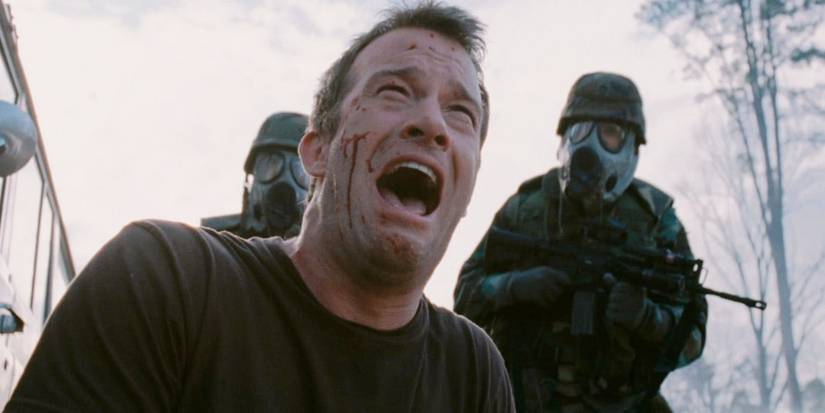 Image via Dimension Films
Not since The Mist has there been a liquid threat so menacing. Directed by Frank Darabont and based on Stephen King's novella, The Mist follows David Drayton (Thomas Jane) and his young son, Billy (Nathan Gamble), in a small Maine town. After a severe storm, an unnatural, dense fog rolls in, trapping people inside a supermarket. The mist conceals deadly, otherworldly monsters, while inside, the townspeople quickly divide into conflicting groups, including religious fanaticism breaking out among the panicked survivors inside. Led by Mrs. Carmody (Marcia Gay Harden), she convinces many survivors that the monsters are a sign of God's wrath and require human sacrifice. With a tortuous twist ending of a survival coming a little too late, The Mist uses the creature-feature premise to explore how normal people turn on one another under intense fear.
Though the action outside of the grocery store seems to be the greatest threat, The Mist showcases how quickly panic can fracture a community. The Mist serves as a sharp critique of societal paranoia and division, a theme that resonates in a timeless manner. With a bleak finale that is different than King's original story, Darabont proves how sacrifice is noble but not always worthwhile. Though one takes place in a house centered on a singular family, and the other is a supermarket with a large group, they both stem from a massive, violent storm that traps everyday ordinary people inside their confined space as they fear the unknown creatures lurking outside the wet gloom. Where The Last House celebrates survivors coming together, The Mist showcases the exact opposite. And yet, they're both brilliant horror stories about the terror that waits in the murky, obscured environment beyond the glass.

The Mist
Release Date November 21, 2007
Runtime 126 minutes
Director Frank Darabont
Writers Frank Darabont





 English (US) ·