
 Image via Sony Pictures Releasing

Published Feb 8, 2026, 7:02 AM EST
Samuel is Collider's List Flex Editor (previously Lead List Editor), which means he's pretty much always hovering around Collider's List department. A writing and editing automaton based in Nashville, Tennessee, and sometimes Los Angeles, Samuel has been working in entertainment journalism for over 10 years.
Samuel is the guy who talked to Betty White about vodka and hot dogs. Chaz Ebert once pinched Samuel's cheeks after a screening of Beyond the Valley of the Dolls, when Samuel told her that Roger was and forever is his hero. William Friedkin once jokingly called Samuel "dad" at a screening of Samuel's favorite movie, The Babadook. Forbes once called Samuel a "sneering critic" because he disliked Don't Look Up.
Two major brands have trusted Samuel with curating their respective lists of the 100 Best Movies of All Time. Samuel wrote one of these lists in its entirety.
Other career highlights include appearing on KCRW and meeting Joe Morgenstern, and also spending 50 minutes talking to Tommy Wiseau on a landline (which was awesome).
Samuel loves his job and is rarely actively not doing it.
Sign in to your Collider account
Though there's occasionally something to be said for entertainment that distracts or even numbs, a lot of us turn to the movies when we want to feel something, and there are two genres that are exceptionally effective at affecting our emotions when they're handled right. The romance genre has obviously existed across other media for as long as storytelling is on record, and remains immensely popular on film. Though early swashbucklers and adventure serials are certainly of note, the modern action film only really started to form in the late 1960s.
For the first film that really married the romantic genre with what we consider to be action cinema these days, one would almost certainly pinpoint Alfred Hitchcock's North by Northwest, an ambitious and giddy entertainment that greatly influenced the early James Bond pictures and beyond. Romantic movies and action movies are generally, if somewhat unfairly, considered to have entirely different demographics, and it's rare that the romance in an action picture is elevated beyond merely a serviceable subplot. There are some highly select, great films, however, that execute both genres to perfection. The result of this uncommonly satisfying entertainment, physiologically in the way the best action cinema grips us, and touching, sometimes tragic in the way we so often hope romance pictures will be, and all too rarely are. These are perfect action movies that are also perfect romantic films. To be clear, there are many movies that do both of these things to varying degrees of success. The following films are rare masterpieces along both lines.
8 'Spider-Man 2' (2004)
Sam Raimi's Spider-Man 2 smartly opens and closes with close-ups of Mary-Jane Watson (Kirsten Dunst), the girl-next-door who's always at the center of Peter Parker (Tobey Maguire)'s psyche. Alvin Sargent, screenwriter of Robert Redford's Best Picture-winning drama Ordinary People, was an unlikely pick to pen this sequel, but obviously the right one. Spider-Man 2 is a film pretty much anyone can relate to; it's about the tough choices that define our lives, and the reality that no matter what, any meaningful life will never be perfect, and will require some sacrifice. The action scenes are electrifying, particularly the runaway train fight, which remains a highlight for all of Marvel. Everything is in service of Peter Parker's story and emotional growth, though. This is a film of intense focus in a genre often characterized by bloat.
Admirably favoring character work to the obligatory final battle, the last act of Spider-Man 2 is, and this really isn't a misuse of the term, Shakespearean. Family secrets are revealed, Peter's alter ego is exposed, feelings of love are finally professed, and Alfred Molina's Doctor Octopus even becomes the only movie supervillain of note to die by suicide. Beneath the Oscar-winning special effects here, there is an all-timer human drama.
7 'Titanic' (1997)
James Cameron's screenplay of Titanic deserves more credit than it gets. One of its masterstrokes is early on, when a character in present-day tells another character—and, in turn, the audience—the exact sequence of events in the sinking of the infamous ocean liner. Because we've been informed in this second-hand way, the picture never has to waste a moment after walking us through the technical details; the focus is henceforth entirely on the characters and how they experience it.
There's a possibility you'll find something to gripe about in Titanic if you're an uncommonly cynical person, but for the rest of us, no matter how many times we see it, it's impossible to not get swept up in the finely acted, intimate human drama as much as the disaster spectacle. In light of its unprecedented success at the box office and the Academy Awards, Titanic saw intense backlash for years. Fortunately, it seems like these days, the consensus is that this is simply one of the greatest American films ever made.
6 'On Her Majesty's Secret Service' (1969)
The sixth Eon Bond film is based on perhaps Ian Fleming's greatest spy novel. On Her Majesty's Secret Service sees 007 (played here by one-time George Lazenby) surveilling his nemesis under deep cover all the while falling madly for the troubled Countess Teresa di Vicenzo (Diana Rigg). Bond ultimately gives the suicidal Tracy a will to live, only for her to be struck by a bullet intended for Bond on their wedding day.
Lazenby has long been dismissed, even unfairly ridiculed, and while he's stiff at times, he's actually mostly really good here. He could have been molded into a great Bond if he hadn't left the franchise. He truly excels in the hand-to-hand fights, and he's a necessarily softer version of Bond in the romantic scenes with Rigg. We have no way of knowing if Sean Connery would have worked here, in a far more emotion-driven Bond film. On Her Majesty's Secret Service is also the best-photographed film in the series apart from perhaps Skyfall, and it features two of the most impressive skiing action sequences ever filmed.
5 'Speed' (1994)
Speed is, simply, a perfect film. It's an action thriller masterpiece that's held up for over 40 years without even the slightest signs of feeling dated. Jan de Bont and 20th Century Fox's blockbuster had a great central premise (there's a bomb on a bus that will explode if the bus goes below 50 mph), and the clever script is divided into three acts across three different vehicles (elevator, bus, then subway) at risk of utter calamity. Speed was Fox's highest-grossing movie of 1994, and received widespread critical acclaim.
Much of the film's greatness comes from the four main performances from Keanu Reeves, Sandra Bullock, Dennis Hopper and Jeff Daniels. Reeves and Bullock have effortless chemistry and are often hilarious (Bullock's comic timing here made her a star), often giving us a much-needed breather from the ever-intensifying mayhem and stakes. In the final moments of Speed, Reeves' good-guy cop Jack is given the choice to abandon Bullock's Annie in order to get to safety, as the latter is handcuffed to the inside of a speeding metro car whose fate is uncertain. Jack doesn't leave; the chivalrous Reeves has maintained a gentleman image on-screen and off for decades now.
Three-time Oscar winner Ang Lee is a master of making films about repressed feelings (see Brokeback Mountain, The Ice Storm, and to some extent Sense & Sensibility) and a master of spectacle. These strengths collide in what's likely the greatest martial arts movie ever made. A major cultural moment around the turn of the century, Crouching Tiger, Hidden Dragon received 10 Oscar nods, winning four. It remains the highest-grossing foreign-produced foreign-language film in U.S. box office history, nearly 30 years later and without even adjusting for inflation.
There are actually two parallel, equally tortured romances in Lee's wuxia epic: Li Mu Bai (Chow Yun Fat) and Yu Shu Lien (Michelle Yeoh) are really only kept apart by their own choices and fear, while the younger Jen Yu (Zhang Ziyi) and Lo (Chang Chen) are torn apart by external forces of family and society. The feelings only really come out here in the action sequences, in a way that's similar to how characters express themselves in a musical.
3 'Casino Royale' (2006)
Due to complicated copyright and legal issues, Ian Fleming's first James Bond novel was only available for Eon to adapt four decades into the series' historic run. Daniel Craig's first outing, Casino Royale was a grounded shot in the arm that brought the franchise a new level of critical praise. Martin Campbell returned after directing the action-heavy GoldenEye. With set pieces like a prolonged parkour opening and an emotionally charged finale in a sinking Venice villa, the action of Casino Royale is sensational. Just as memorable is the emotionally shattering, flawlessly executed love story between Bond and Vesper Lynd (Eva Green).
The death of Lynd, a double agent who betrays Bond but also saves his life, even more carefully crafted for maximum devastation in the script here than in Fleming's novel, is the moment where James Bond becomes the character audiences had known and loved for decades: eternally bleeding, incapable of trusting anyone, perhaps especially women. Because his first outing came out in film form 44 years after Dr. No, Casino Royale, in a way, recontextualized cinema's greatest and most historic franchise for general audiences.
2 'Star Wars: Episode V- The Empire Strikes Back' (1980)
A lot of the conversation around The Empire Strikes Back, the second film and artistic zenith of George Lucas' space opera, is that it's the darkest chapter in the series. While that's obviously true, it's really important to remember that it's also the funniest, and in many ways the warmest due to an unrelenting human touch.
Parallel to Luke Skywalker (Mark Hamill)'s training on Dagobah and the disturbing discovery of his true family identity, scoundrel Han Solo (Harrison Ford) and Princess Leia (Carrie Fisher) can't deny their feelings any longer, as they walk into a trap on Bespin. Echoing some of the best war movies that are set on Earth and in our reality, it's an endearing and even powerful thread about romance finding a way in the darkest and most despairing of times.
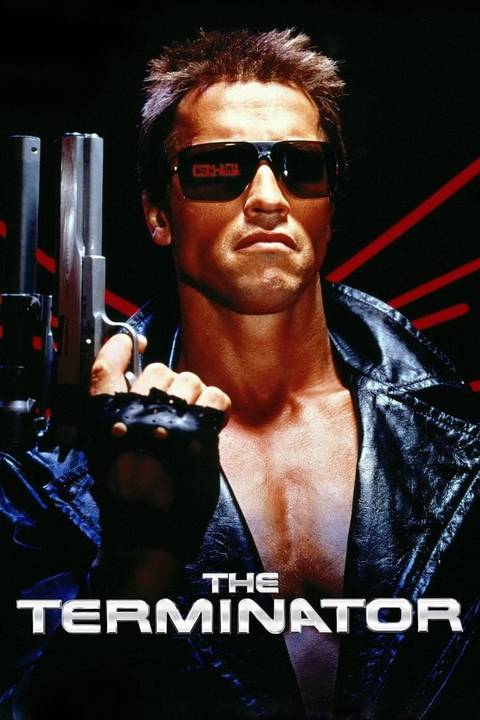
1 'The Terminator' (1984)
A touchstone for sci-fi and action with strong and eerie undertones of slasher horror, James Cameron's first film as writer/director starred then celebrity-on-the-rise Arnold Schwarzenegger as an android sent back in time to kill Sarah Connor (Linda Hamilton), the mother of future resistance leader John Connor. Michael Biehn played Kyle Reese, a future soldier sent across time as Sarah's only defense.
The R-rated action muscle of The Terminator speaks for itself. Throats get ripped out. The sequence where Schwarzenegger's unfeeling cyborg wipes out an entire police precinct without much effort still goes so hard. But The Terminator wouldn't be what it is without the disarming romance at the center, an inspired contrast to the violence. In the final plot twist, it's revealed that Reese is, in fact, John Connor's father. It's ingenious, it's a paradox, it's one of many reasons this movie rewards countless viewings. As is the case in other films like Titanic and the Avatar series, some may find Cameron's open-hearted dialogue corny ("In the few hours we had together, we loved a lifetime's worth"). Scoff if you want; this is the most profitable film director of all time for a reason. Brutality and tenderness fused together makes for an uncommonly satisfying film-viewing experience; when it's over, you're entirely satiated.
Release Date October 26, 1984
Runtime 108 minutes
Director James Cameron
Writers James Cameron, Gale Anne Hurd, William Wisher
Producers Gale Anne Hurd, John Daly





 English (US) ·