
When we ask for a new K-drama, we may not always mean something that just came out. Anything from the past three years or so could count as a new show, especially since so much content has been coming out and keeping up with everything is harder than anticipated. Unless you have time to start a new K-drama as soon as you end one, keeping up with novelty is tough.
These new K-dramas, all released between 2023 and 2026, are some of the greatest of the era. Each one sets a clear tone, executes its vision with confidence, and delivers a satisfying ending that feels earned (though some definitely feel more open to a sequel than others). They represent the very best of what K-dramas can achieve when they respect their audience's time and intelligence—these are the must-watch new K-drama shows that are perfect from start to finish.
8 'Queen of Tears' (2024)
 Image via Netflix
Queen of Tears is the highest-rated drama in tvN history for a reason—and a show that keen ASAP Rocky fans noticed was on his screen during a photo op he posted on Instagram. This show is a melodrama about a married couple on the brink of divorce; Hae-in (Kim Ji-won) is a chaebol heiress, while her husband Hyun-woo (Kim Soo-hyun) is a struggling lawyer. They're not in a happy marriage but are forced to reconnect when Hae-in is diagnosed with a terminal illness, leading to a wild mix of comedy, corporate drama, some thriller, and a tragedy, all combined into a cohesive whole.
The show had one of the highest viewership ratings during its finale (around 24% of viewers nationwide saw it), breaking all previous records for the network. Kim Soo-hyun and Kim Ji-won's chemistry is so beautiful and incredibly electric that even the arguments between them resonate with tension and beauty. Maximalist, messy, and absolutely irresistible, Queen of Tears is the definition of a K-drama that is perfect from start to finish.
7 'Bloodhounds' (2023–Present)
 Image via Netflix
Bloodhounds is a Netflix original that is a lean, mean, action-packed thriller that proves less can look like more. It follows two young boxers, Kim Gun-woo (Woo Do-hwan) and Hong Woo-jin (Lee Sang-yi), who team up to take on a ruthless loan shark syndicate led by the terrifying Myeong-gil (Park Sung-woong), who is preying on vulnerable citizens during the pandemic-induced economic downturn. It's one of the rare K-dramas that got a second season, in which Gun-woo and Woo-jin fight against the members of an underground fighting organization.
What makes Bloodhounds perfect from start to finish is the relentless pacing, hypnotizing action sequences, and commitment to its central theme, which is the unshakeable bond between its two leads. It's a classic underdog story, but one that prioritizes brotherhood and loyalty over cheap thrills and drama. The boxing choreography makes every fight exciting, while the supporting cast and stuntpeople add layers of depth without overwhelming the simple narrative. Its tight one-hour episodes and a story that spans 15 episodes across two seasons ensure that no scene is wasted, the tension never lets up, and the finale delivers a brutal, cathartic resolution that honors the journey. The ending of Season 2 was left somewhat open-ended, with high hopes for Season 3 on the horizon.
6 'Teach You a Lesson' (2026)
 Image via KIM Ji-yeon / ©Netflix / Courtesy Everett Collection
Based on the popular (but controversial) webtoon Get Schooled, the latest Netflix hit called Teach You a Lesson introduces the fictional Educational Rights Protection Bureau (ERPB), a government agency created to protect students from severe bullying and violence when traditional school systems fail to act. However, they don't just protect students from each other but resolve issues across the education system, opening issues like overbearing parents, scheming teachers, and irredeemable students. The series stars Kim Mu-yeol as an ERPB inspector and Lee Sung-min as the visionary minister of education; they're joined by the charming Pyo Ji-hoon and Jin Ki-joo as inspectors who work with them.
Teach You a Lesson debuted at No. 1 on Netflix's non-English TV chart, ranking in the top 10 across 90 countries in its second week. The show's perfection comes from its unflinching examination of systemic failure and its deeply satisfying delivery of extrajudicial punishments. Each episode follows a new case, from school violence to institutional corruption, building toward an overarching narrative about institutional reform. It's a show that channels the audience's frustration with real-world injustices into a gripping, action-packed fantasy that never loses focus, never lets up, and delivers a righteous conclusion that feels like a victory for every victim who was ever failed by the system.
5 'Our Unwritten Seoul' (2025)
 Image via tvN
Our Unwritten Seoul is a K-drama that's a highly overlooked gem, and it's one of the most subtle and impactful dramas of the last few years. It follows identical twin sisters, Yoo Mi-ji and Yoo Mi-rae (both played by Park Bo-young in a career-defining dual performance), who swap lives for reasons they can't fully explain. From a somewhat sci-fi-like premise, this 10-episode series delves into the complexities of identity, familial bonds, and the lives we might have lived or, better said, the roads not taken in life.
Our Unwritten Seoul is perfect from start to finish mostly because of Park's incredible performance; she makes each twin distinct, recognizable, and heartbreakingly human, while the show's idea of not taking it easy on the twins makes her performance all the more powerful. It's a slow-burn character study that explores what happens when siblings are forced to confront the choices they've made and the futures they've abandoned. Our Unwritten Seoul is a beautifully crafted, emotionally intelligent drama that sticks with you long after you're done watching it.
Collider Exclusive · TV Medicine Quiz Which Fictional Hospital Would You Work Best In? The Pitt · ER · Grey's Anatomy · House · Scrubs
Five hospitals. Five completely different ways medicine goes sideways on television — brutal, chaotic, romantic, brilliant, and ridiculous. Only one of them is the ward your instincts were built for. Eight questions will figure out exactly where you belong.
🚨The Pitt
🏥ER
💉Grey's
🔬House
🩺Scrubs
FIND YOUR HOSPITAL →
01
A critical patient comes through the door. What's your first instinct? Medicine under pressure reveals who you actually are.
AStay completely present — block everything else out and work through it step by step, right now. BTriage fast and delegate — get the right people on the right problems immediately. CTrust my gut and move — I work best when I stop overthinking and just act. DAsk the question everyone else is ignoring — what's the thing that doesn't fit? ETake a breath, make a joke to cut the tension, and then get to work — panic helps no one.
NEXT QUESTION →
02
Why did you go into medicine in the first place? The honest answer says more about you than the one you'd give in an interview.
ABecause I wanted to be where it matters most — right at the edge, when someone's life is actually on the line. BBecause I wanted to help people — genuinely, one patient at a time, in a system that makes it hard. CBecause I was drawn to the intensity of it — the stakes, the drama, the feeling of being fully alive. DBecause medicine is the most interesting puzzle there is — and I needed a problem worth solving. EBecause I wanted to make a difference — and also, honestly, I didn't know what else to do with my life.
NEXT QUESTION →
03
What do you actually want from the people you work with? Who you want beside you under pressure is who you are.
ACompetence and calm — I need people who don't fall apart when things get bad. BTrust and reliability — I want to know that when I pass something off, it's handled. CConnection — I want colleagues who become family, even if that gets complicated. DIntelligence and the willingness to be challenged — I have no interest in people who just agree with me. EFriendship — people I actually like spending twelve hours a day with, because those hours are going to happen either way.
NEXT QUESTION →
04
You lose a patient you fought hard to save. How do you carry it? Every doctor who's worked a long shift has had to answer this question.
AI carry it. All of it. I don't look for ways to put it down — that weight is part of doing this work honestly. BI process it and move — you have to, or the next patient suffers for the one you just lost. CI feel it deeply and lean on the people around me — I don't think you're supposed to handle that alone. DI go back over every decision — not to punish myself, but because I need to understand what I missed. EI grieve it genuinely, find some way to laugh about something unrelated, and try to be kind to myself — imperfectly.
NEXT QUESTION →
05
How would your colleagues describe the way you work? Your reputation on the floor is usually more accurate than your self-image.
AIntense and completely present — no small talk during a shift, but exactly who you want there. BSteady and dependable — not the flashiest in the room but never the one who drops something. CPassionate and occasionally chaotic — brilliant on the hard cases, prone to drama everywhere else. DBrilliant and difficult — right more often than anyone else, and everyone knows it, including me. EWarm and self-deprecating — not the most intimidating presence, but genuinely good at this and easy to like.
NEXT QUESTION →
06
How do you feel about hospital protocol and procedure? Every institution has rules. What you do with them is a choice.
AProtocol is the floor, not the ceiling — I follow it until the patient needs something it can't provide. BI respect it — the system is broken in places, but the structure is there for a reason and I work within it. CI follow it until my instincts tell me not to — and my instincts are usually right, even when they cause problems. DRules are for people who haven't thought hard enough about when to break them. EI try to follow it and mostly do — with a few memorable exceptions that still come up in meetings.
NEXT QUESTION →
07
What does this job cost you personally? Nobody works in medicine without paying a price. What's yours?
AEverything outside these walls — I've given this job my full attention and the rest of my life has gone around it. BMy idealism, mostly — I came in believing the system could be fixed and I've made a complicated peace with that. CStability — my personal life has been as chaotic as the OR, and that's not entirely a coincidence. DMy relationships — I am not easy to know, and the people who've tried to would probably agree. EMy sense of gravity — I use humour as a coping mechanism, which not everyone appreciates in a hospital.
NEXT QUESTION →
08
At the end of a long shift, what keeps you coming back? The answer to this question is the most honest thing about you.
AThe fact that it's real — that nothing else I could be doing would matter this much, right now, today. BThe patients — individual human beings who needed something and got it because I was there. CThe people I work with — I have walked through impossible things with these people and I'd do it again. DThe next unsolved case — there's always another puzzle, and I'm not done yet. EBecause despite everything — the exhaustion, the loss, the absurdity — I actually love this job.
REVEAL MY HOSPITAL →
Your Assignment Has Been Made You Belong In…
Your answers have pointed to one fictional hospital above all others. This is the ward your instincts, your temperament, and your particular brand of dysfunction were built for.
The Pitt
You are built for the most unsparing version of emergency medicine television has ever shown — one that puts you inside a single fifteen-hour shift and doesn't let you look away.
- You need your work to be real, not romanticised — meaning over drama, honesty over aesthetics.
- You find purpose inside the work itself, not in the chaos surrounding it.
- You've made peace with the fact that this job takes from you constantly, and gives back in ways that are harder to name.
- Pittsburgh Trauma Medical Center demands exactly that kind of person — and you would not want to be anywhere else.
ER
You are the person who keeps the whole floor running — not the most brilliant in the room, but possibly the most essential.
- You show up, do the work, absorb the losses, and come back the next day without needing the job to be anything other than what it is.
- You care about patients as individual human beings, not as cases to solve or dramas to live through.
- You believe in the system even when it fails you — and you understand that emergency medicine is about holding the line just long enough.
- ER is television about endurance. You have it.
Grey's Anatomy
You came to medicine with your whole self — your ambition, your emotions, your relationships, your history — and you have never quite managed to leave any of it at the door.
- You feel things fully and form deep attachments to the people you work with.
- Your personal and professional lives are permanently, chaotically entangled — and that entanglement drives both your greatest disasters and your most remarkable saves.
- You understand that extraordinary medicine often happens at the intersection of clinical skill and profound human connection.
- It's messy at Grey Sloan. You would not have it any other way.
House
You are drawn to the problem above everything else — the symptom that doesn't fit, the diagnosis hiding underneath the obvious one.
- You're not primarily motivated by the patient as a person — though you are capable of caring, even if you'd deny it.
- You work best when the stakes are highest and the standard answer is wrong.
- Princeton-Plainsboro exists to house one extraordinary, impossible mind — and everyone around that mind is there because they're smart enough to keep up.
- The only way forward here is to think harder than everyone else in the room. That is exactly what you do.
Scrubs
You understand that medicine is tragic and absurd in almost equal measure — and that the only sane response is to hold both of those things at the same time.
- You are warm, self-aware, and funnier than most people in your field.
- You use humour to get through terrible moments — and at Sacred Heart, that's not a flaw, it's a survival strategy.
- You lean on the people around you and let them lean back. The laughter and the grief are genuinely inseparable here.
- Scrubs is a show about learning to become someone worthy of the job. You are still very much in the middle of that process — which is exactly right.
↻ RETAKE THE QUIZ
4 'The Judge from Hell' (2024)
 Image via Disney+
The Judge from Hell is the most fun you'll have with a dark fantasy thriller among any K-drama of the genre. Park Shin-hye delivers a career-best performance as Kang Bit-na, a demon from hell who is forced to possess the body of a human judge to carry out a divine mission: send ten irredeemable sinners to hell. Her black-and-white worldview is challenged when she encounters the kind-hearted detective Han Da-on (Kim Jae-young), who makes her question whether redemption is possible for anyone.
The Judge from Hell holds impressive ratings from critics and audiences; with 14 episodes, the show is a masterclass in shifting effortlessly from brutal, almost comedic violence to genuine emotional depth and moral matters. The romance subplot, as redundant as it may feel, is a pretty nice touch to the entire story, while the supporting cast, including Kim In-kwon and Lee Kyu-hyung, helps make the show an exceptionally fun time. The Judge from Hell is a surprisingly heartfelt thriller that never overstays its welcome and delivers on its promise with pitch-perfect execution.
3 'Moving' (2023–Present)
 Image via Disney+
Moving is the show that proved Disney+ could compete with the best of them in the K-drama space. Based on the hit webtoon by Kang Full, this star-studded action fantasy follows a group of teenagers with inherited superpowers and their superhero parents, who are hiding from a dangerous government agency that wishes to weaponize their abilities. The cast is a who's-who of Korean cinema, including Ryu Seung-ryong, Han Hyo-joo, and Zo In-sung, and the show became the most-watched Korean original series on Disney Plus globally.
At 20 episodes, Moving is the longest show on this list, but it earns every minute through elaborate world-building that spans decades and deftly balances action, romance, and family drama. The show's perfection lies in its emotional core: it's not truly about superheroes and powers but about the sacrifices and lengths people are willing to go to protect their loved ones. Moving is a blockbuster with a heart that delivers a deeply satisfying, emotionally resonant conclusion, and we cannot wait for Season 2, which will likely premiere around 2027.
2 'We Are All Trying Here' (2026)
 Image via Netflix
From the writer of My Mister and My Liberation Notes, Park Hae-young, comes a brand-new black comedy slice-of-life melodrama, We Are All Trying Here, a masterclass in empathetic, character-driven storytelling. The series follows Hwang Dong-man (Koo Kyo-hwan), an aspiring director who has spent two decades chasing his directorial debut while watching his film school friends achieve success and acclaim. His stagnant life changes when he meets Byeon Eun-a (Go Youn-jung), a burnt-out producer who helps him rediscover his self-worth.
We Are All Trying Here stands as a perfect character study that refuses to offer easy answers. It dives deep into the messy, uncomfortable emotions of envy and jealousy, but also the gripes of depression, anxiety, and all the uncomfortable emotions we're incapable of labeling. The ensemble cast, including Oh Jung-se, Park Hae-joon, and Bae Jong-ok, delivers uniformly excellent performances, with Koo turning in a career-best portrayal of a man crippled by anxiety. The show's 12-episode run, each lasting around 70 minutes, allows the narrative to breathe. We Are All Trying Here is a deeply human masterpiece that understands that sometimes, just trying is the most heroic thing you can do.
1 'When Life Gives You Tangerines' (2025)
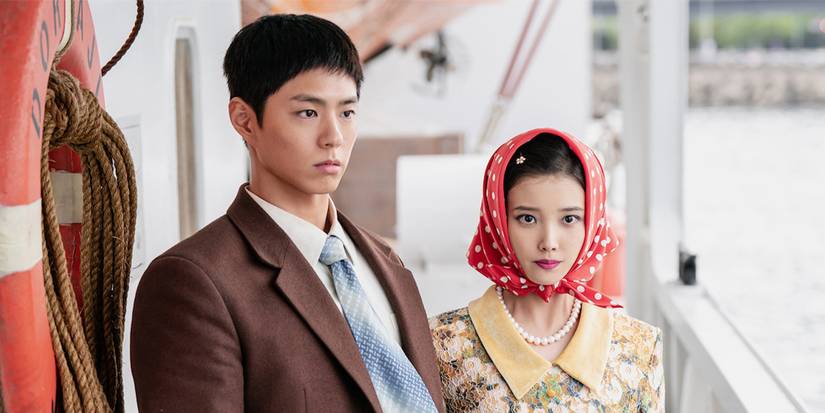 Image via Netflix
There is no show that better defines the phrase "perfect from start to finish" than the masterpiece show When Life Gives You Tangerines. Spanning nearly 70 years on the island of Jeju, it follows the life of Oh Ae-sun (played by IU in her youth and Moon So-ri in old age) from childhood to old age, and her enduring love for Yang Gwan-sik (Park Bo-gum and Park Hae-joon). It's an epic saga of poverty, rebellion, motherhood, and sacrifice that jumps through time in a non-linear but emotionally charged manner.
Time Magazine named When Life Gives You Tangerines the best K-drama of 2025, and it holds a staggering 9.1 user rating on IMDb. It's a beautifully crafted drama that captures the essence of love, resilience, and the impact of the passage of time on both those things. Admittedly, it's not an easy watch (it will emotionally destroy you), but it is a life-affirming masterpiece that earns every single hour of its runtime. A cultural tapestry weaving together Jeju's dialect, the resilience of its old-school female divers, and the symbolism of its tangerine orchards, When Life Gives You Tangerines is the greatest K-drama of the last three years.







 English (US) ·