
 Image via 20th Century Fox
Published Aug 23, 2026, 5:42 PM EDT
Jessica is a young writer from Brisbane, Australia. An avid consumer and lover of all things Film and TV, you will never tear her away from a screen. A tendency rooted from childhood, she once had dreams of becoming a member of the famed kids-band 'Hi-5'. Perhaps that's what pushed her to secure an education with a theater background. But now, as dreams evolved, her passions have turned to admiring performances from afar. Frankly, she's just grateful that she can put her binging skills to good use. Outside of work, Jessica recently completed her undergraduate double degree in Arts/Communications. Other than that, she spends most of her free time with family and friends, probably never forgetting to talk about the new movie or show she watched the day prior.
Sign in to your Collider account
In the Golden Age of Hollywood, the 1950s saw the industry producing everything from dazzling musicals and razor-sharp comedies to psychological thrillers and intimate dramas. It was a decade when filmmakers were pushing the boundaries of what movies could look like amid the (slacking) Hays Code, while some of cinema's most iconic stars delivered performances that remain unforgettable more than 70 years later.
The best part? These films have aged rather well. So, whether you're in the mood for romance, suspense, existential dread, or a little classical dancing, the 1950s had something for everyone. And these are some of its greatest (and most essential) picks. Perhaps you can make a weekend out of them.
8 'Sunset Boulevard' (1950)
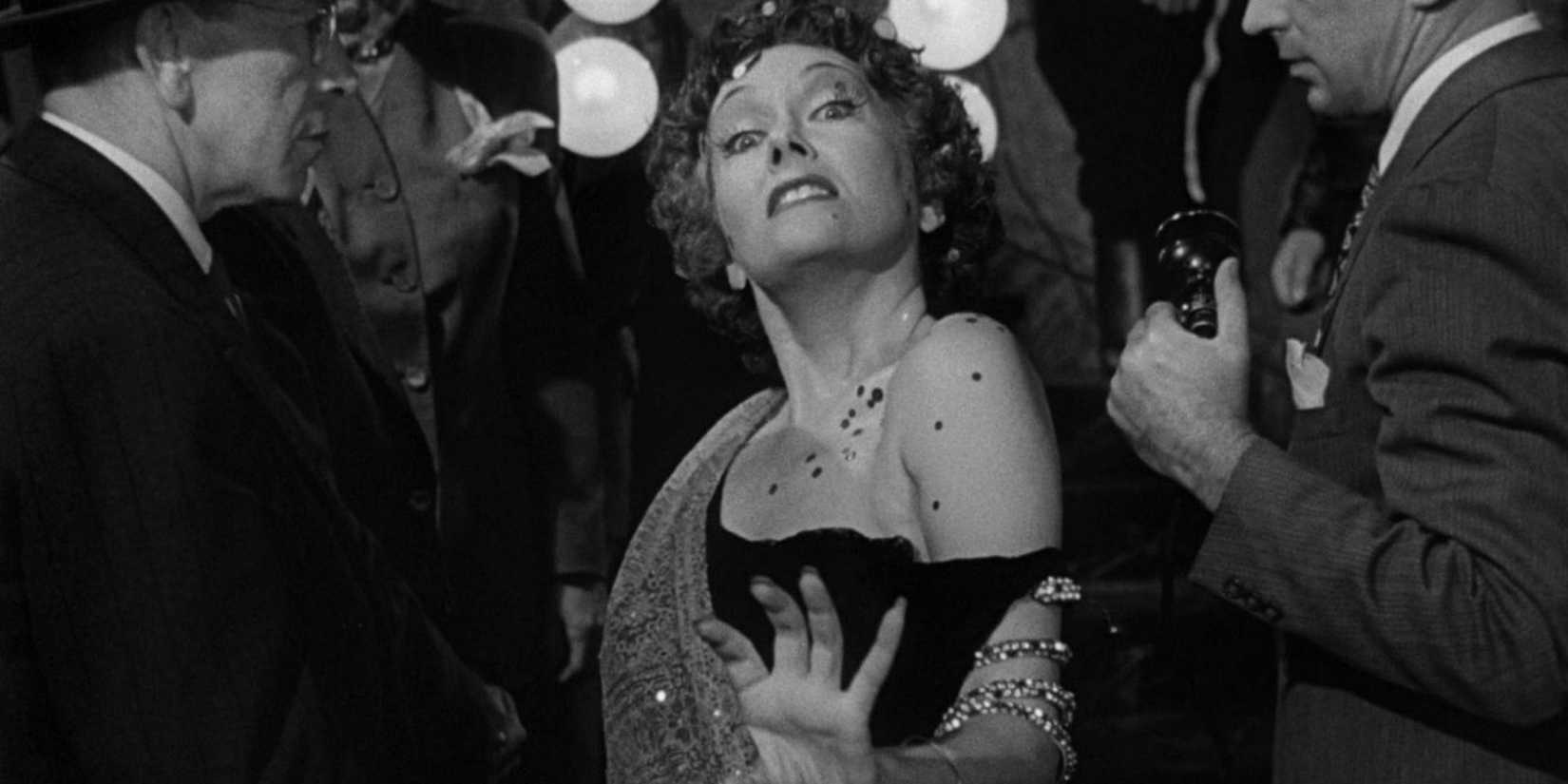 Image via Paramount Pictures
When struggling screenwriter Joe Gillis (William Holden) stumbles into the decaying mansion of former silent-film star Norma Desmond (Gloria Swanson), he sees an opportunity to make some easy money as she hires him to rewrite the screenplay she believes will restore her to Hollywood Glory. But what begins as a mutually beneficial arrangement quickly becomes something much darker as Norma's obsession grows and Joe finds himself trapped in her increasingly bizarre world.
Billy Wilder's Sunset Boulevard is one of Hollywood's sharpest pieces of self-criticism, skewing the industry's obsession with youth, fame, and its tendency to discard people once they are no longer useful. Swanson is spectacularly unhinged as Norma, while Holden gives Joe the weary cynicism of a man who knows exactly how far he's fallen. Stylish, sinister, and surprisingly melancholy, it's a Hollywood noir that still feels brutally honest about the business of making movies.
7 'Some Like It Hot' (1959)
 Image via United Artists
After witnessing a mob murder, musicians Joe (Tony Burtis) and Jerry (Jack Lemmon) flee Chicago by disguising themselves as women and joining an all-female band heading to Florida. Their scheme becomes increasingly complicated when Joe falls for the band's beautiful singer, Sugar Kane (Marilyn Monroe), while Jerry finds himself being pursued by an eccentric millionaire who's completely taken with his new "identity".
In another Wilder classic, Some Like It Hot turns an already ridiculous premise into one of the greatest comedies ever made. Monroe, Curtis, and Lemmon are perfectly matched, with Lemmon's increasingly enthusiastic embrace of his disguise particularly providing some of the film's biggest laughs. The screenplay is packed with brilliant one-liners and escalating misunderstandings, culminating in an ending so perfect that it remains one of the most famous punchlines in movie history.
6 'The Seventh Seal' (1957)
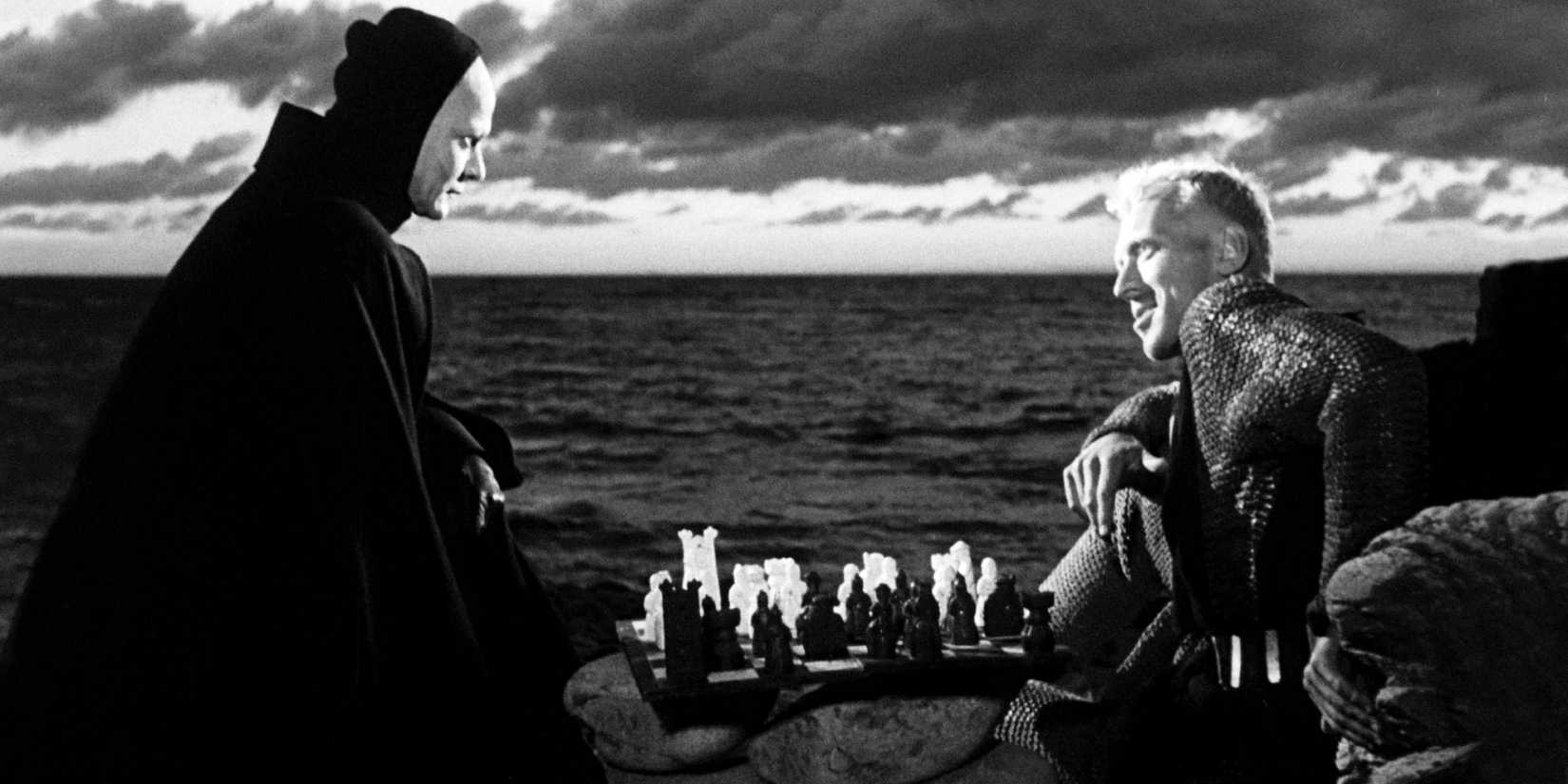 Image via AB Svensk Filmindustri
After returning from the Crusades to a plague-ravaged Sweden, medieval knight Antonius Block (Max von Sydow) encounters Death (Bengt Ekerot) waiting to claim him. But rather than accepting his fate, Block challenges Death to a game of chess, hoping to delay the inevitable long enough to find some meaning in his life and perhaps perform one final meaningful act.
Ingmar Bergman's existential drama may sound grim—and, admittedly, it is—but its exploration of mortality and faith has given it an enduring place in cinema history. von Sydow gives a beautifully restrained performance as Block, while the film's black-and-white imagery has become iconic to anyone aware of Golden Age cinema. It's haunting, philosophical, and (occasionally) surprisingly playful, proving that even a movie about a chess game can be completely riveting.
5 'Singin' in the Rain' (1952)
.jpeg?q=49&fit=crop&w=825&dpr=2) Image via Loew's Inc.
Image via Loew's Inc.As Hollywood transitions from silent films to talking pictures, beloved silent-movie star Don Lockwood (Gene Kelly) finds his career threatened by the arrival of sound. Although, his biggest problem isn't the technology itself, but rather with his co-star Lina Lamont (Jean Hagen), whose grating voice makes her unsuitable for the talkies. Luckily, with the help of aspiring actress Kathy Selden (Debbie Reynolds), Don and his friend Cosmo Brown (Donald O'Connor) hatch a plan to save the production.
Musicals are almost always a good time, but none have ever been this effortlessly joyful. Kelly, O'Connor, and Reynolds have extraordinary chemistry, while the choreography turns everything into an excuse for another spectacular musical number. Plus, beneath the infectious energy also lies a clever look at an industry undergoing enormous change. And yet, it's still the sheer delight of watching these performers work that makes Singin' in the Rain so timeless.
Collider Exclusive · Oscar Best Picture Quiz
Which Oscar Best Picture
Is Your Perfect Movie?
Parasite · Everything Everywhere · Oppenheimer · Birdman · No Country
Five Oscar Best Picture winners. Five completely different visions of what cinema can be — and what it can do to you. One of them is the film that was made for the way your mind works. Ten questions will figure out which one.
🪜Parasite
🌀Everything Everywhere
☢️Oppenheimer
🐦Birdman
🪙No Country for Old Men
FIND YOUR FILM →
01
What kind of film experience do you actually want? The best movies don't just entertain — they leave something behind.
ASomething that pulls the rug out — that makes me think I'm watching one kind of film and then reveals I'm watching another entirely. BSomething overwhelming — funny, sad, absurd, and genuinely moving, all at once. CSomething grand and weighty — a film that makes me feel the full scale of what I'm watching. DSomething formally daring — a film that pushes what cinema can even do. ESomething lean and relentless — pure tension with no wasted frame.
NEXT QUESTION →
02
Which idea grabs you most in a film? Great films are driven by a central obsession. What's yours?
AClass, inequality, and what people are willing to do when desperation meets opportunity. BIdentity, family, and the chaos of trying to hold your life together when everything is falling apart. CGenius, moral responsibility, and the catastrophic weight of a decision you can never take back. DEgo, legacy, and the terror of becoming irrelevant while you're still alive to watch it happen. EEvil, chance, and whether moral order actually exists or if we just tell ourselves it does.
NEXT QUESTION →
03
How do you like your story told? Form is content. The way a story is shaped changes what it means.
AGenre-twisting — I want it to start in one lane and migrate into something completely different. BMaximalist and genre-blending — comedy, action, drama, sci-fi, all in one ride. CEpic and non-linear — cutting between timelines, building a mosaic of cause and consequence. DA single unbroken flow — I want to feel like I'm living it in real time, no cuts to safety. ESpare and precise — every scene doing exactly what it needs to do and nothing more.
NEXT QUESTION →
04
What makes a truly great antagonist? The opposition defines the protagonist. What kind of opposition fascinates you?
AA system — invisible, structural, and almost impossible to fight because it has no single face. BThe self — the ways we sabotage, abandon, and fail the people we love most. CHistory — the unstoppable momentum of events that no single person can stop or redirect. DThe industry — the machinery of culture that chews up talent and spits out irrelevance. EPure, implacable evil — a force so certain of itself it becomes almost philosophical.
NEXT QUESTION →
05
What do you want from a film's ending? The final note is the one that lingers. What do you want it to sound like?
AShock and inevitability — a conclusion that recontextualises everything that came before it. BEarned emotion — I want to cry, laugh, and feel genuinely hopeful, even if the world is a mess. CDevastation and grandeur — an ending that makes me sit in silence for a few minutes after. DAmbiguity — something that leaves enough open that I'm still thinking about it days later. EBleakness — an honest refusal to pretend the world is tidier than it actually is.
NEXT QUESTION →
06
Which setting pulls you in most? Where a film takes place shapes everything — mood, stakes, what's even possible.
AA gleaming modern city with a hidden underside — beauty masking rot, wealth masking desperation. BA collapsing suburban life that opens onto something infinite — the multiverse of a single ordinary person. CThe corridors of power and science at a world-historical turning point — where decisions echo for decades. DThe grimy, alive chaos of New York and Hollywood — fame as both destination and trap. EVast, indifferent landscape — desert and highway where violence arrives without warning or reason.
NEXT QUESTION →
07
What cinematic craft impresses you most? Every great film has a signature — a technical or artistic element that makes it unmistakable.
AProduction design and mise-en-scène — every frame composed to carry meaning beneath the surface. BEditing and tonal control — the ability to move between registers without losing the audience. CScore and sound design — music that becomes inseparable from the dread and awe of what you're watching. DCinematography as performance — the camera not recording events but participating in them. ESilence and restraint — what's left unsaid and unshown doing more work than any dialogue could.
NEXT QUESTION →
08
What kind of main character do you root for? The protagonist is the lens. Who you choose to follow says something about you.
ASomeone smart and resourceful who makes increasingly dangerous decisions under pressure. BSomeone overwhelmed and ordinary who turns out to be capable of something extraordinary. CA brilliant, tortured figure whose gifts and flaws are inseparable from each other. DA self-destructive artist whose ego is both their superpower and their undoing. EA quiet, principled person trying to make sense of a world that has stopped making sense.
NEXT QUESTION →
09
How do you feel about a film that takes its time? Pace is a choice. Some films sprint; others let tension accumulate slowly, deliberately.
AI love a slow build when I know the payoff is going to be seismic — patience for a devastating reveal. BGive me relentless momentum — I want to feel breathless and emotionally spent by the end. CEpic runtime doesn't scare me — if the material demands three hours, give me three hours. DI want it to feel propulsive even when nothing is technically happening — restless energy throughout. EDeliberate and unhurried — I want dread to accumulate in the spaces between the action.
NEXT QUESTION →
10
What do you want to feel walking out of the cinema? The best films leave a mark. What kind of mark do you want?
AUnsettled — like I've just seen something I can't fully explain but can't stop thinking about. BMoved and energised — like the film reminded me what actually matters and gave me something to hold onto. CHumbled — like I've been in the presence of something genuinely important and overwhelming. DExhilarated — like I've just seen cinema doing something it's never quite done before. EHaunted — like a cold, quiet dread that stays with me for days.
REVEAL MY FILM →
The Academy Has Decided Your Perfect Film Is…
Your answers have pointed to one Oscar Best Picture winner above all others. This is the film that was made for the way your mind works.
Parasite
You are drawn to films that operate on multiple levels simultaneously — that begin in one genre and quietly, brilliantly migrate into another. Bong Joon-ho's Parasite is a film about class, desire, and the architecture of inequality that manages to be darkly funny, deeply suspenseful, and genuinely shocking across a single extraordinary running time. Your instinct is for cinema that hides its true intentions until the moment it's ready to reveal them. Parasite is exactly that — a film that rewards close attention and punishes assumptions, right up to its devastating final image.
Everything Everywhere All at Once
You want it all — and this film gives you all of it. The Daniels' Everything Everywhere All at Once is one of the most maximalist films ever made: action comedy, multiverse sci-fi, family drama, existential crisis, and a genuinely earned emotional core that sneaks up on you amid the chaos. You are someone who responds to ambition, who doesn't want cinema to choose between being entertaining and being meaningful. This film refuses that choice entirely. It is overwhelming by design, and its overwhelming nature is precisely the point — because the feeling of being crushed by infinite possibility is exactly what it's about.
Oppenheimer
You are drawn to cinema on a grand scale — films that understand history not as a backdrop but as a force, and that place their characters inside that force and watch what happens. Christopher Nolan's Oppenheimer is a film about the terrifying gap between what we can do and what we should do, told with the full weight of one of the most consequential moments in human history behind it. You want your films to feel important without feeling self-important — to earn their ambition through sheer craft and the gravity of their subject. Oppenheimer does exactly that. It is enormous, complicated, and refuses easy comfort.
Birdman
You are drawn to films that foreground their own construction — that make the how of the filmmaking part of the what it's about. Alejandro González Iñárritu's Birdman, shot to appear as a single continuous take, is cinema examining itself through the cracked mirror of a fading actor's ego. You respond to formal daring, to the feeling that a film is doing something that probably shouldn't be possible. Michael Keaton's performance and Emmanuel Lubezki's restless camera create something genuinely unlike anything else — a film that is simultaneously about creativity, relevance, self-destruction, and the impossibility of ever truly knowing if your work means anything at all.
No Country for Old Men
You are drawn to cinema that trusts silence, that refuses to explain itself, and that treats dread as a form of meaning. The Coen Brothers' No Country for Old Men is a film about the arrival of a new kind of evil — implacable, arbitrary, and utterly indifferent to the moral frameworks we use to make sense of the world. It is one of the most formally controlled films ever made, and its controlled restraint is what makes it so terrifying. You want your films to haunt you, not comfort you. You are not interested in resolution if resolution would be dishonest. No Country for Old Men is honest in a way that most cinema never dares to be.
↻ RETAKE THE QUIZ
4 'Vertigo' (1958)
 Image via Paramount Pictures
Retired detective John "Scottie" Ferguson (James Stewart) is hired to follow Madeleine Elster (Kim Novak), the mysterious wife of an acquaintance who appears to be behaving strangely. Scottie becomes increasingly fascinated by her, but after a traumatic incident leaves him struggling with vertigo, he becomes obsessed with recreating Madeleine through another woman.
Alfred Hitchcock turns what initially appears to be a conventional mystery into a deeply unsettling study of obsession, grief, and control. Stewart gives one of his most complicated performances, while Novak navigates multiple layers of identity and deception. Plus, the film's dreamlike cinematography and haunting score create an atmosphere unlike anything else in Hitchcock's filmography, making Vertigo one of the director's most psychologically rich (and influential) works.
3 'All About Eve' (1950)
 Image via 20th Century Studios
Aging Broadway star Margo Channing (Bette Davis) takes aspiring actress Eve Harrington (Anne Baxter) under her wing after being charmed by the young woman's seemingly genuine admiration. But Eve's ambitions extend far beyond becoming Margo's understudy. And as she begins manipulating everyone around her, Margo realizes that the person she welcomed into her inner circle may just be plotting to take her place.
Joseph L. Mankiewicz's screenplay is packed with some of the sharpest dialogue of the decade, while the film's exploration of ambition, insecurity, and fame remains remarkably relevant. Davis is phenomenal as the sardonic yet vulnerable Margo, with Baxter giving Eve just enough charm to make her manipulation genuinely fascinating. With its ruthless view of show business and unforgettable ensemble, All About Eve is Hollywood cynicism at its most entertaining.
2 'Seven Samurai' (1954)
 Image via Toho
When a poor farming village is repeatedly attacked by bandits, its desperate inhabitants decide to hire samurai to protect them. With little money to offer, they manage to recruit seven warriors led by the experienced Kambei Shimada (Takashi Shimura). Together they fortify the town, even if that means training the villagers in preparation for an inevitable attack.
Akira Kurosawa's masterpiece essentially laid the groundwork for countless action and ensemble films, but its influence hasn't diminished its own power. The characters are richly developed, the action is astonishingly visceral, and Kurosawa finds humanity in both the samurai and the villagers they protect. At nearly three and a half hours, Seven Samurai is hardly a quick watch, but its enormous scope and emotional depth make every minute worthwhile.
1 '12 Angry Men' (1957)
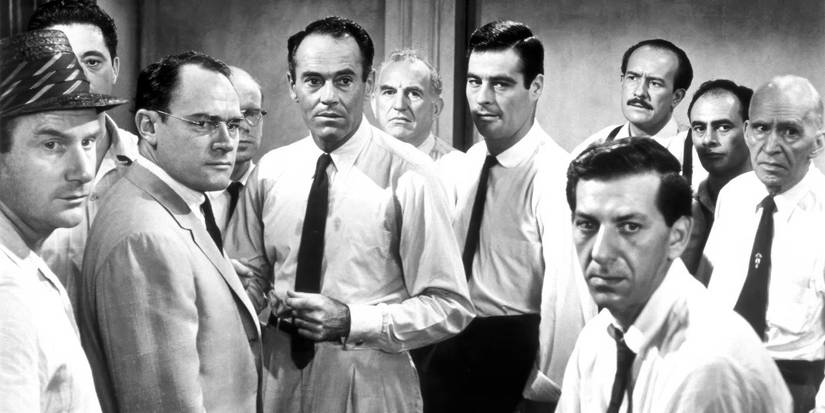 Image via United Artists
After a murder trial, 12 jurors enter a deliberation room to decide whether a teenage boy is guilty of killing his father. 11 of them are immediately convinced of his guilt, but Juror No. 8 (Henry Fonda) has doubts and refuses to send the case to a unanimous verdict without examining the evidence. But as discussions continue, the jurors' personal prejudices and assumptions begin to influence their interpretation of what happened.
What makes 12 Angry Men so extraordinary is how it creates almost unbearable tension without ever leaving the room. Fonda unsurprisingly anchors an exceptional ensemble as the quietly determined juror, while the shifting alliances make every change of vote feel like a genuine dramatic victory. The film is a masterclass in dialogue-driven filmmaking, proving that a handful of actors, a brilliant script, and one increasingly claustrophobic room can be just as gripping as the biggest Hollywood spectacle.
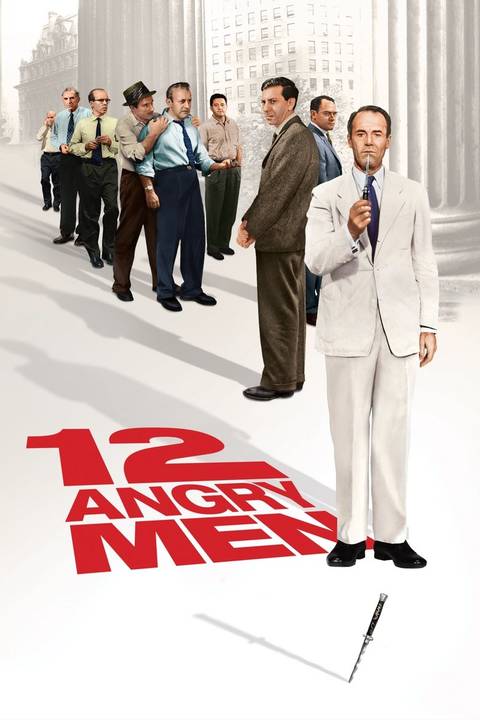
12 Angry Men
Release Date April 10, 1957
Runtime 97 minutes
Director Sidney Lumet
Writers Reginald Rose





 English (US) ·