
A trilogy ends perfectly when the last film does more than resolve plot. It has to reach backward and make the first two feel fuller. It has to reveal that the opening movie was planting a wound, the middle movie was deepening it, and the final movie finally knew exactly where to press to make the whole thing hurt, heal, or break in the right way. That is why a great final chapter feels different from a merely satisfying one. Satisfaction is easy. Scale is easy. Fan service is easy. The hard thing is emotional inevitability.
That is what these eight trilogies have. All the trilogies’ final films listed below understand the exact debt they owed. And once they pay it, you feel that rare thing every fan is chasing: not relief that the story is over, but gratitude that it ended in the only way it should have.
8 The Dark Knight Trilogy (2005–2012)
 Image via Warner Bros.
What makes Christopher Nolan’s Batman trilogy end so well is that Batman Begins, The Dark Knight, and The Dark Knight Rises are really one long argument about whether Bruce Wayne (Christian Bale) can survive turning himself into a symbol. The whole trilogy serves as an inspiration cooker to prove that everybody can be Batman if they tried hard enough. Batman Begins is not just an origin-story business. It is about a man taking trauma, fear, class guilt, and fury and building a theatrical weapon out of them. Then The Dark Knight comes in and does the brutal middle-chapter thing perfectly: it proves that symbols do not only inspire hope. They also attract escalation, chaos, imitation, corruption, and impossible moral pressure. By the end of that film, Bruce has already paid more for Batman than most superheroes ever do.
That is why The Dark Knight Rises works as an ending even with all its baggy edges. It understands that the trilogy cannot finish with Batman wins again. It has to ask whether Bruce gets to remain human. His broken body, his isolation, Gotham’s false peace, Bane (Tom Hardy) turning the city into a political nightmare, all of that pushes toward one answer: the symbol must outgrow the man. Bruce Wayne cannot spend the rest of his life feeding the bat until there is nothing left of himself. So when The Dark Knight Rises lets Batman become legend and Bruce slip into ordinary life, the trilogy lands on exactly the right note. Not conquest. Release. It leaves you wanting for more. It teases you with Robin (Joseph Gordon-Levitt) and leaves at that. The whole trilogy feels too good to be true.
7 Fear Street Trilogy (2021)
 Image via Netflix
The Fear Street Trilogy ends perfectly because each film changes the meaning of the one before it. Fear Street Part One: 1994 starts as this gloriously fast, blood-spattered cursed-town slasher, all teenage panic, old grudges, local folklore, and the delicious feeling that Shadyside has been sick for a very long time. Then Fear Street Part Two: 1978 goes backward into campfire-memory mode and suddenly the curse gets emotional body. The killings are no longer just franchise fuel. They become inherited trauma, youth cut down in the middle of wanting to live. That second film gives the trilogy ache.
Then Fear Street Part Three: 1666 does the exact thing a great final chapter should do: it exposes the original lie. Sarah Fier (Kiana Madeira) stops being legend and becomes history, and the whole trilogy finally reveals itself as a story about stolen blame, class division, and one community protecting its comfort by feeding another into generational suffering. That is why the return to 1994 in the back half feels so satisfying. The final showdown is not just kill-the-evil time. It is historical correction. The trilogy began as “there is a curse.” It ends as “here is who built it, who profited from it, and what it cost.” That is tremendous final-film work.
6 Star Wars Original Trilogy (1977–1983)
 Image via Lucasfilm
The original Star Wars trilogy ends perfectly because Star Wars, The Empire Strikes Back, and Return of the Jedi are not really about winning a war in the simple sense. They are about myth becoming family pain. Star Wars gives you the clean heroic ignition, Luke Skywalker (Mark Hamill) staring at the horizon, wanting something larger, with Han Solo (Harrison Ford), Princess Leia (Carrie Fisher), Darth Vader (James Earl Jones), and Obi-Wan Kenobi (Alec Guinness) all entering as archetypes so vivid they seem eternal from the first shot. Then The Empire Strikes Back performs one of the greatest second-film turns ever: it makes the myth intimate and wounding. Vader stops being merely villainous and becomes inheritance. Luke’s journey stops being adventure and becomes a spiritual and emotional test.
That is why Return of the Jedi is such a perfect conclusion. People talk about the Death Star, the Endor battle, the space spectacle, all deservedly, but the actual ending lives in the throne room. Luke, Vader, and the Emperor (Ian McDiarmid) are the trilogy in miniature. Rage, legacy, temptation, power, pity, redemption. Luke does not win by becoming harder than his father but by refusing to become him. And Vader’s turn lands because Star Wars and The Empire Strikes Back already planted the tragedy needed for that mercy to matter. Then Return of the Jedi gives you the pyre, the celebration, the spirits, and suddenly the trilogy feels complete not because evil has been defeated, but because the father-son wound finally found its end.
5 Before Trilogy (1995–2013)
 Image via Columbia Pictures
The Before Trilogy ends perfectly because Before Sunrise, Before Sunset, and Before Midnight never pretend love is one thing for very long. Before Sunrise is possibility at its purest, the exhilarating, dangerous intimacy of meeting someone who seems to unlock parts of your mind faster than you can protect them. Before Sunset then does something almost unbearably smart: it lets absence become structure. Ten years of missed life hang over every conversation. The romance deepens because it has been interrupted. Memory becomes part of the chemistry. Regret becomes erotic.
And then Before Midnight does the bravest thing in the whole trilogy. It puts Jesse (Ethan Hawke) and Céline (Julie Delpy) inside the actual machinery of long love: old grievances, parental strain, sexual frustration, accumulated sacrifice, weaponized intimacy, the terror that the person who once made your life feel larger is now the person who knows most precisely how to hurt you. That is why the ending is so perfect. It is grounded and realistic. It does not offer a fake grand reconciliation. It gives them one small, fragile step back toward imagination. After all the damage of the hotel-room fight, Before Midnight ends not in certainty but in willingness. And that is exactly right. A trilogy that began with one night and survived ten-year gaps could only end by asking whether love is still a choice after the myth burns off.
4 Three Colours Trilogy (1993–1994)
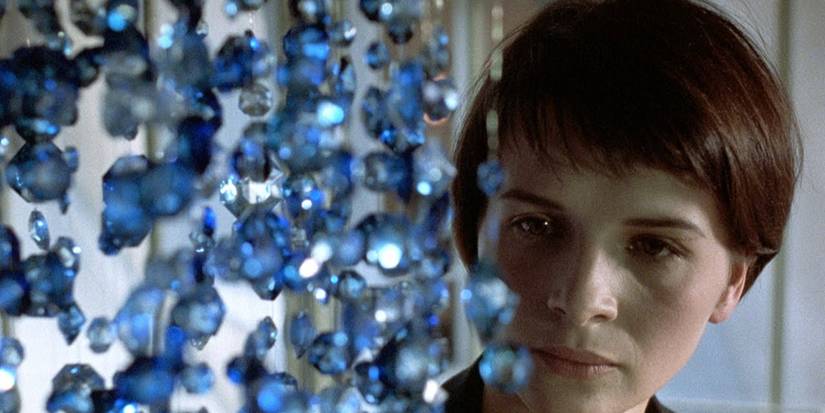 Image via mk2 Diffusion
The Three Colours Trilogy is one of the rare cases where the ending is perfect because it quietly reveals that the trilogy has been ending itself all along. Blue gives us Julie (Juliette Binoche), shattered by loss and trying to erase attachment from her life because feeling has become unbearable. White flips the emotional climate entirely and follows Karol (Zbigniew Zamachowski) through humiliation, bitterness, revenge, and the warped reinvention of self after romantic annihilation. Red then arrives with Valentine (Irène Jacob) and the retired judge and starts building something stranger, a film about coincidence, recognition, unseen proximity, and the possibility that lives are moving beside one another inside patterns they do not fully understand.
So when Red lands on the ferry disaster and the survivors, and you realize the people who emerge are connected to the previous films, the trilogy’s structure suddenly becomes visible in a new way. Blue, White, and Red all feel connected suddenly. That is why Red ends the trilogy so beautifully. It gives you revelation through resonance. The ending does not shout that these stories belong together but allows that to be revealed naturally and that is more haunting than any louder resolution could have been.
3 Planet of the Apes Reboot Trilogy (2011–2017)
 Image via 20th Century Studios
This trilogy ends perfectly because Rise of the Planet of the Apes, Dawn of the Planet of the Apes, and War for the Planet of the Apes never lose sight of Caesar (Andy Serkis) as the soul of the whole thing. Rise is awakening, captivity, intelligence, and revolt. It is a deeply personal first chapter. It works because Caesar’s emotional life matters from the beginning, his bond with Will Rodman (James Franco), his gradual awareness, his first experience of domination, his discovery that love from one human being does not erase the brutality of the system surrounding him. Then Dawn scales outward brilliantly. The world is broken now. Ape society exists. Human survivors exist. Trust flickers and fails. Koba (Toby Kebbell) poisons coexistence from one side, human fear from the other. It is a perfect middle film because it turns possibility into fracture.
That sets up War for the Planet of the Apes, which is such a beautiful ending precisely because it refuses to become only a giant ape-war movie. It becomes the final tragedy of Caesar. He has to carry leadership, grief, vengeance, responsibility, and history itself. He is no longer just the ape who awakened. He is the one who must lead his people into a future beyond him. That is why the ending lands so hard. He gets them there. The people survive. The old world finishes collapsing. And Caesar, after everything Rise and Dawn loaded onto him, is finally allowed to stop. Birth, fracture, exodus. It is gorgeously complete.
2 The Lord of the Rings Trilogy (2001–2003)
 Image via New Line Cinema
This one ends perfectly because The Fellowship of the Ring, The Two Towers, and The Return of the King understand that an ending this large has to pay off the intimate and the mythic at the same time. The Fellowship of the Ring gives you the formation, the innocence that can still exist under gathering shadow, the miracle of disparate beings becoming one answer to a spreading darkness. Then The Two Towers does what a middle chapter this good must do: it fractures the journey, thickens the war, isolates characters inside the specific burdens they are now carrying, and lets every strand of the story darken differently. Frodo Baggins (Elijah Wood)’s exhaustion, Samwise Gamgee (Sean Astin)’s loyalty, Aragorn (Viggo Mortensen)’s emerging kingship, Gollum (Andy Serkis)’s cracked soul, all of it deepens there.
That is why The Return of the King feels less like a finale and more like destiny collecting on every debt. Aragorn stepping fully into kingship. Sam proving again and again that devotion can be more heroic than glory. Gollum becoming both ruin and instrument. The war reaching its terrible height. And then, crucially, the film keeps going after victory. That is part of why it is perfect. It knows defeating Sauron (Ian McKellen) is not the same thing as healing the wound. The Gray Havens are essential. Frodo’s inability to fully return is essential. Without that, the trilogy would merely be triumphant. With it, The Return of the King becomes something rarer: a conclusion that understands the cost of salvation and refuses to sentimentalize it away.
1 The Apu Trilogy (1955–1959)
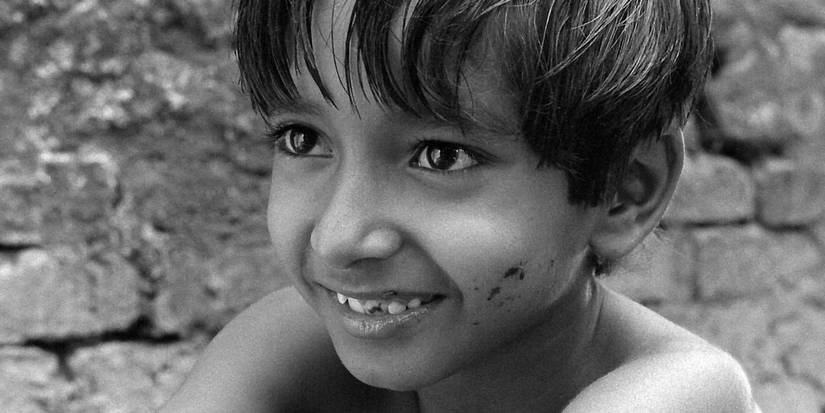 Image via Aurora Film Corporation
The reason The Apu Trilogy has the most perfect ending of all is that Pather Panchali, Aparajito, and Apur Sansar build not toward a climax in the usual sense, but toward the full moral and emotional shape of a life. Pather Panchali gives us childhood as texture, hunger, wonder, family strain, beauty discovered in small things, sorrow moving in slowly from the edges. Aparajito then carries Apu (played across the trilogy by Subir Banerjee, Pinaki Sengupta, Smaran Ghosal, and Soumitra Chatterjee) into education, distance, maternal ache, ambition, and one of the greatest depictions of separation ever put on film, because it understands that growing can also feel like abandonment from the other side. By the time you reach Apur Sansar, the trilogy already feels frighteningly close to life itself.
And then Apur Sansar does something miraculous. It gives Apu love almost incidentally, then lets that love become the warmest thing in the trilogy, then tears it away and follows him into a grief so complete it nearly empties him of the will to remain a father, a man, a participant in life at all. That is why the ending is so overwhelming. When Apu finally reaches toward his son, the trilogy does not force happiness. It does not pretend pain has been canceled. It gives us something much more beautiful: continuation after devastation. A damaged man moving, finally, back toward human connection. Not healed. Not restored. Open again. That is perfect. That is mercy earned across three films. That is why it is number one.
Collider Exclusive · Middle-earth Quiz
Which Lord of the Rings
Character Are You?
One Quiz · Ten Questions · Your Fate Revealed
The road goes ever on. From the green hills of the Shire to the fires of Mount Doom, every soul in Middle-earth carries a destiny. Ten questions stand between you and the truth of who you are. Answer honestly — the One Ring has a way of revealing what we most want to hide.
💍Frodo
🌿Samwise
👑Aragorn
🔥Gandalf
🏹Legolas
⚒️Gimli
👁️Sauron
🪨Gollum
BEGIN YOUR QUEST →
01
You are handed a responsibility that could destroy you. What do you do? The weight of the world falls on unlikely shoulders.
AAccept it. Someone has to, and running changes nothing. BStay by the side of whoever carries it. They shouldn't go alone. CStep forward and lead. This is exactly what I was made for. DIt's mine now. I won't let anyone else have it.
NEXT QUESTION →
02
Your closest companion is heading into terrible danger. You: True loyalty is revealed not in comfort, but in crisis.
AFollow them without hesitation. I'd rather die beside them than live without them. BRally others and forge a plan to help — strength in numbers. COffer wisdom and guidance. My counsel may save them where swords cannot. DLet them go. Only the strong survive, and sentiment is a weakness.
NEXT QUESTION →
03
Enormous power is within your reach. Your instinct is: Power corrupts — but only those who reach for it.
ADestroy it. Nothing good comes from power this absolute. BUse it to protect those I love — just this once. CWield it wisely. I have the will and the knowledge to do good with it. DSeize it. I have waited long enough. It belongs to me.
NEXT QUESTION →
04
What does "home" mean to you? Where we long to return reveals who we truly are.
AA simple, peaceful place — green hills, good food, no adventure required. BWherever the people I love are. Home is a feeling, not a place. CA kingdom I must earn before I can truly claim it as mine. DI lost it long ago. That loss is what drives everything I do.
NEXT QUESTION →
05
When a battle is upon you, your approach is: War reveals what we are made of — whether we like it or not.
ASurvive by any means. I'm not a fighter — but I'll do what I must. BFight for the person beside me, not for glory or honour. CLead the charge. Nothing inspires an army like a king at the front. DStrike from range, fast and precise — never let them get close.
NEXT QUESTION →
06
Someone comes to you for advice in their darkest hour. You: Wisdom is not knowing all the answers — it's knowing which questions to ask.
AListen, then offer honest encouragement. Sometimes people just need belief. BGive them practical help — words are fine, but action is better. CSpeak carefully. I have seen much, and I know what counsel can cost. DTell them what they want to hear. Trust is a tool like any other.
NEXT QUESTION →
07
How do you see yourself, honestly? Self-knowledge is the most dangerous kind.
ASmall and ordinary — but perhaps that's exactly why I was chosen. BDefined entirely by who I serve and love. I am nothing without them. CForged by hardship into something the world has not yet fully seen. DDiminished from what I once was — and consumed by the need to reclaim it.
NEXT QUESTION →
08
Which of these best describes your relationship with the natural world? Middle-earth speaks to those who know how to listen.
AI find peace in it — forests, rivers, open skies. Nature restores me. BI prefer the earth underfoot — stone, mines, solid and real things. CI have watched the world change for longer than most can comprehend. DNature offers hiding places, cold water, raw fish. That's enough for me.
NEXT QUESTION →
09
You encounter a wretched, pitiable creature who has done terrible things. You: How we treat the fallen reveals the height of our character.
AShow mercy. Even the most broken souls deserve a chance at redemption. BPity them — but never trust them. They made their choices. CSee them as a tool. Their knowledge or skills may still serve a purpose. DDestroy them before they can cause more harm. Mercy is a luxury we cannot afford.
NEXT QUESTION →
10
When the quest is over and the songs are sung, what do you hope they say about you? In the end, we are all just stories.
AThat an ordinary person did an extraordinary thing — and came home. BThat I never abandoned the person who needed me most. CThat I was worthy of the crown — and everything it demanded. DNothing. I don't need songs. I needed it, and now it's gone.
REVEAL MY FATE →
The Fellowship Has Spoken Your Place in Middle-earth
The scores below reveal your true character. Your highest number is your match. Even a tie tells a story — the Fellowship was never made of simple people.
💍 Frodo
🌿 Samwise
👑 Aragorn
🔥 Gandalf
🏹 Legolas
⚒️ Gimli
👁️ Sauron
🪨 Gollum
You carry something heavy — and you carry it alone, even when you don't have to. You were not born for greatness, and that is precisely why greatness chose you. Your courage is not the roaring, sword-swinging kind; it is quiet, stubborn, and terrifying in its refusal to quit. The Ring weighs on you more than anyone can see, and still you walk toward the fire. That is not weakness. That is the rarest kind of strength there is.
You are, without question, the best of them. Not the most powerful, not the most celebrated — but the most essential. Your loyalty is not a trait; it is a force of nature. You would carry the person you love up the slopes of Mount Doom if it came to that, and we both know you'd do it without being asked. The world needs more people like you, and the world is lucky it has even one.
You were born to lead, and you have spent years running from it. The crown is yours by right, but you know better than anyone that right means nothing without the will and the worthiness to back it up. You are tempered by loss, shaped by long roads, and defined by a code of honour you hold to even when no one is watching. When you finally step forward, the world shifts. Because it was always waiting for you.
You have seen more than you let on, and you say less than you know — which is exactly as it should be. You are a catalyst: you do not fight the battles yourself, you ignite the people who can. Your wisdom comes not from books but from an age of watching what happens when it is ignored. You arrive precisely when you mean to, and your presence alone changes what is possible. A wizard is never late.
Graceful, perceptive, and almost preternaturally calm under pressure — you see things others miss and act before others react. You do not need to make a scene to be remarkable; your presence speaks for itself. You are loyal to those you choose to stand beside, and that choice is not made lightly. You have lived long enough to know that the most beautiful things in this world are also the most fragile, and that is why you fight to protect them.
You are loud, proud, and absolutely formidable — and beneath all of that is one of the most fiercely loyal hearts in Middle-earth. You don't do anything by half measures. Your friendships are forged like iron, your grudges run as deep as mines, and your courage in battle is the kind that makes legends. You came into this fellowship suspicious of everyone and ended it willing to die for an elf. That is not a small thing. That is everything.
You think in centuries and act in absolutes. Order, dominion, control — not because you are cruel by nature, but because you have decided that the world left to itself always falls apart, and you are the only one with the vision and the will to hold it together. You were not always this. Something was lost, or taken, or betrayed, and the version of you that stands now is the answer to that wound. The tragedy is that you're not entirely wrong — just entirely too far gone to course-correct.
You are a study in contradiction — pitiable and dangerous, cunning and broken, capable of both cruelty and something that once resembled love. You are defined by loss: of innocence, of self, of the one thing that gave your existence meaning. Two voices war inside you constantly, and the tragedy is that the better one sometimes wins, just not often enough, and never at the right moment. You are a warning, yes — but also a mirror. We are all a little Gollum, given the right ring and enough time.
↻ RETAKE THE QUIZ
Pather Panchali
Release Date August 26, 1955






 English (US) ·