
 Image via Paramount Pictures
Published Aug 19, 2026, 12:14 AM EDT
Diego Pineda has been a devout storyteller his whole life. He has self-published a fantasy novel and a book of short stories, and is actively working on publishing his second novel.
A lifelong fan of watching movies and talking about them endlessly, he writes reviews and analyses on his Instagram page dedicated to cinema, and occasionally on his blog. His favorite filmmakers are Andrei Tarkovsky and Charlie Chaplin. He loves modern Mexican cinema and thinks it's tragically underappreciated.
Other interests of Diego's include reading, gaming, roller coasters, writing reviews on his Letterboxd account (username: DPP_reviews), and going down rabbit holes of whatever topic he's interested in at any given point.
Sign in to your Collider account
The roots of the thriller genre go back hundreds and hundreds of years, but it didn't start becoming a fully-formed genre with a style all of its own until the late-19th and early-20th centuries—part of that evolution coming in the form of some of the most suspenseful movies the world has ever seen. Over the course of the last century, thriller filmmakers around the world have offered some of the most nail-biting movies one can ever possibly find.
Tension, sky-high stakes, and the mystery of what will happen next are all at the heart of what makes suspense work as well as it does on the big screen. From 1926 until the present, there have been a few key cinematic masterpieces, from classics like M to modern hits like Uncut Gems, which have completely re-defined the way thrills and suspense work in the Seventh Art.
8 'M' (1931)
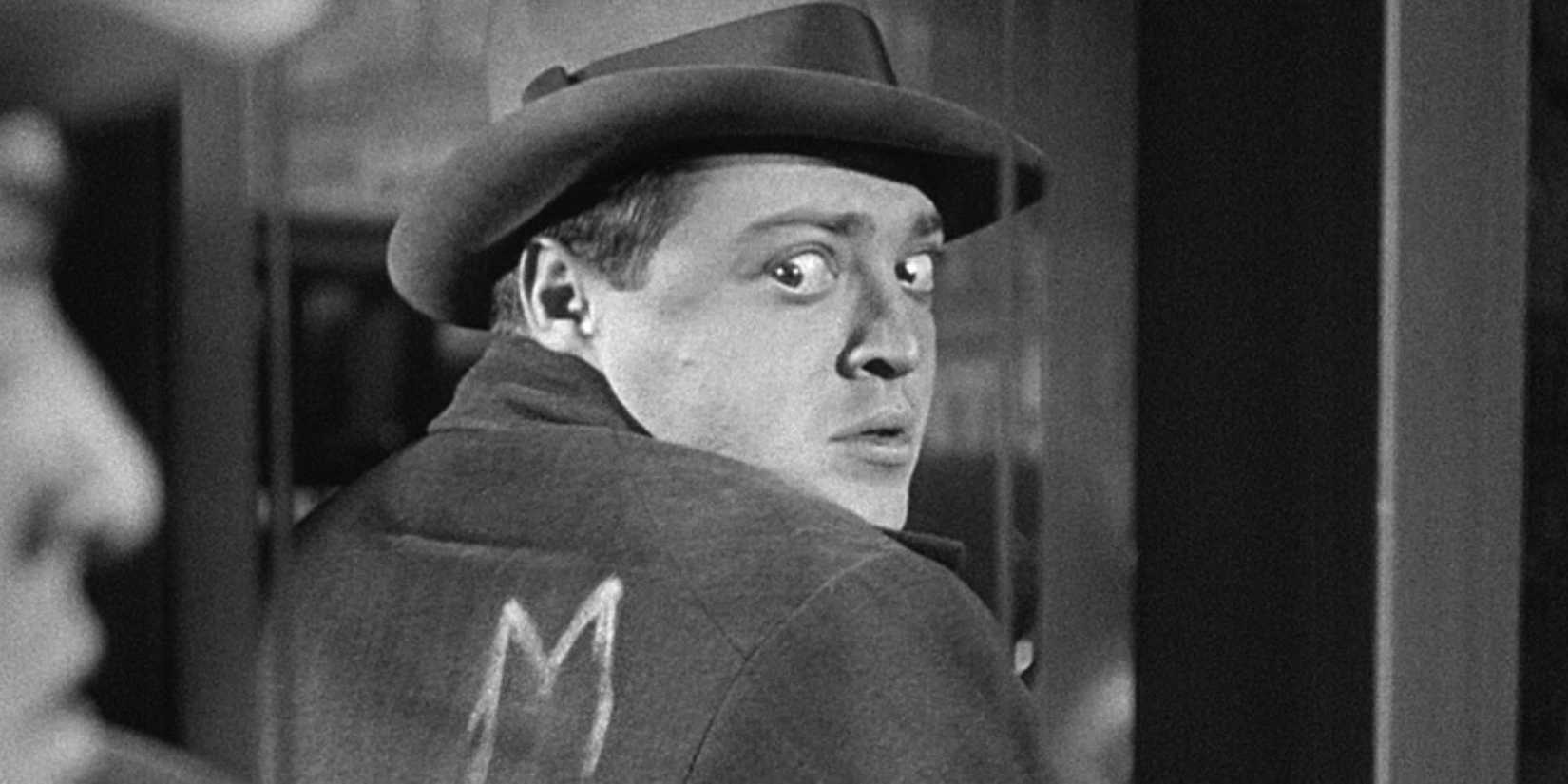 Image via Paramount Pictures
Fritz Lang is one of the most important and groundbreaking European filmmakers in history, which should make it entirely unsurprising that he directed and co-wrote (with his wife, Thea von Harbou) one of the most foundational thrillers in cinema's history: M, which also happens to be one of the most important films made during cinema's transition to sound.
M is an undisputed masterpiece, one of those psychological thrillers that helped define the genre. Bolstered by Peter Lorre's powerhouse lead performance and some of the best camerawork of the 1930s, this classic built an atmosphere of urban paranoia and psychological dread that was unlike anything cinema had ever seen before. Over 90 years later, it's still awfully effective, making the movie a must-see for all those interested in learning about the genre's evolution.
7 'The Departed' (2006)
 Image via Warner Bros. Pictures
A remake of the 2002 Hong Kong masterpiece Infernal Affairs, The Departed was the movie that finally earned Martin Scorsese his long-overdue Best Director Academy Award, as well as his first film ever to win Best Picture. Whether it's superior to the original or not is beside the point; the fact of the matter is that it's one of the most perfect gangster movies since 2000, a modern classic that has only gotten better with age.
By this point in the 21st century, Scorsese had already become such a master of the crime thriller genre that it's no surprise that he made in The Departed his most suspenseful movie to date. Full of delicious dramatic irony and jaw-dropping plot twists, this relentlessly-paced gem is one of the most foundational crime thrillers of the 21st century as a whole. Scorsese mafia movies are always immensely entertaining, but never had they been more tension-filled than this—and they never have since then.
6 'The Silence of the Lambs' (1991)
 Image via Orion Pictures
Jonathan Demme's The Silence of the Lambs is the latest film to have won all Big Five Academy Awards (Best Picture, Director, Actress, Actor, and Screenplay), and very deservedly so. There are some thrillers so terrifyingly suspenseful and darkly atmospheric that some go so far as to consider them horror thrillers, and Silence of the Lambs is perhaps the quintessential example of that.
Several R-rated psychological thrillers can be called masterpieces, but few more clearly so than Demme's magnum opus. Adapted from Thomas Harris' massively influential novel, this essential '90s classic is a masterclass in filmmaking so suspenseful that it's downright horrifying. Violent, twisty, and psychologically complex, Silence of the Lambs is made all the more powerful by Jodie Foster and Anthony Hopkins' powerhouse performances.
Collider Exclusive · Horror Survival Quiz Which Horror Villain Do You Have the Best Chance of Surviving? Jason Voorhees · Michael Myers · Freddy Krueger · Pennywise · Chucky
Five killers. Five completely different ways to die — if you're not smart enough, fast enough, or self-aware enough to avoid it. Only one of them is the villain your particular set of instincts gives you a fighting chance against. Eight questions will figure out which one.
🏕️Jason
🔪Michael
💤Freddy
🎈Pennywise
🪆Chucky
TEST YOUR SURVIVAL →
01
Something feels wrong. You can't explain it — you just know. What do you do? First instincts are the difference between the survivor and the first act casualty.
ALeave immediately. I don't need to understand a threat to respect it. BStay quiet and observe. If I can see it, I can understand it. If I can understand it, I can avoid it. CStay awake. Whatever this is, I am not going to sleep until I feel safe again. DConfront it directly. Fear grows in the dark — I'd rather know what I'm dealing with. ECheck everything, trust nothing. The threat might be closer than I think — and smaller.
NEXT QUESTION →
02
Where are you most likely to find yourself when things go wrong? Setting is everything in horror. Where you are determines which rules apply.
ASomewhere remote — a cabin, a campsite, off the grid and away from people. BA quiet suburban neighbourhood where nothing ever happens. Except tonight. CIn my own head — the most dangerous place of all, depending on what's already in there. DWherever children are — because something about this place attracts the worst things. ESomewhere ordinary — a house, a toy store, a place where the last thing you'd expect is a threat.
NEXT QUESTION →
03
What is your most reliable survival asset? Every survivor has a quality the villain didn't account for. What's yours?
APhysical fitness — I can run, I can swim, I can outlast something that relies on brute persistence. BSpatial awareness — I always know the exits, the hiding spots, the fastest route out. CPsychological resilience — I've faced my worst fears before. They don't have the same power over me. DEmotional steadiness — I don't panic. Panic is what gets you caught. EScepticism — I don't underestimate threats because of how they look. Size is irrelevant.
NEXT QUESTION →
04
What kind of fear is hardest for you to fight through? Knowing your weakness is the first step to not dying because of it.
AThe unstoppable — something that will not stop, cannot be reasoned with, and is always getting closer. BThe invisible — a threat I can feel but can't locate, watching from somewhere I can't see. CThe psychological — something that uses my own mind and memories against me. DThe unknowable — something ancient, shapeless, that feeds on the fear itself. EThe mundane — a threat so ordinary-looking that no one will believe me until it's too late.
NEXT QUESTION →
05
You're with a group when things start going wrong. What's your role? Horror movies are brutally clear about who survives group situations and who doesn't.
AThe one who says "we need to leave" first — and means it, even when no one listens. BThe one who stays quiet, watches the others, and figures out the pattern before anyone else does. CThe one who holds the group together when panic sets in — because someone has to. DThe one who asks the questions nobody wants to ask — because ignoring them gets people killed. EThe one who takes the threat seriously when everyone else is laughing it off.
NEXT QUESTION →
06
What's the horror movie mistake you're most likely to make? Honest self-assessment is a survival skill. Denial is not.
AGoing back for someone — I know I shouldn't, but I can't leave them behind. BAssuming I'm safe once I've found a hiding spot. That's when it finds me. CFalling asleep when I absolutely cannot afford to. Exhaustion is its own enemy. DLetting my curiosity override my instincts — I always need to understand what I'm dealing with. EDismissing the threat because of how it looks. That's exactly what it wants.
NEXT QUESTION →
07
What's your best weapon against something that can't be stopped by conventional means? Every horror villain has a weakness. The survivors are always the ones who find it.
AThe environment itself — I use the terrain, the water, the geography against it. BPatience — I wait, I watch, and I strike at the one moment it doesn't expect. CLucidity — if I can stay in control of my own mind, it loses its primary weapon. DCourage — facing it directly, refusing to run, taking away the fear it feeds on. EImprovisation — I use whatever's at hand, however unconventional. Creativity over brute force.
NEXT QUESTION →
08
It's the final scene. You're the last one standing. How did you make it? The final survivor always has a reason. What's yours?
AI kept moving. I never stopped, never hid for too long, never let it corner me. BI figured out the pattern before anyone else did — and I used it against the thing following it. CI stayed awake, stayed lucid, and refused to give it the one thing it needed most. DI stopped being afraid of it. And the moment I did, everything changed. EI took it seriously from the start — and I never once made the mistake of underestimating it.
REVEAL MY VILLAIN →
Your Survival Odds Have Been Calculated Your Best Chance Is Against…
Your instincts, your strengths, and your particular way of thinking under pressure point to one villain you actually have a fighting chance against. Everyone else — good luck.
Jason Voorhees
Jason is relentless, but he is also predictable — and that is the gap you would exploit.
- He moves in straight lines toward his target. He doesn't strategise, doesn't adapt, doesn't outsmart. He simply pursues.
- Your ability to keep moving, use the environment, and resist the panic that freezes most victims gives you a genuine edge.
- The Crystal Lake survivors were always the ones who stopped running in circles and started thinking about terrain, water, and distance.
- You think like that. Which means Jason, for all his indestructibility, would face someone who simply refused to be where he expected.
Michael Myers
Michael watches before he moves. He is patient, methodical, and almost impossible to detect — until it's too late for anyone who isn't paying close enough attention.
- But you are paying attention. You notice the shape in the window, the car parked slightly wrong, the silence where there should be sound.
- Michael's power lies in the invisibility of ordinary suburbia — the fact that nothing ever looks wrong until it already is.
- Your spatial awareness and instinct to map every room, every exit, and every shadow before you need them is precisely the quality Laurie Strode had.
- You are not a victim waiting to happen. You are someone who already suspects something is wrong — and acts on it.
Freddy Krueger
Freddy wins by getting inside your head — using your own fears, your own memories, your own subconscious as weapons against you. That strategy requires a target who can be destabilised.
- You are harder to destabilise than most. You've faced uncomfortable truths about yourself and you haven't looked away.
- The survivors on Elm Street were always the ones who understood what was happening and chose to face it rather than flee from it.
- Freddy's greatest weakness is that his power evaporates in the presence of someone who refuses to give him the fear he feeds on.
- Your psychological resilience — the ability to stay grounded when reality itself becomes unreliable — is exactly the quality that keeps you alive here.
Pennywise
Pennywise is ancient, shapeshifting, and feeds on terror — but it has one critical vulnerability: it cannot function against someone who genuinely stops being afraid of it.
- The Losers Club didn't survive because they were braver than everyone else. They survived because they faced their fears together, and faced them honestly.
- You ask the questions others avoid. You look directly at what frightens you rather than turning away.
- That directness — the refusal to let fear fester in the dark — is Pennywise's worst nightmare.
- It chose the wrong target when it chose you. You are exactly the kind of person whose fear tastes like nothing at all.
Chucky
Chucky's greatest advantage is that nobody takes him seriously until it's already too late. He exploits the gap between how something looks and what it actually is.
- You don't have that gap. You take threats seriously regardless of how they present — and you never make the mistake of underestimating something because of its size or appearance.
- Chucky relies on surprise, on the delay between recognition and response. You close that delay faster than almost anyone.
- Your instinct to treat every unfamiliar thing with appropriate scepticism — rather than dismissing it because it seems absurd — is the exact quality that keeps you breathing.
- Against Chucky, not laughing is already winning. You are very good at not laughing.
↻ RETAKE THE QUIZ
5 'Inglourious Basterds' (2009)
 Image via The Weinstein Company
Quentin Tarantino proved admirably soon into his career that he was a voice to look out for going forward; and indeed, by this point, one could confidently call him one of the most acclaimed filmmakers currently working in Hollywood. The question of what his greatest movie ever is can elicit many responses, but it's likelier than not that Inglourious Basterds will come up more than most.
It's one of the most intense World War II movies of all time for a wide variety of reasons. There's the presence of Christoph Waltz's Hans Landa, one of the most intimidating villains in the genre's history; there's the pure entertainment value of Tarantino's historical revisionism; and, of course, there's also the pure suspense of the whole thing. From the opening scene to the infamous bar sequence, Inglourious Basterds basically consists of two-and-a-half hours of Tarantino delivering masterclasses in how to build high-stakes tension and suspense.
4 'Misery' (1990)
Misery is one of the greatest horror thriller movies of all time, based on one of the best horror thriller books ever written. One of the best Stephen King adaptations the big screen has ever seen, this Rob Reiner classic is one of the most suspenseful single-location movies of all time, bolstered by James Caan and Kathy Bates' downright-flawless performances. Movies with premises as minimalistic as this are tough to truly nail, but Reiner had such a spotless understanding of the bare essentials of suspense that he did as marvelous a job as anyone possibly could have.
Like all the most exciting movies based on great books, Misery seems to perfectly understand how to best lift the tension from King's printed page right to the screen. It's character-driven suspense through and through, permeated by an atmosphere of pure dread and survival that's fueled mostly by Bates' performance, arguably the best Oscar-winning horror movie performance of all time.
3 'Psycho' (1960)
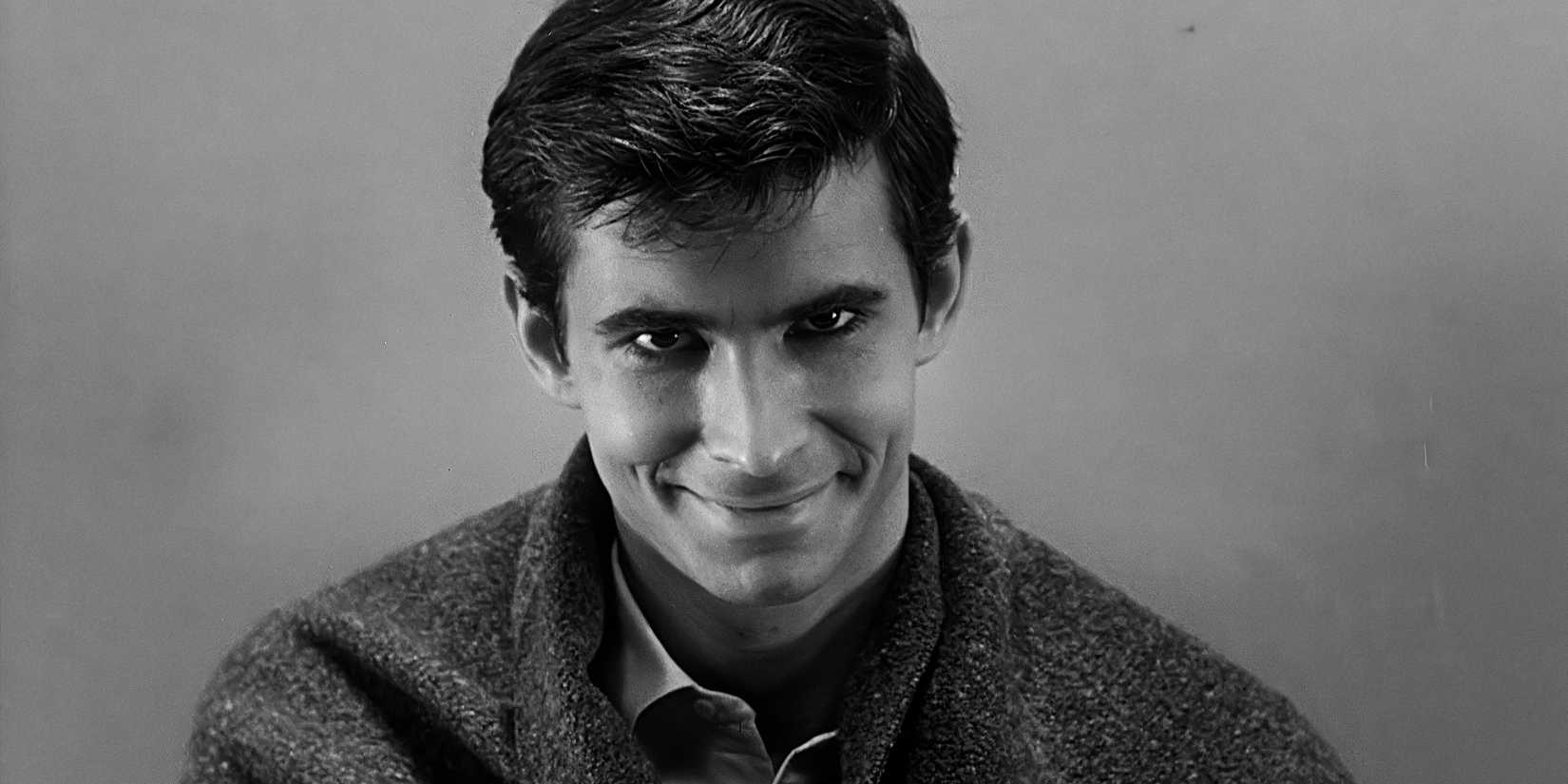 Image via William Creamer - © MPTV
Alfred Hitchcock is often given the moniker of the Master of Suspense, and that's for good reason. Since his early days in British silent cinema, the director began to revolutionize suspense and the thriller genre as a whole, completely changing the way movies create tension and deliver twists and surprises. Even though he made several of the most suspenseful thrillers of the last 100 years, there's one that stands tall above all the others: the chilling horror thriller Psycho.
One of the best psychological thriller movies in history, Psycho is packed with twists and turns that broke new ground in the thriller genre, bridging the gap between its Golden-Age-Hollywood form and the experimental years right after its conclusion. Though the years have made it so that some of Psycho's surprises aren't all that shocking anymore, the whole film's atmosphere of fear and suspense is still entirely effective.
2 'Se7en' (1995)
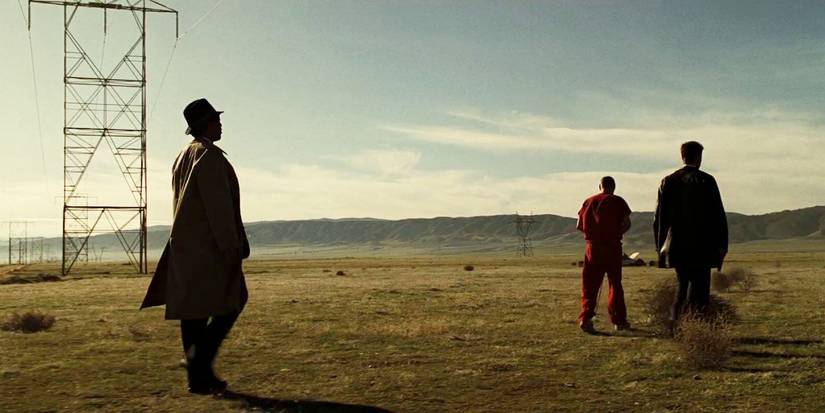 Image via New Line Cinema
There's a solid number of filmmakers worthy of being considered today's Masters of Suspense, worthy spiritual successors to Alfred Hitchcock. One of those filmmakers is undoubtedly David Fincher, and there's no better way to understand why than watching Se7en. All in all, it's arguably the darkest and most cynical movie ever to make over $300 million dollars at the worldwide box office.
It's one of the most perfect cat-and-mouse thrillers ever made, one so unapologetically pessimistic and grim that it can also be counted as psychological horror. In any case, one thing is certain, and that is that it's the sort of hyper-suspenseful big-budget studio film so dark that it could only possibly come from post-'90s Hollywood. There are those who would argue that it's Fincher's most suspenseful film, and talking about a director who's such a master of cinematic tension, that's high praise.
1 'Uncut Gems' (2019)
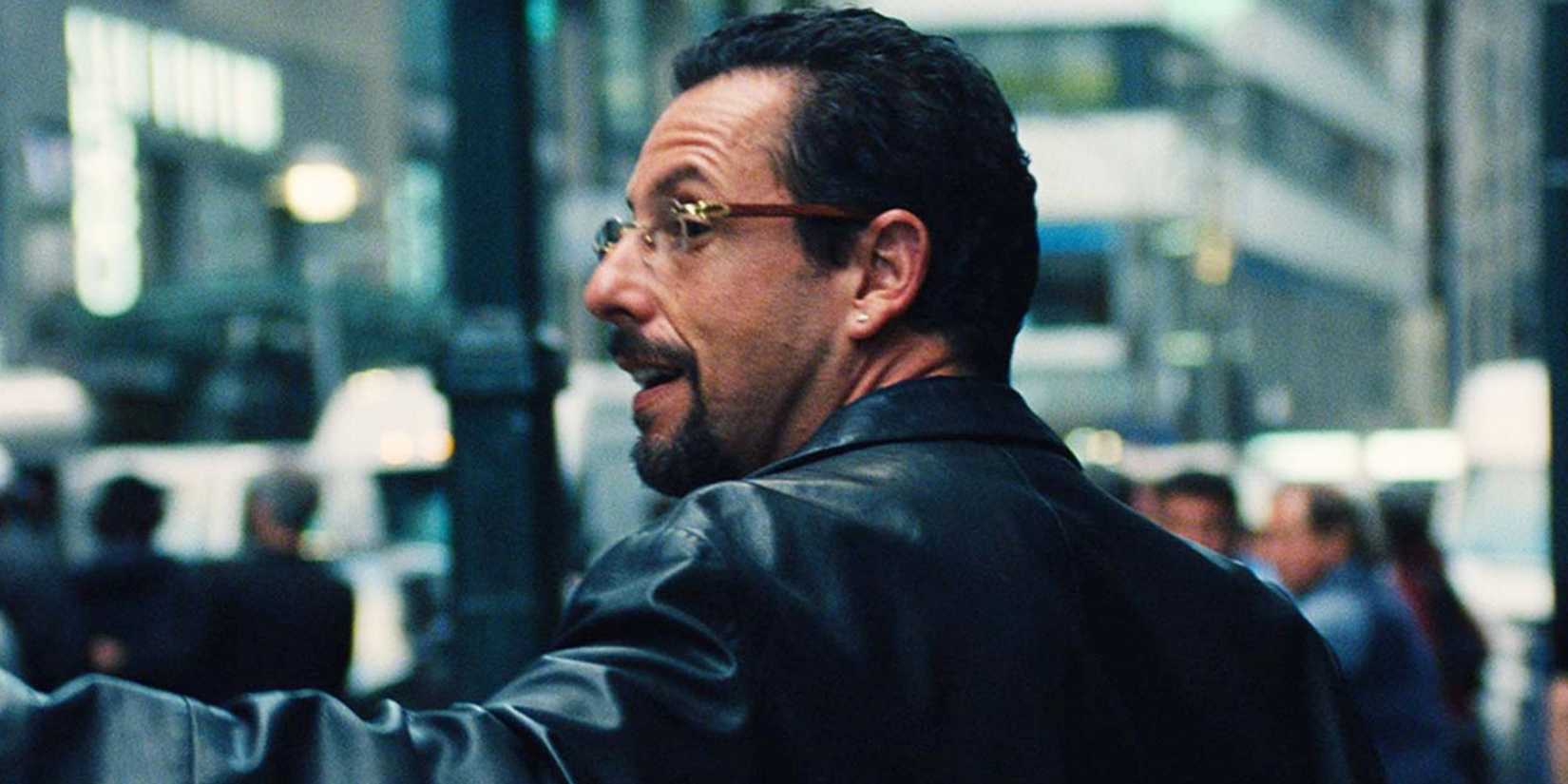 Image via A24
Josh and Benny Safdie are masters of anxiety-inducing cinema, and never have either of them made a film more anxiety-inducing than what some may rightfully call the single most suspenseful feature film ever shot: Uncut Gems. Anchored by the most admirable acting performance of Adam Sandler's career, it's one of the best thriller movies since 2010, a masterpiece that makes it easy to run out of nails to bite if you're not paying attention.
Every single element of Uncut Gems works in perfect conjunction with all the others to generate an atmosphere of suspense as stressful as humanly possible. Sandler's performance, the Safdies' perfect sense of pacing, the overlapping naturalistic dialogue, Daniel Lopatin's score—it's all meant to keep the audience at the edge of their seats for 135 straight minutes, and it works flawlessly. Uncut Gems is by no means an easy film to get through, since it definitely demands a strong stomach from its viewers; but no thriller movie fans' bucket list can be complete without it.

Uncut Gems
Release Date December 25, 2019
Runtime 136 minutes
Director Benny Safdie, Josh Safdie
-
Adam Sandler
Howard Ratner
-





 English (US) ·