
Science fiction has always looked toward the future, but only a handful of novels have managed to really predict it. These books saw trends long before they were visible to everyone else, or imagined paths that science and technology would eventually go down.
With that in mind, this list looks at some of the most prescient sci-fi novels ever, from the pioneering cyberpunk of Neuromancer to the authoritarian dystopian of Nineteen Eighty-Four. Some of them are remarkable in just how many decades ahead of the curve they were.
8 'The Shockwave Rider' (1975)

"The future belongs to information." Long before the internet became part of everyday life, John Brunner imagined a society transformed by interconnected computer networks in The Shockwave Rider. The story centers on Nick Haflinger, a brilliant fugitive capable of manipulating vast computer systems while attempting to evade an increasingly powerful surveillance state. In this world, information is one of the most valuable (and dangerous) commodities imaginable.
These days, The Shockwave Rider is most remembered for coining the term 'worm' to describe malware that spreads between computers. However, the novel was also ahead of its time in the way it looked at issues like hacking, mass surveillance, and information overload. Plus, it has a lot to say about algorithmic manipulation and data theft, with many characters utterly terrified of fraud and having their personal details weaponized against them.
7 'Fahrenheit 451' (1953)
 Image via Simon & Schuster
"You don't have to burn books to destroy knowledge." This dystopian classic by genre legend Ray Bradbury follows firefighter Guy Montag, whose job is to burn books in a future where reading has become socially unacceptable. Ideas are too dangerous to be permitted. However, he gradually begins questioning the values of his society, eventually seeing how free thought has been replaced by passive entertainment and carefully managed public opinion.
At its core, Fahrenheit 451 is an allegory about censorship, though it also includes many spot-on predictions about interactive screens, wireless audio devices, shortened attention spans, and media designed to discourage reflection. In particular, it shows us a world inundated in short, fast-paced content, stripped of nuance, whose cumulative effect is to make it harder for citizens to think through the problems affecting them most. Totally farfetched, right?
6 'Snow Crash' (1992)

"The future is already online." By the early 1990s, PCs and the internet were beginning to go mainstream, and author Neal Stephenson saw the endpoints of many of these emerging trends. In his breakout novel Snow Crash, our protagonist Hiro, a pizza delivery driver and hacker, contends with a mysterious digital phenomenon capable of affecting both virtual and physical reality. From here, much of the story unfolds within the Metaverse, a vast shared virtual world where users interact through customizable digital identities.
It's impressive that Stephenson conceived of this online world years before virtual reality platforms, online gaming communities, cryptocurrency, and digital marketplaces became widespread. Likewise, his vision of a future where corporations increasingly wield more power than traditional governments feels uncomfortably plausible. Finally, he also came up with tech that would eventually become real, like a virtual map of the planet which is basically just Google Earth.
5 'The Machine Stops' (1909)

"We have learned to live without the world." Published well over a century ago, this book deserves credit for how ahead of the curve it was. The Machine Stops is a novella by English author E.M. Forster, most famous for writing A Room with a View and Howards End. In contrast to those dramas, it's a futuristic tale in which the surface of the earth is uninhabitable, forcing humanity to live in isolated underground rooms where they communicate through screens, consume endless streams of content, and rely upon automated systems for pretty much every aspect of daily life.
Presiding over all this is an omnipresent AI known only as 'the Machine'. It's almost astounding just how many ideas Forster included here that would eventually become real in some form, from video conferencing and data clouds to automation, food delivery, pandemic-style lockdowns and social isolation, and, of course, a tendency to live online rather than out in the real world.
4 'Machines Like Me' (2019)
 Image via Nan A. Talese
"What makes someone truly human?" Although Machines Like Me only came out 7 years ago, it was still prescient as a complex portrait of AI, and ranks among the very best novels on the topic. Penned by Atonement's Ian McEwan, it takes place in an alternate version of the 1980s where digital tech was developed decades ahead of schedule. The main character is a man named Charlie, who purchases a robot named Adam and brings it into his home.
Soon, a strange, messy three-way dynamic emerges between Charlie, his partner Miranda, and their new metallic roommate/servant/friend/frenemy Adam. Rather than exploring the usual ideas of AI gone bad or 'Skynet'-style dystopian, McEwan uses this premise to imagine what it might be like to live with genuinely alien artificial intelligences with very different (perhaps superior?) moral judgments than our own.
3 'Nineteen Eighty-Four' (1949)
 Image via Simon & Schuster
"Big Brother is watching you." The greatest dystopian novel of all time, and by some margin. Nineteen Eighty-Four revolves around Winston Smith, a minor government employee living under the totalitarian regime of Oceania, where history is constantly rewritten, and independent thought is ruthlessly suppressed. The Party in charge invades every aspects of its subjects' lives, including the privacy of their minds, forcing them not only to parrot the party line but to believe it, achieving this through brainwashing and torture.
In other words, this is one of the grimmest visions of the future ever written, made even more frightening by the fact that it's rooted in real-world tendencies. In particular, George Orwell was ahead of his time in recognizing the importance of language for both freedom and control. Along the way, he gave us concepts like "Big Brother," "thoughtcrime," and "doublethink", which are still used in political discourse today.
2 'Neuromancer' (1984)
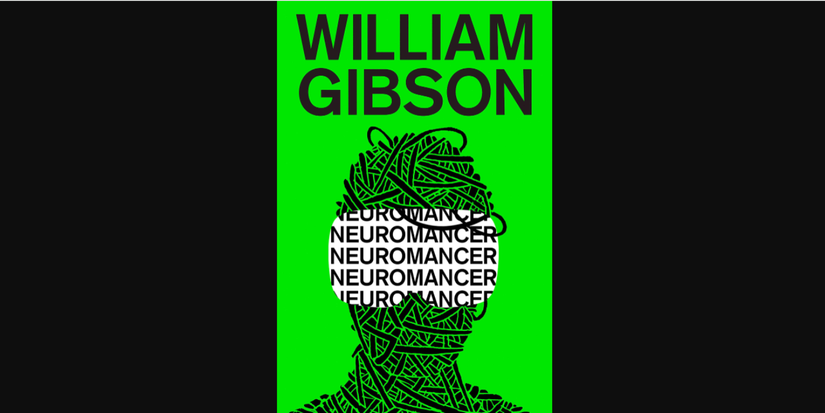 Image via Ace Books
"The matrix has you already." William Gibson's magnum opus, Neuromancer is the archetypal cyberpunk story. The main character is Case, a washed-up computer hacker recruited for one final, extraordinarily dangerous digital heist. As he returns to cyberspace, Gibson presents us with a future dominated by multinational corporations, artificial intelligences, cybernetic enhancement, virtual environments, and global computer networks that blur the boundaries between the physical and the digital.
Indeed, it was here that the author coined terms like 'cyberspace' and 'matrix', while also painting a convincing picture of an economy where vast hordes of wealth move around the world with the click of a button. In addition, he broke ground with his treatment of things like biological microchips and nanobots.. Fundamentally, Neuromancer understood that information would soon become the world's most valuable resource.
1 'Brave New World' (1932)
 Image via Horizon Ridge Publishing
"People can be controlled through pleasure as easily as fear." In contrast to the brutality of Nineteen Eighty-Four, where compliance is enforced through violence and ceaseless surveillance, Brave New World proposed something arguably more disturbing: a future where citizens have surrendered their freedom willingly, happy to trade it for shallow pleasures and endless entertainment. In this society, people fritter away their lives through consumerism and recreational drugs, never having to think for themselves. Instant gratification is the highest good.
Consequently, over time, many have come to view Aldous Huxley's dystopia as more probable than Orwell's. Its central insight, that freedom may disappear not because it's wrested away by force, but because they gradually stop valuing it, continues to make it one of the most relevant (and provocative) novels ever written.
Collider Exclusive · Sci-Fi Survival Quiz Which Sci-Fi World Would You Survive? The Matrix · Mad Max · Blade Runner · Dune · Star Wars
Five universes. Five completely different ways the future went wrong — or sideways, or up in flames. Only one of them is the world your instincts were built for. Eight questions will figure out which dystopia, galaxy, or desert wasteland you'd actually make it out of alive.
💊The Matrix
🔥Mad Max
🌧️Blade Runner
🏜️Dune
🚀Star Wars
TEST YOUR SURVIVAL →
01
You sense something is deeply wrong with the world around you. What do you do? The first instinct is often the truest one.
APull on every thread until I understand the system — then figure out how to break it. BStop asking questions and start stockpiling — food, fuel, weapons. Questions don't keep you alive. CKeep my head down, observe carefully, and trust no one until I know who's pulling the strings. DStudy the patterns. Every system has a rhythm — learn it, and you learn how to survive it. EFind the people fighting back and join them. You can't fix a broken galaxy alone.
NEXT QUESTION →
02
In a world of scarcity, what resource do you guard most fiercely? What we protect reveals what we believe survival actually requires.
AKnowledge. If you understand the system, you don't need resources — you can generate them. BFuel. Everything else — movement, power, escape — runs on it. CTrust. In a world of fakes and informants, a truly reliable ally is rarer than any commodity. DWater. And after water, information — the two things empires are truly built on. EShips and credits. The galaxy is big — you survive it by being able to move through it freely.
NEXT QUESTION →
03
What kind of threat keeps you up at night? Fear is useful data — if you're honest about what you're actually afraid of.
AThat reality itself is a lie — that everything I experience has been constructed to keep me compliant. BA raid. No warning, no mercy — just the roar of engines and then nothing left. CBeing identified. Once someone with power decides you're a problem, you're already out of time. DBeing outmanoeuvred — losing a political game I didn't even know I was playing. EThe Empire tightening its grip until there's nowhere left to run.
NEXT QUESTION →
04
How do you deal with authority you don't trust? Every dystopia has a power structure. Your approach to it determines everything.
ASubvert it from the inside — learn its rules well enough to weaponise them against it. BIgnore it and stay out of its reach. The further from any power structure, the better. CAppear to comply while doing exactly what I need to do. Visibility is the enemy. DManoeuvre within it carefully. You can't beat a system you refuse to understand. EResist openly when I have to. Some things are worth the risk of being seen.
NEXT QUESTION →
05
Which environment could you actually endure long-term? Survival isn't just tactical — it's physical, psychological, and very much about where you are.
AUnderground bunkers and server rooms — cramped, artificial, but with access to everything that matters. BOpen wasteland — brutal sun, no shelter, constant movement. At least the threat is honest. CA dense, rain-soaked city where you can disappear into the crowd and nobody asks questions. DMerciless desert — extreme heat, no water, and something enormous living beneath the sand. EThe fringe — backwater planets and busy spaceports where the Empire's attention rarely reaches.
NEXT QUESTION →
06
Who do you want in your corner when things fall apart? The company you keep is the clearest signal of who you actually are.
AA tight crew of believers who've seen behind the curtain and have nothing left to lose. BOne or two people I'd trust with my life. Any more than that and someone talks. CNobody, ideally. Alliances are liabilities. I work alone unless I have no choice. DA community bound by shared hardship and mutual survival — people who need each other to last. EA ragtag team with wildly different skills and total commitment when it counts.
NEXT QUESTION →
07
Where do you draw the line — if you draw one at all? Every survivor eventually faces a moment that tests what they're actually made of.
AI won't harm the innocent — even the ones who'd report me without hesitation. BI do what I have to to protect the people I've chosen. Everything else is negotiable. CThe line shifts depending on who's asking and what's at stake. DI draw a long-term line — nothing that compromises my people's future, even if it'd help now. ESome lines, once crossed, can't be uncrossed. I know which ones they are.
NEXT QUESTION →
08
What would actually make survival worth it? Staying alive is one thing. Having a reason to is another.
AWaking others up — dismantling the illusion so no one else has to live inside it. BFinding somewhere — or someone — worth protecting. A reason to keep moving. CAnswers. Understanding what I am, what any of this means, before time runs out. DLegacy — shaping the future in a way that outlasts me by generations. EFreedom — for myself, for others, for every world still living under someone else's boot.
REVEAL MY WORLD →
Your Fate Has Been Calculated You'd Survive In…
Your answers point to the world your instincts were built for. This is the universe your temperament, your survival instincts, and your particular brand of stubbornness were made for.
The Matrix
You took the red pill a long time ago — probably before anyone offered it to you. You're a systems thinker who can't help but notice the seams in things.
- You're drawn to understanding how the system works before figuring out how to break it.
- You'd find the Resistance, or it would find you — your instinct for spotting constructed realities is the machines' worst nightmare.
- You function best when you have access to information and the freedom to act on it.
- The Matrix built an airtight prison. You'd be the one probing the walls for the door.
Mad Max
The wasteland doesn't reward the clever or the well-connected — it rewards those who are hard to kill and harder to break. That's you.
- You don't need comfort, community, or a cause larger than the next horizon.
- You need a vehicle, a clear threat, and enough fuel to outrun it — and you're good at all three.
- You are unsentimental enough to survive that world, and decent enough — just barely — to be something more than another raider.
- In the wasteland, that distinction is everything.
Blade Runner
You'd survive here because you know how to exist in moral grey areas without losing yourself completely.
- You read people accurately, keep your circle small, and ask the questions others prefer not to answer.
- In a city where humanity is a legal designation rather than a feeling, you hold onto something that keeps you functional.
- You're not a hero. But you're not lost, either.
- In Blade Runner's world, that distinction is everything.
Dune
Arrakis is the most hostile environment in the known universe — and you are precisely the kind of person it rewards.
- Patience, discipline, and political awareness are your core strengths — and on Arrakis, they're survival tools.
- You understand that the long game matters more than any single victory.
- Others come to Dune and are consumed by it. You'd learn its logic and earn its respect.
- In time, you wouldn't just survive Arrakis — you'd begin to reshape it.
Star Wars
The galaxy far, far away is vast, loud, and in a constant state of violent political upheaval — and you wouldn't have it any other way.
- You find meaning in being part of something larger than yourself — a cause, a crew, a rebellion.
- You'd gravitate toward the Rebellion, or the fringes, or whatever pocket of the galaxy still believes the Empire's grip can be broken.
- You fight — not because you have to, but because standing aside isn't something you're capable of.
- In Star Wars, that willingness is what makes all the difference.
↻ RETAKE THE QUIZ





 English (US) ·