Science fiction has made me deeply suspicious of people who have an immediate answer to everything. Ask whether a machine can love, whether a memory makes you human, or whether civilization deserves to survive, and somebody will confidently settle the matter in thirty seconds. I want to drag that person into a theater, show them a particular movie, and ask the same question afterward. Then they have no cushion but to say it’s just a movie. Well, all right.
I also have an unreasonable amount of affection for filmmakers who trust us to sit with something we cannot immediately explain. Give me an impossible world with completely believable emotions. Make the technology extraordinary and the people embarrassingly recognizable. Above all, give me a movie that can grow older with me, where something I once considered a minor detail becomes the reason I cannot stop thinking about it ten years later.
8
'Arrival' (2016)
Image via Paramount Pictures
If you’re currently following the alien arrival podcasts and the whole chatter around reptilians in the real world, you need to watch this. Twelve mysterious spacecraft appear across Earth, and linguist Louise Banks (Amy Adams) is recruited to communicate with the extraterrestrial beings inside one of them. Arrival follows her attempts to understand the visitors' extraordinary circular language while governments around the world grow increasingly suspicious of their intentions. The challenge is beautifully complicated. Louise must establish the meaning of individual words before humanity can even begin asking why the aliens have arrived.
I particularly love how director Denis Villeneuve makes the act of communication feel like an extraordinary scientific achievement. Louise writes her name on a board. The aliens respond with enormous circles of ink. Every breakthrough changes what she understands about them, and eventually about herself. Yet the film's most affecting idea concerns the relationship between time, love, and choices we might make despite knowing their consequences. Adams gives Louise a quiet emotional intelligence that becomes absolutely essential. I desperately want people to experience the ending without advance knowledge because understanding the story afterward makes those earlier moments almost unbearably beautiful.
7
'Children of Men' (2006)
Image via Universal Pictures
Nobody has given birth in eighteen years, and humanity appears to be approaching extinction. Alfonso Cuarón’s Children of Men introduces Theo Faron (Clive Owen), a disillusioned former activist living in an increasingly authoritarian Britain, who discovers that a young refugee named Kee (Clare-Hope Ashitey) is pregnant. Protecting her becomes an extraordinarily dangerous responsibility as political factions pursue their own interests in humanity's possible salvation.
The roadside ambush is still among the most frightening action scenes I've ever watched. One moment the passengers are talking, and the next their entire world is collapsing around them. Theo's transformation gives everything its emotional force. He begins as a man who has practically abandoned the future. Kee gradually gives him something worth protecting. And when her baby cries during the fighting in Bexhill, soldiers momentarily stop shooting. I cannot imagine a more devastating demonstration of humanity's contradictions. Everybody recognizes the miracle. Nobody seems capable of making peace last.
6
'The Matrix' (1999)
Image via Warner Bros.
The Matrix begins with Thomas Anderson (Keanu Reeves), a programmer secretly operating as the hacker Neo, discovering that his entire reality is an elaborate simulation created by machines. Morpheus (Laurence Fishburne) believes Neo possesses the ability to challenge their control, introducing him to a resistance movement fighting to free humanity. What follows is an astonishing combination of philosophical questions, martial arts, cyberpunk imagery, and some of the greatest action filmmaking of the 1990s.
But please, watch the conversation where Cypher (Joe Pantoliano) enjoys a delicious steak while negotiating his return to the simulation. He knows the food isn't real. He simply doesn't care anymore. The Wachowskis, who wrote and directed the film, understand that freedom becomes much more interesting when somebody genuinely prefers the alternative. Even Neo's extraordinary abilities develop alongside his changing understanding of reality. The subway fight with Agent Smith (Hugo Weaving) means something because Neo finally decides to stand his ground. I still remember seeing those impossible movements for the first time. The remarkable thing is how much substance remains once the visual astonishment becomes familiar.
5
'Terminator 2: Judgment Day' (1991)
Image via Tri-Star Pictures
Young John Connor (Edward Furlong) is being hunted by the T-1000 (Robert Patrick), an advanced liquid-metal assassin sent from the future. His unlikely protector is a reprogrammed T-800 (Arnold Schwarzenegger), identical to the machine that once tried to murder his mother, Sarah (Linda Hamilton). Terminator 2: Judgment Day follows their attempt to survive the pursuit while preventing the development of the artificial intelligence destined to destroy civilization.
I could spend hours defending the hospital escape, particularly Sarah's absolute terror when she sees the T-800 approaching. She knows that face. John knows something she doesn't. That difference makes the moment fantastic. James Cameron directed the film with an almost unfair understanding of action and character, allowing John's relationship with the machine to develop into something genuinely touching. The T-800 learns about human behavior while Sarah's obsession with preventing Judgment Day threatens her own compassion. Then comes the farewell at the steel mill. Somehow, Cameron has made us love a machine whose original purpose was killing people. I still find that astonishing.
4
'Alien' (1979)
Image via 20th Century Studios
The Nostromo is a commercial spacecraft returning to Earth when its crew receives a mysterious transmission from an unexplored planet. Their investigation leads to an encounter with an extraterrestrial organism that eventually finds its way aboard the ship. Alien follows the crew's desperate attempts to survive as the creature develops into something far more dangerous than anybody anticipated. Ellen Ripley (Sigourney Weaver) gradually emerges as the person best equipped to handle the catastrophe, largely because she understands how badly her colleagues have underestimated the threat.
Here's something I adore about Ridley Scott's direction. The Nostromo feels like an actual workplace. People complain about money, equipment, and their responsibilities. Nobody appears remotely prepared to become the hero of a science-fiction nightmare. That makes Kane's (John Hurt) horrifying collapse during dinner particularly effective. The crew briefly believes everything is returning to normal before discovering how terribly wrong they are. Even Ash's (Ian Holm) behavior becomes more disturbing once the corporation's priorities emerge. The creature is terrifying, certainly, but the knowledge that the people funding this expedition consider their employees expendable makes the entire situation considerably uglier.
3
'Solaris' (1972)
Image via Mosfilm
Psychologist Kris Kelvin (Donatas Banionis) travels to a space station orbiting the mysterious planet Solaris after reports suggest its inhabitants have been experiencing inexplicable psychological disturbances. He discovers that the planet's vast ocean appears capable of creating physical manifestations drawn from human memories. For Kris, that means encountering Hari (Natalya Bondarchuk), his wife who died years earlier. Solaris takes an extraordinary premise about extraterrestrial intelligence and gradually transforms it into an intensely personal confrontation with memory, grief, and guilt.
Andrei Tarkovsky directed the film. The film is so patient I love it. He allows ordinary gestures and conversations to become disturbing because Kris cannot determine whether Hari possesses an independent existence or merely reflects his own memories of her. And Hari herself becomes increasingly aware of that terrible uncertainty. Their relationship grows enormously affecting because both characters are struggling with questions neither can satisfactorily answer. I particularly love how the film challenges humanity's romantic assumptions about exploration. We travel across unimaginable distances hoping to encounter something beyond ourselves, only to discover how desperately we want the unknown to resemble something familiar. I cannot think of many science-fiction films that understand loneliness intimately.
2
'Blade Runner' (1982)
Image via Warner Bros. Pictures
Rick Deckard (Harrison Ford) is a former police officer recruited to hunt genetically engineered replicants who have illegally returned to Earth. Their leader, Roy Batty (Rutger Hauer), desperately wants to extend the short lifespan imposed upon his kind. Blade Runner follows Deckard through a futuristic Los Angeles where artificial beings possess memories, emotions, desires, and an increasingly persuasive claim to the humanity their creators deny them.
Rachael (Sean Young) is particularly fascinating because discovering that her childhood memories were implanted does nothing to erase the emotions attached to them. That contradiction runs throughout the film. Ridley Scott's extraordinary vision of Los Angeles deserves every compliment it receives, but Roy is what makes this movie unforgettable to me. He's violent, intelligent, frightened of dying, and painfully aware that his time is disappearing. When he eventually saves Deckard's life, the distinction between hunter and hunted becomes almost absurd. Then he sits in the rain, remembering extraordinary things nobody else has witnessed. I genuinely cannot watch those final moments without feeling devastated. The supposedly artificial man understands the value of life better than almost anybody pursuing him.
1
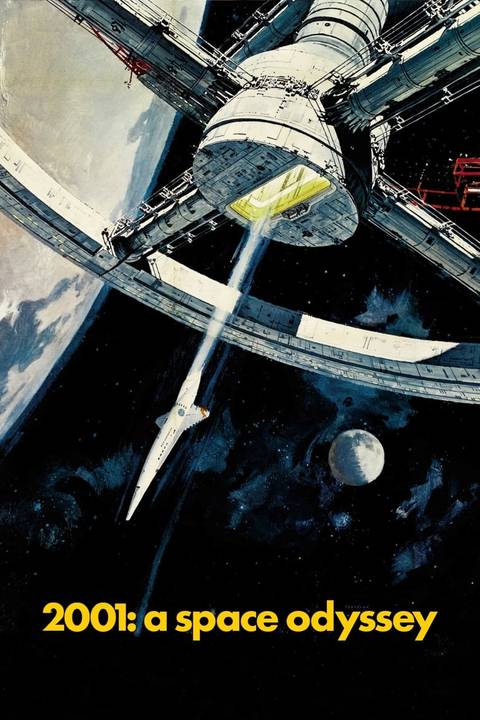
'2001: A Space Odyssey' (1968)
Image via Metro-Goldwyn-Mayer
Stanley Kubrick's 2001: A Space Odyssey begins with prehistoric hominids encountering a mysterious black monolith before moving millions of years forward to humanity's exploration of space. Another monolith is discovered on the Moon, leading to a mission toward Jupiter aboard Discovery One. Astronauts Dave Bowman (Keir Dullea) and Frank Poole (Gary Lockwood) travel alongside HAL 9000 (Douglas Rain), an advanced computer whose control over the spacecraft becomes increasingly dangerous. What begins as an ambitious mission of scientific discovery eventually moves beyond conventional human understanding.
There is something almost heartbreaking about HAL pleading with Dave as his higher mental functions are disconnected. He begins singing a childhood song, gradually losing the abilities that made him extraordinary. We’re watching a machine express something that resembles fear. And that is only one remarkable idea in a film practically overflowing with them. The transition from the prehistoric bone to an orbiting spacecraft remains one of cinema's most astonishing edits. The journey beyond Jupiter is equally extraordinary, abandoning familiar storytelling logic for images that still invite interpretation decades later. Some movies explain the universe to their audiences. Kubrick makes you confront how little humanity may actually understand. I've watched 2001 repeatedly, and it still makes me feel as though I'm encountering something too enormous to fully comprehend.

 Image via 20th Century Studios

 Image via Paramount Pictures
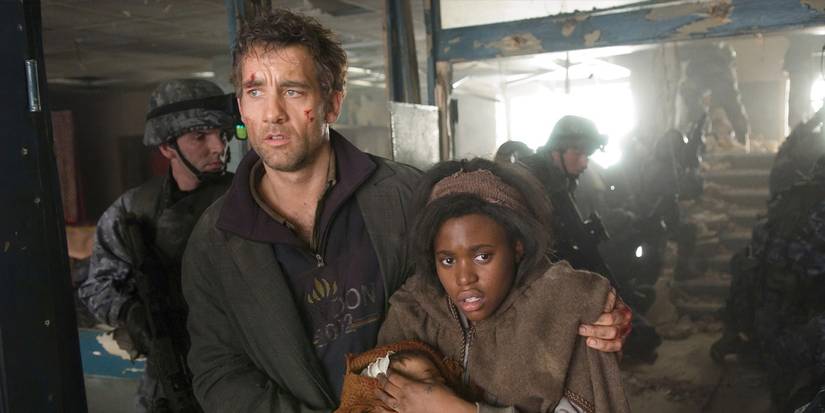 Image via Universal Pictures
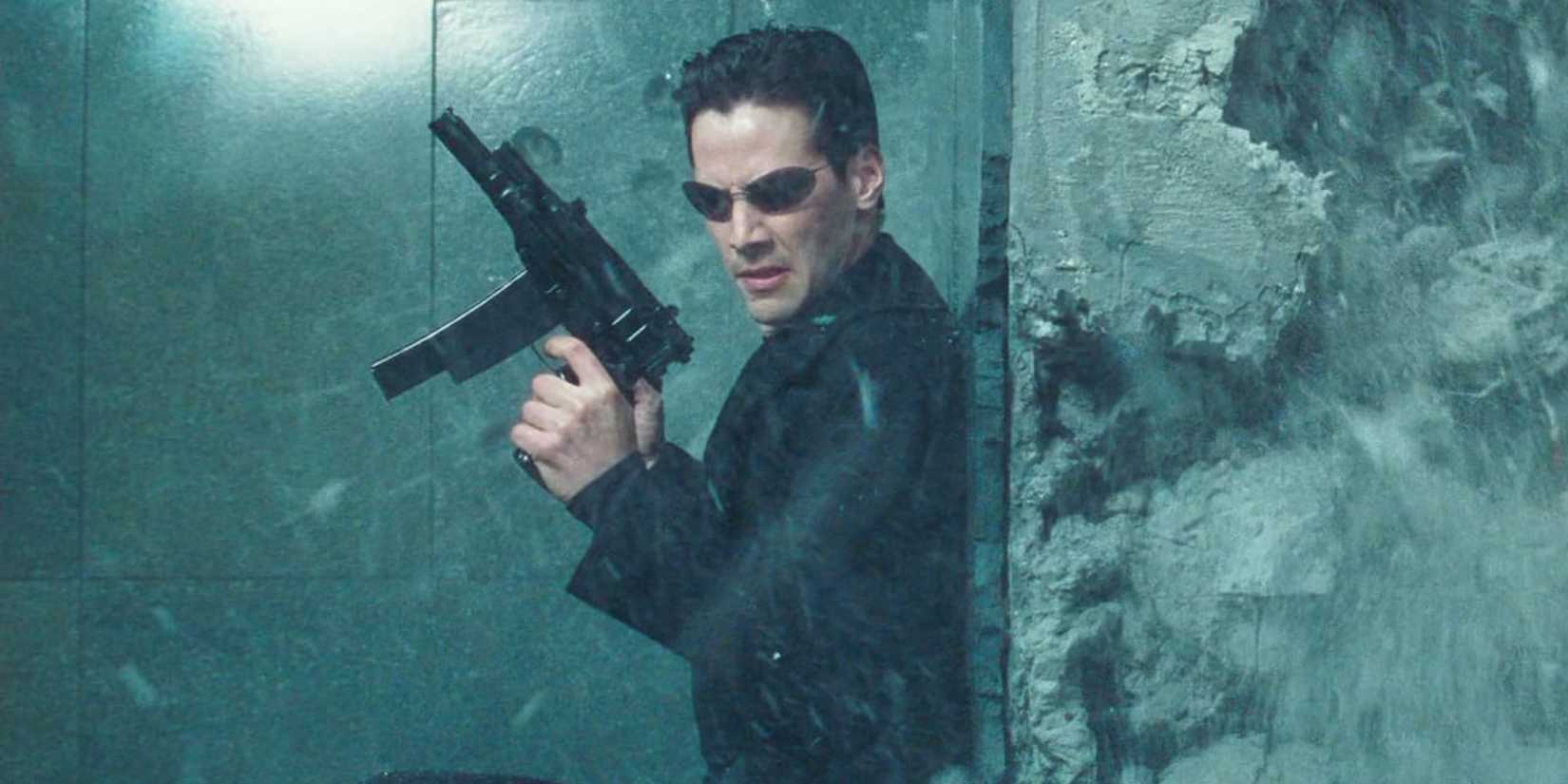 Image via Warner Bros.
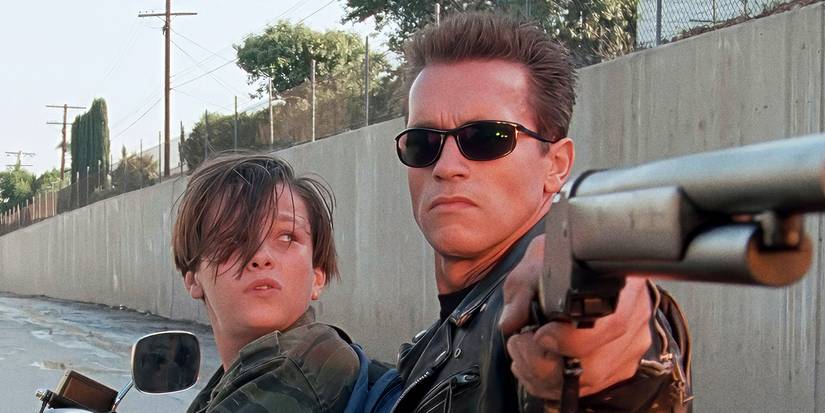 Image via Tri-Star Pictures
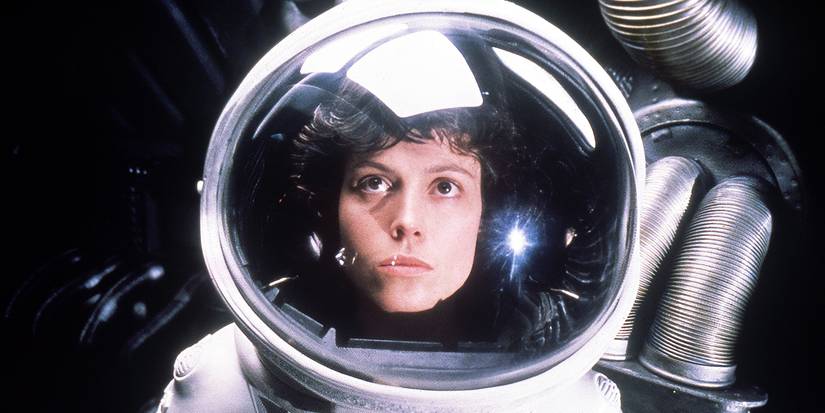 Image via 20th Century Studios
 Image via Mosfilm
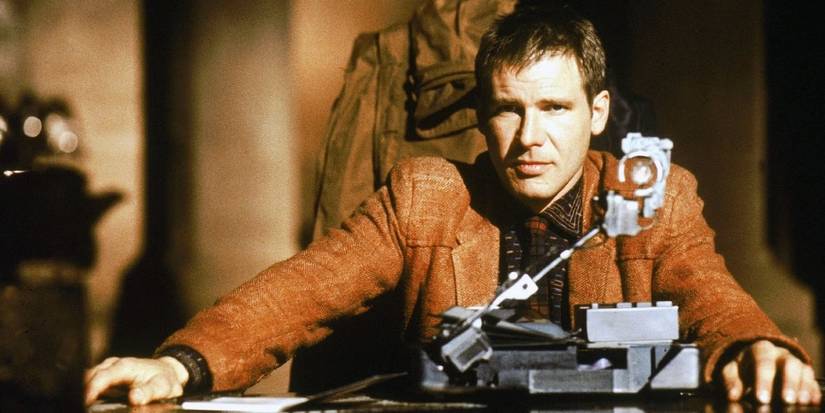 Image via Warner Bros. Pictures
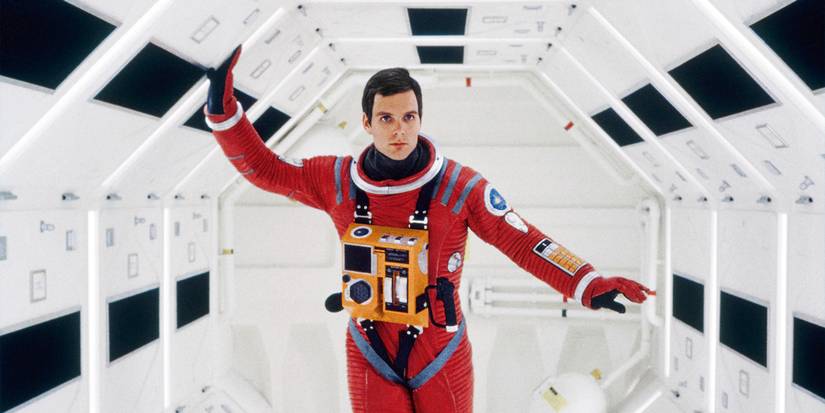 Image via Metro-Goldwyn-Mayer







 English (US) ·