

Published Jun 20, 2026, 3:00 PM EDT
Faith Roswell is a Senior Writer on Screen Rant's Classic TV team. Since earning her degree in Creative Writing over a decade ago, Faith has written articles on film and TV from a variety of different angles. Faith now combines her knowledge of psychology with her love of monster movies to give more insight into what makes the best ones.
You may have read her Screen Rant lists and features covering horror, sci-fi, and fantasy, or read her Amazon Top 10 book, "Movie Monsters of the Deep."
Faith has had an extensive career as a writer, appearing on BBC live radio, researching true crime for Rotten Mango podcast, and writing for publications including Mental Floss, Atlas Obscura, and The Daily Jaws before beginning here at Screen Rant.
While Yellowstone is generally credited with sparking the neo-Western revival, neo-Westerns don't get better than Justified. The show quickly became the pinnacle of the genre, cementing Timothy Olyphant's status as one of the best modern Western actors, and showcases Walton Goggins' standout performance as his worthy adversary. The six seasons of Justified and its spinoff, Justified: City Primeval received respective 97% and 92% positive critics' ratings on Rotten Tomatoes, highlighting the brutality and grit that set Justified apart from most classic Westerns, even including Yellowstone.
Justified is essentially a blend of the Western and crime drama genres, with action that even outshines Reacher. The show has some extremely violent scenes, with moments of cold-blooded revenge, hard-hitting fights, and emotional torment for many of the core characters. That said, a single show cannot do everything, and viewers looking for a series with a more serious tone and a greater focus on survival than on witty dialogue should watch these next.
American Primeval

If Justified is the best neo-Western TV show, then American Primeval is surely the best modern historical Western. Until quite recently, most Western TV series still focused on charismatic lawmen and land battles in a relatively settled area. However, American Primeval takes viewers back to the frontier, following the desperate journey of one woman and her son, as they enlist a gruff but good-hearted guide to accompany them across to the frontier to the possibility of safety from the threat pursuing them.
Classic Western TV series have often romanticized frontier life, but American Primeval is extremely brutal, offering a much darker and more accurate portrayal of the worst moments in the historical setting. Justified's Raylan Givens often survives the situations he finds himself in through his intelligence and self-confidence, but American Primeval shows that even the most capable characters can meet a violent end when they least expect it.
Hell On Wheels

A series centered on life building the American railroad system does not automatically sound like the most riveting subject for a TV show, but AMC made one of the most violent Westerns of all time with this exact setting. Hell on Wheels follows the former Confederate soldier Cullen Bohannon, who is on a revenge mission, chasing the men who killed his family and finding himself part of the rolling railroad encampment. The series is bleak and grounded, highlighting the corruption and greed that drove much of the industry.
Hell on Wheels has a more expansive and ambitious premise than Justified, and although Justified is an excellent example of a crime drama, its strength is in its writing and characters rather than its creative scope. On the other hand, Hell on Wheels tells a story that has rarely been afforded attention, while highlighting the hard life the workers led, with every aspect of the undertaking involving death, pain, and hardship. This, combined with an unforgettably unhinged villain, makes the show outshine Justified in several ways.
Deadwood

The bloody and mud-soaked brawl in Deadwood's episode "A Two-Headed Beast" is still one of the greatest action scenes in a Western TV show, but there is more to it than just great choreography. The scene is about a struggle between the villains, but played out by their chosen representatives, allowing the villains to remain unharmed while ordinary people bleed for them. This scene alone outshines Justified's best fight scenes, but it is a grittier show in general for one key reason.
Most of the characters in Justified are clear heroes or antagonists, as even Boyd Crowder's charm cannot distract from the fact that he is a racist criminal, while Deadwood is much more ambiguous. Most of the characters in Deadwood are morally grey, defined by their will to survive, which often makes the best of people do the unthinkable, while the series then showed them suffering from the aftermath. Justified and Deadwood are both TV shows that made Timothy Olyphant a Western legend, but Deadwood hits harder.
Longmire
 Image courtesy of Everett Collection
At first glance, Longmire is a Western show like Justified. Both are Western crime series that feature an old-school lawman who finds himself up against a variety of villains, from ruthless mob bosses to more traditional outlaws and gunslingers. Both have some excellent action scenes, and both are critically-acclaimed with high Rotten Tomatoes scores, with audiences rating Longmire and Justified 92% and 95% positive respectively. That said, Longmire has a darker tone and slower pace, which at times makes the series feel more like a prestige drama.
Longmire's tension-filled buildups to important scenes and focus on detective work rather than shootouts give the show a more serious tone than Justified, despite their similarities. Walt Longmire's grief over his wife's murder forms the undercurrent for many of his actions, and this makes the series feel grittier and heavier, especially while it also covers systemic issues surrounding life on the reservation that many other TV shows do not address.
Dark Winds
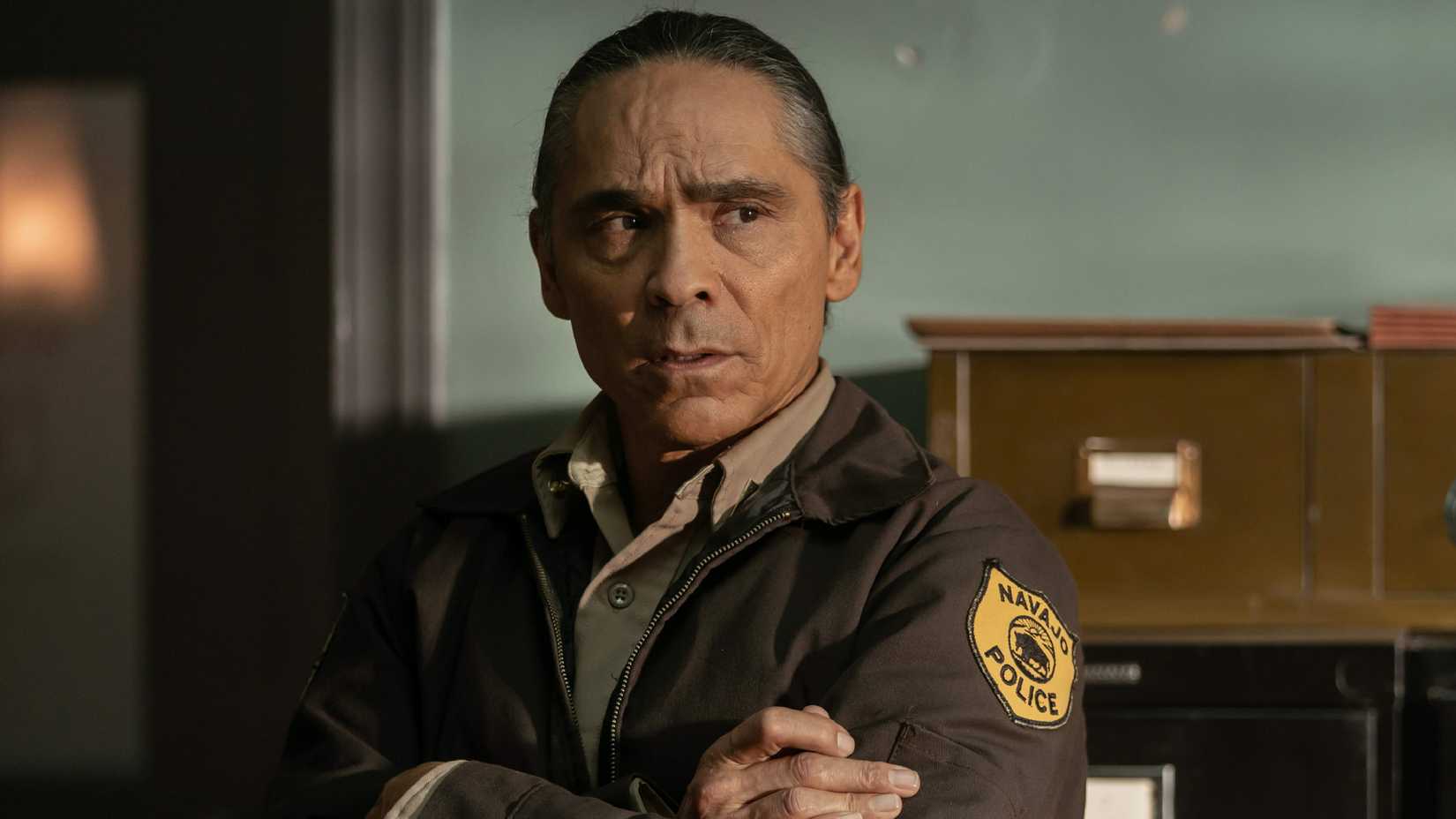
Dark Winds' perfect Rotten Tomatoes rating is impressive enough, but the series has also reinvented the modern Western, with some considering Dark Winds to be so good that it has its own genre. The genre bending series combines typical Western tropes with supernatural elements, while still remaining a police procedural drama. Set in the 1970s and based on Tony Hillerman's Leaphorn & Chee novel series, Dark Winds stands out for its disturbing psychological thriller elements, and its cultural details which have been revised over time with guidance from Navajo cultural advisor George R. Joe.
|
Season |
Year |
Episodes |
Rotten Tomatoes critics' rating |
Rotten Tomatoes audience rating |
|
1 |
2022 |
6 |
100% |
78% |
|
2 |
2023 |
6 |
100% |
71% |
|
3 |
2025 |
8 |
100% |
81% |
|
4 |
2026 |
8 |
100% |
71% |
The series is unique among modern Westerns for its largely Native American cast and team of writers. As Westerns have often stereotyped or sidelined their Native American characters, Dark Winds incorporates this into its plot, with the cultural trauma inflicted and suffered being part of several major storylines. This heaviness makes it a more somber show than Justified, while still telling a compelling story with some unmissable twists and turns.
The English

The English stars Emily Blunt and is a perfect weekend binge, with only six episodes lasting around an hour each. Still, for all the series' short length, it hits hard, and its most harrowing moments will stay with viewers long afterward. The English is set in 1890 and follows Lady Cornelia Locke (Blunt) as she travels to the American West on a revenge mission for the murder of her son. Discovering a shared history with Sergeant Eli Whipp, who is from the Pawnee Nation and on a mission of his own, the two set out together.
The English has a lot in common with American Primeval, with its central character being a mother whose actions are informed by love for her son. However, the ending twist is both shocking and heartbreaking, changing everything that came before it. Justified also features some game-changing twists, but none that recontextualize the entire series in such a devastating way.
Gunsmoke

Gunsmoke has often been described as the best Western series ever made, and despite some outdated references typical of its 1950s origins, the series has largely stood the test of time as a Western TV show that everyone should watch at least once. For some audiences, Gunsmoke might feel less gritty than Justified, based on the fact that classic shows are generally less violent than their modern counterparts, but this is not necessarily the case.
Gunsmoke is the longest-running Western TV show, airing 20 seasons and 635 episodes from 1955 to 1975.
Many Gunsmoke episodes do not follow the typical hero and villain formula of early Westerns, with many of the guest characters meeting endings that would be considered dark even by modern standards. The season three episode, "The Cabin," which features Matt Dillon's most brutal kill, is a great example of an episode that seems to leave no real winners, even among the heroes.
1883

Most of Taylor Sheridan's Western projects are epic dramas with a soap opera feel, and while many of them have their bleak moments, 1883 is by far the most gritty. The series explores the infamous Dutton family's roots, taking the story back to the frontier and representing the least-romantic aspects of pioneer life, like dysentery, disease, and the realities of the harsh environment. Justified features many deaths by shootout and murder, but one of the most painful in 1883 is far more tragic.
When Elsa Dutton is shot by an infected arrow, the show perfectly represents the family's hopelessness and turmoil, as a simple infection slowly takes hold. This is the beginning of one of the most heartbreaking endings in any Western TV series. Both Justified and 1883 have perfect, satisfying finales, but while Justified represents a man struggling with lawless characters, 1883 represents characters struggling in a lawless world.






 English (US) ·