
 Image via Warner Bros. Pictures
Published Jun 22, 2026, 11:11 PM EDT
Ryan Heffernan is a Senior Writer at Collider. Storytelling has been one of his interests since an early age, with his appreciation for film and television becoming a particular interest of his during his teenage years.
This passion saw Ryan graduate from the University of Canberra in 2020 with an Honours Degree in Film Production. In the years since, he has found freelance work as a videographer and editor in the Canberra region while also becoming entrenched in the city's film-making community.
In addition to cinema and writing, Ryan's other major interest is sport, with him having a particular love for Australian Rules football, Formula 1, and cricket. He also has casual interests in reading, gaming, and history.
Sign in to your Collider account
The height of blockbuster brilliance is the epitome of cinematic exhilaration in its purest form, a spectacle of heart-racing excitement and astonishing set pieces that treat audiences to rollicking, roller-coaster thrills from start to finish. While it is always fun to revisit one’s favorite blockbusters to relive the drama, action, and suspense anew, there is nothing quite like the first viewing of a movie that drags you to the edge of your seat and holds you there.
Ranging from sadly dismissed Hollywood productions of the 21st century to underrated gems from decades ago, these thriller movies may be classed as forgotten and forlorn misfires today. However, their ability to lure viewers on an agonizing journey of high-stakes suspense and ferocious plot twists is irrefutable. If you feel as though you’ve rewatched your favorite blockbuster hits enough times and want something new, these forgotten titles are sure to entrance with their intensity and tension.
'One Hour Photo' (2002)
 Image via Searchlight Pictures
Starring the universally admired Robin Williams in what was one of his most ambitious and chilling performances, One Hour Photo excels as a gripping psychological thriller that extracts piercing terror from the mundane. Seymour Parrish (Williams) is a lonely photo technician who works almost invisibly developing photos in a department store. The obsessive interest he has in the Yorkin family spirals out of control when he is fired from his job and discovers the reality of the Yorkins doesn’t match his idyllic vision of them, and decides to take action.
Profoundly uncomfortable, yet painfully empathetic at times as well, Williams’s performance is extraordinary in how it encourages sorrow and pity while being entirely disturbing. The striking brilliance of his portrayal of Parrish is beautifully complemented by director Mark Romanek’s use of sterile and symmetrical imagery, purposefully conjuring a sense of unease through contrived perfection that illuminates the impractical vision Parrish has of the world. At just 96 minutes, One Hour Photo is a taut and contained thriller that is both chilling and provocative, and an underrated gem that features Robin Williams in a sensational against-type performance that leaves quite a lasting impression.
'Manhunter' (1986)
 Image Via De Laurentiis Entertainment Group
When it comes to blockbuster thrills, there is hardly a title more revered or beloved than 1991’s Oscar-winning sensation The Silence of the Lambs, but it isn’t the first movie to be adapted from Thomas Harris’s Hannibal Lecter series. That honor belongs to Manhunter, a criminally underappreciated '80s gem directed by Michael Mann that adapts Red Dragon. It follows FBI agent Will Graham (William Petersen) as he is called out of his early retirement to investigate an at-large serial killer. As he is forced to work with detained serial killer and cannibal Hannibal Lecter (Brian Cox) to solve the case, Graham and the FBI find themselves entangled in a deadly game of cat-and-mouse.
Like The Silence of the Lambs, Manhunter doesn’t rely solely on the wicked decadence of Harris’s characters to conjure suspense, also thriving off the back of Dante Spinotti’s eerie cinematography and its unsettling synth-pop score. Appropriately callous and chilling performances from Cox and Tom Noonan only heighten the sense of atmospheric dread and heart-stopping suspense. Manhunter is a wonderful treat for modern audiences given how it presents a unique interpretation of what has become a familiar story world.
'Roadgames' (1981)
 Image via AVCO Embassy Pictures
One of the more significant released of the Australian New Wave cinema movement of the 1970s and early '80s, Roadgames delivers a tight and contained serial killer thriller that uses the vast expanses of the Australian outback as a catalyst for Hitchcockian suspense. Stacey Keach stars as Patrick Quid, a trucker hauling cargo to Perth, who begins to suspect the driver of a green van as being responsible for a string of murders along the highway. As he becomes embroiled in a deadly battle of wits, however, he realizes that the hitchhiking heiress he picks up and the ensuing police view him as the prime suspect.
The vastness of the unforgiving Nullarbor Plain becomes an image of isolation and terror in director Richard Franklin’s hands, allowing the meticulous plotting and central psychological battle to carry a constant sense of imposing suspense and torment. Also finding inflections of comical delight in Keach’s charismatic performance, Roadgames offers thriller cinema at its most infectiously entertaining.
'Edge of Tomorrow' (2014)
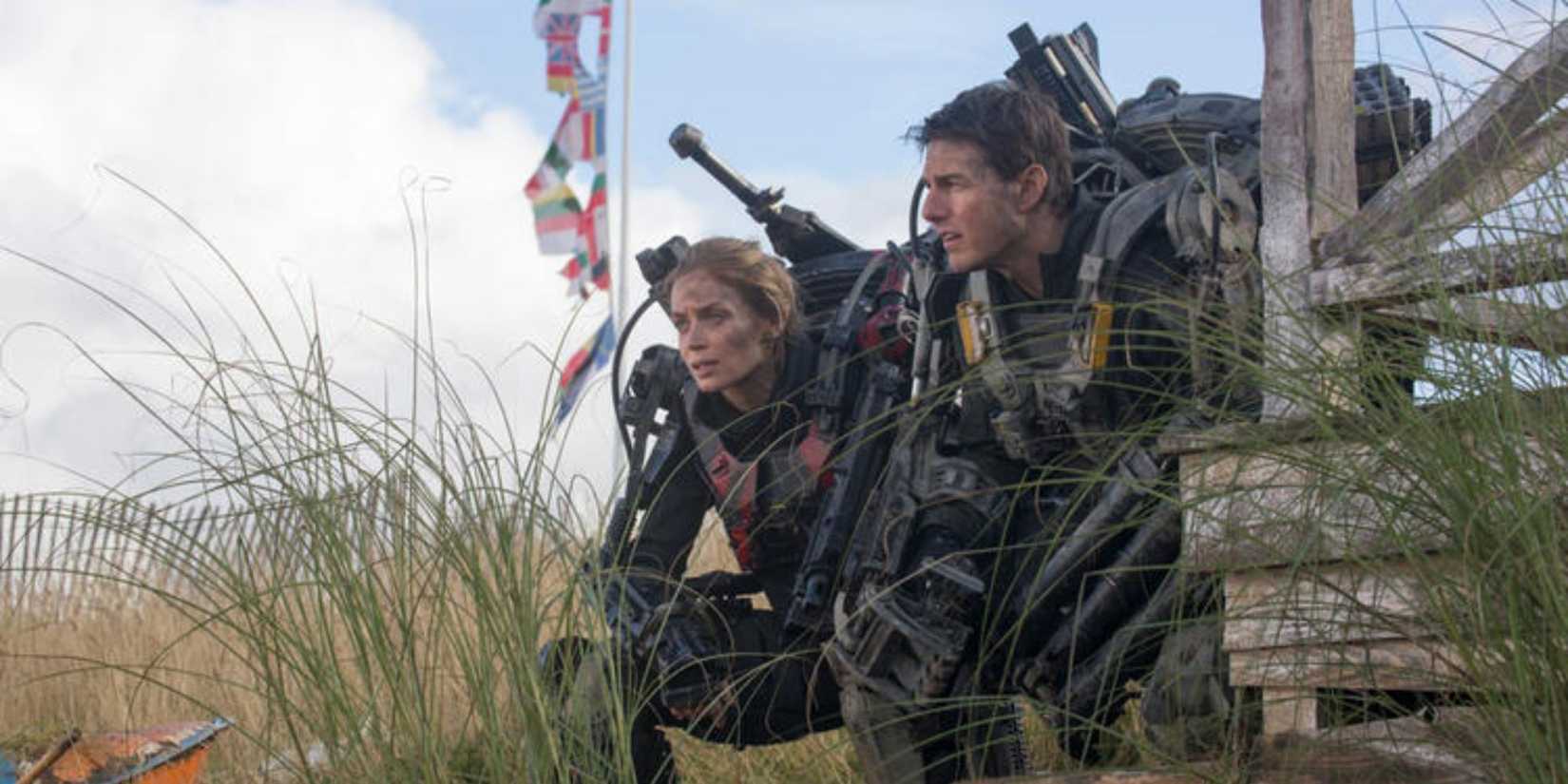 Image via Warner Bros.
It certainly isn’t as forgotten or discarded as many other movies on this list. For movie lovers seeking a thriller that truly embraces modern blockbuster cinema’s appetite for action carnage, Edge of Tomorrow provides a visually sharp and outrageously entertaining treat of high-octane intensity. Featuring Tom Cruise in a wonderful against-type performance, it follows military public affairs officer Major William Cage as he is thrust into battle against an alien race against his will, only to find himself stranded in a time loop. With help from war hero Rita Vrataski (Emily Blunt), Cage tries to figure out how to use his new ability to defeat humanity’s enemy once and for all.
Combining elements of action bombast, high-concept sci-fi, and thriller bravado, Edge of Tomorrow delivers a fun and fast-paced spectacle of action-heavy excitement supported by outstanding visual effects, strong character work, brilliant large-scale battle sequences, and razor-sharp action editing. It remains one of the greatest time-loop movies audiences have been treated to, as well as one of the more ambitious and tonally precise blockbusters in recent decades, even if it never did receive the acclaim and popularity it so thoroughly deserved.
Collider Exclusive · Sci-Fi Survival Quiz Which Sci-Fi World Would You Survive? The Matrix · Mad Max · Blade Runner · Dune · Star Wars
Five universes. Five completely different ways the future went wrong — or sideways, or up in flames. Only one of them is the world your instincts were built for. Eight questions will figure out which dystopia, galaxy, or desert wasteland you'd actually make it out of alive.
💊The Matrix
🔥Mad Max
🌧️Blade Runner
🏜️Dune
🚀Star Wars
TEST YOUR SURVIVAL →
01
You sense something is deeply wrong with the world around you. What do you do? The first instinct is often the truest one.
APull on every thread until I understand the system — then figure out how to break it. BStop asking questions and start stockpiling — food, fuel, weapons. Questions don't keep you alive. CKeep my head down, observe carefully, and trust no one until I know who's pulling the strings. DStudy the patterns. Every system has a rhythm — learn it, and you learn how to survive it. EFind the people fighting back and join them. You can't fix a broken galaxy alone.
NEXT QUESTION →
02
In a world of scarcity, what resource do you guard most fiercely? What we protect reveals what we believe survival actually requires.
AKnowledge. If you understand the system, you don't need resources — you can generate them. BFuel. Everything else — movement, power, escape — runs on it. CTrust. In a world of fakes and informants, a truly reliable ally is rarer than any commodity. DWater. And after water, information — the two things empires are truly built on. EShips and credits. The galaxy is big — you survive it by being able to move through it freely.
NEXT QUESTION →
03
What kind of threat keeps you up at night? Fear is useful data — if you're honest about what you're actually afraid of.
AThat reality itself is a lie — that everything I experience has been constructed to keep me compliant. BA raid. No warning, no mercy — just the roar of engines and then nothing left. CBeing identified. Once someone with power decides you're a problem, you're already out of time. DBeing outmanoeuvred — losing a political game I didn't even know I was playing. EThe Empire tightening its grip until there's nowhere left to run.
NEXT QUESTION →
04
How do you deal with authority you don't trust? Every dystopia has a power structure. Your approach to it determines everything.
ASubvert it from the inside — learn its rules well enough to weaponise them against it. BIgnore it and stay out of its reach. The further from any power structure, the better. CAppear to comply while doing exactly what I need to do. Visibility is the enemy. DManoeuvre within it carefully. You can't beat a system you refuse to understand. EResist openly when I have to. Some things are worth the risk of being seen.
NEXT QUESTION →
05
Which environment could you actually endure long-term? Survival isn't just tactical — it's physical, psychological, and very much about where you are.
AUnderground bunkers and server rooms — cramped, artificial, but with access to everything that matters. BOpen wasteland — brutal sun, no shelter, constant movement. At least the threat is honest. CA dense, rain-soaked city where you can disappear into the crowd and nobody asks questions. DMerciless desert — extreme heat, no water, and something enormous living beneath the sand. EThe fringe — backwater planets and busy spaceports where the Empire's attention rarely reaches.
NEXT QUESTION →
06
Who do you want in your corner when things fall apart? The company you keep is the clearest signal of who you actually are.
AA tight crew of believers who've seen behind the curtain and have nothing left to lose. BOne or two people I'd trust with my life. Any more than that and someone talks. CNobody, ideally. Alliances are liabilities. I work alone unless I have no choice. DA community bound by shared hardship and mutual survival — people who need each other to last. EA ragtag team with wildly different skills and total commitment when it counts.
NEXT QUESTION →
07
Where do you draw the line — if you draw one at all? Every survivor eventually faces a moment that tests what they're actually made of.
AI won't harm the innocent — even the ones who'd report me without hesitation. BI do what I have to to protect the people I've chosen. Everything else is negotiable. CThe line shifts depending on who's asking and what's at stake. DI draw a long-term line — nothing that compromises my people's future, even if it'd help now. ESome lines, once crossed, can't be uncrossed. I know which ones they are.
NEXT QUESTION →
08
What would actually make survival worth it? Staying alive is one thing. Having a reason to is another.
AWaking others up — dismantling the illusion so no one else has to live inside it. BFinding somewhere — or someone — worth protecting. A reason to keep moving. CAnswers. Understanding what I am, what any of this means, before time runs out. DLegacy — shaping the future in a way that outlasts me by generations. EFreedom — for myself, for others, for every world still living under someone else's boot.
REVEAL MY WORLD →
Your Fate Has Been Calculated You'd Survive In…
Your answers point to the world your instincts were built for. This is the universe your temperament, your survival instincts, and your particular brand of stubbornness were made for.
The Matrix
You took the red pill a long time ago — probably before anyone offered it to you. You're a systems thinker who can't help but notice the seams in things.
- You're drawn to understanding how the system works before figuring out how to break it.
- You'd find the Resistance, or it would find you — your instinct for spotting constructed realities is the machines' worst nightmare.
- You function best when you have access to information and the freedom to act on it.
- The Matrix built an airtight prison. You'd be the one probing the walls for the door.
Mad Max
The wasteland doesn't reward the clever or the well-connected — it rewards those who are hard to kill and harder to break. That's you.
- You don't need comfort, community, or a cause larger than the next horizon.
- You need a vehicle, a clear threat, and enough fuel to outrun it — and you're good at all three.
- You are unsentimental enough to survive that world, and decent enough — just barely — to be something more than another raider.
- In the wasteland, that distinction is everything.
Blade Runner
You'd survive here because you know how to exist in moral grey areas without losing yourself completely.
- You read people accurately, keep your circle small, and ask the questions others prefer not to answer.
- In a city where humanity is a legal designation rather than a feeling, you hold onto something that keeps you functional.
- You're not a hero. But you're not lost, either.
- In Blade Runner's world, that distinction is everything.
Dune
Arrakis is the most hostile environment in the known universe — and you are precisely the kind of person it rewards.
- Patience, discipline, and political awareness are your core strengths — and on Arrakis, they're survival tools.
- You understand that the long game matters more than any single victory.
- Others come to Dune and are consumed by it. You'd learn its logic and earn its respect.
- In time, you wouldn't just survive Arrakis — you'd begin to reshape it.
Star Wars
The galaxy far, far away is vast, loud, and in a constant state of violent political upheaval — and you wouldn't have it any other way.
- You find meaning in being part of something larger than yourself — a cause, a crew, a rebellion.
- You'd gravitate toward the Rebellion, or the fringes, or whatever pocket of the galaxy still believes the Empire's grip can be broken.
- You fight — not because you have to, but because standing aside isn't something you're capable of.
- In Star Wars, that willingness is what makes all the difference.
↻ RETAKE THE QUIZ
'Blow Out' (1981)
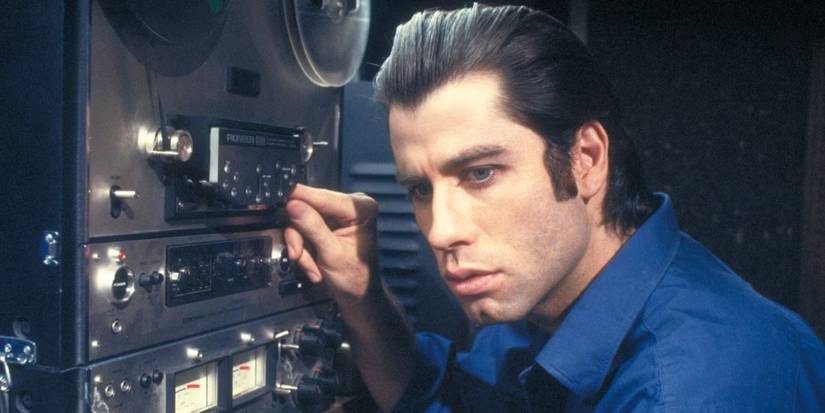 Image via Filmways Pictures
A box office flop from Brian De Palma that achieves the incredibly rare feat of being a remake of a great movie that is incredibly impressive in its own right, Blow Out is the oft-forgotten reinterpretation of Michelangelo Antonioni’s 1966 cult gem, Blow-Up. It sees John Travolta star as Jack Terry, a sound technician in Philadelphia who finds himself engulfed in a web of conspiracy and murder when he realizes his late-night recording has accidentally captured evidence that suggests a fatal car crash was actually a political assassination.
A pulsating tale of conceit and a bleak meditation on the nature of power, corruption, and the truth in America. Blow Out excels as both a nerve-rattling thriller revolving around Jack’s growing obsession with figuring out the truth, and a brutally honest critique of the brand of people that rise to power in society. Also a technical marvel of filmmaking ambition, Blow Out is a stunning treat of thriller cinema. It flaunts razor-sharp narrative instincts, timeless ideas on political morality, and impressionable and beautiful craftsmanship that solidifies it as one of the best thriller flicks of the '80s.
'Tightrope' (1984)
 Image via Warner Bros.
Psychological thrills have always gone well with the intrigue and grim of neo-noir crime mystery, a fact that a litany of iconic titles can serve as a testament to. One of the more forgotten movies to have excelled in this realm is 1984’s Tightrope, which stars Clint Eastwood as a New Orleans detective and single father who begins looking into a serial rapist and murderer. His investigation becomes even more urgent when he realizes the criminal he is chasing has started targeting the women in his life.
The movie blurs the line between the hunter and the hunted, not only in how it conjures suspense and a pervasive sense of dread from the rising stakes of the killer targeting Detective Block’s family, but also in how it delves into Block’s amorality and impulsive urges. It is also surprisingly progressive for its time, refusing to simply use misogynistic violence as a tool to inspire a strong emotional response from the audience, but as a catalyst for exploring issues of sexual assault and sexism in society. Buoyed by Eastwood’s surprisingly vulnerable performance of a man riddled by doubt and self-destructive tendencies, Tightrope shines as a captivating crime thriller and character study.
'The Book of Eli' (2010)
 Image via Warner Bros.
Despite its mixed critical response and widespread audience disapproval, it is easy to see The Book of Eli as a contemplative post-apocalyptic thriller that was simply released at the wrong time. Featuring typically magnetic performances from Denzel Washington and Gary Oldman, it transpires in a world reeling from the aftermath of the nuclear holocaust as Eli (Washington) carries the last known copy of a sacred book westward. When he clashes with the power-hungry Carnegie (Oldman) in a ramshackle town, he is forced to fight to safeguard the powerful text and ensure he can continue on his journey.
There is something of a disconnect between the grounded coarseness of the story world and the martial arts excess and bombastic carnage of the action. Still, The Book of Eli finds tremendous intrigue in how it grapples with religion and power. Even the squabble between the dutiful protector and the charismatic tyrant feels biblical and symbolic, especially with the beautiful irony of the film's finale. It all makes The Book of Eli an admirable thriller, even if not a flawless one, and it is worth a watch for those many who missed it when it hit theaters in 2010.
'Wait Until Dark' (1967)
 Image via Warner Bros.
 Despite being almost 60 years old, Wait Until Dark remains a true heart-racing thrill-fest from start to finish with its deft marriage of unbearable Hitchcockian suspense and controlled, contained horror. Susy (Audrey Hepburn) is a recently-blinded woman who lives with her husband. One night when he is away at work, Susy finds herself in a fight for survival when a small crew of gangsters tries to break into her apartment believing she is in possession of a stash of their drugs.
The innate terror of Suzy being held at a disadvantage by her blindness is only amplified by Alan Arkin’s chilling portrayal of the film’s primary antagonist, the sadistic and tormenting Harry Roat. Henry Mancini’s piercing score is another nerve-rattling quality that has seen Wait Until Dark age so gracefully over the years. It excels as a brilliantly realized and tightly-plotted thriller of old, a procession of simmering suspense accentuated by some frightful jolts. Today, Susy’s desperate struggle endures as one of cinema’s greatest and most underrated thrillers.








 English (US) ·