
 Image via Searchlight Pictures
Published Jun 13, 2026, 8:29 AM EDT
Marcel is a writer who is passionate about most movies and series. He will watch anything that's good. He is a content manager by day and a videographer when needed. Marcel used to work at a major streaming service based in Asia Pacific as a Content Specialist and was the Distribution Manager for a local movie distribution company.
Sign in to your Collider account
Science fiction movies are often associated with massive budgets and cutting-edge visual effects, but some of the genre's most fascinating stories are usually smaller and more peculiar. While blockbuster sci-fi tends to grab attention with spectacle, many smaller and lesser-known movies do so simply through the strength of their stories. These movies may not have launched cinematic universes, but they often deliver richer ideas and riskier creative bets.
Here, we take a look at the forgotten sci-fi movies that are arguably better than sci-fi blockbusters. Most of them deliver intimate stories in an ambitious setting with riveting performances. There may not be any world-ending stakes, but they are surely more relevant to audiences. With stars like Keanu Reeves, Angela Bassett and Carey Mulligan, these movies deserve to be remembered more.
'Frequency' (2000)
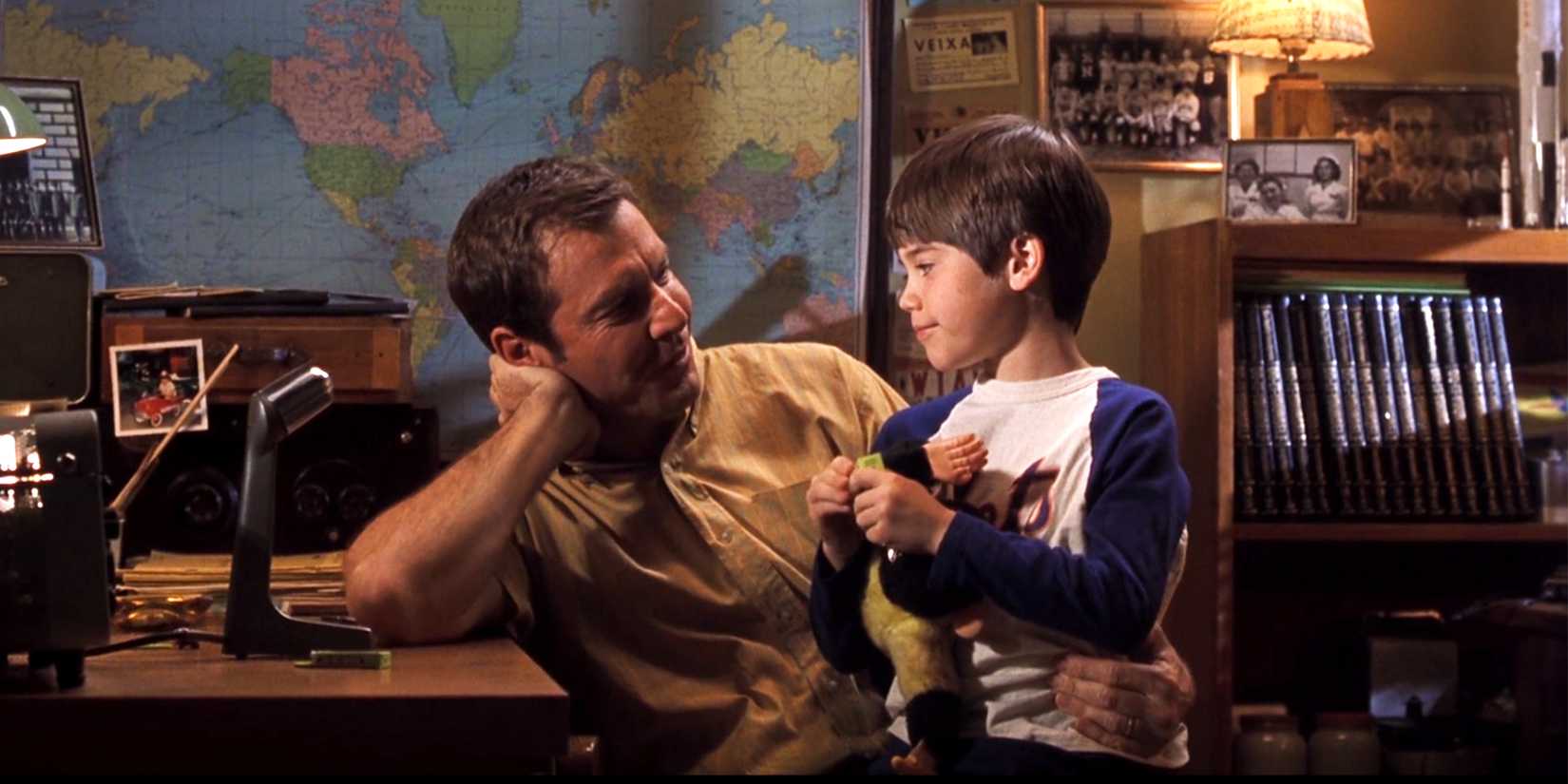 Image via New Line Cinema
Frequency follows John Sullivan (Jim Caviezel), a New York police officer who discovers that he can communicate with his deceased father Frank (Dennis Quaid) through a ham radio during a rare atmospheric event. However, the Frank that John is speaking to is him from 1969, decades before his death. Together, the father and son attempt to alter history and prevent Frank's death.
There are an abundance of movies with time-travel aspects. However, Frequency differentiates itself from the others by focusing on the relationship between father and son. Many science-fiction blockbusters become so consumed by overexplaining their lore or playing too much with it that they neglect the human stories at their center. Frequency does the opposite by favoring the characters rather than the mechanics. Even decades later, the film remains surprisingly moving for those who discover it for the first time. It was adapted into a one-season TV show, which has its own devoted fans.
'I Origins' (2014)
 Image via Searchlight Pictures
I Origins follows Ian Gray (Michael Pitt), a PhD student obsessed with disproving the origins of mankind through studying eyes and sight with his partner Karen (Brit Marling). His life changes when he meets a mysterious woman named Sofi (Astrid Berges-Frisbey) who changes his perspective. Years later, Ian uncovers evidence that suggests identical iris signatures can appear in different individuals across generations and, therefore, reincarnation.
Grounded, low-key, but highly intriguing, I Origins is on this list because of its boldness to explore profound topics without feeling tacky. There are no huge spectacles here; instead, it dives into the conflict between faith and reason in a way that respects both perspectives. Having made the equally thought-provoking Another Earth before this, director Mike Cahill had a larger budget and canvas to play with. Its heavy themes made it harder to connect with a wider audience, but those who resonate with the film cannot get enough. It was supposed to have a sequel, but for now, it stands as an interesting piece of indie sci-fi film.
'The Man from Earth' (2007)
 Image via Anchor Bay Entertainment
The Man from Earth begins as university professor John Oldman (David Lee Smith) is preparing to leave town when a group of colleagues gathers at his home for a farewell party. During their conversation, John reveals a secret that he is a man who has lived for over 14,000 years without aging.
The Man from Earth strips down the genre to its basics with its great idea. The entire film takes place mostly in one room, yet it feels bigger than movies that spend millions creating digital worlds. Instead of dazzling audiences with spectacle, it captivates through intellectual curiosity. The film is mostly spent on conversations as Goldman's colleagues investigate the truth by asking philosophical questions about history and faith. Made with a tiny budget, The Man from Earth evokes audiences' reactions similar to or even stronger than films that cost a hundred times more.
'A Scanner Darkly' (2006)
 Image via Warner Independent Pictures
A Scanner Darkly follows Bob Arctor (Keanu Reeves), an undercover narcotics agent in America who's been devastated by addiction to a powerful narcotic known as Substance D. He is assigned to monitor a group of drug users that includes himself, but as his addiction worsens, the line between his real identity and his undercover identity begins to blur. The film also stars Woody Harrelson, Winona Ryder, and Robert Downey Jr.
Based on the novel by Philip K. Dick, this film by Richard Linklater has a psychedelic, trippy visual style that reflects Bob's deteriorating state. The rotoscope animation sets this apart from other films, especially blockbuster sci-fi. Linklater remains the only Hollywood filmmaker who utilizes this technique on a massive scale. Unlike many studio science-fiction productions that prioritize action sequences over substance, A Scanner Darkly uses its premise to examine addiction and corruption. It is a brilliant piece of adult animation that only grows more relevant with time.
Collider Exclusive · Sci-Fi Personality Quiz Which Sci-Fi Hero Are You Most Like? Paul Atreides · Captain Kirk · Princess Leia · Ellen Ripley · Max Rockatansky
Five iconic heroes. Five completely different ways of facing an impossible universe. One of them shares your instincts, your values, and your particular way of refusing to back down. Eight questions will tell you which one.
🏜️Paul Atreides
🖖Capt. Kirk
✊Princess Leia
🔦Ellen Ripley
🔥Max Rockatansky
FIND YOUR HERO →
01
How do you lead when the stakes couldn't be higher? The way you lead under pressure is the most honest thing about you.
AI absorb everything — every variable, every pattern — and move only when I know the path forward. BI read the room, make the call, and own the consequences. Hesitation costs more than mistakes. CI rally people. A cause needs a voice, and I refuse to let fear be louder than conviction. DI assess the threat, establish what needs doing, and get it done without waiting for permission. EI don't lead. I act. Others can follow or not — I'm already moving.
NEXT QUESTION →
02
What is your greatest strength in a crisis? The quality that keeps you alive when everything else fails.
APrescience — the ability to see further ahead than anyone else and plan accordingly. BImprovisation — I'm at my best when the plan falls apart and I have to invent a new one. CConviction — I know what I'm fighting for, and that certainty doesn't waver under fire. DComposure — I stay functional when everyone around me is falling apart. Panic is a luxury. EEndurance — I outlast things. I take the hit and keep moving long after others have stopped.
NEXT QUESTION →
03
What is the thing you'd sacrifice everything else for? Your deepest motivation is your truest compass.
AThe survival and dignity of my people — even if I have to become something frightening to ensure it. BThe safety of my crew — every single one of them. No one gets left behind. CFreedom — for my people, for every world still crushed under the weight of an empire. DThe truth — what actually happened, what's actually out there, whether anyone believes me or not. EThe one person — or the one memory — that still makes any of this worth surviving for.
NEXT QUESTION →
04
How do you relate to the people around you? Who you are to others under pressure is who you really are.
AWith intensity and distance — I care deeply, but the weight I carry makes closeness complicated. BWith warmth and irreverence — I take the mission seriously, not myself. CWith directness and trust — I say what I mean, and I expect the people I work with to rise to it. DWith professional care but clear limits — I'll protect you, but I won't pretend we're family. EWith wariness that slowly becomes loyalty — I don't trust easily, but when I do, it holds.
NEXT QUESTION →
05
You're facing a threat that no one else believes is real. What do you do? How you respond when you're the only one who sees it defines everything.
APrepare in silence. If they won't listen, I'll be ready when they finally have to. BKeep pushing until someone listens — and if no one does, handle it myself. CBuild the case, find the allies, and make the threat impossible to ignore. DDocument everything. The truth matters even if no one believes it yet. EStop trying to convince anyone. Survive it. That's the only argument that counts.
NEXT QUESTION →
06
What has your heroism cost you personally? Every hero pays. The question is what — and whether they'd pay it again.
AMy innocence — I've seen what I'm capable of, and I can't unsee it. BPeople I loved — the command chair has a view, but it's a lonely one. CA normal life — I gave up everything ordinary the moment I chose the cause. DMy sense of safety — I know exactly what's out there now, and I can't pretend otherwise. EAlmost everything — and I'm still not sure what I'm carrying it all for. But I keep going.
NEXT QUESTION →
07
How do you feel about the rules of the world you're in? Every hero has a relationship with the system. What's yours?
AI understand them deeply — and I know exactly which ones must be broken, and why. BI respect the spirit of them and bend the letter when the situation demands it. CThe system is the problem. I'm not here to work within it — I'm here to dismantle it. DI follow protocol until protocol stops being useful. Then I make the call myself. EThe rules collapsed a long time ago. What's left is instinct, and mine are reliable.
NEXT QUESTION →
08
When everything is on the line, what keeps you going? The answer is the most honest thing about you.
ADestiny — or something that feels so much like it that the difference no longer matters. BThe people on my ship — their faces, their trust, the fact that they're counting on me. CThe belief that what we're fighting for is worth every sacrifice, including this one. DSheer refusal to let it win — whatever it is. I don't stop. That's just who I am. EI'm not sure anymore. But the road is still there, and I'm still on it.
REVEAL MY HERO →
Your Hero Has Been Identified Your Sci-Fi Hero Is…
Your answers point to the iconic sci-fi hero who shares your instincts, your values, and your particular way of facing the impossible.
Paul Atreides
You carry a weight most people would crumble under — the knowledge of what you're capable of, and the burden of what you might have to become.
- You see further ahead than others and you plan accordingly, even when the vision frightens you.
- You are driven by loyalty to your people and a sense of destiny you didn't ask for but can't escape.
- Paul Atreides is not simply a hero — he is someone who understands the cost of power and chooses to bear it anyway.
- That gravity, that willingness to carry what others won't, is exactly you.
Captain Kirk
You lead with instinct, warmth, and an absolute refusal to accept a no-win scenario — because you've always believed there's a third option nobody else has thought of yet.
- You take the mission seriously without ever taking yourself too seriously.
- Your crew would follow you anywhere, not because you demand it, but because you've earned it.
- Kirk's genius isn't tactical — it's human. He reads people, bends rules with purpose, and wills outcomes into existence through sheer conviction.
- That combination of warmth, audacity, and relentless optimism is unmistakably yours.
Princess Leia
You are the kind of person who holds the line when everyone else is losing faith — not because you're fearless, but because giving up simply isn't something you're capable of.
- You lead through conviction. Your voice carries because your belief is unshakeable.
- You gave up everything ordinary the moment you chose the cause, and you've never looked back.
- Leia is not a supporting character in her own story — she is the moral centre of the entire rebellion.
- That same fierce, principled, unbreakable core is what defines you.
Ellen Ripley
You are not reckless, not grandiose, and not particularly interested in being anyone's hero — you just refuse to stop when it matters.
- You see threats clearly, you document the truth even when no one listens, and when the time comes you handle it yourself.
- Ripley's heroism is earned, not performed. She doesn't have a speech — she has a flamethrower and a plan.
- You share her composure under the worst possible pressure, and her refusal to pretend the monster isn't there.
- When it counts, you don't flinch. That's everything.
Max Rockatansky
You have been through fire that would break most people — and what came out the other side is something the world underestimates at its peril.
- You don't ask for help, don't need validation, and don't wait for anyone to tell you the rules no longer apply.
- Your loyalty, when it finally arrives, is absolute — but it's earned in silence and tested in action, not in words.
- Max is not a nihilist. He is someone who lost everything and found, against his will, that he still has something worth protecting.
- That bruised, stubborn, ultimately human core is exactly yours.
↻ RETAKE THE QUIZ
'Upstream Color' (2013)
 Image via ERBP/VHX
Upstream Color follows Kris (Amy Seimetz), a woman whose life is shattered after she becomes the victim of a bizarre biological manipulation involving parasitic organisms. As she struggles to reclaim her identity, she meets Jeff (Shane Carruth), another victim of the same mysterious process. Their lives become intertwined while a mysterious figure dubbed the Sampler appears to influence them from afar.
Similar to Carruth's previous film, Primer, Upstream Color trusts its audience completely and does not dumb down its bold premise. Modern blockbuster science fiction often feels obligated to explain every detail, but this film is practically an immersive puzzle that asks audiences to discover the meaning for themselves. It's also gorgeous-looking, filled with heavy ideas about trauma and connection that can haunt audiences. That alone makes it more ambitious than countless expensive studio productions. It really is mesmerizing to be able to experience a sci-fi film this original.
'Never Let Me Go' (2010)
 Image via 20th Century Studios
Based on the acclaimed novel by Kazuo Ishiguro, Never Let Me Go takes place in an alternate version of England where a group of children grows up in what appears to be a peaceful boarding school. Kathy (Carey Mulligan), Tommy (Andrew Garfield), and Ruth (Keira Knightley) form a close friendship as they grow into adults, while gradually discovering the disturbing truth about their purpose in society.
Adapted for film by Alex Garland, Never Let Me Go is not a traditional sci-fi film. For most of its runtime, it is a quiet personal coming-of-age drama until it reveals its dystopian elements. The film's blockbuster sibling, The Island, is comparatively more explosive and bombastic, while Never Let Me Go uses its premise to examine mortality and sacrifice. If you think The Island does not explore the ethical question more deeply, you'll find it more in this film. The film is bleak yet also hopeful, further elevated by the strong performances from Mulligan, Knightley and Garfield. It is one of the most underrated films of its year.
'Little Fish' (2020)
 Image via IFC Films
Set in a near future where a pandemic causes people to lose their memories, Little Fish follows Emma (Olivia Cooke) and Jude (Jack O'Connell), a young couple trying to maintain their relationship as the disease spreads. As memories begin to disappear, people forget loved ones, careers, and entire histories. Emma and Jude struggle to preserve their connection while facing the possibility that they may no longer recognize each other.
The film may have hit too close to home when it was released during the COVID-19 pandemic. As we distance ourselves from 2020, Little Fish is an effective hidden gem of a film. The memory-loss pandemic could easily have been treated as the basis for a large-scale disaster movie, but the film wisely narrows its focus to a single relationship. While blockbuster science fiction often aims for larger stakes, Little Fish demonstrates that smaller stories can be far more affecting. Cooke and O'Connell are a magnificent pair, showing their vulnerable side in this poignant, beautiful film that needs to be remembered more.
'Strange Days' (1995)
 Image via 20th Century Studios
Set during the final days of 1999, Strange Days follows former police officer Lenny Nero (Ralph Fiennes), who sells SQUID, a technology to experience other people's memories and sensations. When he comes into possession of footage linked to a brutal murder and a conspiracy, Lenny becomes involved in a dangerous investigation together with his trusted friend Mace (Angela Bassett).
Written by James Cameron and directed by Kathryn Bigelow, Strange Days should have been a bigger hit, but if anything, it has only become more relevant with time. Long before social media and livestreaming became common, the film explored a culture addicted to consuming reality through technology. Through its premise, Strange Days examines how technology changes human behavior and politics. Bigelow combines cyberpunk concepts with a gripping noir thriller, and the result is a film that is exciting and ahead of its time. With its bold ideas and social commentary, this underrated sci-fi is far more rewarding than many of the genre's blockbusters.





 English (US) ·