
 Image via BBC
Published Aug 29, 2026, 11:55 AM EDT
Sign in to your Collider account
Ask ten different people for a miniseries recommendation and you'll get the same six titles every time, because word of mouth online tends to circle back to whatever already has a fan base built in. Meanwhile there are shows sitting a few clicks away that never got that boost, because they aired at the wrong time, on the wrong network, or without the marketing budget to make any noise.
What ties this group together is that a shorter runtime actually helped them instead of hurting them. A story built for six or eight episodes has room to breathe without ever needing to stretch past its own ideas, so nothing here feels padded or rushed. Go find these before someone finally puts them on a bigger platform and everyone starts pretending they always knew about them.
8 'The Lost Room' (2006)
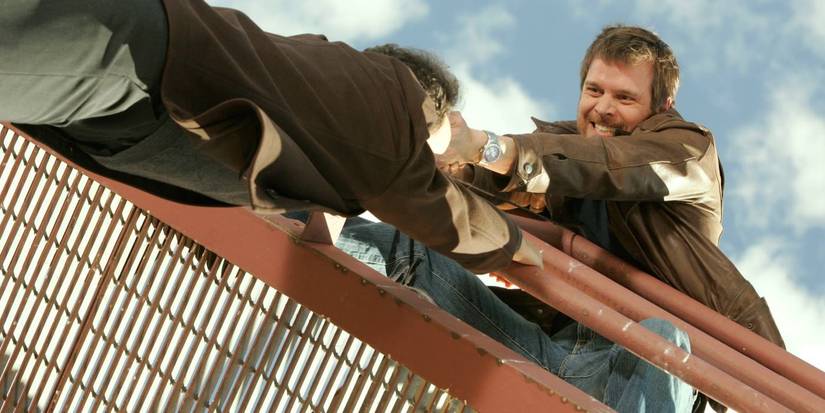 Image via SYFY
A motel room key that opens any door in the world, as long as you use it on that exact door, sounds like a storyline that could wear thin fast, but The Lost Room turns it into one of the most inventive sci-fi mysteries ever made for television. Joe Miller (Peter Krause), a detective, gets pulled into a hidden world of collectors chasing other cursed objects from the same vanished motel room, all while trying to get his daughter, Anna (Elle Fanning), back after she vanishes into the room itself.
Jennifer Bloom (Julianna Margulies) plays one of the more dangerous members of this shadowy collector world. Creators Christopher Leone and Laura Harkcom never fully explain where any of these objects actually came from, which makes the mystery even bigger than three episodes are usually able to hold. Syfy only gave it six hours total, and it's still one of the most re-watched cult favorites the network ever aired, even though barely anyone saw it the first time.
7 'The Singing Detective' (1986)
 Image via BBC1
Philip Marlow (Michael Gambon), a pulp crime novelist, is stuck in a hospital bed in The Singing Detective with a severe skin disease that's left his joints so swollen he can barely move, and to survive the boredom and pain, his mind keeps drifting into three different places at once, which include his own hardboiled detective novel, memories from his childhood, and elaborate musical numbers the hospital staff suddenly break into.
Dennis Potter wrote this while going through the same illness himself, and it shows in how unflinching the hospital scenes are, right down to the ointments and the humiliation of being unable to dress himself. Nicola (Janet Suzman) and Nurse Mills (Joanne Whalley) circle in and out of his fantasies too, blurring into figures from his own detective story until it's hard to tell which version of Marlow you're actually watching. It's one of the strangest, most personal things the BBC ever put on air, and decades later nothing else has really attempted the same trick.
6 'State of Play' (2003)
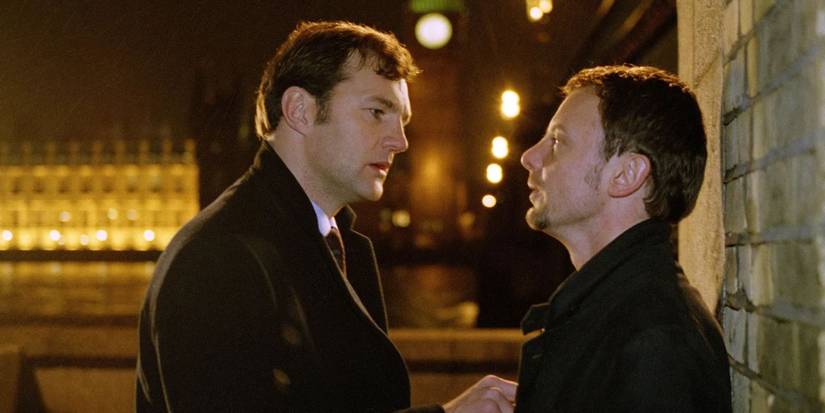 Image via BBC One
A junior researcher for a rising MP turns up dead on the Underground tracks, and no it might look like a straightforward suicide but instead it turns into a sprawling conspiracy involving oil companies, government cover-ups, and a journalist who used to be best friends with the MP now caught in the middle of it. Cal McCaffrey (John Simm) is the journalist, Stephen Collins (David Morrissey) is the MP, and the fact that they know each other personally makes every interview between them even more interesting.
Della Smith (Kelly Macdonald) and editor Cameron Foster (Bill Nighy) round out the newsroom, and Nighy in particular turns every scene into something close to comedy without ever undercutting the tension around him. Paul Abbott created the show, and it moves at the pace of an actual newsroom on deadline, where phones are ringing, sources are drying up, and nobody really has quite enough time to double check anything before it runs. Hollywood remade it in 2009 with Russell Crowe, but the compressed six-hour version is still so much better than the two-hour film.
5 'The Little Drummer Girl' (2018)
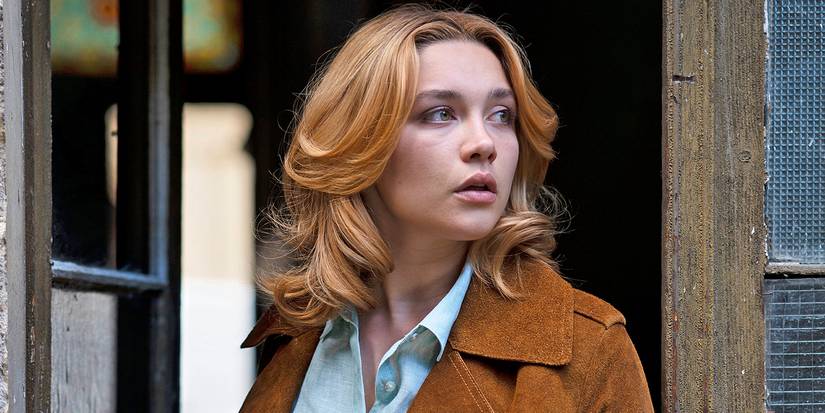 Image via AMC
Charlie (Florence Pugh) is a small-time English actress recruited by Israeli intelligence to infiltrate a Palestinian terrorist network, and the entire show plays like a spy thriller that's also, quietly, about how good she is at pretending to be someone else. Kurtz (Michael Shannon) runs the operation, and Becker (Alexander Skarsgård) trains her, falls for her, and nevertells her where the performance is supposed to end.
Park Chan-wook directed all six episodes, and his camera lingers in rooms, circles slowly, and makes every handoff and safehouse like it's dressed for a film festival. The show is based on a John le Carré novel, and it keeps his moral murkiness intact, nobody here is fully right, and the show refuses to tell you who to root for. It's gorgeous to look at and upsetting by the end, which is a rare combination for anything with this much espionage in it.
Collider Exclusive · TV Medicine Quiz Which Fictional Hospital Would You Work Best In? The Pitt · ER · Grey's Anatomy · House · Scrubs
Five hospitals. Five completely different ways medicine goes sideways on television — brutal, chaotic, romantic, brilliant, and ridiculous. Only one of them is the ward your instincts were built for. Eight questions will figure out exactly where you belong.
🚨The Pitt
🏥ER
💉Grey's
🔬House
🩺Scrubs
FIND YOUR HOSPITAL →
01
A critical patient comes through the door. What's your first instinct? Medicine under pressure reveals who you actually are.
AStay completely present — block everything else out and work through it step by step, right now. BTriage fast and delegate — get the right people on the right problems immediately. CTrust my gut and move — I work best when I stop overthinking and just act. DAsk the question everyone else is ignoring — what's the thing that doesn't fit? ETake a breath, make a joke to cut the tension, and then get to work — panic helps no one.
NEXT QUESTION →
02
Why did you go into medicine in the first place? The honest answer says more about you than the one you'd give in an interview.
ABecause I wanted to be where it matters most — right at the edge, when someone's life is actually on the line. BBecause I wanted to help people — genuinely, one patient at a time, in a system that makes it hard. CBecause I was drawn to the intensity of it — the stakes, the drama, the feeling of being fully alive. DBecause medicine is the most interesting puzzle there is — and I needed a problem worth solving. EBecause I wanted to make a difference — and also, honestly, I didn't know what else to do with my life.
NEXT QUESTION →
03
What do you actually want from the people you work with? Who you want beside you under pressure is who you are.
ACompetence and calm — I need people who don't fall apart when things get bad. BTrust and reliability — I want to know that when I pass something off, it's handled. CConnection — I want colleagues who become family, even if that gets complicated. DIntelligence and the willingness to be challenged — I have no interest in people who just agree with me. EFriendship — people I actually like spending twelve hours a day with, because those hours are going to happen either way.
NEXT QUESTION →
04
You lose a patient you fought hard to save. How do you carry it? Every doctor who's worked a long shift has had to answer this question.
AI carry it. All of it. I don't look for ways to put it down — that weight is part of doing this work honestly. BI process it and move — you have to, or the next patient suffers for the one you just lost. CI feel it deeply and lean on the people around me — I don't think you're supposed to handle that alone. DI go back over every decision — not to punish myself, but because I need to understand what I missed. EI grieve it genuinely, find some way to laugh about something unrelated, and try to be kind to myself — imperfectly.
NEXT QUESTION →
05
How would your colleagues describe the way you work? Your reputation on the floor is usually more accurate than your self-image.
AIntense and completely present — no small talk during a shift, but exactly who you want there. BSteady and dependable — not the flashiest in the room but never the one who drops something. CPassionate and occasionally chaotic — brilliant on the hard cases, prone to drama everywhere else. DBrilliant and difficult — right more often than anyone else, and everyone knows it, including me. EWarm and self-deprecating — not the most intimidating presence, but genuinely good at this and easy to like.
NEXT QUESTION →
06
How do you feel about hospital protocol and procedure? Every institution has rules. What you do with them is a choice.
AProtocol is the floor, not the ceiling — I follow it until the patient needs something it can't provide. BI respect it — the system is broken in places, but the structure is there for a reason and I work within it. CI follow it until my instincts tell me not to — and my instincts are usually right, even when they cause problems. DRules are for people who haven't thought hard enough about when to break them. EI try to follow it and mostly do — with a few memorable exceptions that still come up in meetings.
NEXT QUESTION →
07
What does this job cost you personally? Nobody works in medicine without paying a price. What's yours?
AEverything outside these walls — I've given this job my full attention and the rest of my life has gone around it. BMy idealism, mostly — I came in believing the system could be fixed and I've made a complicated peace with that. CStability — my personal life has been as chaotic as the OR, and that's not entirely a coincidence. DMy relationships — I am not easy to know, and the people who've tried to would probably agree. EMy sense of gravity — I use humour as a coping mechanism, which not everyone appreciates in a hospital.
NEXT QUESTION →
08
At the end of a long shift, what keeps you coming back? The answer to this question is the most honest thing about you.
AThe fact that it's real — that nothing else I could be doing would matter this much, right now, today. BThe patients — individual human beings who needed something and got it because I was there. CThe people I work with — I have walked through impossible things with these people and I'd do it again. DThe next unsolved case — there's always another puzzle, and I'm not done yet. EBecause despite everything — the exhaustion, the loss, the absurdity — I actually love this job.
REVEAL MY HOSPITAL →
Your Assignment Has Been Made You Belong In…
Your answers have pointed to one fictional hospital above all others. This is the ward your instincts, your temperament, and your particular brand of dysfunction were built for.
The Pitt
You are built for the most unsparing version of emergency medicine television has ever shown — one that puts you inside a single fifteen-hour shift and doesn't let you look away.
- You need your work to be real, not romanticised — meaning over drama, honesty over aesthetics.
- You find purpose inside the work itself, not in the chaos surrounding it.
- You've made peace with the fact that this job takes from you constantly, and gives back in ways that are harder to name.
- Pittsburgh Trauma Medical Center demands exactly that kind of person — and you would not want to be anywhere else.
ER
You are the person who keeps the whole floor running — not the most brilliant in the room, but possibly the most essential.
- You show up, do the work, absorb the losses, and come back the next day without needing the job to be anything other than what it is.
- You care about patients as individual human beings, not as cases to solve or dramas to live through.
- You believe in the system even when it fails you — and you understand that emergency medicine is about holding the line just long enough.
- ER is television about endurance. You have it.
Grey's Anatomy
You came to medicine with your whole self — your ambition, your emotions, your relationships, your history — and you have never quite managed to leave any of it at the door.
- You feel things fully and form deep attachments to the people you work with.
- Your personal and professional lives are permanently, chaotically entangled — and that entanglement drives both your greatest disasters and your most remarkable saves.
- You understand that extraordinary medicine often happens at the intersection of clinical skill and profound human connection.
- It's messy at Grey Sloan. You would not have it any other way.
House
You are drawn to the problem above everything else — the symptom that doesn't fit, the diagnosis hiding underneath the obvious one.
- You're not primarily motivated by the patient as a person — though you are capable of caring, even if you'd deny it.
- You work best when the stakes are highest and the standard answer is wrong.
- Princeton-Plainsboro exists to house one extraordinary, impossible mind — and everyone around that mind is there because they're smart enough to keep up.
- The only way forward here is to think harder than everyone else in the room. That is exactly what you do.
Scrubs
You understand that medicine is tragic and absurd in almost equal measure — and that the only sane response is to hold both of those things at the same time.
- You are warm, self-aware, and funnier than most people in your field.
- You use humour to get through terrible moments — and at Sacred Heart, that's not a flaw, it's a survival strategy.
- You lean on the people around you and let them lean back. The laughter and the grief are genuinely inseparable here.
- Scrubs is a show about learning to become someone worthy of the job. You are still very much in the middle of that process — which is exactly right.
↻ RETAKE THE QUIZ
4 'The Virtues' (2019)
 Image via Warp Films
Joseph (Stephen Graham) has been sober for years when his ex-partner moves to Australia with their young son, and that loss cracks something open in him that sends him back to Ireland for the first time since childhood. He grew up in a group home there, and the show slowly reveals just how much of what happened to him inside it he's spent his whole adult life trying to bury.
Anna (Helen Behan), his sister, and Dinah (Niamh Algar), a young woman with her own connection to the group home, both pull Joseph deeper into a past he clearly isn't ready for. Shane Meadows directed and co-wrote it with Jack Thorne, and Meadows famously shoots with almost no script locked down, letting Graham improvise scenes raw enough that some of the crying on screen is reportedly real.
3 'The Honourable Woman' (2014)
 Image via BBC Two
Nessa Stein (Maggie Gyllenhaal) inherits her father's arms manufacturing company and tries to atone for it by funding a fiber-optic cable meant to connect Israel and the West Bank, and from the first episode, it's clear someone doesn't want that cable finished. Hugh Hayden-Hoyle (Stephen Rea), an aging MI6 officer, watches her from the sidelines with a mix of protectiveness and suspicion that never settles in.
Hugo Blick wrote and directed every episode himself, and the show moves like a puzzle box, jumping across timelines without warning and trusting the audience to keep up. Ephra Stein (Andrew Buchan), Nessa's brother, gets pulled into the fallout too, and by the end, practically everyone connected to the Stein family turns out to be hiding something. It's dense and occasionally confusing on a first watch, but that density is exactly why it rewards a second one.
2 'Our Friends in the North' (1996)
 Image via BBC
Nicky (Christopher Eccleston), Geordie (Daniel Craig), Mary (Gina McKee), and Tosker (Mark Strong) start the show as four friends in their twenties in Newcastle in 1964, and by the time it ends thirty-one years later, every one of them has been reshaped by politics, corruption, and plain bad luck in ways none of them saw coming. It's essentially a state-of-the-nation drama disguised as a story about friendship.
Peter Flannery spent years trying to get this made, and the BBC nearly buried it entirely before it finally aired in 1996, decades after he first wrote it. Watching four actors age across nine episodes, three of whom later became major stars, gives the whole thing a strange, retroactive weight it didn't have when it first aired. It's one of the few miniseries that actually earns comparisons to a great novel, mostly because it was structurally built like one from the start.
1 'The Corner' (2000)
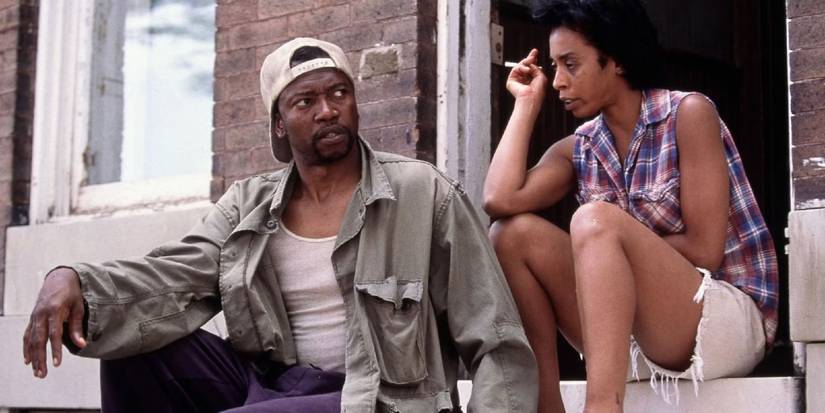 Image via HBO
Gary McCullough (T.K. Carter) and Fran Boyd (Khandi Alexander) are a separated couple both struggling with heroin addiction in West Baltimore, and their son, DeAndre (Sean Nelson), is trying to survive in a neighborhood that's already decided what kind of future he's allowed to have. David Simon and Ed Burns adapted it from their own nonfiction book, after spending a full year actually living and reporting on the real corner this show is based on.
This is the same David Simon who made The Wire a few years later, and you can see the entire blueprint for that show sitting right here, the structural patience, the refusal to hand out easy villains, the insistence that addiction is a systems problem and not just a personal failing. It won the Emmy for Outstanding Miniseries the year it aired, and then more or less vanished from the cultural conversation the second The Wire ate all the attention.





![[Virtual Event] Building a Secure AI Strategy for the Enterprise](https://eu-images.contentstack.com/v3/assets/blt6d90778a997de1cd/blt11afeac15e7adbb9/6a921187f8aef68330d6ae57/DRIW-AI-Strategy-VE-Oct26.jpg?width=720&quality=80&disable=upscale)


 English (US) ·