
 Image via Jennifer Dionisio/Vintage Books
Published Jul 13, 2026, 11:55 PM EDT
Anja Djuricic was born in Belgrade, Serbia, in 1992. Her first interest in film started very early, as she learned to speak English by watching Disney animated movies (and many, many reruns). Anja soon became inspired to learn more foreign languages to understand more movies, so she entered the Japanese language and literature Bachelor Studies at the University of Belgrade.
Anja is also one of the founders of the DJ duo Vazda Garant, specializing in underground electronic music influenced by various electronic genres.
Anja loves to do puzzles in her spare time, pet cats wherever she meets them, and play The Sims. Anja's Letterboxd four includes Memories of Murder, Parasite, Nope, and The Road to El Dorado.
Sign in to your Collider account
Mystery might just be the greatest book genre, like, ever. But whoever thinks it's easy to just sit down, write a book, and make it thrilling, entertaining, and totally make sense from start to finish hasn't tried writing at all. Mystery writers are some of the most ingenious (if not a tad eccentric) artists out there because there's something truly brilliant about a mystery novel that can hook us from sentence one and never let go.
The mystery novels where every chapter hides a clue, where every clue matters, and where the payoff is so good that you immediately want to flip back to page one and find all the hidden elements of the puzzle are rare, but they exist. They especially hide among the classics, and these eight don't just belong on a shelf; they should be in your hands right about now, preferably with a drink of choice and a free afternoon. Here are the classic mystery books that are perfect from the first page to the last.
'The Murders in the Rue Morgue' (1841)
 Image via Vintage Classics
Edgar Allan Poe is often considered the pioneer of the horror/mystery genre; if not the inventor, he's definitely one of the earliest examples of writers who had the ability to transport readers and give them the absolute creeps while setting up a clever, somewhat tragic whodunit. Even when it comes to fictional detectives, before The Murders in the Rue Morgue, there weren't any, really; there definitely was no Sherlock Holmes, no Hercule Poirot, and no Sam Spade. Poe's C. Auguste Dupin was the prototype for every brilliant, eccentric sleuth who followed.
In The Murders in the Rue Morgue, two women are found brutally murdered in a locked room in Paris, and the police are baffled. However, Detective Dupin, using nothing but his formidable powers of observation and deduction, pieces together a solution that is as shocking as it is logical. Rue Morgue is a short story, so you can read it in a single sitting, but its influence is massive: the locked-room mystery, the armchair detective, and the final reveal presented before the reasoning that leads to it. The prose may be a bit dense by modern standards, and Poe did love his lengthy philosophical digressions, but if you want to understand where every mystery novel you've ever loved came from, Rue Morgue is where you start.
'The Turn of the Screw' (1898)
 Image via Penguin Random House
When we talk about The Turn of the Screw, questions arise: Is it a ghost story? Is it a psychological thriller? Is it a fever dream about a woman slowly losing her grip on reality? Is it a mystery about a family lineage? The answers, though, are simple—Henry James' gothic novella is all of the above, and this ambiguity and all-encompassing nature are exactly what makes it so gripping. The Turn of the Screw is probably one of the most adapted mystery novels, including film, theater, and television, with the most acclaimed version being The Haunting of Bly Manor by Mike Flanagan.
The Turn of the Screw follows a young governess who is hired to care for two orphaned children at a remote English estate called Bly. She soon becomes convinced that the grounds are haunted by the ghosts of two former servants, but here's the thing: you never quite know if the ghosts are real or if the governess is an unreliable narrator projecting her own anxieties onto innocent children. What makes The Turn of the Screw a perfect book is precisely that—it doesn't give a straight answer at all. It's a mystery that invites you to become the detective, parsing every sentence for clues about what's actually happening. It's unsettling, beautifully written, and unforgettable. And if you read it once and think you've figured it out, read it again; you probably haven't.
'The Hound of the Baskervilles' (1902)
 Image via George Newnes Ltd
The Hound of the Baskervilles is a Sherlock Holmes novel that pretty much everyone knows about, even if they've never read it. There is, of course, a perfectly good reason for that: the book is a masterpiece. Arthur Conan Doyle masterfully balances supernatural dread with Holmes' insistence on logic and evidence. Watson, who narrates most of the story, is at his most competent and engaging, and Holmes's eventual solution is as satisfying as they come. It's the book that brought Holmes back from the dead (literally—Doyle had killed him off in a previous story), and thank goodness for that. Some detectives just can't be killed.
Set on the fog-shrouded moors of Dartmoor, The Hound of the Baskervilles follows Holmes and Watson as they investigate the death of Sir Charles Baskerville, who apparently died of a heart attack while fleeing from a gigantic, supernatural hound. The legend says a demonic dog has haunted the Baskerville family since the English Civil War, and now Sir Charles' heir, Sir Henry, may be next. The novel is a perfect blend of gothic atmosphere and classic puzzle-box detective work, but its strength is almost always in the rapport between Holmes and Watson, including the moments of deduction that would impress anyone. There are many Sherlock Holmes stories out there, but The Hound of the Baskervilles is universally beloved.
'The Talented Mr. Ripley' (1955)
 Image via Coward-McCann
Patricia Highsmith's The Talented Mr. Ripley is the rare mystery that doesn't care who committed the crime—because, well, you not only already know who the culprit is, but you're also rooting for him. Highsmith skillfully takes us into the mind of a man utterly indifferent to evil, and somehow, impossibly, we can't look away. The Talented Mr. Ripley is a novel about envy, identity, and the terrifying lengths we'll go to become someone else—to live the life of another, at any cost. With this novel, Highsmith introduced one of literature's greatest antiheroes, later writing four sequels with Tom Ripley as the protagonist (known as the Ripliad). People nowadays know this story because of the same-name film adaptation starring Matt Damon.
Tom Ripley is a young man scraping by in New York through small-time cons. When a wealthy shipping magnate, Herbert Greenleaf, hires him to travel to Italy and convince his wayward son, Dickie Greenleaf, to return home, Ripley sees an opportunity. He befriends Dickie and grows obsessed with his lavish lifestyle, so much so that his obsession takes a final extreme (let's try without spoilers, unless you've seen the adaptations). Though less of a mystery and more of a psychological thriller, Talented Mr. Ripley turns the mystery genre inside out, presenting it as a setup for understanding Ripley's psyche (the true mystery). If you've only seen the Matt Damon film (or the Netflix miniseries Ripley, starring Andrew Scott), do yourself a favor and read the book, too. It's mind-blowing.
Collider Exclusive · Horror Survival Quiz Which Horror Villain Do You Have the Best Chance of Surviving? Jason Voorhees · Michael Myers · Freddy Krueger · Pennywise · Chucky
Five killers. Five completely different ways to die — if you're not smart enough, fast enough, or self-aware enough to avoid it. Only one of them is the villain your particular set of instincts gives you a fighting chance against. Eight questions will figure out which one.
🏕️Jason
🔪Michael
💤Freddy
🎈Pennywise
🪆Chucky
TEST YOUR SURVIVAL →
01
Something feels wrong. You can't explain it — you just know. What do you do? First instincts are the difference between the survivor and the first act casualty.
ALeave immediately. I don't need to understand a threat to respect it. BStay quiet and observe. If I can see it, I can understand it. If I can understand it, I can avoid it. CStay awake. Whatever this is, I am not going to sleep until I feel safe again. DConfront it directly. Fear grows in the dark — I'd rather know what I'm dealing with. ECheck everything, trust nothing. The threat might be closer than I think — and smaller.
NEXT QUESTION →
02
Where are you most likely to find yourself when things go wrong? Setting is everything in horror. Where you are determines which rules apply.
ASomewhere remote — a cabin, a campsite, off the grid and away from people. BA quiet suburban neighbourhood where nothing ever happens. Except tonight. CIn my own head — the most dangerous place of all, depending on what's already in there. DWherever children are — because something about this place attracts the worst things. ESomewhere ordinary — a house, a toy store, a place where the last thing you'd expect is a threat.
NEXT QUESTION →
03
What is your most reliable survival asset? Every survivor has a quality the villain didn't account for. What's yours?
APhysical fitness — I can run, I can swim, I can outlast something that relies on brute persistence. BSpatial awareness — I always know the exits, the hiding spots, the fastest route out. CPsychological resilience — I've faced my worst fears before. They don't have the same power over me. DEmotional steadiness — I don't panic. Panic is what gets you caught. EScepticism — I don't underestimate threats because of how they look. Size is irrelevant.
NEXT QUESTION →
04
What kind of fear is hardest for you to fight through? Knowing your weakness is the first step to not dying because of it.
AThe unstoppable — something that will not stop, cannot be reasoned with, and is always getting closer. BThe invisible — a threat I can feel but can't locate, watching from somewhere I can't see. CThe psychological — something that uses my own mind and memories against me. DThe unknowable — something ancient, shapeless, that feeds on the fear itself. EThe mundane — a threat so ordinary-looking that no one will believe me until it's too late.
NEXT QUESTION →
05
You're with a group when things start going wrong. What's your role? Horror movies are brutally clear about who survives group situations and who doesn't.
AThe one who says "we need to leave" first — and means it, even when no one listens. BThe one who stays quiet, watches the others, and figures out the pattern before anyone else does. CThe one who holds the group together when panic sets in — because someone has to. DThe one who asks the questions nobody wants to ask — because ignoring them gets people killed. EThe one who takes the threat seriously when everyone else is laughing it off.
NEXT QUESTION →
06
What's the horror movie mistake you're most likely to make? Honest self-assessment is a survival skill. Denial is not.
AGoing back for someone — I know I shouldn't, but I can't leave them behind. BAssuming I'm safe once I've found a hiding spot. That's when it finds me. CFalling asleep when I absolutely cannot afford to. Exhaustion is its own enemy. DLetting my curiosity override my instincts — I always need to understand what I'm dealing with. EDismissing the threat because of how it looks. That's exactly what it wants.
NEXT QUESTION →
07
What's your best weapon against something that can't be stopped by conventional means? Every horror villain has a weakness. The survivors are always the ones who find it.
AThe environment itself — I use the terrain, the water, the geography against it. BPatience — I wait, I watch, and I strike at the one moment it doesn't expect. CLucidity — if I can stay in control of my own mind, it loses its primary weapon. DCourage — facing it directly, refusing to run, taking away the fear it feeds on. EImprovisation — I use whatever's at hand, however unconventional. Creativity over brute force.
NEXT QUESTION →
08
It's the final scene. You're the last one standing. How did you make it? The final survivor always has a reason. What's yours?
AI kept moving. I never stopped, never hid for too long, never let it corner me. BI figured out the pattern before anyone else did — and I used it against the thing following it. CI stayed awake, stayed lucid, and refused to give it the one thing it needed most. DI stopped being afraid of it. And the moment I did, everything changed. EI took it seriously from the start — and I never once made the mistake of underestimating it.
REVEAL MY VILLAIN →
Your Survival Odds Have Been Calculated Your Best Chance Is Against…
Your instincts, your strengths, and your particular way of thinking under pressure point to one villain you actually have a fighting chance against. Everyone else — good luck.
Jason Voorhees
Jason is relentless, but he is also predictable — and that is the gap you would exploit.
- He moves in straight lines toward his target. He doesn't strategise, doesn't adapt, doesn't outsmart. He simply pursues.
- Your ability to keep moving, use the environment, and resist the panic that freezes most victims gives you a genuine edge.
- The Crystal Lake survivors were always the ones who stopped running in circles and started thinking about terrain, water, and distance.
- You think like that. Which means Jason, for all his indestructibility, would face someone who simply refused to be where he expected.
Michael Myers
Michael watches before he moves. He is patient, methodical, and almost impossible to detect — until it's too late for anyone who isn't paying close enough attention.
- But you are paying attention. You notice the shape in the window, the car parked slightly wrong, the silence where there should be sound.
- Michael's power lies in the invisibility of ordinary suburbia — the fact that nothing ever looks wrong until it already is.
- Your spatial awareness and instinct to map every room, every exit, and every shadow before you need them is precisely the quality Laurie Strode had.
- You are not a victim waiting to happen. You are someone who already suspects something is wrong — and acts on it.
Freddy Krueger
Freddy wins by getting inside your head — using your own fears, your own memories, your own subconscious as weapons against you. That strategy requires a target who can be destabilised.
- You are harder to destabilise than most. You've faced uncomfortable truths about yourself and you haven't looked away.
- The survivors on Elm Street were always the ones who understood what was happening and chose to face it rather than flee from it.
- Freddy's greatest weakness is that his power evaporates in the presence of someone who refuses to give him the fear he feeds on.
- Your psychological resilience — the ability to stay grounded when reality itself becomes unreliable — is exactly the quality that keeps you alive here.
Pennywise
Pennywise is ancient, shapeshifting, and feeds on terror — but it has one critical vulnerability: it cannot function against someone who genuinely stops being afraid of it.
- The Losers Club didn't survive because they were braver than everyone else. They survived because they faced their fears together, and faced them honestly.
- You ask the questions others avoid. You look directly at what frightens you rather than turning away.
- That directness — the refusal to let fear fester in the dark — is Pennywise's worst nightmare.
- It chose the wrong target when it chose you. You are exactly the kind of person whose fear tastes like nothing at all.
Chucky
Chucky's greatest advantage is that nobody takes him seriously until it's already too late. He exploits the gap between how something looks and what it actually is.
- You don't have that gap. You take threats seriously regardless of how they present — and you never make the mistake of underestimating something because of its size or appearance.
- Chucky relies on surprise, on the delay between recognition and response. You close that delay faster than almost anyone.
- Your instinct to treat every unfamiliar thing with appropriate scepticism — rather than dismissing it because it seems absurd — is the exact quality that keeps you breathing.
- Against Chucky, not laughing is already winning. You are very good at not laughing.
↻ RETAKE THE QUIZ
'The Maltese Falcon' (1930)
 Image via Alfred A. Knopf
Dashiell Hammett's most famous novel, The Maltese Falcon, is the godfather of hard-boiled detective fiction—it's what we call a lean, mean, well-oiled machine; it's also utterly devoid of sentimentality, and yet it provokes sentiment in the reader with every line of beautifully crafted dialogue. Hammett essentially invented the noir detective mystery genre, and his influence can still be found everywhere, from the first noir films starring Humphrey Bogart (who also starred in the film version of the novel) to the most recent Nicolas Cage-led Spider-Noir. Hammett's style and influence can be found in every cynical private eye, double-cross, and femme fatale.
The Maltese Falcon follows private detective Sam Spade, who is hired by a beautiful woman to follow a man named Floyd Thursby. His agency partner takes the first shift and ends up dead, and soon Spade is caught in a web of murder, betrayal, and a desperate search for a gilded statuette of a falcon that everyone seems willing to kill for. The novel is told entirely in external third-person; there are no internal thoughts and no feelings on display, just what characters say and do, making The Maltese Falcon a sharp mystery that forces you to pay attention to every gesture and word. It's a quick but incredibly entertaining read that (re)set the standard in the hard-boiled detective genre.
'Rebecca' (1938)
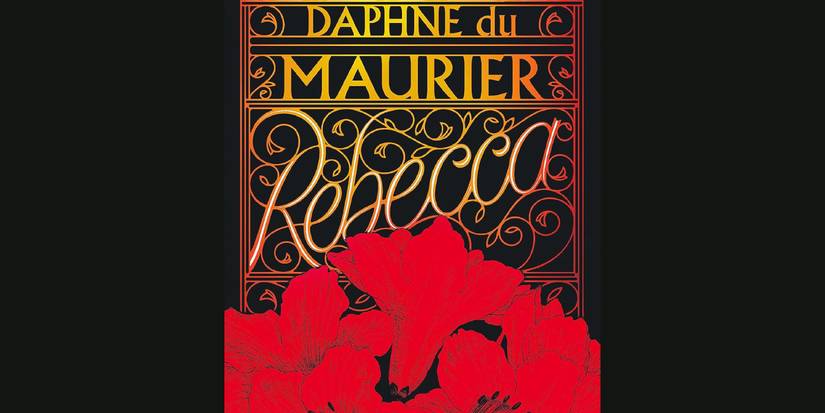 Image via Hachette
Daphne du Maurier's gothic mystery masterpiece, Rebecca, begins with one of the most famous opening lines in literature: "Last night, I dreamt I went to Manderley again." While it's easy to claim you'll be hooked from the first line, it's actually true with Rebecca. Du Maurier's most famous novel is a true page-turner because of how she sets up the story, where her writing takes us, and how she incorporates her own life into the mystery. Rebecca has never gone out of print, selling millions of copies. Of course, film fans remember that Alfred Hitchcock famously adapted Rebecca into an Oscar-winning film in 1940, but the book is where the true magic lives, and it's as gripping today as it was in 1938.
Rebecca follows an unnamed young woman (and narrator) who marries the wealthy widower Maxim de Winter and moves to his grand estate, Manderley. But she soon discovers that the memory of his first wife, Rebecca, haunts every corner of the house and most notably the sinister housekeeper, Mrs. Danvers, who seems determined to remind the narrator of it. She leaves an entire wing of the estate intact in Rebecca's honor and makes sure to undermine the narrator at every step, making her unreliable and isolated. The story is a slow-burning psychological mystery/thriller that builds to an interesting, emotional revelation; it's a story about identity and jealousy, and it's, by du Maurier's own admittance, somewhat inspired by her own life and relationship.
'The Murder of Roger Ackroyd' (1926)
 Image via HarperCollins
While Murder on the Orient Express may be Agatha Christie's most famous novel, The Murder of Roger Ackroyd is her greatest achievement and quite possibly the greatest mystery novel ever written. It's so perfectly constructed that the British Crime Writers' Association voted it the best crime novel of all time in 2013, when they celebrated their 60th anniversary. It's another novel Christie herself sorted among her personal favorites. It's quite the typical setup for a Poirot mystery, but it's still, even a century later, the gold standard of the genre.
The Murder of Roger Ackroyd is set in a quiet English village, where a wealthy widower named Roger Ackroyd is stabbed to death in his study. The local doctor, as well as the story's narrator, James Sheppard, assists the now-retired detective Hercule Poirot in finding Ackroyd's killer. The suspects are numerous, the motives are plentiful, and the clues are persistent, but the solution is so audacious and brilliant that it changed the genre forever. I know what you might be wondering, and no, knowing the ending doesn't ruin the book; in fact, it makes it even better, because you can observe just how precisely Christie plants every clue and red herring. If you must read only one mystery book in your life, make it The Murder of Roger Ackroyd.
'Murder on the Orient Express' (1934)

Half of the novels on this list were written by women (two by the same author), which is a source of pride for many female mystery fans. Highsmith, du Maurier, and Agatha Christie in particular influenced the psychological mystery/thriller genre in literature in numerous ways. If you believe that women can only write romances, romantic fantasy, or smut, you're mistaken. The true monarch of mystery and detective novels is, in fact, a queen, and her name is Agatha Christie. Murder on the Orient Express is a masterpiece of detective fiction, but it's much more than just a whodunit. It is a meditation on justice, revenge, and the limits of the law that shows how vengeance consumes a person. Christie herself rated this novel as one of her favorites.
Murder on the Orient Express follows Hercule Poirot, the world's greatest detective, as he is traveling on the luxurious Orient Express when a passenger is found stabbed to death in his compartment. The train is stranded in a snowdrift, and the killer is still on board. Poirot has a finite number of suspects and a finite amount of time to solve the mystery, and the solution is one of the most shocking and morally complex in crime fiction. The plotting is immaculate, the characters are vivid, and Poirot is at his most brilliant; Orient Express is the kind of book that makes you want to flip back to the beginning as soon as you finish.



 English (US) ·