
 Image via Paramount Pictures
Published Jun 27, 2026, 1:57 PM EDT
Remus is a writer, editor, journalist, and author with an eye for detail and an extremely active imagination. He is an enthusiast of everything to do with the graphic medium, whether it's Western comics and their adaptations or manga and anime. Remus is also the author of the sci-fantasy novel Once Upon a Time in Hyperspace and several works of short fiction in the mystery, comedy, and horror genres.
Sign in to your Collider account
In cinema, retreading old ground can often lead to brilliance, as evidenced by the many well-made remakes and reimaginings Hollywood has produced over the decades. Some of those movies even rank among the best films of all time, with a greater impact on audiences than their original inspirations, like Scarface or Ocean’s Eleven. And though not every classic movie needs a remake, there are some that could do with a modern update.
Some of these are films that deserve a remake just for retrospective improvements in techniques and world-building, which may have been limited in their time simply because the technology didn’t exist yet. With others, the foundational concepts of their stories are so timeless that they capture the attention of every generation with their universal themes, becoming cultural touchstones that make just as much sense today as they did when they first premiered. With that in mind, here’s our selection of classic movies that we need to see remade.
1 ‘Dial M For Murder’ (1954)
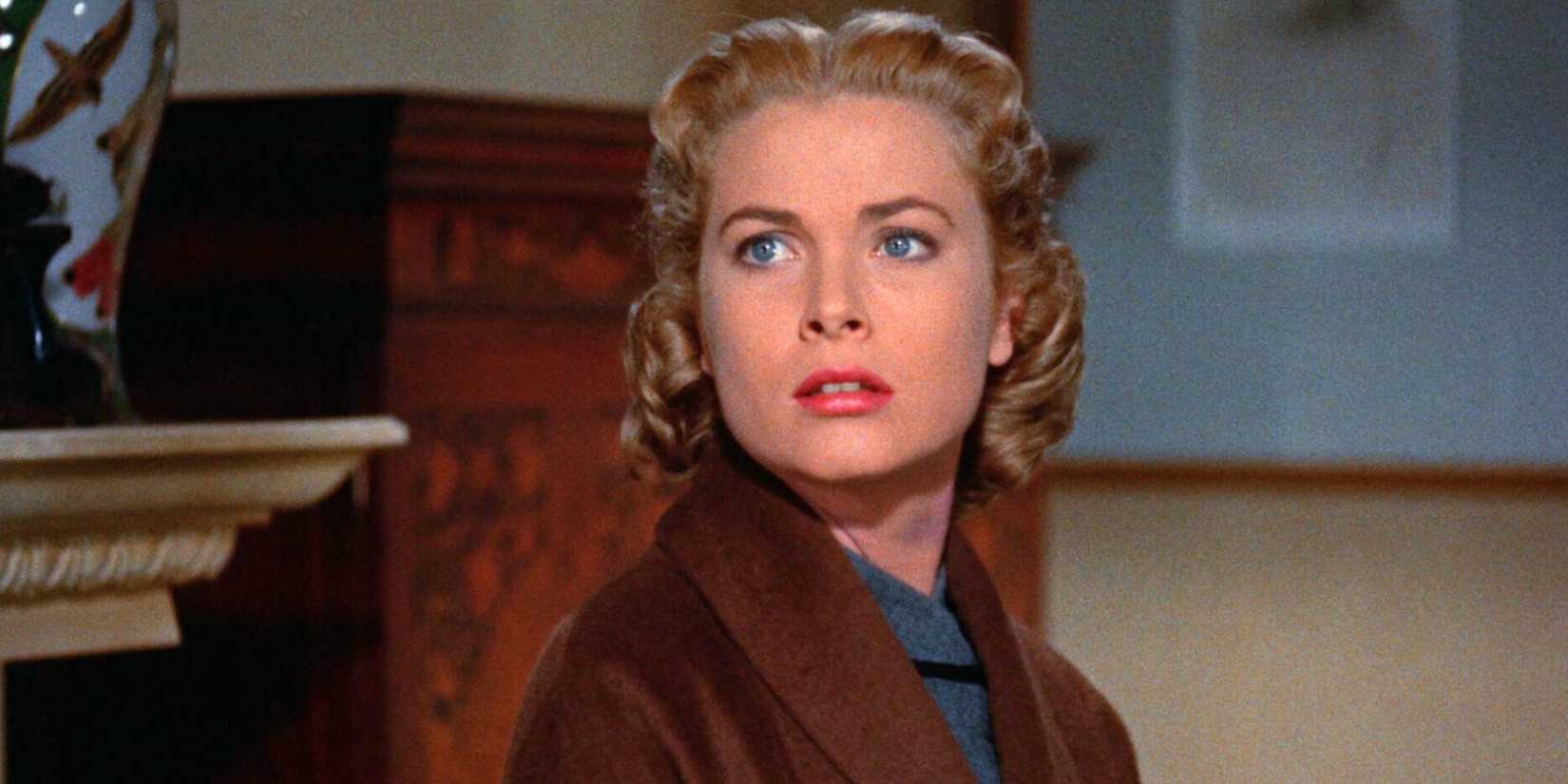 Image via Warner Bros.
Directed by Alfred Hitchcock and based on Frederick Knott’s play, Dial M for Murder follows Tony Wendice (Ray Milland), a former tennis player who has devised a plan to kill his wife, Margot (Grace Kelly), for her inheritance. After finding out about Margo’s extra-marital affair, Tony blackmails an old acquaintance to kill her, but the plan goes haywire, forcing him to improvise. The movie also stars Robert Cummings, Anthony Dawson, and John Williams in notable roles.
One of Hitchcock’s crime thriller masterpieces, Dial M for Murder would make for a perfect remake with its inverted mystery narrative, which would appeal to the modern audience seeking something beyond the conventional whodunit format. Additionally, the original film was meant to be projected in 3D, but the technology was error-prone at the time, and it wasn’t released in 3D until the 1980s. Considering all the advancements made in 3D filming technology since then, a new version of Dial M for Murder would not only add an edge to the production and narrative but also bring a fresh perspective to Hitchcock’s brilliant original.
2 ‘The Wizard of Oz’ (1939)
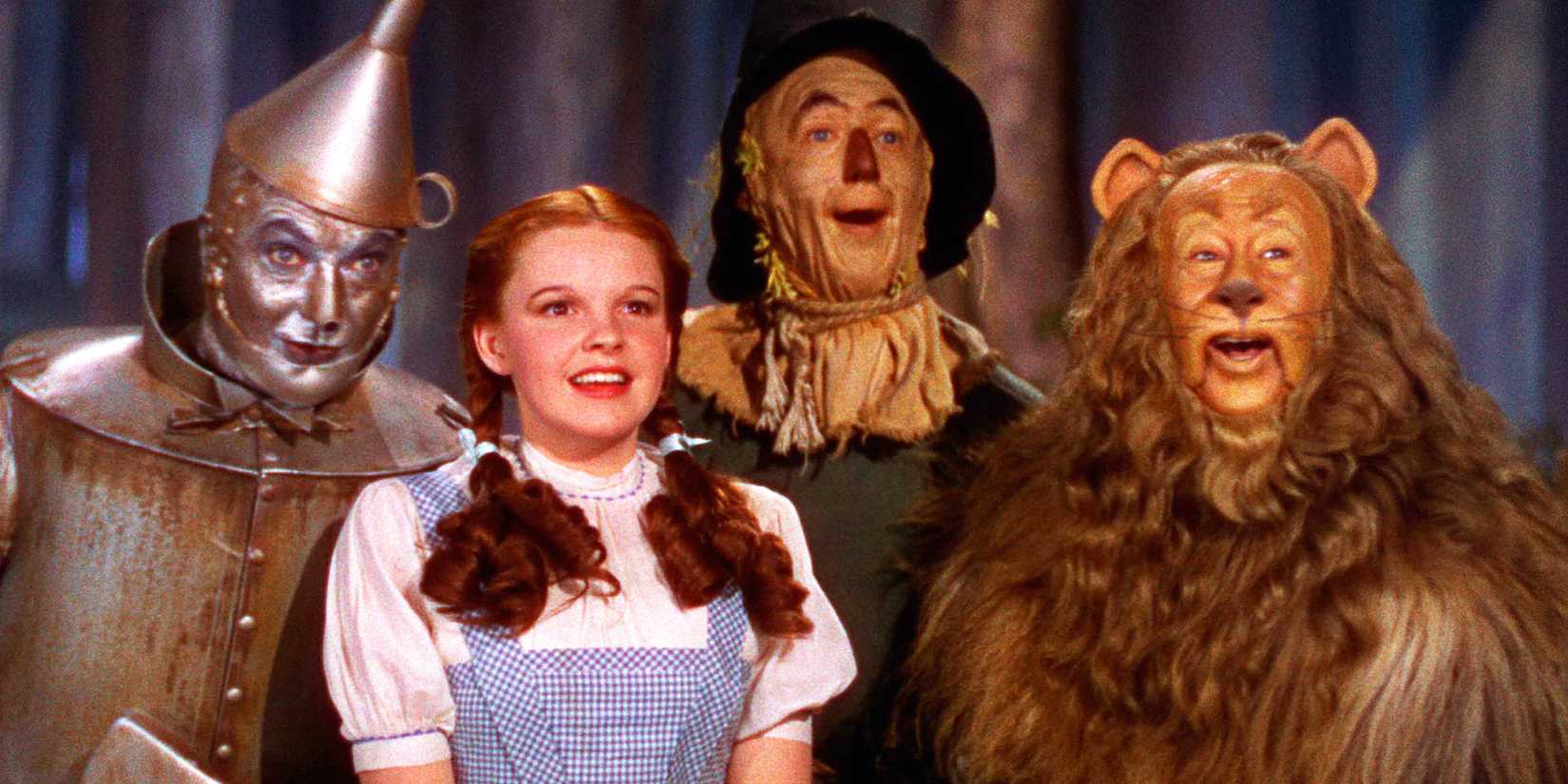 Image via Warner Bros.
Victor Fleming’s 1939 adaptation of L. Frank Baum’s children’s literary classic novel, The Wizard of Oz follows the story of Dorothy, a young farm girl from Kansas, and her pet dog, Toto. After getting caught in a tornado that transports them to the magical land of Oz, Dorothy and Toto set out on a fantastical journey to meet the mysterious wizard, running into various interesting characters along the way. Judy Garland stars as Dorothy in arguably her most iconic role, with Frank Morgan, Ray Bolger, Bert Lahr, Jack Haley, Billie Burke, and Margaret Hamilton in other lead roles.
The Wizard of Oz is a cinematic landmark and a cultural milestone that has since been readapted, reimagined, and rebooted several times. But a 21st-century remake of the original film, using the latest imaging technologies and special effects, would make for a brilliant rendition that fans would love to see far more than the many spin-offs, sequels, and prequels that we’ve seen so far this century. While it would be difficult to surpass the 1939 film’s reputation as a groundbreaking work of cinema, its themes of self-identity, individuality, non-conformity, and embracing the out-of-ordinary surely resonate with a modern audience.
3 ‘Clue’ (1985)
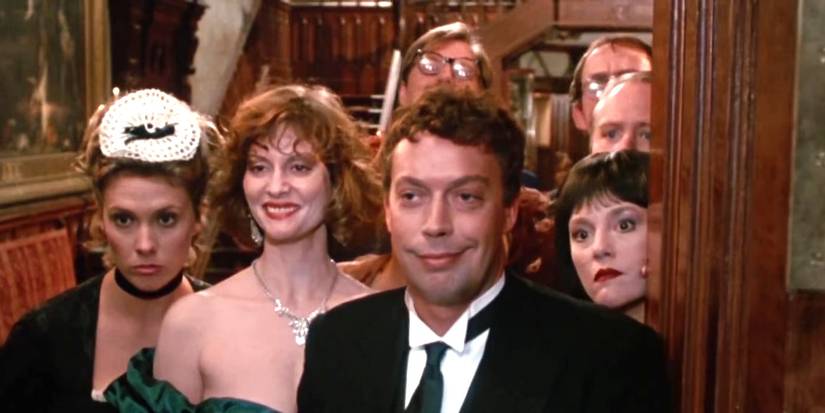 Image via Paramount Pictures
Written and directed by Jonathan Lynn, Clue is a mystery dark comedy adaptation of the popular board game of the same name, invented in 1943. Set in 1954, the film follows seven strangers who are invited by a mysterious host to his remote New England mansion, where the sudden death of one of the guests causes tension and suspicion among the group. Eileen Brennan, Tim Curry, Madeline Kahn, Christopher Lloyd, Michael McKean, Martin Mull, Lesley Ann Warren, and Colleen Camp star as main characters.
A campy and colorful crime comedy, Clue is proof that some board games do merit a cinematic adaptation, and the movie has been hailed as a cult classic that would surely earn greater attention if it were made today. Inspired by the premise of Agatha Christie’s And Then There Were None, the film’s plot still holds appeal among genre fans. With its multiple endings and signature color-coding of characters and their personalities, a contemporary take on Clue would make for a stylish and fun, possibly even interactive, murder mystery that could redefine the genre.
Collider Exclusive · Oscar Best Picture Quiz
Which Oscar Best Picture
Is Your Perfect Movie?
Parasite · Everything Everywhere · Oppenheimer · Birdman · No Country
Five Oscar Best Picture winners. Five completely different visions of what cinema can be — and what it can do to you. One of them is the film that was made for the way your mind works. Ten questions will figure out which one.
🪜Parasite
🌀Everything Everywhere
☢️Oppenheimer
🐦Birdman
🪙No Country for Old Men
FIND YOUR FILM →
01
What kind of film experience do you actually want? The best movies don't just entertain — they leave something behind.
ASomething that pulls the rug out — that makes me think I'm watching one kind of film and then reveals I'm watching another entirely. BSomething overwhelming — funny, sad, absurd, and genuinely moving, all at once. CSomething grand and weighty — a film that makes me feel the full scale of what I'm watching. DSomething formally daring — a film that pushes what cinema can even do. ESomething lean and relentless — pure tension with no wasted frame.
NEXT QUESTION →
02
Which idea grabs you most in a film? Great films are driven by a central obsession. What's yours?
AClass, inequality, and what people are willing to do when desperation meets opportunity. BIdentity, family, and the chaos of trying to hold your life together when everything is falling apart. CGenius, moral responsibility, and the catastrophic weight of a decision you can never take back. DEgo, legacy, and the terror of becoming irrelevant while you're still alive to watch it happen. EEvil, chance, and whether moral order actually exists or if we just tell ourselves it does.
NEXT QUESTION →
03
How do you like your story told? Form is content. The way a story is shaped changes what it means.
AGenre-twisting — I want it to start in one lane and migrate into something completely different. BMaximalist and genre-blending — comedy, action, drama, sci-fi, all in one ride. CEpic and non-linear — cutting between timelines, building a mosaic of cause and consequence. DA single unbroken flow — I want to feel like I'm living it in real time, no cuts to safety. ESpare and precise — every scene doing exactly what it needs to do and nothing more.
NEXT QUESTION →
04
What makes a truly great antagonist? The opposition defines the protagonist. What kind of opposition fascinates you?
AA system — invisible, structural, and almost impossible to fight because it has no single face. BThe self — the ways we sabotage, abandon, and fail the people we love most. CHistory — the unstoppable momentum of events that no single person can stop or redirect. DThe industry — the machinery of culture that chews up talent and spits out irrelevance. EPure, implacable evil — a force so certain of itself it becomes almost philosophical.
NEXT QUESTION →
05
What do you want from a film's ending? The final note is the one that lingers. What do you want it to sound like?
AShock and inevitability — a conclusion that recontextualises everything that came before it. BEarned emotion — I want to cry, laugh, and feel genuinely hopeful, even if the world is a mess. CDevastation and grandeur — an ending that makes me sit in silence for a few minutes after. DAmbiguity — something that leaves enough open that I'm still thinking about it days later. EBleakness — an honest refusal to pretend the world is tidier than it actually is.
NEXT QUESTION →
06
Which setting pulls you in most? Where a film takes place shapes everything — mood, stakes, what's even possible.
AA gleaming modern city with a hidden underside — beauty masking rot, wealth masking desperation. BA collapsing suburban life that opens onto something infinite — the multiverse of a single ordinary person. CThe corridors of power and science at a world-historical turning point — where decisions echo for decades. DThe grimy, alive chaos of New York and Hollywood — fame as both destination and trap. EVast, indifferent landscape — desert and highway where violence arrives without warning or reason.
NEXT QUESTION →
07
What cinematic craft impresses you most? Every great film has a signature — a technical or artistic element that makes it unmistakable.
AProduction design and mise-en-scène — every frame composed to carry meaning beneath the surface. BEditing and tonal control — the ability to move between registers without losing the audience. CScore and sound design — music that becomes inseparable from the dread and awe of what you're watching. DCinematography as performance — the camera not recording events but participating in them. ESilence and restraint — what's left unsaid and unshown doing more work than any dialogue could.
NEXT QUESTION →
08
What kind of main character do you root for? The protagonist is the lens. Who you choose to follow says something about you.
ASomeone smart and resourceful who makes increasingly dangerous decisions under pressure. BSomeone overwhelmed and ordinary who turns out to be capable of something extraordinary. CA brilliant, tortured figure whose gifts and flaws are inseparable from each other. DA self-destructive artist whose ego is both their superpower and their undoing. EA quiet, principled person trying to make sense of a world that has stopped making sense.
NEXT QUESTION →
09
How do you feel about a film that takes its time? Pace is a choice. Some films sprint; others let tension accumulate slowly, deliberately.
AI love a slow build when I know the payoff is going to be seismic — patience for a devastating reveal. BGive me relentless momentum — I want to feel breathless and emotionally spent by the end. CEpic runtime doesn't scare me — if the material demands three hours, give me three hours. DI want it to feel propulsive even when nothing is technically happening — restless energy throughout. EDeliberate and unhurried — I want dread to accumulate in the spaces between the action.
NEXT QUESTION →
10
What do you want to feel walking out of the cinema? The best films leave a mark. What kind of mark do you want?
AUnsettled — like I've just seen something I can't fully explain but can't stop thinking about. BMoved and energised — like the film reminded me what actually matters and gave me something to hold onto. CHumbled — like I've been in the presence of something genuinely important and overwhelming. DExhilarated — like I've just seen cinema doing something it's never quite done before. EHaunted — like a cold, quiet dread that stays with me for days.
REVEAL MY FILM →
The Academy Has Decided Your Perfect Film Is…
Your answers have pointed to one Oscar Best Picture winner above all others. This is the film that was made for the way your mind works.
Parasite
You are drawn to films that operate on multiple levels simultaneously — that begin in one genre and quietly, brilliantly migrate into another. Bong Joon-ho's Parasite is a film about class, desire, and the architecture of inequality that manages to be darkly funny, deeply suspenseful, and genuinely shocking across a single extraordinary running time. Your instinct is for cinema that hides its true intentions until the moment it's ready to reveal them. Parasite is exactly that — a film that rewards close attention and punishes assumptions, right up to its devastating final image.
Everything Everywhere All at Once
You want it all — and this film gives you all of it. The Daniels' Everything Everywhere All at Once is one of the most maximalist films ever made: action comedy, multiverse sci-fi, family drama, existential crisis, and a genuinely earned emotional core that sneaks up on you amid the chaos. You are someone who responds to ambition, who doesn't want cinema to choose between being entertaining and being meaningful. This film refuses that choice entirely. It is overwhelming by design, and its overwhelming nature is precisely the point — because the feeling of being crushed by infinite possibility is exactly what it's about.
Oppenheimer
You are drawn to cinema on a grand scale — films that understand history not as a backdrop but as a force, and that place their characters inside that force and watch what happens. Christopher Nolan's Oppenheimer is a film about the terrifying gap between what we can do and what we should do, told with the full weight of one of the most consequential moments in human history behind it. You want your films to feel important without feeling self-important — to earn their ambition through sheer craft and the gravity of their subject. Oppenheimer does exactly that. It is enormous, complicated, and refuses easy comfort.
Birdman
You are drawn to films that foreground their own construction — that make the how of the filmmaking part of the what it's about. Alejandro González Iñárritu's Birdman, shot to appear as a single continuous take, is cinema examining itself through the cracked mirror of a fading actor's ego. You respond to formal daring, to the feeling that a film is doing something that probably shouldn't be possible. Michael Keaton's performance and Emmanuel Lubezki's restless camera create something genuinely unlike anything else — a film that is simultaneously about creativity, relevance, self-destruction, and the impossibility of ever truly knowing if your work means anything at all.
No Country for Old Men
You are drawn to cinema that trusts silence, that refuses to explain itself, and that treats dread as a form of meaning. The Coen Brothers' No Country for Old Men is a film about the arrival of a new kind of evil — implacable, arbitrary, and utterly indifferent to the moral frameworks we use to make sense of the world. It is one of the most formally controlled films ever made, and its controlled restraint is what makes it so terrifying. You want your films to haunt you, not comfort you. You are not interested in resolution if resolution would be dishonest. No Country for Old Men is honest in a way that most cinema never dares to be.
↻ RETAKE THE QUIZ
4 ‘12 Angry Men’ (1957)
 Image via United Artists
Sidney Lumet’s courtroom classic, based on Reginald Rose’s 1954 teleplay, 12 Angry Men centers on a group of 12 jury members who must deliberate on the fate of an 18-year-old boy accused of murder. As they discuss and debate the outcome of the trial, it sparks serious conflicts among the jurors, making them question their own sense of morality and judgment, and the very concept of reasonable doubt. The film stars Henry Fonda, Lee J. Cobb, Ed Begley, E. G. Marshall, and Jack Warden in the main roles.
One of the most influential legal dramas of the last 100 years, 12 Angry Men is a compelling commentary on justice, prejudice, civic responsibility, and the American justice system. With its closed-room setting and timeless themes, the film continues to fit into the modern landscape and is highly worthy of a remake. A 21st-century take on 12 Angry Men with updated perspectives, including gender diversity and psychosocial themes, could successfully revive its legacy and impact in a world where our biases continue to influence truth and justice.
5 ‘The Hunchback of Notre Dame’ (1996)
 Image via Walt Disney Studios Motion Pictures
A Disney animated musical drama adaptation of Victor Hugo’s 1831 literary classic, The Hunchback of Notre Dame tells the story of Quasimodo, a deformed bell-ringer in the titular cathedral in Paris, who is suppressed and isolated from the outside world by his tyrannical guardian, Claude. When Quasimodo meets a traveling dancer named Esmeralda, it sparks courage in him to break free of his controlling father and society at large. Directed by Gary Trousdale, the film stars the voices of Tom Hulce, Demi Moore, Tony Jay, and Kevin Kline.
With themes of genocide, social prejudice, sin, and redemption, The Hunchback of Notre Dame is a much darker and more complex Disney film that was way ahead of its time. A live-action remake of the same would allow Hugo’s classic to be explored with more depth and realism, navigating serious topics like systemic oppression, marginalization, and bigotry against the current landscape. Furthermore, translating the 15th-century Gothic setting and the sweeping animation into real-world cinematography would yield a visually stunning film, ranking a step above Disney’s other live-action remakes.
6 ‘Nineteen Eighty-Four’ (1984)
 Image via Virgin Films
Directed by Michael Radford, Nineteen Eighty-Four is an adaptation of George Orwell’s classic, set in a totalitarian regime ravaged by war, where people are constantly under surveillance by their totalitarian leader, Big Brother, and persecuted for any sign of individualism (including thoughts). The plot centers on a low-ranking civil servant named Winston, who struggles to maintain his grasp on reality and his sanity against the overwhelming influence and power of the tyrannical rule. The film stars John Hurt, Richard Burton, Suzanna Hamilton, Cyril Cusack, James Walker, and John Boswell in main roles.
With themes of political authoritarianism, mass surveillance, and manipulation of the populace, Nineteen Eighty-Four has never been timelier, and it certainly deserves to be revisited with a contemporary lens. The film’s grim atmosphere, tragic story, and incisive socio-political commentary can be seamlessly updated to fit modern sentiments. A contemporary reimagining of the Orwellian classic has the potential to deliver a critical and necessary exploration of the nuances of social media influence, AI bias, digital surveillance, and the constant fight between facts and misinformation.
7 ‘A Clockwork Orange’ (1971)
 Image via Warner Bros.
Written, directed, and produced by Stanley Kubrick and based on the 1962 novel of the same name, A Clockwork Orange is a dystopian thriller that centers on Alex, a sociopathic teenager who is arrested for his acts of extreme violence. In captivity, he is forced to undergo a rehabilitation technique using experimental psychological therapy that renders him free of individualism. Malcolm McDowell stars in his most iconic role as Alex, alongside Michael Bates, Patrick Magee, Adrienne Corri, James Marcus, Warren Clarke, and Michael Tarn.
Despite facing plenty of criticism and controversy in its day, A Clockwork Orange remains an iconic dystopian thriller of the 20th century that deserves to be revisited through the 21st-century perspective. With modern audiences’ love for antiheroes, a new adaptation of the film would put the premise and the protagonist right at the heart of that cultural evolution. While it might be impossible to match Kubrick’s profound and surrealist vision, a remake of A Clockwork Orange could provide a crucial update on its social, cultural, political, and economic themes.
8 ‘Invasion of the Body Snatchers’ (1956)
 Image via Paramount Pictures
A sci-fi classic directed by Don Siegel and based on Jack Finney’s 1954 novel The Body Snatchers, The Invasion of the Body Snatchers follows an alien invasion in a fictional California town, where extraterrestrial plant pods replace existing humans with a visually identical copy devoid of emotions. When a local doctor stumbles on the phenomenon, he realizes the full scale of this “quiet invasion” and attempts to stop it. The film stars Kevin McCarthy and Dana Wynter, with Larry Gates, King Donovan, Carolyn Jones, Jean Willes, and Ralph Dumke as supporting characters.
One of the most definitive alien movies of all time, Invasion of the Body Snatchers is a timeless classic that has resonated with fans and filmmakers ever since, meriting several remakes in the later decades. From political paranoia to the silent conformity of the “pod people,” the film’s themes hold relevance even today and would make for a perfect alien thriller. While the movie has been remade once in 2007, a more contemporary reimagining of Invasion of the Body Snatchers could reshape the premise to reflect the current world, while simultaneously elevating the production values with state-of-the-art filmmaking capabilities.

Invasion of the Body Snatchers
Release Date February 5, 1956
Runtime 80 Minutes
Director Don Siegel
Writers Daniel Mainwaring, Jack Finney, Richard Collins



 English (US) ·