
 Image via Universal Pictures
Published Aug 9, 2026, 2:40 PM EDT
Jeremy has more than 2700 published articles on Collider to his name, and has been writing for the site since February 2022. He's an omnivore when it comes to his movie-watching diet, so will gladly watch and write about almost anything, from old Godzilla films to gangster flicks to samurai movies to classic musicals to the French New Wave to the MCU... well, maybe not the Disney+ shows.
His favorite directors include Martin Scorsese, Sergio Leone, Akira Kurosawa, Quentin Tarantino, Werner Herzog, John Woo, Bob Fosse, Fritz Lang, Guillermo del Toro, and Yoji Yamada. He's also very proud of the fact that he's seen every single Nicolas Cage movie released before 2022, even though doing so often felt like a tremendous waste of time. He's plagued by the question of whether or not The Room is genuinely terrible or some kind of accidental masterpiece, and has been for more than 12 years (and a similar number of viewings).
When he's not writing lists - and the occasional feature article - for Collider, he also likes to upload film reviews to his Letterboxd profile (username: Jeremy Urquhart) and Instagram account.
He has achieved his 2025 goal of reading all 13,467 novels written by Stephen King, and plans to spend the next year or two getting through the author's 82,756 short stories and 105,433 novellas.
Sign in to your Collider account
The thing about great movie scores is that sometimes, it feels like a fair amount of time has to pass before they become iconic. Maybe people came out of Jaws and Star Wars humming some of the music they'd heard, and maybe the same could be said for The Good, the Bad and the Ugly and its theme, but even then, time was probably a factor in those earworms becoming ear…wormier?
Looking ahead, what might be considered a classic score some decades from now? Possibly these ones. You might not be able to hum certain melodies here the way you can with the best-known John Williams and Ennio Morricone compositions, though maybe you'll be able to eventually. These are some of the best movie scores composed in the 2020s so far, with the music in each case complementing the visuals perfectly, while often also being genuinely interesting just to listen to on its own.
8 'Dune: Part Two' (2024)
2021’s Dune was good for sure, but Dune: Part Two had more interesting things to work with thematically and narratively, with Paul shifting from a somewhat heroic figure into something darker than an antihero. The actors got a little more to do, Dune: Part Two arguably impressed even more on a visual front, and then Hans Zimmer really committed to the score, too, with the music in Dune: Part Two being even grander and, where needed, a good bit darker, too.
Zimmer’s work on Part Two is even better, but the score for Dune (2021) is still very much worth an honorable mention.
Hans Zimmer won for his Dune (2021) score, though Dune: Part Two’s score wasn’t eligible for an Academy Award, for rather strange reasons. Still, it’s Zimmer’s work on Part Two that is even better, but the score for Dune (2021) is still very much worth an honorable mention. Throughout both movies (and hopefully in the upcoming Dune: Part Three), music really does play such a huge part.
7 'Blonde' (2022)
Blonde is an incredibly confronting movie based on the 2000 book of the same name, with neither version of Blonde attempting to be a historically accurate depiction of the life of Marilyn Monroe. Both book and movie use her life and likeness as ways to explore some very heavy thematic content, with the book being an ordeal to get through because of its darkness and length (700+ pages), and then the movie being similarly grim, but technically more digestible at 166 minutes.
On a technical front, there are parts of Blonde that are beautiful, while the story it explores proves ugly and challenging. The score is striking, having been done by Nick Cave and Warren Ellis, who are best known for the music they’ve done as members of the band Nick Cave and the Bad Seeds. Certain tracks in Blonde sound a bit like instrumental versions of songs from their 2019 album Ghosteen, but effectively repurposed for Blonde (and certainly not overused). Cave and Ellis know their music, basically, and they were the right musicians to have on hand for composing a score for a movie as difficult as this one.
6 'The Wild Robot' (2024)
And then on the other end of things tonally and genre-wise to Blonde, here’s The Wild Robot, which is a family movie and a very heartwarming one overall. It’s about a robot who gets stranded on an island, and then has to figure out how to continue serving, even though there aren’t any people or other robots around, so she eventually enters the lives of some animals who live on the small island.
She also befriends a young goose who doesn’t have a mother of his own, and… like, yeah, you know where this is going. You know how a movie like this is eventually going to feel inspirational and nice, and that’s okay, because The Wild Robot executes all that very well, even if parts of it do feel familiar. The music also does a lot of the heavy-lifting in some of the movie’s most emotional moments, being a well-above-average (and genuinely memorable) score for an animated movie.
5 'Marty Supreme' (2025)
There’s lots of music heard in Marty Supreme, with the score by Daniel Lopatin sounding fairly modern, and then numerous pre-existing songs used throughout are distinctly from the 1980s (including selections from Tears for Fears, New Order, Alphaville, and Peter Gabriel). There are some period-accurate songs here, because Marty Supreme does take place in the 1950s, but some of those 1980s needle-drops – and the more modern Lopatin score – add a lot by way of unusual flavor.
Somehow, it all works, and accentuates the messiness and intensity of Marty Supreme overall. Also, the Daniel Lopatin score on its own is just great. You can listen to it without the movie, and it sounds a great deal more dynamic and varied than plenty of full-fledged albums out there. The same can be said about the excellent score he did for Uncut Gems (from the Safdie Brothers, while Marty Supreme was only directed by Josh Safdie), though both were snubbed by the Oscars, making him one of the best film composers working today who’s yet to get an Academy Award nomination. Oh, yeah, he’s also known as Oneohtrix Point Never, so plenty of the music he’s made under that name has been acclaimed and not been written for any movies, but still.
4 'Spider-Man: Across the Spider-Verse' (2023)
If you're after live-action Spider-Men, then you're barking up the wrong tree, though there are references to them thanks to all the multiverse-related shenanigans going on in Spider-Man: Across the Spider-Verse. Into the Spider-Verse worked as an origin story for Miles Morales/Spider-Man, all the while introducing him to various Spider-People from other universes, and then the adventures in that first movie had unintended consequences that get explored more in Across the Spider-Verse.
Make no mistake: Into the Spider-Verse looked incredible, and it also sounded amazing, thanks to Daniel Pemberton’s score. But Pemberton did what Zimmer did on Dune, in terms of getting better between installments, because his Across the Spider-Verse score is even stronger than his Into the Spider-Verse score. The music’s fantastic and compelling here in ways that are hard to wrap one’s head around, so the boldness (and variety) of the music more than matches how bold, varied, and creative everything here is on a visual and narrative front, too.
3 'Sinners' (2025)
Sinners aims to look at a whole history of music, especially during one particularly impressive sequence that everyone deservedly talked about and praised, but it being a movie about music would've naturally put a good deal of pressure on composer Ludwig Göransson. Sinners was far from the first time he made a strong impression as a composer, since the scores for Creed, Tenet, Black Panther, and Oppenheimer were all memorable, but Sinners was arguably his first outright masterful score. It’s one that fits every scene of the movie perfectly, and then it’s got so much creativity and variety that listening to it without watching the movie also proves compelling.
Him getting his third win for Best Original Score was well-deserved here, and he’s barely in his 40s right now, so him being considered one of the all-time truly legendary film composers feels very possible, at this stage. As for Sinners, though, it does a lot to replicate the music important to the era and characters of the movie, feeling very blues-heavy, and then paying homage to other genres during that one big sequence, and then also in some other ways, throughout (like how there are a few heavy metal moments throughout the Sinners score, acknowledging how heavy metal was derived from blues rock, if you go back far enough).
2 'Babylon' (2022)
If you want a breezy and romantic look at Hollywood going from the silent era to talkies, then you’ve got Singin’ in the Rain. And Singin’ in the Rain is great. But if you like things being down-and-dirty, epic in length, and want just as much by way of tragedy and gross-out moments as you have opportunities to laugh, then maybe Babylon will be more up your alley, because it kind of does the same thing as Singin’ in the Rain, but it’s nastier, longer, and more cynical.
It’s also one of those grand old rise-and-fall stories in the style of something like Boogie Nights or Goodfellas, so there has to be a certain amount of fun had before things go wrong. And Babylon does celebrate the excitement that can come with making a movie, and then also laying bare how the industry destroys people. The score, composed by Justin Hurwitz, is also appropriately all over the place, because it’s packed with anxious, cathartic, sad, and even some unnerving music, making the movie quite the odyssey just based on its music alone (the score is cinematic enough to kind of feel like its own film). Oh, and speaking of odysseys…
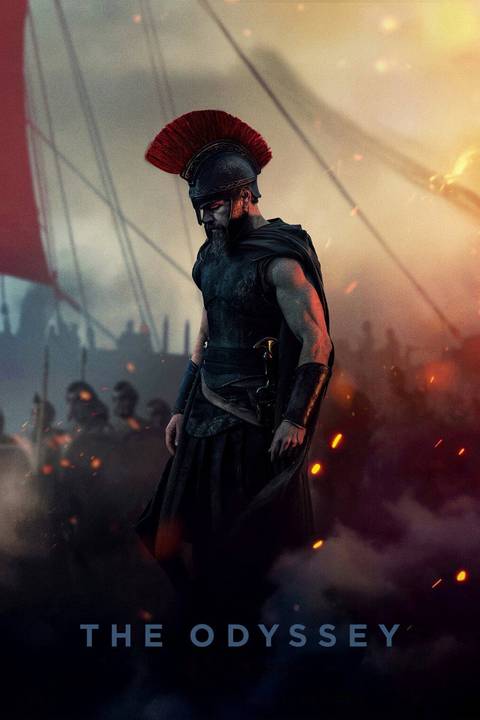
1 'The Odyssey' (2026)
There are a ton of recognizable faces in The Odyssey, and numerous characters to play, with plenty of them getting their own themes in a very classic “film score” sort of way. The Odyssey is one of the ultimate stories, and has endured to a genuinely daunting extent over thousands of years, so to do it all justice, you do obviously need great performances, people who know what they're doing behind the camera, and, of course, a skilled composer.
Enter, once more, Ludwig Göransson, who somehow does something even more impressive with his score for The Odyssey than he did when composing the music for the aforementioned Sinners. Hans Zimmer stopped working with Christopher Nolan after Dunkirk, and it really felt like a loss at the time, but truthfully, Göransson has been a more than worthy substitute, to the extent that The Odyssey might well even have the best score for any Christopher Nolan movie made so far. And reading about how Ludwig Göransson did the score – and some of the limitations placed upon him – just makes it even easier to appreciate how immense it all sounds.
The Odyssey
Release Date July 15, 2026
Runtime 173 minutes






 English (US) ·