
 Image via The Weinstein Company
Published Aug 9, 2026, 2:49 PM EDT
Jessica is a young writer from Brisbane, Australia. An avid consumer and lover of all things Film and TV, you will never tear her away from a screen. A tendency rooted from childhood, she once had dreams of becoming a member of the famed kids-band 'Hi-5'. Perhaps that's what pushed her to secure an education with a theater background. But now, as dreams evolved, her passions have turned to admiring performances from afar. Frankly, she's just grateful that she can put her binging skills to good use. Outside of work, Jessica recently completed her undergraduate double degree in Arts/Communications. Other than that, she spends most of her free time with family and friends, probably never forgetting to talk about the new movie or show she watched the day prior.
Sign in to your Collider account
Well-done historical films often strive for accuracy, meticulously recreating costumes, settings, and real-world events in an effort to transport audiences back into the past. But sometimes the most fascinating way to explore history is by asking a simple question: what if things had gone differently? Alternate history stories take familiar timelines and twist them, imagining worlds where scientific breakthroughs arrive earlier, wars end differently, or hidden forces reshape the course of events entirely.
The results can be far more imaginative — and sometimes more revealing — than traditional period pieces. By bending reality, filmmakers gain the freedom to explore deeper cultural anxieties, political tensions, and philosophical questions that might otherwise remain hidden. So, whether through satirical mockumentaries, speculative science fiction, or bold genre mashups, these are the films that transform history into something thrillingly unpredictable.
1 'C.S.A.: The Confederate State of America' (2004)
 Image via IFC Films
Presented as a satirical television broadcast, C.S.A.: The Confederate States of America imagines a chilling alternate timeline in which the Confederacy won the American Civil War. Framed like a documentary airing on a fictional Confederate television network, the film depicts a modern America still governed by slavery, racial hierarchy, and deeply ingrained systemic oppression. Through fake commercials, news segments, and historical retrospectives, it constructs an unsettling version of history that feels disturbingly plausible.
What makes the film so effective is its commitment to the format. Writer-director Kevin Willmott uses the mockumentary structure to expose the absurdity and brutality of institutional racism by presenting it through the mundane language of everyday media. The result is both darkly satirical and deeply uncomfortable. Indeed, rather than romanticizing the past like many traditional period pieces, C.S.A. weaponizes history to confront audiences with a version of America that forces difficult reflection.
2 'Never Let Me Go' (2005)
 Image via Fox Searchlight Pictures
Set in an alternate version of late-20th-century England, three children are raised at an idyllic yet strangely secluded boarding school, Hailsham. As they grow older, the trio gradually learns the devastating truth about their purpose: they have been created to serve as organ donors, destined to sacrifice their lives so that others may live longer. Despite this looming fate, their lives unfold through friendships, jealousy, and love.
Never Let Me Go has proved itself as a haunting piece of alternate history in how quietly it presents its premise. The world looks almost identical to our own, with the dystopian reality revealed ever so slowly through subtle details rather than dramatic exposition. Of course, Kazuo Ishiguro's source novel lays the foundation for this retrained approach. However, credit must be given for the film's ability to explore questions of humanity, morality, and what it means to live a meaningful life. Instead of rewriting history through spectacle, Never Let Me Go imagines a society shaped by a single scientific advancement — and the moral cost that follows.
3 'Anastasia' (1997)
 Image via 20th Century Fox
In this animated re-imagining of Russian history, after the fall of the Romanov dynasty, two charming men plan to pawn off a phony Princess Anastasia look-alike to earn a reward from the Dowager Empress (Dame Angela Lansbury). Luckily for them, Anya (Meg Ryan) — a young woman suffering from amnesia — stumbles into the auditions, bearing a striking resemblance to the missing Princess. Little do they know, she is exactly the woman they are looking for.
While it does take enormous creative liberties with historical fact (note the megalomaniac lich sorcerer), Anastasia transforms tragedy into a sweeping fantasy adventure. The film blends alternate history with vibrant fairy tale elements, turning the mystery of the Romanov daughter's fate into a lush animated musical. Sure, historians may raise their eyebrows, but between the story's romantic optimism and rich visual style, Anastasia creates a sweeter version of history that feels far more magical than reality. Plus, at least this one is perfect for the whole family.
Collider Exclusive · Sci-Fi Survival Quiz Which Sci-Fi World Would You Survive? The Matrix · Mad Max · Blade Runner · Dune · Star Wars
Five universes. Five completely different ways the future went wrong — or sideways, or up in flames. Only one of them is the world your instincts were built for. Eight questions will figure out which dystopia, galaxy, or desert wasteland you'd actually make it out of alive.
💊The Matrix
🔥Mad Max
🌧️Blade Runner
🏜️Dune
🚀Star Wars
TEST YOUR SURVIVAL →
01
You sense something is deeply wrong with the world around you. What do you do? The first instinct is often the truest one.
APull on every thread until I understand the system — then figure out how to break it. BStop asking questions and start stockpiling — food, fuel, weapons. Questions don't keep you alive. CKeep my head down, observe carefully, and trust no one until I know who's pulling the strings. DStudy the patterns. Every system has a rhythm — learn it, and you learn how to survive it. EFind the people fighting back and join them. You can't fix a broken galaxy alone.
NEXT QUESTION →
02
In a world of scarcity, what resource do you guard most fiercely? What we protect reveals what we believe survival actually requires.
AKnowledge. If you understand the system, you don't need resources — you can generate them. BFuel. Everything else — movement, power, escape — runs on it. CTrust. In a world of fakes and informants, a truly reliable ally is rarer than any commodity. DWater. And after water, information — the two things empires are truly built on. EShips and credits. The galaxy is big — you survive it by being able to move through it freely.
NEXT QUESTION →
03
What kind of threat keeps you up at night? Fear is useful data — if you're honest about what you're actually afraid of.
AThat reality itself is a lie — that everything I experience has been constructed to keep me compliant. BA raid. No warning, no mercy — just the roar of engines and then nothing left. CBeing identified. Once someone with power decides you're a problem, you're already out of time. DBeing outmanoeuvred — losing a political game I didn't even know I was playing. EThe Empire tightening its grip until there's nowhere left to run.
NEXT QUESTION →
04
How do you deal with authority you don't trust? Every dystopia has a power structure. Your approach to it determines everything.
ASubvert it from the inside — learn its rules well enough to weaponise them against it. BIgnore it and stay out of its reach. The further from any power structure, the better. CAppear to comply while doing exactly what I need to do. Visibility is the enemy. DManoeuvre within it carefully. You can't beat a system you refuse to understand. EResist openly when I have to. Some things are worth the risk of being seen.
NEXT QUESTION →
05
Which environment could you actually endure long-term? Survival isn't just tactical — it's physical, psychological, and very much about where you are.
AUnderground bunkers and server rooms — cramped, artificial, but with access to everything that matters. BOpen wasteland — brutal sun, no shelter, constant movement. At least the threat is honest. CA dense, rain-soaked city where you can disappear into the crowd and nobody asks questions. DMerciless desert — extreme heat, no water, and something enormous living beneath the sand. EThe fringe — backwater planets and busy spaceports where the Empire's attention rarely reaches.
NEXT QUESTION →
06
Who do you want in your corner when things fall apart? The company you keep is the clearest signal of who you actually are.
AA tight crew of believers who've seen behind the curtain and have nothing left to lose. BOne or two people I'd trust with my life. Any more than that and someone talks. CNobody, ideally. Alliances are liabilities. I work alone unless I have no choice. DA community bound by shared hardship and mutual survival — people who need each other to last. EA ragtag team with wildly different skills and total commitment when it counts.
NEXT QUESTION →
07
Where do you draw the line — if you draw one at all? Every survivor eventually faces a moment that tests what they're actually made of.
AI won't harm the innocent — even the ones who'd report me without hesitation. BI do what I have to to protect the people I've chosen. Everything else is negotiable. CThe line shifts depending on who's asking and what's at stake. DI draw a long-term line — nothing that compromises my people's future, even if it'd help now. ESome lines, once crossed, can't be uncrossed. I know which ones they are.
NEXT QUESTION →
08
What would actually make survival worth it? Staying alive is one thing. Having a reason to is another.
AWaking others up — dismantling the illusion so no one else has to live inside it. BFinding somewhere — or someone — worth protecting. A reason to keep moving. CAnswers. Understanding what I am, what any of this means, before time runs out. DLegacy — shaping the future in a way that outlasts me by generations. EFreedom — for myself, for others, for every world still living under someone else's boot.
REVEAL MY WORLD →
Your Fate Has Been Calculated You'd Survive In…
Your answers point to the world your instincts were built for. This is the universe your temperament, your survival instincts, and your particular brand of stubbornness were made for.
The Matrix
You took the red pill a long time ago — probably before anyone offered it to you. You're a systems thinker who can't help but notice the seams in things.
- You're drawn to understanding how the system works before figuring out how to break it.
- You'd find the Resistance, or it would find you — your instinct for spotting constructed realities is the machines' worst nightmare.
- You function best when you have access to information and the freedom to act on it.
- The Matrix built an airtight prison. You'd be the one probing the walls for the door.
Mad Max
The wasteland doesn't reward the clever or the well-connected — it rewards those who are hard to kill and harder to break. That's you.
- You don't need comfort, community, or a cause larger than the next horizon.
- You need a vehicle, a clear threat, and enough fuel to outrun it — and you're good at all three.
- You are unsentimental enough to survive that world, and decent enough — just barely — to be something more than another raider.
- In the wasteland, that distinction is everything.
Blade Runner
You'd survive here because you know how to exist in moral grey areas without losing yourself completely.
- You read people accurately, keep your circle small, and ask the questions others prefer not to answer.
- In a city where humanity is a legal designation rather than a feeling, you hold onto something that keeps you functional.
- You're not a hero. But you're not lost, either.
- In Blade Runner's world, that distinction is everything.
Dune
Arrakis is the most hostile environment in the known universe — and you are precisely the kind of person it rewards.
- Patience, discipline, and political awareness are your core strengths — and on Arrakis, they're survival tools.
- You understand that the long game matters more than any single victory.
- Others come to Dune and are consumed by it. You'd learn its logic and earn its respect.
- In time, you wouldn't just survive Arrakis — you'd begin to reshape it.
Star Wars
The galaxy far, far away is vast, loud, and in a constant state of violent political upheaval — and you wouldn't have it any other way.
- You find meaning in being part of something larger than yourself — a cause, a crew, a rebellion.
- You'd gravitate toward the Rebellion, or the fringes, or whatever pocket of the galaxy still believes the Empire's grip can be broken.
- You fight — not because you have to, but because standing aside isn't something you're capable of.
- In Star Wars, that willingness is what makes all the difference.
↻ RETAKE THE QUIZ
4 'District 9' (2009)
 Image via Sony Pictures
When a massive alien spacecraft arrives above Johannesburg in an alternate 1982 (and then seemingly stalls), humanity discovers its passengers are stranded extraterrestrial refugees. Decades later, the aliens have found themselves confined to overcrowded slums, while corporations exploit their technology. Meanwhile, government agent Wikus van de Merwe (Sharlto Copley) becomes entangled in the conflict after a mysterious accident begins transforming him into one of the creatures himself.
As a critically acclaimed sci-fi flick, District 9 brilliantly fuses the genre with alternate history by showcasing an apartheid society through the lens of extraterrestrial contact. The film's documentary-style storytelling and gritty realism make its premise feel disturbingly believable. Rather than a traditional alien invasion tale, District 9 uses the vague framework of "history" to examine prejudice, exploitation, and systemic injustice with striking power.
5 'Richard III' (1995)
 Image via Guild Film Distribution
Set in an alternate version of the 1930s, this bold adaptation of Shakespeare's Richard III relocates the classic play to an England torn by civil war. Richard (Sir Ian McKellen) from the House of York dreams of nothing more than to become a fascist dictator — even if those ambitions require him to take out members of his own family.
By transforming the story into a stylized fascist Britain, the film grounds this famed Shakespearean drama deeper into humanity and reality. Director Richard Loncrain merges stage theatrics with cinematic spectacle, creating a world that feels both historical and eerily modern. The result is a political thriller that highlights how power-hungry ambition can flourish in any era.
6 'April and the Extraordinary World' (2015)
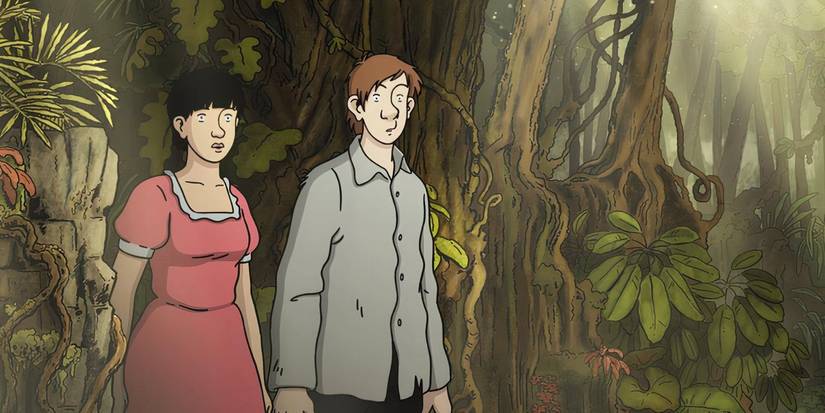 Image via StudioCanal
In a version of 1940s France, where the Franco-Prussian War was averted following the sudden death of Napoleon III, the world's greatest scientists have mysteriously vanished for generations, leaving technological progress frozen in time. While young April (Marion Cotillard) spends her life searching for her missing parents — brilliant researchers who may hold the key to humanity's stalled future — her journey leads her into secret societies, hidden laboratories, and a conspiracy stretching across the globe.
The film's alternate timeline creates a fascinating world where steam technology dominates and modern innovation never fully arrives. With its hand-drawn animation and richly imagined setting, April and the Extraordinary World feels like a Jules Verne novel brought to life. The result is a whimsical yet thoughtful exploration of how scientific discovery shapes civilization itself. It's a true underrated gem of the animated form.
7 'Lola' (2022)
 Image via Cowtown Pictures
Set in 1940s England, young inventor Thom (Emma Appleton) manages to build a mysterious machine capable of receiving radio and television broadcasts from the future. At first, she and her sister, Mars (Stefanie Martini), use the device to enjoy music and films that haven't been released yet. But as World War II intensifies, the sisters begin sharing future knowledge with the British military — unknowingly altering the course of history itself.
Starting out as a playful sci-fi premise, Lola captivates audiences as it gradually evolves into something far more unsettling. The sisters' attempt to manipulate the timeline creates ripple effects that reshape the war and ultimately spiral beyond their control. Told through archival-style footage — shot beautifully on 16mm and 35mm black-and-white film — Lola cleverly blurs the line between historical dramas and psychological thrills, crafting a tale that feels eerily dystopian even as it centers around history.
8 'Inglourious Basterds' (2009)
 Image via The Weinstein Company
In a tale set during World War II, audiences are met with two parallel storylines: a group of Jewish-American soldiers hunts Nazis across occupied Europe, while a wronged young woman named Shosanna Dreyfuss (Mélanie Laurent) plots revenge against the regime that murdered her family. Their paths ultimately converge in Paris as they attempt to assassinate Nazi Germany's leadership at a large cinema premiere.
In true Quentin Tarantino fashion, Inglourious Basterds delivers one of the most audacious alternate-history twists ever put on screen. Rather than faithfully recreating the past, the story gleefully rewrites it, turning a movie theater into the site of an explosive historical reckoning. Blending razor-sharp dialogue, unforgettable performances, and nerve-wracking suspense, this film proves that alternate history can sometimes be more cathartic — and definitely more thrilling — than traditional historical drama.








 English (US) ·