
 2 hours ago
8
2 hours ago
8

Published Sep 22, 2026, 5:30 AM EDT
Six words that still ring true
 Image: Universal Pictures
Science fiction has never been short of spellbinding openers. William Gibson's Neuromancer conjures an entire cyberpunk world with its image of a sky “the color of television, tuned to a dead channel,” while Ursula K. Le Guin writes just four words — “There was a wall” — to introduce one of the most important ideas of The Dispossessed. Other authors, like Frank Herbert with Dune and Dan Simmons with Hyperion, take a more novelistic approach, dropping readers into the strange preparations for Paul Atreides' journey to Arrakis or the pilgrims' desperate voyage to the Time Tombs.
While all of these sci-fi openings do something different, they also share that same unputdownable quality only the best writers can muster. Still, after decades of reading science fiction, I've never found a starting sentence from a book more brutally poignant and true than Ray Bradbury's opening line in Fahrenheit 451.
“It was a pleasure to burn.”
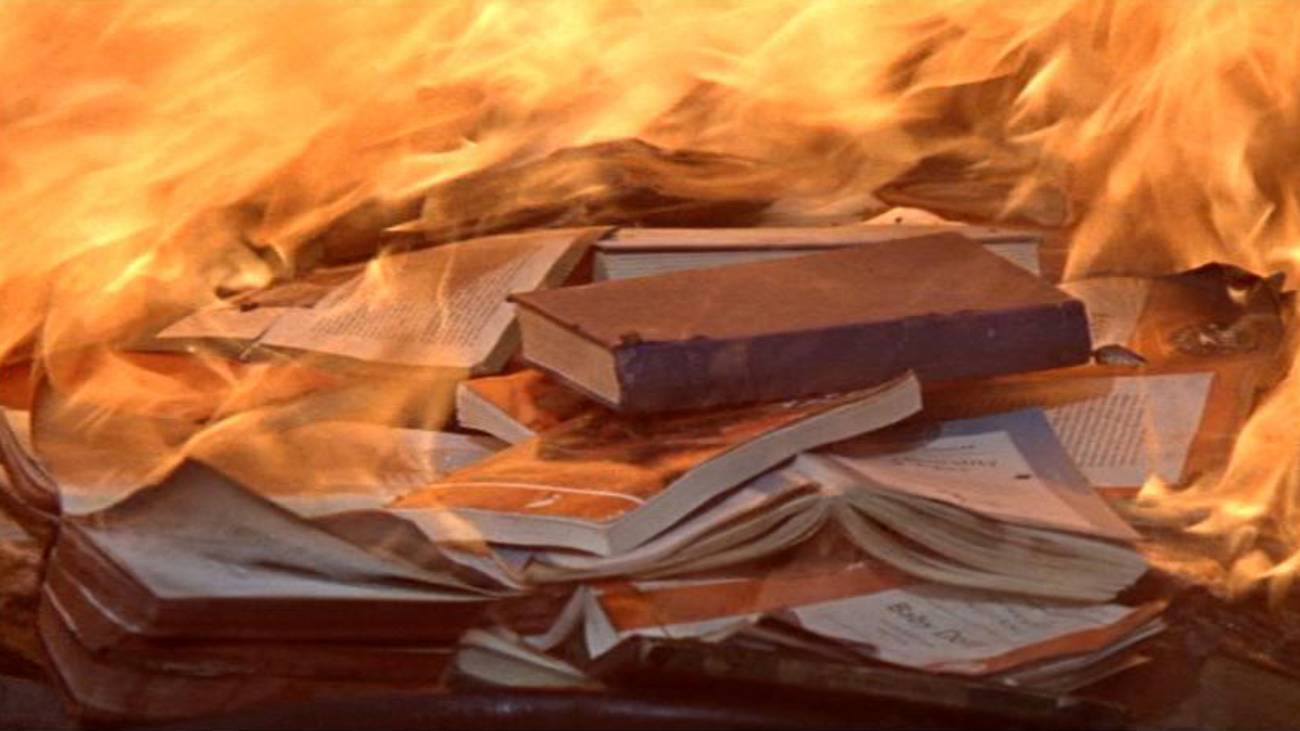 Image: Universal Pictures
All he needed was six words. That's all Bradbury required to introduce one of the most famous dystopian novels ever written. The sentence is almost comically straightforward, which makes its meaning all the more horrifying. Bradbury doesn't begin by explaining why books are forbidden or by introducing the society that outlawed them. Instead, he puts us directly inside the head of the story’s protagonist, Guy Montag, a fireman whose very job is to burn said books. The pleasure isn't metaphorical. Montag genuinely enjoys watching books of all kinds erupt into flames.
This destructive delight, however, does not last. Montag’s unquestioning loyalty to the regime begins to falter after a chance meeting with an eccentric young neighbor named Clarisse, whose free-spirited curiosity exposes the screen-obsessed nature of his world. When an elderly woman chooses to burn alive alongside her illegal collection rather than surrender it, a horrified Montag secretly steals a book, seeking to understand the power of the words he has spent his life destroying. Hunted by his own fire captain and a relentless mechanical hound, Montag is forced to flee the city, only finding refuge among an underground network of exiled scholars who memorize entire works of literature to preserve human thought for a world on the brink of self-destruction.
Bradbury’s warning was never really about fire
Published in 1953, the aptly-named Fahrenheit 451 arrived at a particularly anxious moment in American culture. Bradbury was writing in the shadow of World War II, the rise of McCarthyism, and the proliferation of television, while his awareness of the infamous Nazi book-burnings helped shape his obsession with the destruction of literature. Yet the novel was not meant to imply that “the government might ban books.” Bradbury himself later described Fahrenheit 451 as a warning about television, declining education, and people's willingness to surrender reading and independent thought for easier forms of entertainment. In a 2009 interview, he said his science fiction was meant to look at the present rather than predict the future.
Despite insisting he was merely reflecting on his own era, Bradbury somehow managed to foretell the exact future we’re living in today, pinpointing a modern-day crisis that’s as terrifying as it is detrimental to society. While he imagined a state that physically burned books, Bradbury was far more terrified by a culture that would simply lose interest in them. The distinction is that you don't need a totalitarian regime with a lit match when an entire population voluntarily turns away from books and the ideas within their pages.
We’re burning books without striking a match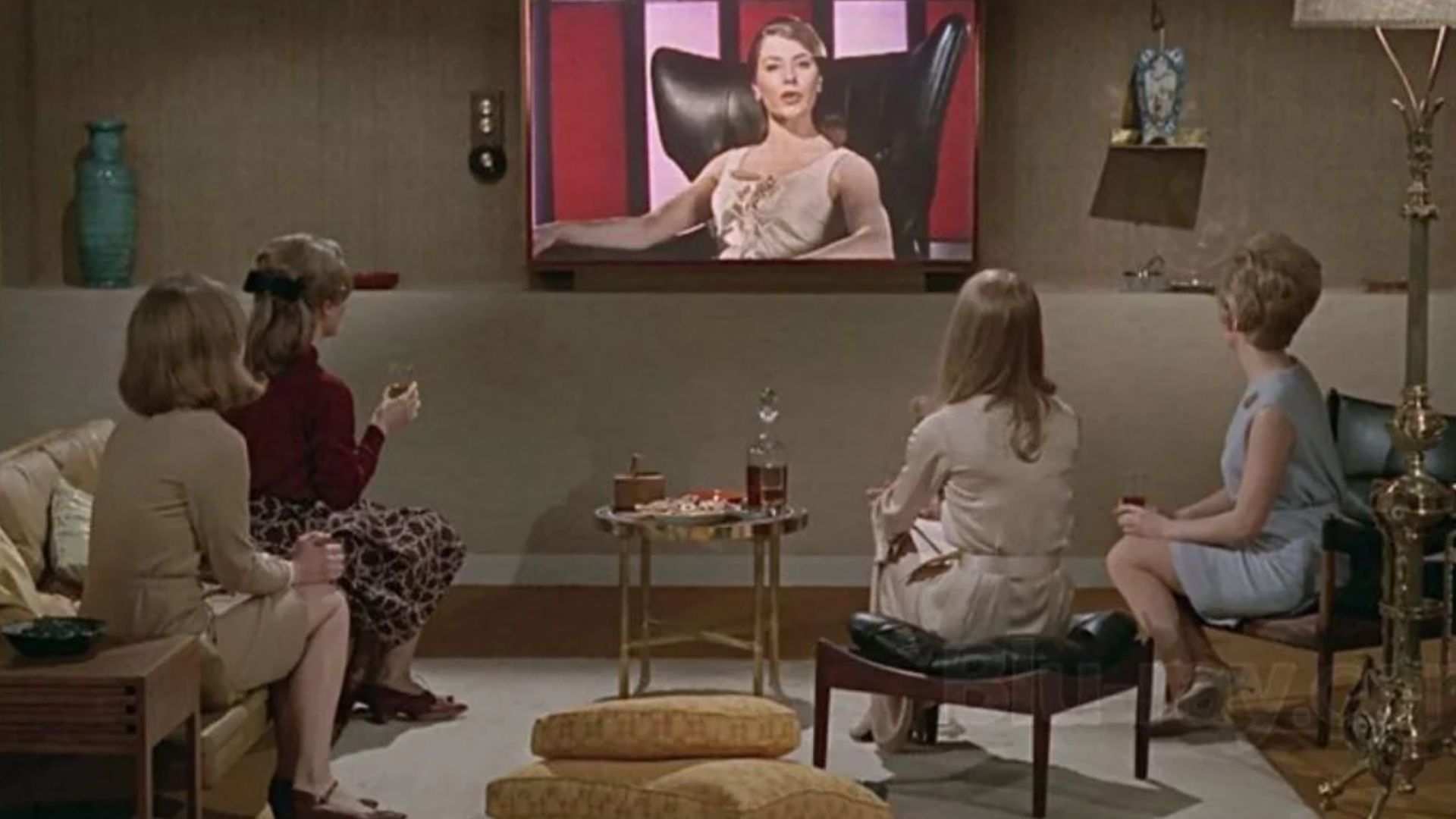
The numbers surrounding modern reading habits prove Bradbury’s point. According to data from the National Endowment for the Arts, just 48.5% of U.S. adults reported reading a book in 2022, down from 54.6% in 2012. Fiction reading fell even further, dropping from 45.2% to an all-time low of 37.6% over that same decade. Furthering the decline, an analysis of two decades of American Time Use Survey data found that the share of Americans reading for fun on an average day plummeted from 28% in 2004 to just 16% in 2023. Sure, we’re not being forced to surrender and burn our literature; we’re just quietly letting it wither away.
Meanwhile, screen time on electronic devices has metastasized to claim the attention that print lost. DataReportal’s 2024 Global Overview Report shows American adults now average over seven hours a day staring at digital displays, surrendering more than 40% of their waking lives to pixels. And Bradbury’s precognition doesn’t stop there. Court documents and legal filings have revealed how tech developers are acquiring massive collections of copyrighted works to train AI. Anthropic, for example, purchased millions of physical print books, severed their bindings to scan every page, and destroyed the paper remains, as reported by The Washington Post. While courts debate copyright and fair use, the imagery remains impossible to ignore: human knowledge systematically acquired, processed, and discarded in service of a new technology.
 Image: Universal Pictures
Bradbury could hardly have predicted the mechanics of AI training or algorithmically optimized distraction, but his opening lands with terrifying precision because “It was a pleasure to burn” was never really about kerosene or fire. It was about the thrill of friction-free consumption and what happens when we stop seeing written human thought as something worth preserving.
More than seven decades later, Bradbury's opening line still rings with a chillingly prophetic weight that will likely continue to fall on deaf ears.






 English (US) ·