


Published May 16, 2026, 8:45 PM EDT
Dani Kessel Odom (they/them) is an autistic lead writer and TV critic who frequently covers sci-fi shows like Doctor Who and Pluribus, fantasy shows like The Magicians and Percy Jackson, horror, and superheroes. Their specialty is onscreen book adaptations. Their TV reviews can be found on Rotten Tomatoes.
They have covered events, such as the Denver Fan Expo. Professionals in the field, such as Damien Leone and Lucy Hale, have shared their articles. Their review for Ponies was quoted in the show's TV trailer.
In university, they majored in English Writing with a minor in psychology. They have always had a passion for analyzing TV and movies, even taking filmography and scriptwriting classes in university. They also studied and participated in onstage and onscreen acting extensively from the ages of 7 to 18.
Aside from working at Screen Rant, Dani has worked as a freelance editor and writer over the past decade, often in a ghostwriting capacity.
Sign in to your ScreenRant account
When it comes to long-running sci-fi series, one show with seven seasons and an 89% Rotten Tomatoes score was so fantastic that it essentially created its own genre. It’s easy to long for the days of 20-episode seasons and more than 3 seasons per show. However, series that last longer can sometimes run into the problem of getting stale and repetitive. Some TV shows stretch their premise out too long or outlast their character development. Prime examples of this are Lost, The Walking Dead, and The Flash. These three shows absolutely lost the spark that made them special to begin with.
However, a few big examples have avoided this. The Twilight Zone stayed fresh because it's anthological. Doctor Who has a built-in premise that allows the show to evolve. Love each regenerataion or hate them, the show can always move forward in exciting new ways. Similarly, DC’s Legends of Tomorrow, a sci-fi show with seven seasons, avoided this problem by creating its own path.
The TV show is not just an ordinary Arrowverse superhero show. The show starts by following a group brought together by a rogue time traveler named Rip Hunter, who travels through time to stop a supervillain named Vandal Savage, intent on destroying the world and time itself. However, it moves away from the premise after one season and paves its own path in the sci-fi world.
At the time of its release, the series was considered a complete flop, but Legends of Tomorrow is now considered a gem. It’s entertaining for sci-fi fans, whether you are into the Arrowverse or not. You don’t have to commit to watching every other show to understand what’s going on. On top of that, it’s unbelievably creative and unhinged in the best way possible. The show embraces the good, bad, and horribly campy parts of the sci-fi genre.
Unlike other Arrowverse TV shows, Legends of Tomorrow was a metaphorical sandbox. Anything goes. The show isn’t restricted to gritty superhero violence like Arrow or Batwoman, nor is it stuck to polished optimism like The Flash or Supergirl. The B-rated heroes and antiheroes gave the writers creative freedom to do basically anything they wanted. Although it started as a grounded time-traveling sci-fi epic, each season brought something new.
The second season was a historical sci-fi adventure with a lighthearted tone. The show pivoted in season 3 to a weird, campy occult sci-fi. After that, Legends of Tomorrow became a satirical science fantasy in season 4. The fifth season throws together absurdist sci-fi, historical fiction, mythology, and even a little bit of meta commentary. Everything went off the rails in the best way in Legends of Tomorrow season 6, when they turned the show into a B-movie alien invasion story. Finally, they concluded with a season of suspenseful alternate history, rounded out with robotic clones.
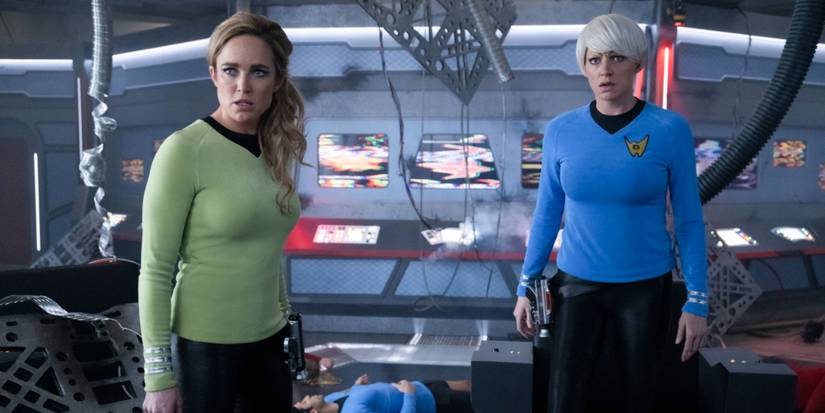
Legends of Tomorrow is more sci-fi than it is superhero or fantasy. Technically, the characters in Legends of Tomorrow are superheroes, but they feel more like a ragtag group of misfits on an unlikely mission, like the crew on the Serenity or Moya’s Crew in Farscape. They were also created specifically for the TV show rather than pulled from the comics, as they’re completely unrelated to the 2016 DC comic of the same name. Legends of Tomorrow became part of the comics in May 2022, after the show’s cancellation. On top of that, Legends of Tomorrow rarely ever crosses over with the larger Arrowverse, making it feel separate from DC.
At the same time, the show breaks out from sci-fi norms. The Legends constantly face new interdimensional threats throughout history, and the group's members shift regularly, keeping the team's dynamics fresh. Everything about the show is completely ludicrous. It feels like a love letter to and a parody of traditional sci-fi, but that’s why it’s so fantastic. By refusing to stick to a single genre, storytelling style, or even crew, Legends of Tomorrow becomes an enigma in sci-fi. The show is a singular entity completely detached from any labels, existing as its own genre.
Release Date 2016 - 2022-00-00
Showrunner Phil Klemmer
Writers Tyron Carter, Sarah Nicole Jones, Jackie Canino
-

Boyd Ferguson
Lieutenant Cadwalader
-
Cameron Bancroft
Mr. Blake








 English (US) ·