
The Audacity, AMC's newest hit, is a darkly comic drama that mocks the toxic, ego-driven world of technology. It stars Billy Magnussen in a role similar to some of his earlier work (most notably Made for Love), but this time he ups the ante and takes the lead in a show he deserves. He is joined by Sarah Goldberg, who is also fantastic; Rob Corddry; Lucy Punch; and Zach Galifianakis. Jonathan Glatzer, who wrote for Succession and produced Bad Sisters, created The Audacity, which mirrors those shows' dark, satirical, but realistic punch.
The Audacity follows Duncan Park (Magnussen), a tech CEO who ineptly leads his latest company, Hypergnosis. He visits therapist JoAnne (Goldberg), who only works with Silicon Valley clients like him, and Duncan quickly realizes JoAnne has a secret he can use against her. Mutual destruction has never felt more cringeworthy and diabolical; if you just finished watching this, here are the must-watch shows if you love AMC's The Audacity.
'The Chair Company' (2025–Present)
 Image via HBO
If your favorite part of The Audacity is its protagonist spiraling into an all-consuming existential crisis, its dark humor, or its incredibly inept characters, HBO's The Chair Company is an absolute must-see. This dark office satire, which debuted with a perfect 100% on Rotten Tomatoes, is a masterclass of turning the mundane into the bizarre. The plot revolves around Ron Trosper (Tim Robinson), a typical family man who has an embarrassing encounter with an office chair in front of his peers at a conference. Instead of letting it go, Ron begins an amateur investigation into the chair's manufacturer, falling into a rabbit hole of corporate conspiracy theories and illogical customer service loops.
The Chair Company, created by and starring Robinson (I Think You Should Leave), has a uniquely surreal and unhinged energy; anyone can derail the plot, while a simple task usually turns into a labyrinth of misdirection and complications. It's not about technology or billionaires, but it perfectly captures the simmering sense of paranoia that Duncan Park experiences throughout The Audacity. The Chair Company consists of half-hour episodes, and its most appealing aspect is its absurdity.
'Halt and Catch Fire' (2014–2017)
 Image via AMC
While The Audacity is entirely focused on modern technological complexities, ethics, and absurdities, AMC's own Halt and Catch Fire feels like the ideal "prequel" that chronicles the dawn of the digital age itself. This critically acclaimed series begins in the early 1980s and follows a group of forward-thinking engineers and entrepreneurs through the personal computer revolution and the birth of the World Wide Web; it also follows their personal lives and struggles while dealing with history-making events. It stars Lee Pace, Mackenzie Davis, Scoot McNairy, and Kerry Bishe, and it is one of the most underappreciated and brilliant series ever produced.
Halt and Catch Fire is about the obsessive cost of creation, rather than corporate scandals and schemes. Characters like Duncan Park can be traced back to the show's first anti-hero, Joe MacMillan (Pace), a charismatic idea man whose ambition is only matched by his ability to destroy himself. Over four near-perfect seasons, the show shifts into a moving, character-driven drama about what it truly takes to create something new, capturing the interesting and compelling mix of ego, desperation, and fleeting genius. It's a must-see for anyone interested in the human drama behind the computer screens.
'Made for Love' (2021–2022)
 Image via HBO Max
We've already mentioned Made for Love, which is the perfect companion piece to The Audacity. If Duncan Park's desperate, scheming energy drew you in, Magnussen's performance as a far more calculated and chilling tech billionaire in Made for Love will be an absolute thrill. The series, a darkly comedic drama with a 97% critical rating on Rotten Tomatoes, follows Hazel Green (Cristin Milioti), a woman who flees a decade-long suffocating marriage only to discover that her husband, Byron (Magnussen), has implanted a monitoring device in her brain. This chip enables him to track her location, access her emotional data, and even see through her eyes, transforming a divorce into a high-tech prison break.
Where Magnussen's Duncan feels like a flailing figurehead, his Byron is his counterpart as a cold, competent monster. He's unsettling and pathetic at the same time, a villain who truly believes that his hypersurveillance is a love language. The show brilliantly uses its premise to comment on society's reliance on technology and the horrors of abusive relationships. Critics and fans alike praised the series, which was renewed for a second season before being tragically cancelled in 2022, leaving its 16 half-hour episodes as a perfectly bite-sized and criminally underrated gem.
'The Dropout' (2022)
 Image via Hulu
If The Audacity's exploitation of personal data feels extremely timely, there are many real-life examples of this happening right now. The Audacity hardly predicted it; rather, it examines the psychology, luck, and, well, audacity of the companies and CEOs who exploit their users and investors. In the same vein, if you want to watch someone build a multibillion-dollar empire out of nothing but sheer audacity, you should watch Hulu's chilling limited series The Dropout. Amanda Seyfried gives a career-best and Emmy-winning performance as Elizabeth Holmes, the enigmatic Stanford dropout who founded the blood-testing startup Theranos.
Holmes captivated Silicon Valley and some of the world's most powerful political figures in the 2000s with her promise of a revolutionary device capable of running hundreds of tests on a single drop of blood. The problem was that the technology was a complete fabrication that endangered thousands of patients, and Holmes did it to impress, basing her claims solely on speculation and theories. The Dropout is a masterful psychological thriller that meticulously dissects the toxic combination of ambition, secrets, and deception (most often self-deception); Seyfried is mesmerizing in it and perfectly mirrors Holmes' stature and mannerisms. The audacity of it all is, like in The Audacity, The Dropout's greatest draw.
Collider Exclusive · Sci-Fi Survival Quiz Which Sci-Fi World Would You Survive? The Matrix · Mad Max · Blade Runner · Dune · Star Wars
Five universes. Five completely different ways the future went wrong — or sideways, or up in flames. Only one of them is the world your instincts were built for. Eight questions will figure out which dystopia, galaxy, or desert wasteland you'd actually make it out of alive.
💊The Matrix
🔥Mad Max
🌧️Blade Runner
🏜️Dune
🚀Star Wars
TEST YOUR SURVIVAL →
01
You sense something is deeply wrong with the world around you. What do you do? The first instinct is often the truest one.
APull on every thread until I understand the system — then figure out how to break it. BStop asking questions and start stockpiling — food, fuel, weapons. Questions don't keep you alive. CKeep my head down, observe carefully, and trust no one until I know who's pulling the strings. DStudy the patterns. Every system has a rhythm — learn it, and you learn how to survive it. EFind the people fighting back and join them. You can't fix a broken galaxy alone.
NEXT QUESTION →
02
In a world of scarcity, what resource do you guard most fiercely? What we protect reveals what we believe survival actually requires.
AKnowledge. If you understand the system, you don't need resources — you can generate them. BFuel. Everything else — movement, power, escape — runs on it. CTrust. In a world of fakes and informants, a truly reliable ally is rarer than any commodity. DWater. And after water, information — the two things empires are truly built on. EShips and credits. The galaxy is big — you survive it by being able to move through it freely.
NEXT QUESTION →
03
What kind of threat keeps you up at night? Fear is useful data — if you're honest about what you're actually afraid of.
AThat reality itself is a lie — that everything I experience has been constructed to keep me compliant. BA raid. No warning, no mercy — just the roar of engines and then nothing left. CBeing identified. Once someone with power decides you're a problem, you're already out of time. DBeing outmanoeuvred — losing a political game I didn't even know I was playing. EThe Empire tightening its grip until there's nowhere left to run.
NEXT QUESTION →
04
How do you deal with authority you don't trust? Every dystopia has a power structure. Your approach to it determines everything.
ASubvert it from the inside — learn its rules well enough to weaponise them against it. BIgnore it and stay out of its reach. The further from any power structure, the better. CAppear to comply while doing exactly what I need to do. Visibility is the enemy. DManoeuvre within it carefully. You can't beat a system you refuse to understand. EResist openly when I have to. Some things are worth the risk of being seen.
NEXT QUESTION →
05
Which environment could you actually endure long-term? Survival isn't just tactical — it's physical, psychological, and very much about where you are.
AUnderground bunkers and server rooms — cramped, artificial, but with access to everything that matters. BOpen wasteland — brutal sun, no shelter, constant movement. At least the threat is honest. CA dense, rain-soaked city where you can disappear into the crowd and nobody asks questions. DMerciless desert — extreme heat, no water, and something enormous living beneath the sand. EThe fringe — backwater planets and busy spaceports where the Empire's attention rarely reaches.
NEXT QUESTION →
06
Who do you want in your corner when things fall apart? The company you keep is the clearest signal of who you actually are.
AA tight crew of believers who've seen behind the curtain and have nothing left to lose. BOne or two people I'd trust with my life. Any more than that and someone talks. CNobody, ideally. Alliances are liabilities. I work alone unless I have no choice. DA community bound by shared hardship and mutual survival — people who need each other to last. EA ragtag team with wildly different skills and total commitment when it counts.
NEXT QUESTION →
07
Where do you draw the line — if you draw one at all? Every survivor eventually faces a moment that tests what they're actually made of.
AI won't harm the innocent — even the ones who'd report me without hesitation. BI do what I have to to protect the people I've chosen. Everything else is negotiable. CThe line shifts depending on who's asking and what's at stake. DI draw a long-term line — nothing that compromises my people's future, even if it'd help now. ESome lines, once crossed, can't be uncrossed. I know which ones they are.
NEXT QUESTION →
08
What would actually make survival worth it? Staying alive is one thing. Having a reason to is another.
AWaking others up — dismantling the illusion so no one else has to live inside it. BFinding somewhere — or someone — worth protecting. A reason to keep moving. CAnswers. Understanding what I am, what any of this means, before time runs out. DLegacy — shaping the future in a way that outlasts me by generations. EFreedom — for myself, for others, for every world still living under someone else's boot.
REVEAL MY WORLD →
Your Fate Has Been Calculated You'd Survive In…
Your answers point to the world your instincts were built for. This is the universe your temperament, your survival instincts, and your particular brand of stubbornness were made for.
The Matrix
You took the red pill a long time ago — probably before anyone offered it to you. You're a systems thinker who can't help but notice the seams in things.
- You're drawn to understanding how the system works before figuring out how to break it.
- You'd find the Resistance, or it would find you — your instinct for spotting constructed realities is the machines' worst nightmare.
- You function best when you have access to information and the freedom to act on it.
- The Matrix built an airtight prison. You'd be the one probing the walls for the door.
Mad Max
The wasteland doesn't reward the clever or the well-connected — it rewards those who are hard to kill and harder to break. That's you.
- You don't need comfort, community, or a cause larger than the next horizon.
- You need a vehicle, a clear threat, and enough fuel to outrun it — and you're good at all three.
- You are unsentimental enough to survive that world, and decent enough — just barely — to be something more than another raider.
- In the wasteland, that distinction is everything.
Blade Runner
You'd survive here because you know how to exist in moral grey areas without losing yourself completely.
- You read people accurately, keep your circle small, and ask the questions others prefer not to answer.
- In a city where humanity is a legal designation rather than a feeling, you hold onto something that keeps you functional.
- You're not a hero. But you're not lost, either.
- In Blade Runner's world, that distinction is everything.
Dune
Arrakis is the most hostile environment in the known universe — and you are precisely the kind of person it rewards.
- Patience, discipline, and political awareness are your core strengths — and on Arrakis, they're survival tools.
- You understand that the long game matters more than any single victory.
- Others come to Dune and are consumed by it. You'd learn its logic and earn its respect.
- In time, you wouldn't just survive Arrakis — you'd begin to reshape it.
Star Wars
The galaxy far, far away is vast, loud, and in a constant state of violent political upheaval — and you wouldn't have it any other way.
- You find meaning in being part of something larger than yourself — a cause, a crew, a rebellion.
- You'd gravitate toward the Rebellion, or the fringes, or whatever pocket of the galaxy still believes the Empire's grip can be broken.
- You fight — not because you have to, but because standing aside isn't something you're capable of.
- In Star Wars, that willingness is what makes all the difference.
↻ RETAKE THE QUIZ
'Bad Sisters' (2022–2024)
Jonathan Glatzer, the creator of The Audacity, was a co-executive producer on Bad Sisters, and the creative DNA is unmistakable. The five Garvey sisters—Eva (Sharon Horgan), Grace (Anne-Marie Duff), Ursula (Eva Birthistle), Bibi (Sarah Greene), and Becka (Eve Hewson)—are connected by blood but also by their dislike for Grace's husband, John Paul (Claes Bang). He is an insidious, controlling monster who has spent years quietly dismantling not only Grace's but all of their spirits, so the sisters decide to kill him. What follows is a pitch-black comedy of errors told in two timelines: the present-day aftermath of John Paul's death, with a pair of bumbling insurance agents attempting to prove foul play, and a series of increasingly disastrous flashbacks depicting the sisters' hilariously inept attempts to carry out the murder.
Sharon Horgan created and stars (as Eva) in Bad Sisters, a rare show that earned a perfect 100% critics' score on Rotten Tomatoes for its first season and deserved it. Bad Sisters, like The Audacity, weaves together schemes in which everyone involved is completely out of their depth, creating suspense mostly from watching them squirm under the weight of their own terrible ideas. Both shows share a DNA that recognizes that the best dark comedy comes from watching deeply flawed people make catastrophically bad decisions for reasons that seem entirely human. While Bad Sisters may be a slightly more compelling series, both make excellent companions.
'Silicon Valley' (2014–2019)
 Image via HBO
The Audacity can sometimes feel like a slow-motion corporate nightmare version of Mike Judge's Silicon Valley, but kind of in a good way. This HBO masterpiece is the undisputed champion of satirizing the tech world's bizarre subculture, but Silicon Valley's protagonist is actually a shy genius who invents a game-changing compression algorithm that the Valley begins to compete for. However, he quickly realizes that the software itself is less important than whether his company's name sounds cool. Silicon Valley is an award-winning, history-making series with five consecutive Primetime Emmy nominations for Outstanding Comedy Series.
Silicon Valley follows Richard Hendricks (Thomas Middleditch) and his Pied Piper startup team as they navigate the valley's absurdities, including clueless venture capitalists and the soul-crushing realities of working with them. It serves as a crash course in the often ridiculous mechanics of startup life, showing how most of its buzzwords are just cover-ups for something mundane; it's nerve-racking, absurd comedy at its best, but the show's best part is that every minor victory for the team is quickly followed by a massive disaster (often self-inflicted). You'll laugh until you cry and then cry some more when you realize that large portions of it are most likely not made up.
'Succession' (2018–2023)
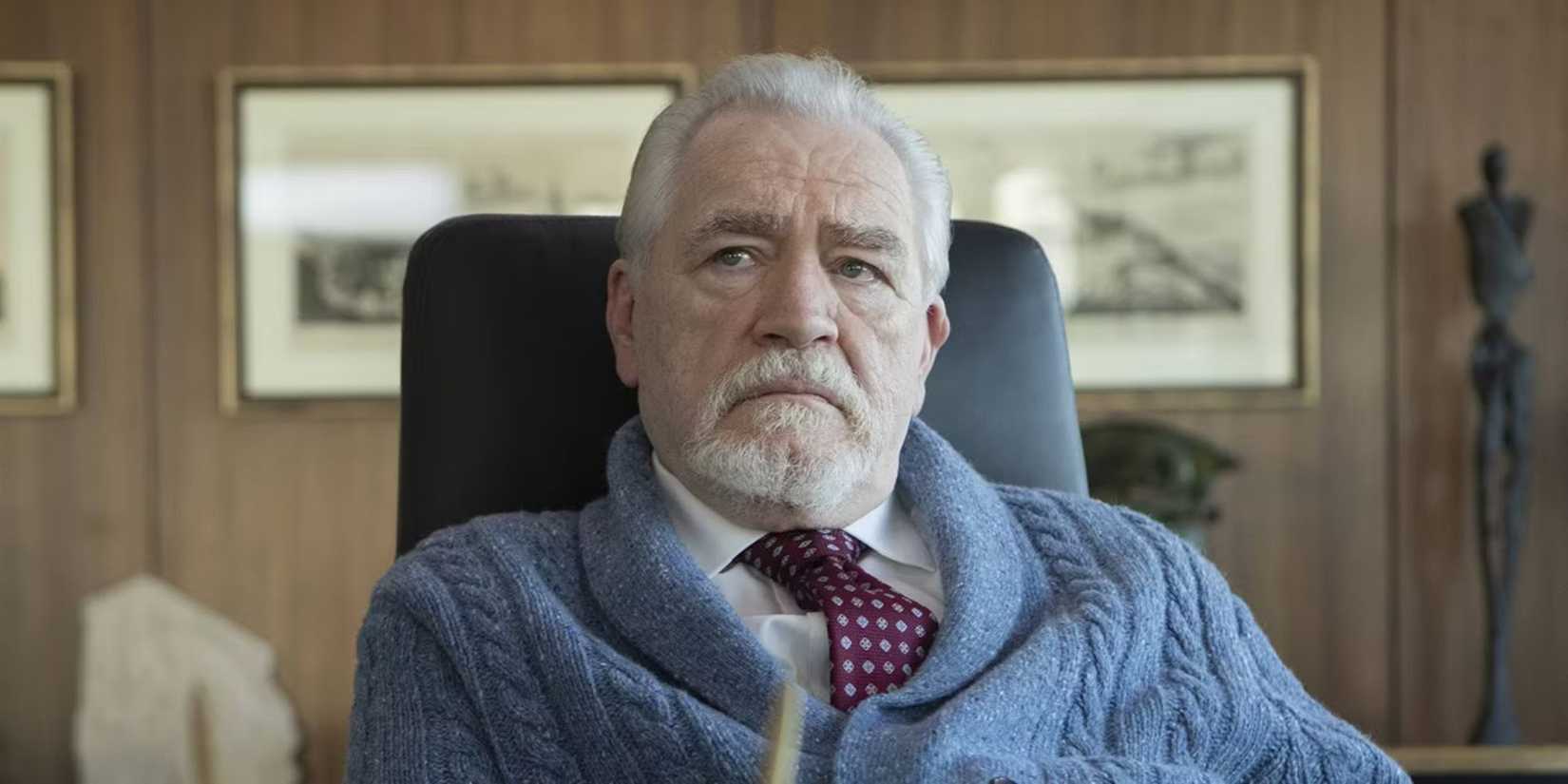 Image via HBO
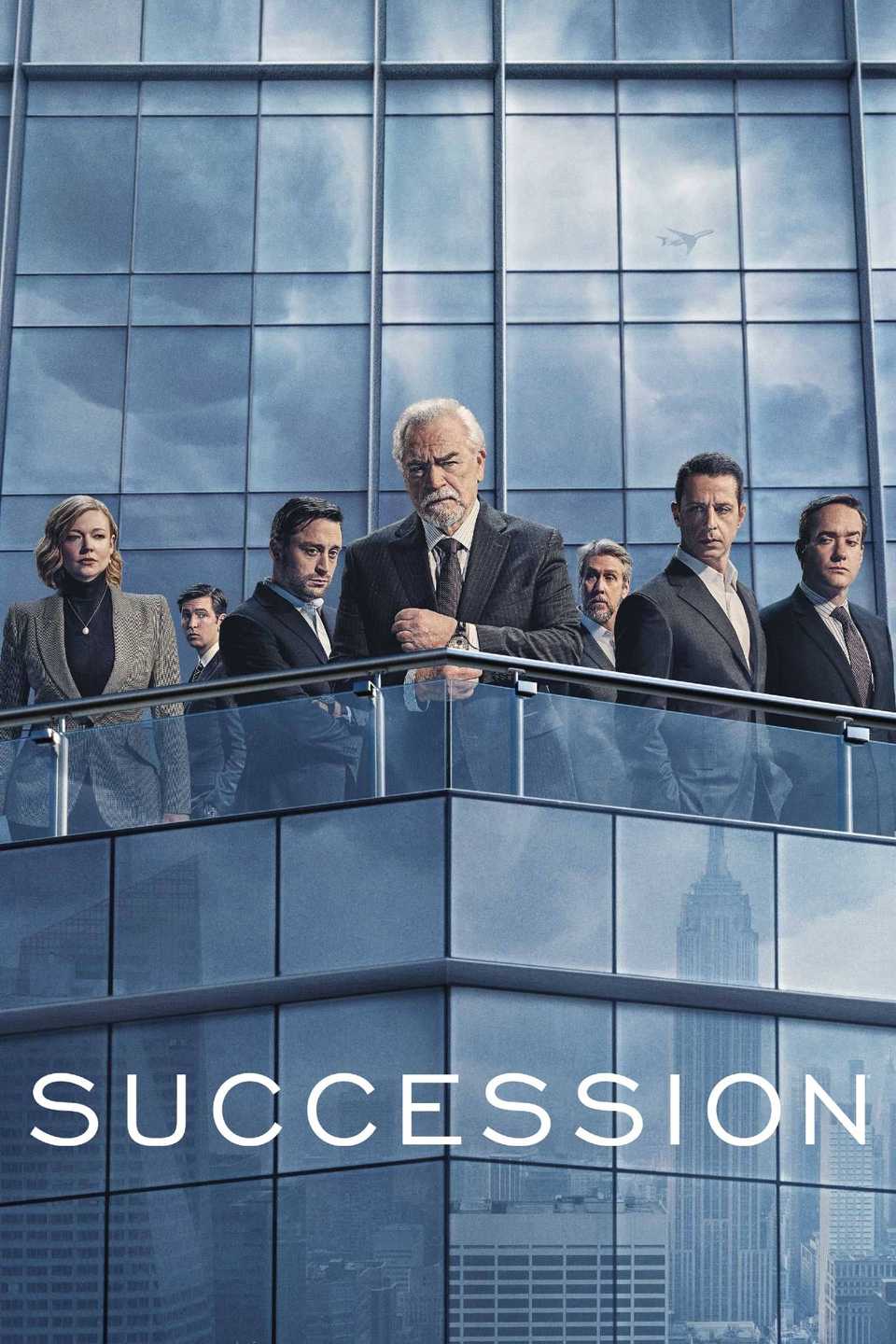
Fans of The Audacity will undoubtedly enjoy HBO's Succession, on which Glatzer wrote a couple of episodes. While The Audacity brilliantly mocks a narcissistic tech CEO, Jesse Armstrong's Emmy-winning Shakespearean drama is a broad, dark, and funny masterpiece about the destructive nature of power itself; however, that's what makes the two shows strikingly similar as well. Succession follows the Roy family, owners of the global media and entertainment conglomerate Waystar Royco, and the civil war that erupts as the patriarch, Logan Roy (Brian Cox), ages and refuses to name a successor.
The dialogue in Succession is a profane, poetic, and brutally hilarious masterpiece of backstabbing that often rivals or mirrors the power plays in The Audacity. Every character is a textbook example of moral bankruptcy, but the show tends to make you empathize with them even during their most pitiful moments. This deep, unsettling understanding that billionaires see the world and its inhabitants as nothing more than chess pieces distinguishes Succession as the definitive series of its time. If you want to understand the psychology that drives the Duncan Parks of the world, this is the handbook.
Succession
Release Date 2018 - 2023
Network HBO Max
Showrunner Jesse Armstrong
Directors Mark Mylod







 English (US) ·