
 Image via Warner Bros. Pictures

Published May 15, 2026, 5:12 AM EDT
Sign in to your Collider account
It’s easy to call a trilogy great when one or two films carry most of the substance, but that’s not really the same thing as all three working equally well. In most cases, there’s always one part that feels slightly off, either slower, weaker, or just not as memorable as the others. It has happened so many times that it almost feels expected when going into any three-part series.
That’s what makes a few trilogies stand out differently. They don’t have that obvious drop anywhere, and each film is just as carefully made as the one before it. Watching them doesn’t feel like sitting through a weaker middle or waiting for things to improve again, and that’s exactly what puts these seven trilogies in a separate category.
7 ‘The Cornetto Trilogy’ (2004–2013)
 Image via Focus Features
Talking about The Cornetto Trilogy, in the first movie, Shaun of the Dead, Shaun (Simon Pegg) lives a routine life that becomes disrupted when a sudden outbreak spreads through his surroundings. Therefore, he gathers a small group and begins to move through the situation while also trying to maintain control over changing conditions. The story develops as Shaun responds to immediate threats while also trying to manage relationships within the group, which continue to influence his decisions.
As the trilogy continues, Hot Fuzz follows Nicholas Angel (Simon Pegg) as he is transferred to a quiet town where incidents begin to occur that do not match the place's appearance. His investigation gradually reveals the connections between these events, requiring him to respond as the situation becomes more complex. In The World’s End, Gary King (Simon Pegg) reunites with his friends to complete an unfinished journey, but the situation changes as new conditions emerge, forcing the group to respond while moving forward.
6 ‘The Bourne Trilogy’ (2002–2007)
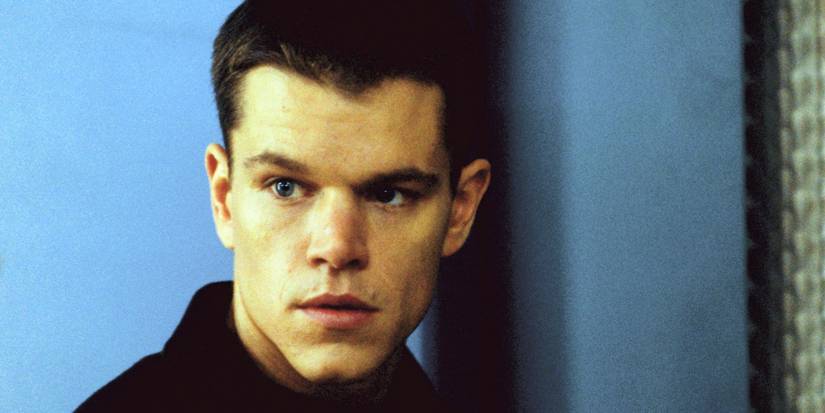 Image via Universal Studios
The Bourne Trilogy begins with Jason Bourne (Matt Damon), who is found without memory of his identity, and this absence becomes the starting point of his journey. As he begins to recover fragments of his past, he realizes that his abilities are connected to a structured form of training. His search for answers takes him across different locations, where each step reveals more about the system that shaped his actions. During this process, he meets Marie (Franka Potente), who gets involved as he tries to understand his situation.
As Bourne continues his investigation, he discovers that his past is connected to a covert program responsible for creating operatives like him. Each discovery brings him closer to understanding the structure behind these operations while increasing the risk around him. He continues to move carefully as individuals connected to that program attempt to stop him.
5 ‘The Before Trilogy’ (1995–2013)
 Image via Warner Independent Pictures
The Before Trilogy follows Jesse (Ethan Hawke) and Céline (Julie Delpy), who meet by chance while traveling and decide to spend some time together before continuing on separate paths. As their connection develops through conversation while they move through the city, discussing their thoughts and experiences. The interaction remains focused on their exchange of ideas, allowing their relationship to develop gradually over the time they spent together.
Somehow, they meet again at later stages of their lives, each time under different circumstances shaped by the passage of time. Their conversations begin to reflect changes in their perspectives as well as the influence of earlier experiences. Each meeting builds on what came before, allowing their relationship to develop through continuity.
4 ‘The Dark Knight Trilogy’ (2005–2012)
 Image via Warner Bros.
The narrative of The Dark Knight Trilogy begins with Bruce Wayne (Christian Bale) returning to Gotham City and starts to operate as Batman in response to rising crime. With support from Alfred (Michael Caine) and Lieutenant Gordon (Gary Oldman), he works to reduce criminal activity and restore order. His actions lead to the rise of individuals who challenge his methods, most notably the Joker (Heath Ledger), whose chaotic approach disrupts the city’s fragile order.
As the story continues, the conflict grows larger, and Bruce must face situations that test both his purpose and his limits. The arrival of Bane (Tom Hardy) brings a new kind of pressure to Gotham, forcing further changes in how events unfold. Each stage builds on earlier choices, showing how Bruce’s decisions shape the direction and outcome of the story.
3 ‘Toy Story Trilogy’ (1995–2010)
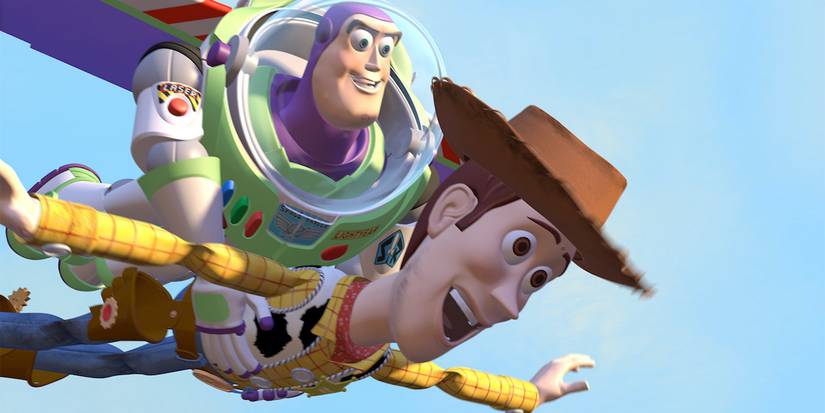 Image via Pixar Animation Studios
In the Toy Story Trilogy, Woody (Tom Hanks) understands his role as a toy belonging to a child named Andy, and this defines how he views his place in the world. His perspective is challenged when Buzz Lightyear (Tim Allen) arrives and introduces a different understanding of purpose. This creates conflict between them as they adjust to sharing the same environment and responsibilities.
As the trilogy unfolds, Woody and Buzz’s relationship evolves from rivalry to mutual respect. As they begin to understand that their value isn’t limited to ownership but lies in the loyalty and care they share. Each film builds on this growth, showing how friendship and purpose can change while still remaining true to the heart of their story.
2 ‘The Lord of the Rings Trilogy’ (2001–2003)
 Image via New Line Cinema
In The Lord of the Rings Trilogy, Frodo Baggins (Elijah Wood) is given the task of carrying a ring that must be destroyed, and this responsibility becomes the center of his journey. At the beginning, he leaves his home with a group that includes Aragorn (Viggo Mortensen) and Gandalf (Ian McKellen), who guide and support him as they travel through different regions. As the journey continues, what starts as a shared mission gradually grows more complex, revealing how each character’s choices shape the path ahead.
As the story continues, the group separates, and each member follows a different path that contributes to the same goal. Meanwhile, Frodo continues toward the destination while at the same time, others engage in conflicts that affect the larger situation. Through these developments, each action across these paths contributes to the progression of events, connecting multiple storylines into a single narrative that moves toward its conclusion.
1 ‘The Original Star Wars Trilogy’ (1977–1983)
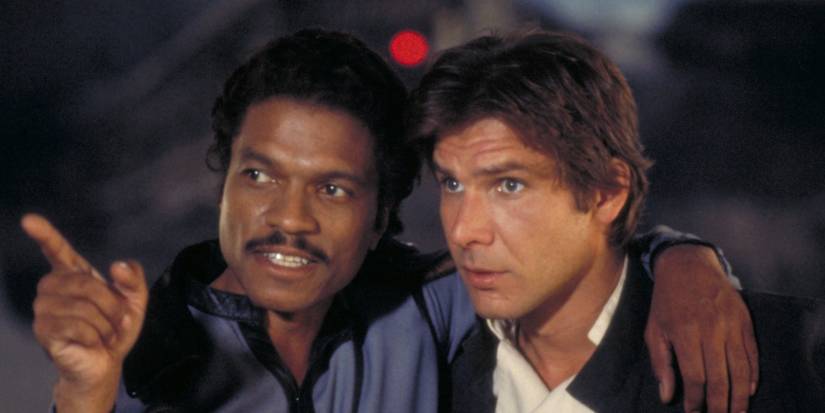 Image via 20th Century Fox
The Original Star Wars Trilogy begins with Luke Skywalker (Mark Hamill), who begins his journey with a limited understanding of the larger conflict until he meets Obi-Wan Kenobi (Alec Guinness), who introduces him to the Force and opens his eyes to a greater purpose. Through this connection, Luke becomes involved in a struggle against a powerful system led by Darth Vader (David Prowse) and the Emperor. He travels across different worlds, gradually learning what his role means within the growing conflict.
As the story progresses, Luke continues to develop his abilities while also forming connections with Leia (Carrie Fisher) and Han Solo (Harrison Ford). Over time, these relationships become central to his growth, especially as the conflict expands and both sides struggle for control. Through each event, the narrative builds on earlier actions, gradually moving toward a conclusion shaped by the choices made along the way.
Collider Exclusive · Sci-Fi Personality Quiz Which Sci-Fi Hero Are You Most Like? Paul Atreides · Captain Kirk · Princess Leia · Ellen Ripley · Max Rockatansky
Five iconic heroes. Five completely different ways of facing an impossible universe. One of them shares your instincts, your values, and your particular way of refusing to back down. Eight questions will tell you which one.
🏜️Paul Atreides
🖖Capt. Kirk
✊Princess Leia
🔦Ellen Ripley
🔥Max Rockatansky
FIND YOUR HERO →
01
How do you lead when the stakes couldn't be higher? The way you lead under pressure is the most honest thing about you.
AI absorb everything — every variable, every pattern — and move only when I know the path forward. BI read the room, make the call, and own the consequences. Hesitation costs more than mistakes. CI rally people. A cause needs a voice, and I refuse to let fear be louder than conviction. DI assess the threat, establish what needs doing, and get it done without waiting for permission. EI don't lead. I act. Others can follow or not — I'm already moving.
NEXT QUESTION →
02
What is your greatest strength in a crisis? The quality that keeps you alive when everything else fails.
APrescience — the ability to see further ahead than anyone else and plan accordingly. BImprovisation — I'm at my best when the plan falls apart and I have to invent a new one. CConviction — I know what I'm fighting for, and that certainty doesn't waver under fire. DComposure — I stay functional when everyone around me is falling apart. Panic is a luxury. EEndurance — I outlast things. I take the hit and keep moving long after others have stopped.
NEXT QUESTION →
03
What is the thing you'd sacrifice everything else for? Your deepest motivation is your truest compass.
AThe survival and dignity of my people — even if I have to become something frightening to ensure it. BThe safety of my crew — every single one of them. No one gets left behind. CFreedom — for my people, for every world still crushed under the weight of an empire. DThe truth — what actually happened, what's actually out there, whether anyone believes me or not. EThe one person — or the one memory — that still makes any of this worth surviving for.
NEXT QUESTION →
04
How do you relate to the people around you? Who you are to others under pressure is who you really are.
AWith intensity and distance — I care deeply, but the weight I carry makes closeness complicated. BWith warmth and irreverence — I take the mission seriously, not myself. CWith directness and trust — I say what I mean, and I expect the people I work with to rise to it. DWith professional care but clear limits — I'll protect you, but I won't pretend we're family. EWith wariness that slowly becomes loyalty — I don't trust easily, but when I do, it holds.
NEXT QUESTION →
05
You're facing a threat that no one else believes is real. What do you do? How you respond when you're the only one who sees it defines everything.
APrepare in silence. If they won't listen, I'll be ready when they finally have to. BKeep pushing until someone listens — and if no one does, handle it myself. CBuild the case, find the allies, and make the threat impossible to ignore. DDocument everything. The truth matters even if no one believes it yet. EStop trying to convince anyone. Survive it. That's the only argument that counts.
NEXT QUESTION →
06
What has your heroism cost you personally? Every hero pays. The question is what — and whether they'd pay it again.
AMy innocence — I've seen what I'm capable of, and I can't unsee it. BPeople I loved — the command chair has a view, but it's a lonely one. CA normal life — I gave up everything ordinary the moment I chose the cause. DMy sense of safety — I know exactly what's out there now, and I can't pretend otherwise. EAlmost everything — and I'm still not sure what I'm carrying it all for. But I keep going.
NEXT QUESTION →
07
How do you feel about the rules of the world you're in? Every hero has a relationship with the system. What's yours?
AI understand them deeply — and I know exactly which ones must be broken, and why. BI respect the spirit of them and bend the letter when the situation demands it. CThe system is the problem. I'm not here to work within it — I'm here to dismantle it. DI follow protocol until protocol stops being useful. Then I make the call myself. EThe rules collapsed a long time ago. What's left is instinct, and mine are reliable.
NEXT QUESTION →
08
When everything is on the line, what keeps you going? The answer is the most honest thing about you.
ADestiny — or something that feels so much like it that the difference no longer matters. BThe people on my ship — their faces, their trust, the fact that they're counting on me. CThe belief that what we're fighting for is worth every sacrifice, including this one. DSheer refusal to let it win — whatever it is. I don't stop. That's just who I am. EI'm not sure anymore. But the road is still there, and I'm still on it.
REVEAL MY HERO →
Your Hero Has Been Identified Your Sci-Fi Hero Is…
Your answers point to the iconic sci-fi hero who shares your instincts, your values, and your particular way of facing the impossible.
Paul Atreides
You carry a weight most people would crumble under — the knowledge of what you're capable of, and the burden of what you might have to become.
- You see further ahead than others and you plan accordingly, even when the vision frightens you.
- You are driven by loyalty to your people and a sense of destiny you didn't ask for but can't escape.
- Paul Atreides is not simply a hero — he is someone who understands the cost of power and chooses to bear it anyway.
- That gravity, that willingness to carry what others won't, is exactly you.
Captain Kirk
You lead with instinct, warmth, and an absolute refusal to accept a no-win scenario — because you've always believed there's a third option nobody else has thought of yet.
- You take the mission seriously without ever taking yourself too seriously.
- Your crew would follow you anywhere, not because you demand it, but because you've earned it.
- Kirk's genius isn't tactical — it's human. He reads people, bends rules with purpose, and wills outcomes into existence through sheer conviction.
- That combination of warmth, audacity, and relentless optimism is unmistakably yours.
Princess Leia
You are the kind of person who holds the line when everyone else is losing faith — not because you're fearless, but because giving up simply isn't something you're capable of.
- You lead through conviction. Your voice carries because your belief is unshakeable.
- You gave up everything ordinary the moment you chose the cause, and you've never looked back.
- Leia is not a supporting character in her own story — she is the moral centre of the entire rebellion.
- That same fierce, principled, unbreakable core is what defines you.
Ellen Ripley
You are not reckless, not grandiose, and not particularly interested in being anyone's hero — you just refuse to stop when it matters.
- You see threats clearly, you document the truth even when no one listens, and when the time comes you handle it yourself.
- Ripley's heroism is earned, not performed. She doesn't have a speech — she has a flamethrower and a plan.
- You share her composure under the worst possible pressure, and her refusal to pretend the monster isn't there.
- When it counts, you don't flinch. That's everything.
Max Rockatansky
You have been through fire that would break most people — and what came out the other side is something the world underestimates at its peril.
- You don't ask for help, don't need validation, and don't wait for anyone to tell you the rules no longer apply.
- Your loyalty, when it finally arrives, is absolute — but it's earned in silence and tested in action, not in words.
- Max is not a nihilist. He is someone who lost everything and found, against his will, that he still has something worth protecting.
- That bruised, stubborn, ultimately human core is exactly yours.
↻ RETAKE THE QUIZ






 English (US) ·