
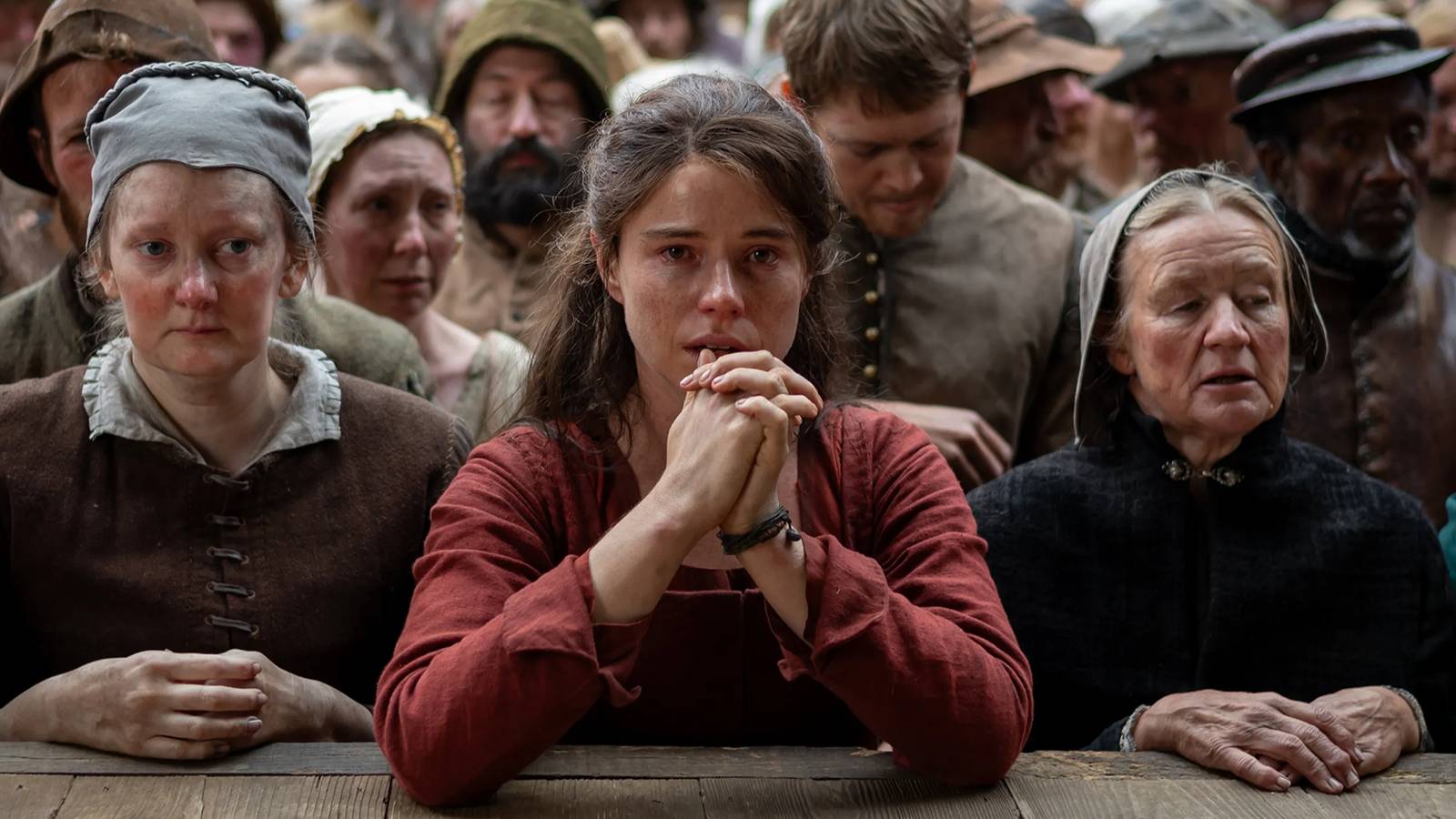
 Image via Focus Features
Published Aug 16, 2026, 6:01 AM EDT
Remus is a writer, editor, journalist, and author with an eye for detail and an extremely active imagination. He is an enthusiast of everything to do with the graphic medium, whether it's Western comics and their adaptations or manga and anime. Remus is also the author of the sci-fantasy novel Once Upon a Time in Hyperspace and several works of short fiction in the mystery, comedy, and horror genres.
Sign in to your Collider account
Since the days of Ancient Greece, many works of literature have aspired to take their readers on painful emotional journeys, a symbolic purgation of emotion that Aristotle called catharsis. Despite the thousands of years that have passed since then, the idea has stayed firmly planted in our cultural consciousness, and there’s no denying the fact that we all enjoy a powerful, heartbreaking read every once in a while. Over the years, there have been plenty of books that fit the bill, including both those drawn on personal experiences and stories of fiction that nonetheless evoke the same emotion.
From stories set against the backdrop of horrific events to more personal tragedies rooted in everyday pain, these heartbreaking books seek out the uncomfortable and even traumatic and transform them into something uplifting, inspiring, and beautiful. In the process, they’ve also earned widespread acclaim and sold millions of copies around the world, earning their places in both our libraries and the bestseller lists. So, if you’re in the mood for a read that will truly shatter your heart in the best ways possible, we’ve got you covered. Read on to discover our ranked selection of the most heartbreaking books of all time, including both modern hits and timeless classics.
7 ‘The Fault in Our Stars’ (2014)

John Green’s fourth solo novel, The Fault in Our Stars is a tragic young adult romance novel that centers on 16-year-old Hazel Grace Lancaster, who suffers from thyroid cancer that has spread to her lungs. Forced to attend a support group by her parents, Hazel meets and falls in love with 17-year-old cancer survivor Augustus Waters. Bonding over their shared love of books, the two plan a trip to Amsterdam to meet the author of their favorite novel.
A best-selling book that broke the hearts of a whole generation of fans, The Fault in Our Stars is both bitterly tragic and a life-affirming coming-of-age story. Sweet, funny, and often melancholic, the novel lives and breathes with its characters, who are easily among Green’s most endearing. Arguably the author’s best book, The Fault in Our Stars was adapted as a 2014 feature film directed by Josh Boone and starring Shailene Woodley and Ansel Elgort, which was similarly successful.
6 ‘The Song of Achilles’ (2011)
 Image via Ecco Press
Written by Madeline Miller, The Song of Achilles is a reimagining of Homer’s Iliad, approaching the story of the Trojan War from the perspective of Patroclus. The book recounts Patroclus’s early life, his initial encounter with Achilles, the development of their relationship, and their exploits during the war. Though largely inspired by the Iliad, the novel also draws from other sources and makes a few changes to the original mythology.
Published in 2011, The Song of Achilles was well-received by critics and awarded the Orange Prize for Fiction, but it’s only in the 2020s that the book became a major bestseller. With over 2 million copies sold across formats, the novel is a highly popular and influential take on the romance of Achilles and Patroclus, capturing deep emotion in their fate-crossed story. It’s painful and tragic, but also deeply poetic, and a brilliant read overall.
5 ‘The Book Thief’ (2005)
 Image via Alfred A. Knopf
Written by Australian author Markus Zusak, The Book Thief is a historical fiction novel that follows the adventures of a young girl in Nazi Germany. The story is narrated by Death, who reveals the story of Liesel Meminger, who lives with foster parents Hans and Rosa Hubermann and, recognizing the power of literature, begins to steal books to read. As bombs fall around her and she loses all the people she knew and loved, Liesel’s love of reading and writing carries her to the very end of her life, when she finally speaks with Death.
First published in 2005, The Book Thief is an acclaimed international bestseller that has sold over 17 million copies around the world and inspired countless readers with its powerful story. It unravels a deeply moving narrative with themes of death, love, and the value of sharing stories — one that’s sure to resonate with any lover of literature and break the hearts of plenty more as well. A feature film based on the novel was released in 2013, and the book has also inspired a musical.
Collider Exclusive · Oscar Best Picture Quiz
Which Oscar Best Picture
Is Your Perfect Movie?
Parasite · Everything Everywhere · Oppenheimer · Birdman · No Country
Five Oscar Best Picture winners. Five completely different visions of what cinema can be — and what it can do to you. One of them is the film that was made for the way your mind works. Ten questions will figure out which one.
🪜Parasite
🌀Everything Everywhere
☢️Oppenheimer
🐦Birdman
🪙No Country for Old Men
FIND YOUR FILM →
01
What kind of film experience do you actually want? The best movies don't just entertain — they leave something behind.
ASomething that pulls the rug out — that makes me think I'm watching one kind of film and then reveals I'm watching another entirely. BSomething overwhelming — funny, sad, absurd, and genuinely moving, all at once. CSomething grand and weighty — a film that makes me feel the full scale of what I'm watching. DSomething formally daring — a film that pushes what cinema can even do. ESomething lean and relentless — pure tension with no wasted frame.
NEXT QUESTION →
02
Which idea grabs you most in a film? Great films are driven by a central obsession. What's yours?
AClass, inequality, and what people are willing to do when desperation meets opportunity. BIdentity, family, and the chaos of trying to hold your life together when everything is falling apart. CGenius, moral responsibility, and the catastrophic weight of a decision you can never take back. DEgo, legacy, and the terror of becoming irrelevant while you're still alive to watch it happen. EEvil, chance, and whether moral order actually exists or if we just tell ourselves it does.
NEXT QUESTION →
03
How do you like your story told? Form is content. The way a story is shaped changes what it means.
AGenre-twisting — I want it to start in one lane and migrate into something completely different. BMaximalist and genre-blending — comedy, action, drama, sci-fi, all in one ride. CEpic and non-linear — cutting between timelines, building a mosaic of cause and consequence. DA single unbroken flow — I want to feel like I'm living it in real time, no cuts to safety. ESpare and precise — every scene doing exactly what it needs to do and nothing more.
NEXT QUESTION →
04
What makes a truly great antagonist? The opposition defines the protagonist. What kind of opposition fascinates you?
AA system — invisible, structural, and almost impossible to fight because it has no single face. BThe self — the ways we sabotage, abandon, and fail the people we love most. CHistory — the unstoppable momentum of events that no single person can stop or redirect. DThe industry — the machinery of culture that chews up talent and spits out irrelevance. EPure, implacable evil — a force so certain of itself it becomes almost philosophical.
NEXT QUESTION →
05
What do you want from a film's ending? The final note is the one that lingers. What do you want it to sound like?
AShock and inevitability — a conclusion that recontextualises everything that came before it. BEarned emotion — I want to cry, laugh, and feel genuinely hopeful, even if the world is a mess. CDevastation and grandeur — an ending that makes me sit in silence for a few minutes after. DAmbiguity — something that leaves enough open that I'm still thinking about it days later. EBleakness — an honest refusal to pretend the world is tidier than it actually is.
NEXT QUESTION →
06
Which setting pulls you in most? Where a film takes place shapes everything — mood, stakes, what's even possible.
AA gleaming modern city with a hidden underside — beauty masking rot, wealth masking desperation. BA collapsing suburban life that opens onto something infinite — the multiverse of a single ordinary person. CThe corridors of power and science at a world-historical turning point — where decisions echo for decades. DThe grimy, alive chaos of New York and Hollywood — fame as both destination and trap. EVast, indifferent landscape — desert and highway where violence arrives without warning or reason.
NEXT QUESTION →
07
What cinematic craft impresses you most? Every great film has a signature — a technical or artistic element that makes it unmistakable.
AProduction design and mise-en-scène — every frame composed to carry meaning beneath the surface. BEditing and tonal control — the ability to move between registers without losing the audience. CScore and sound design — music that becomes inseparable from the dread and awe of what you're watching. DCinematography as performance — the camera not recording events but participating in them. ESilence and restraint — what's left unsaid and unshown doing more work than any dialogue could.
NEXT QUESTION →
08
What kind of main character do you root for? The protagonist is the lens. Who you choose to follow says something about you.
ASomeone smart and resourceful who makes increasingly dangerous decisions under pressure. BSomeone overwhelmed and ordinary who turns out to be capable of something extraordinary. CA brilliant, tortured figure whose gifts and flaws are inseparable from each other. DA self-destructive artist whose ego is both their superpower and their undoing. EA quiet, principled person trying to make sense of a world that has stopped making sense.
NEXT QUESTION →
09
How do you feel about a film that takes its time? Pace is a choice. Some films sprint; others let tension accumulate slowly, deliberately.
AI love a slow build when I know the payoff is going to be seismic — patience for a devastating reveal. BGive me relentless momentum — I want to feel breathless and emotionally spent by the end. CEpic runtime doesn't scare me — if the material demands three hours, give me three hours. DI want it to feel propulsive even when nothing is technically happening — restless energy throughout. EDeliberate and unhurried — I want dread to accumulate in the spaces between the action.
NEXT QUESTION →
10
What do you want to feel walking out of the cinema? The best films leave a mark. What kind of mark do you want?
AUnsettled — like I've just seen something I can't fully explain but can't stop thinking about. BMoved and energised — like the film reminded me what actually matters and gave me something to hold onto. CHumbled — like I've been in the presence of something genuinely important and overwhelming. DExhilarated — like I've just seen cinema doing something it's never quite done before. EHaunted — like a cold, quiet dread that stays with me for days.
REVEAL MY FILM →
The Academy Has Decided Your Perfect Film Is…
Your answers have pointed to one Oscar Best Picture winner above all others. This is the film that was made for the way your mind works.
Parasite
You are drawn to films that operate on multiple levels simultaneously — that begin in one genre and quietly, brilliantly migrate into another. Bong Joon-ho's Parasite is a film about class, desire, and the architecture of inequality that manages to be darkly funny, deeply suspenseful, and genuinely shocking across a single extraordinary running time. Your instinct is for cinema that hides its true intentions until the moment it's ready to reveal them. Parasite is exactly that — a film that rewards close attention and punishes assumptions, right up to its devastating final image.
Everything Everywhere All at Once
You want it all — and this film gives you all of it. The Daniels' Everything Everywhere All at Once is one of the most maximalist films ever made: action comedy, multiverse sci-fi, family drama, existential crisis, and a genuinely earned emotional core that sneaks up on you amid the chaos. You are someone who responds to ambition, who doesn't want cinema to choose between being entertaining and being meaningful. This film refuses that choice entirely. It is overwhelming by design, and its overwhelming nature is precisely the point — because the feeling of being crushed by infinite possibility is exactly what it's about.
Oppenheimer
You are drawn to cinema on a grand scale — films that understand history not as a backdrop but as a force, and that place their characters inside that force and watch what happens. Christopher Nolan's Oppenheimer is a film about the terrifying gap between what we can do and what we should do, told with the full weight of one of the most consequential moments in human history behind it. You want your films to feel important without feeling self-important — to earn their ambition through sheer craft and the gravity of their subject. Oppenheimer does exactly that. It is enormous, complicated, and refuses easy comfort.
Birdman
You are drawn to films that foreground their own construction — that make the how of the filmmaking part of the what it's about. Alejandro González Iñárritu's Birdman, shot to appear as a single continuous take, is cinema examining itself through the cracked mirror of a fading actor's ego. You respond to formal daring, to the feeling that a film is doing something that probably shouldn't be possible. Michael Keaton's performance and Emmanuel Lubezki's restless camera create something genuinely unlike anything else — a film that is simultaneously about creativity, relevance, self-destruction, and the impossibility of ever truly knowing if your work means anything at all.
No Country for Old Men
You are drawn to cinema that trusts silence, that refuses to explain itself, and that treats dread as a form of meaning. The Coen Brothers' No Country for Old Men is a film about the arrival of a new kind of evil — implacable, arbitrary, and utterly indifferent to the moral frameworks we use to make sense of the world. It is one of the most formally controlled films ever made, and its controlled restraint is what makes it so terrifying. You want your films to haunt you, not comfort you. You are not interested in resolution if resolution would be dishonest. No Country for Old Men is honest in a way that most cinema never dares to be.
↻ RETAKE THE QUIZ
4 ‘Hamnet’ (2020)
 Image via Tinder Press
Written by Maggie O'Farrell, Hamnet is a work of historical fiction that presents a fictional account of the death of its titular character, the son of William Shakespeare and Agnes Hathaway. Focusing primarily on Agnes, the novel chronicles the couple’s meeting, courtship, marriage, and other events leading up to the death of their only son. From there, it explores the fracturing of their relationship amid overwhelming grief, culminating years later when Shakespeare stages a new play called Hamlet.
Combining known facts of the legendary playwright’s life with fiction, Hamnet is a book about the untold history of grief. Charged with emotion and intensely cathartic, the novel explores a key moment in the Bard’s life that is known of but not known about, filling in the gaps with imagination and a touch of literary magic. The novel received several accolades when it was published in 2020 and was adapted as an Oscar-winning film directed by Chloé Zhao, starring Jessie Buckley and Paul Mescal.
3 ‘Kafka on the Shore’ (2002)
 Image via Knopf
Written by Japanese author Haruki Murakami, Kafka on the Shore is a magical realist novel that follows the stories of young runaway Kafka Tamura and elderly, mentally disabled man Satoru Nakata. Cursed by his father, Kafka leaves Tokyo for Shikoku, experiencing a series of surreal events along the way. Meanwhile, Nakata, who possesses the ability to talk to cats, finds himself called on a quest that takes him far away from his home, guided by the universe and an ineffable force.
First published in 2002 and translated into English in 2005, Kafka on the Shore is a highly acclaimed and award-winning novel that has inspired generations of readers. The book isn’t heartbreaking the same way many of the other entries on this list are. However, there is a pervasive sense of melancholy that suffuses the narrative, balanced by its meditations on metaphysics, philosophy, and fate, as well as its surprising sense of humor. The novel is many things to many people; it’s transformative, cathartic, spiritual, sexual, satirical, and yes, heartbreaking, all at the same time.
2 ‘And the Mountains Echoed’ (2013)
 Image via Riverhead Books
The third novel written by Afghan-American author Khaled Hosseini, And the Mountains Echoed chronicles the lives of multiple characters living in and around Kabul, Afghanistan. The book primarily follows the story of 10-year-old Abdullah and his younger sister Pari, whose lives take them oceans apart, touching the lives of many others along the way. The novel is a departure from Hosseini’s previous books, which follow a more traditional narrative, but features similar themes of family and loss.
Using sibling relationships as a consistent theme, And the Mountains Echoed takes readers through a series of human and realistic stories, each with its own complexity, and paints an overall picture of Afghanistan, identity, and transformation. It’s a powerful, engrossing novel that’s been critically acclaimed and has sold millions of copies around the world. Though relatively underrated compared to Hosseini’s previous work, And the Mountains Echoed is an experience that’s both deeply painful and yet overflowing with love.
1 ‘The Diary of a Young Girl’ (1947)
 Image via Contact Publishing
Commonly called The Diary of Anne Frank, The Diary of a Young Girl is a book that’s practically synonymous with its young author. A German-born Jewish girl who lived in the Netherlands during the Nazi occupation, Anne Frank was captured and sent to a concentration camp, where she died at the age of 15. The book collects writings from her diary, written during her two years in hiding and given to her father, Otto Frank, the sole survivor of the family, at the end of World War II.
To say that The Diary of a Young Girl is one of the most heartbreaking books ever written would be an understatement. The book captures the daily thoughts and life of its young author as she lives through one of humanity’s darkest chapters, chronicling her search for friendship, her inner development, and her enduring hope in the face of unspeakable horror. The book has been critically and popularly acclaimed ever since it was first published in 1947, and it continues to break the hearts of millions around the world today.

The Diary of Anne Frank
Release Date August 19, 1995
Runtime 102 Minutes
Director Akinori Nagaoka
Writers Hachirô Konno, Roger Pulvers
-

Reina Takahashi
Anne Frank
-
-
-
Jiro Sakagami
Hermann van Daan



 English (US) ·