
Spoiler Alert: This list contains spoilers for multiple TV shows.Some television episodes stand as incredibly memorable, not because they're shocking or twist-wielding, but because they leave viewers sitting with a deep emotional weight that stays with them long after the credits roll. The heaviest episodes of the last 25 years often force audiences to face grief, loss, trauma, injustice, or the painful truth behind a character's journey, slowing everything down and hitting them where it hurts.
Episodes like When They See Us' "Part Four," which carries a rawness and the pure devastation of lost time, real injustice, and survival after irreversible harm, and Avatar: The Last Airbender's "The Tales of Ba Sing Se," which delivers one of animation's most heartbreaking moments, are just two episodes that brilliantly prove that TV can be at its most powerful when it refuses to look away from tough emotions. Compiled on this list are iconic episodes that are some of the heaviest ever created in the last 25 years.
7 "My Moon My Man"
'Cyberpunk: Edgerunners' Season 1, Episode 10
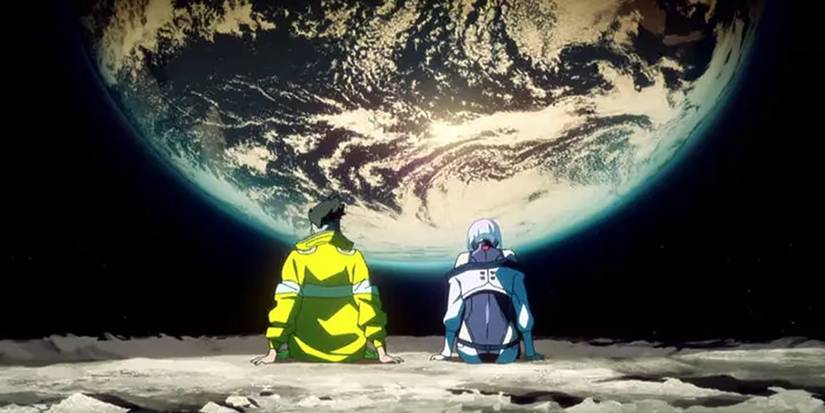 Image via Netflix
This Netflix animated series saves a truly heavy emotional blow for its finale, "My Moon My Man." Set in Night City, Cyberpunk: Edgerunners follows a street kid named David Martinez (Zach Aguilar) who, after a personal loss, joins the mercenary underworld, which pushes him toward cybernetic enhancement. During the show's finale, Episode 10, "My Moon My Man," the series makes it clear that it has officially left its kinetic rise-to-power story behind and entered its final, last-stand collapse, with David clutching to his purpose, identity, and love in a city designed to grind all three into ash and chrome.
What truly makes the big finale of a rather thrilling animated series so enticingly heavy is its steady refusal to preach the fantasy that sheer willpower is enough to overcome a system built entirely to consume people. "My Moon My Man" is violent and action-filled, but its real weight is the haunting inevitability of sacrifice. Cyberpunk: Edgerunners is a fantastic series, and its finale stands as one of the absolute heaviest episodes of the last 25 years, one that fans still single out as a devastating watch as it turns the colorful and stylish show into one of outright heartbreak.
6 "The Tales of Ba Sing Se"
'Avatar: The Last Airbender' Season 2, Episode 15
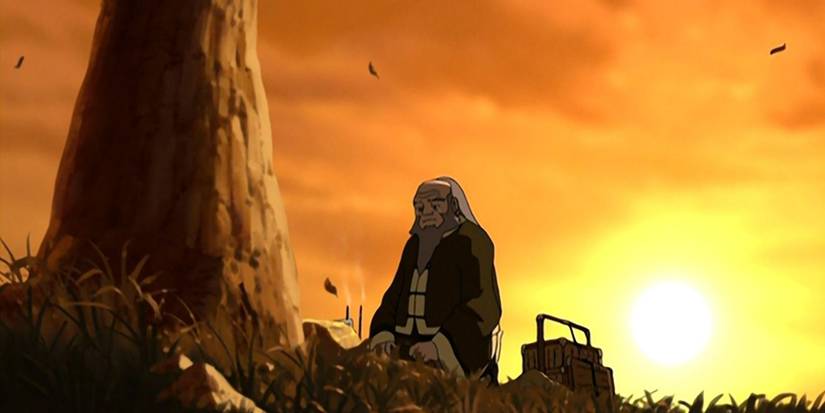 Image via Nickelodeon
Avatar: The Last Airbender, "The Tales of Ba Sing Se" is one episode that no fan of the incredibly fun series ever expected to be as heartbreaking as it is. The show centers around the young Avatar Aang (Zach Tyler Eisen) as he, with the help of his friends, attempts to master the four elements and end a world war. "The Tales of Ba Sing Se" gifts audiences a quiet collection of small character stories before hitting them with the centerpiece of the episode, Uncle Iroh (Mako), whose heartfelt remembrance of his son transforms the installment into one of the most heartbreaking moments seen in animation.
"The Tales of Ba Sing Se" is a true contrast to what Avatar: The Last Airbender normally gives its viewers, which makes it all the more devastating to watch. By the time the episode is done with its usual playfulness, Iroh's segment hits harder than ever, as it shows that grief often lives within ordinary errands, quiet remembrance, and songs, rather than maximum-volume, dramatic tragedy. "The Tales of Ba Sing Se" blinds audiences with unexpected pain, not because it's loud but because it's tender enough to ensure absence feels enormous.
5 "Jurassic Bark"
'Futurama' Season 5, Episode 2
 Image via FOX
"Jurassic Bar" of the sci-fi animated series Futurama is one of TV’s most well-known emotional gut punches of the past 25 years. The series follows Philip J. Fry (Billy West), who, after he is accidentally frozen, wakes up a thousand years later in the sci-fi epic future. "Jurassic Bark" sees Fry discovering the fossilized remains of his old dog, which triggers an emotional journey through memories and reveals just how much of Fry's pre-future life still aches inside him.
Futurama's "Jurassic Bark" is an easy addition to this list, as the normally chaotically hilarious watch delivers one of the most heart-wrenching installments ever seen on television. The episode's gut punch lands effectively, creating a genuinely heavy viewing experience because it understands both loyalty and abandonment are inseparable pains—the fear of being forgotten, only to discover being remembered can hurt a hundred times worse. "Jurassic Bark" earns its rank as one of the most canonical answers whenever fans ask for the saddest animated TV episode and definitely deserves its flowers as one of television's heaviest watches.
4 "Whenever You're Ready"
'The Good Place' Season 4, Episodes 13 & 14
 Image via NBC
This impactful episode of the high-concept comedy about the afterlife, The Good Place, is honestly one of the heaviest—if not the heaviest—episodes of the entire series. The show focuses on Eleanor Shellstrop (Kristen Bell), as she and her friends attempt to become "good people," who are deserving of "The Good Place." The series finale, "Whenever You're Ready," is a culmination of every emotional lesson each beloved character of the series has learned, delivering a rather moving farewell about love, life, and learning to let go.
While The Good Place's heaviness is unusually gentle, especially compared to some on this list, the heartache it leaves within its audiences is astonishingly profound. There is no betrayal bomb, gore, or terrifying reveal; instead, it's just the quiet realization that even joy can grow to be unbearable if it never changes shape. Even years since its conclusion, "Whenever You're Ready" remains quite memorable for the heartbreak it instills in its viewers, leaving them in real tears as they say goodbye to beloved characters and the profound lessons that shaped their journey.
Collider Exclusive · Sci-Fi Survival Quiz Which Sci-Fi World Would You Survive? The Matrix · Mad Max · Blade Runner · Dune · Star Wars
Five universes. Five completely different ways the future went wrong — or sideways, or up in flames. Only one of them is the world your instincts were built for. Eight questions will figure out which dystopia, galaxy, or desert wasteland you'd actually make it out of alive.
💊The Matrix
🔥Mad Max
🌧️Blade Runner
🏜️Dune
🚀Star Wars
TEST YOUR SURVIVAL →
01
You sense something is deeply wrong with the world around you. What do you do? The first instinct is often the truest one.
APull on every thread until I understand the system — then figure out how to break it. BStop asking questions and start stockpiling — food, fuel, weapons. Questions don't keep you alive. CKeep my head down, observe carefully, and trust no one until I know who's pulling the strings. DStudy the patterns. Every system has a rhythm — learn it, and you learn how to survive it. EFind the people fighting back and join them. You can't fix a broken galaxy alone.
NEXT QUESTION →
02
In a world of scarcity, what resource do you guard most fiercely? What we protect reveals what we believe survival actually requires.
AKnowledge. If you understand the system, you don't need resources — you can generate them. BFuel. Everything else — movement, power, escape — runs on it. CTrust. In a world of fakes and informants, a truly reliable ally is rarer than any commodity. DWater. And after water, information — the two things empires are truly built on. EShips and credits. The galaxy is big — you survive it by being able to move through it freely.
NEXT QUESTION →
03
What kind of threat keeps you up at night? Fear is useful data — if you're honest about what you're actually afraid of.
AThat reality itself is a lie — that everything I experience has been constructed to keep me compliant. BA raid. No warning, no mercy — just the roar of engines and then nothing left. CBeing identified. Once someone with power decides you're a problem, you're already out of time. DBeing outmanoeuvred — losing a political game I didn't even know I was playing. EThe Empire tightening its grip until there's nowhere left to run.
NEXT QUESTION →
04
How do you deal with authority you don't trust? Every dystopia has a power structure. Your approach to it determines everything.
ASubvert it from the inside — learn its rules well enough to weaponise them against it. BIgnore it and stay out of its reach. The further from any power structure, the better. CAppear to comply while doing exactly what I need to do. Visibility is the enemy. DManoeuvre within it carefully. You can't beat a system you refuse to understand. EResist openly when I have to. Some things are worth the risk of being seen.
NEXT QUESTION →
05
Which environment could you actually endure long-term? Survival isn't just tactical — it's physical, psychological, and very much about where you are.
AUnderground bunkers and server rooms — cramped, artificial, but with access to everything that matters. BOpen wasteland — brutal sun, no shelter, constant movement. At least the threat is honest. CA dense, rain-soaked city where you can disappear into the crowd and nobody asks questions. DMerciless desert — extreme heat, no water, and something enormous living beneath the sand. EThe fringe — backwater planets and busy spaceports where the Empire's attention rarely reaches.
NEXT QUESTION →
06
Who do you want in your corner when things fall apart? The company you keep is the clearest signal of who you actually are.
AA tight crew of believers who've seen behind the curtain and have nothing left to lose. BOne or two people I'd trust with my life. Any more than that and someone talks. CNobody, ideally. Alliances are liabilities. I work alone unless I have no choice. DA community bound by shared hardship and mutual survival — people who need each other to last. EA ragtag team with wildly different skills and total commitment when it counts.
NEXT QUESTION →
07
Where do you draw the line — if you draw one at all? Every survivor eventually faces a moment that tests what they're actually made of.
AI won't harm the innocent — even the ones who'd report me without hesitation. BI do what I have to to protect the people I've chosen. Everything else is negotiable. CThe line shifts depending on who's asking and what's at stake. DI draw a long-term line — nothing that compromises my people's future, even if it'd help now. ESome lines, once crossed, can't be uncrossed. I know which ones they are.
NEXT QUESTION →
08
What would actually make survival worth it? Staying alive is one thing. Having a reason to is another.
AWaking others up — dismantling the illusion so no one else has to live inside it. BFinding somewhere — or someone — worth protecting. A reason to keep moving. CAnswers. Understanding what I am, what any of this means, before time runs out. DLegacy — shaping the future in a way that outlasts me by generations. EFreedom — for myself, for others, for every world still living under someone else's boot.
REVEAL MY WORLD →
Your Fate Has Been Calculated You'd Survive In…
Your answers point to the world your instincts were built for. This is the universe your temperament, your survival instincts, and your particular brand of stubbornness were made for.
The Matrix
You took the red pill a long time ago — probably before anyone offered it to you. You're a systems thinker who can't help but notice the seams in things.
- You're drawn to understanding how the system works before figuring out how to break it.
- You'd find the Resistance, or it would find you — your instinct for spotting constructed realities is the machines' worst nightmare.
- You function best when you have access to information and the freedom to act on it.
- The Matrix built an airtight prison. You'd be the one probing the walls for the door.
Mad Max
The wasteland doesn't reward the clever or the well-connected — it rewards those who are hard to kill and harder to break. That's you.
- You don't need comfort, community, or a cause larger than the next horizon.
- You need a vehicle, a clear threat, and enough fuel to outrun it — and you're good at all three.
- You are unsentimental enough to survive that world, and decent enough — just barely — to be something more than another raider.
- In the wasteland, that distinction is everything.
Blade Runner
You'd survive here because you know how to exist in moral grey areas without losing yourself completely.
- You read people accurately, keep your circle small, and ask the questions others prefer not to answer.
- In a city where humanity is a legal designation rather than a feeling, you hold onto something that keeps you functional.
- You're not a hero. But you're not lost, either.
- In Blade Runner's world, that distinction is everything.
Dune
Arrakis is the most hostile environment in the known universe — and you are precisely the kind of person it rewards.
- Patience, discipline, and political awareness are your core strengths — and on Arrakis, they're survival tools.
- You understand that the long game matters more than any single victory.
- Others come to Dune and are consumed by it. You'd learn its logic and earn its respect.
- In time, you wouldn't just survive Arrakis — you'd begin to reshape it.
Star Wars
The galaxy far, far away is vast, loud, and in a constant state of violent political upheaval — and you wouldn't have it any other way.
- You find meaning in being part of something larger than yourself — a cause, a crew, a rebellion.
- You'd gravitate toward the Rebellion, or the fringes, or whatever pocket of the galaxy still believes the Empire's grip can be broken.
- You fight — not because you have to, but because standing aside isn't something you're capable of.
- In Star Wars, that willingness is what makes all the difference.
↻ RETAKE THE QUIZ
3 "Long, Long Time"
'The Last of Us' Season 1, Episode 3
This episode of The Last of Us stands strong as one of the heaviest of the last 25 years because it takes a break from the show's norm and instead delivers an epically tragic love story. The show mainly focuses on hardened smuggler Joel (Pedro Pascal) and immune teenager Ellie (Bella Ramsey) as they attempt to survive the apocalypse, but Season 1, Episode 3, "Long, Long Time," follows the heart-aching love story of survivalist Bill (Nick Offerman) and outsider Frank (Murray Bartlett).
The Last of Us is rife with devastation, but something about "Long, Long Time" ruins fans unlike any other. The episode's heaviness comes from showing that love isn't just a brief light in the darkness, but an entirely different way of valuing life. The sadness comes from the abrupt realization that even in a broken world, a private life built well and with tons of love may still end in pain. The installment is considered utter devastation to fans as it delivers a rare genre detour into a manifesto on why living for someone matters at all.
2 "Part Four"
'When They See Us' Season 1, Episode 4
 Image via Netflix
When They See Us is all around a difficult watch because of its heaviness throughout its limited episode, but "Part Four" of the series delivers an emotional weight that allows it to stand as one of the heaviest chapters to come out of the last 25 years. The series dramatizes the Central Park Five case following the boys facing the miscarriage of justice. "Part Four" mainly highlights character Korey Wise (Jharrel Jerome) as he moves through the adult prison system even as the truth begins, far too late, to surface.
"Part Four" is exceptionally heavy because it makes state violence feel intimate rather than simply procedural. Every step of the way, audiences are forced to feel and acknowledge the characters' suffering, as the installment frames it not as an abstract injustice case file, but as a devastating human tragedy. "Part Four" is often singled out as the episode that is sure to break viewers' hearts, enraging them in a way that lingers long after the credits roll.
1 "The Body"
'Buffy the Vampire Slayer' Season 5, Episode 16
 Image via The WB
Few episodes of television have truly captured the total numbness of grief as realistically as Buffy the Vampire Slayer's "The Body." The supernatural series focuses on teenager Buffy Summers (Sarah Michelle Gellar) as she attempts to balance her life with her destiny as the Slayer, protecting the world from demons, vampires, and other supernatural threats. The show's sixteenth episode of its fifth season doesn't offer the usual monster battle or magical solution; instead, it follows the kick-butt protagonist as she faces the death of her mother.
"The Body" is one of the finest examples of TV's understanding of grief, especially in the early hours immediately after loss. The episode is heavy because it's so real, from its lack of score and fragmented reaction to its awkward details and refusal of big emotional speeches, making it crushing in a way TV rarely dares. "The Body" isn't simply "sad," in the polished prestige-drama way; it's instead ugly, numb, disorienting, and brutally ordinary. That particular ordinariness is exactly why, even so many years later, the episode still ruins its viewers. "The Body" is a brilliant and absolutely heavy episode, one that definitely earns its rank on this list of TV episodes that are clear masterpieces of true emotional devastation.

Buffy The Vampire Slayer
Release Date 1997 - 2003-00-00
Network The WB
Showrunner Joss Whedon
Directors Joss Whedon
-

-

Nicholas Brendon
Alexander Harris



 English (US) ·