
 Image via HBO

Published May 10, 2026, 11:22 PM EDT
Dyah (pronounced Dee-yah) is a Senior Author at Collider, responsible for both writing and transcription duties. She joined the website in 2022 as a Resource Writer before stepping into her current role in April 2023. As a Senior Author, she writes Features and Lists covering TV, music, and movies, making her a true Jill of all trades. In addition to her writing, Dyah also serves as an interview transcriber, primarily for events such as San Diego Comic-Con, the Toronto International Film Festival, and the Sundance Film Festival.
Dyah graduated from Satya Wacana Christian University in October 2019 with a Bachelor's degree in English Literature, concentrating on Creative Writing. She is currently completing her Master's degree in English Literature Studies, with a thesis on intersectionality in postcolonial-feminist studies in Asian literary works, and is expected to graduate in 2026.
Born and raised between Indonesia and Singapore, Dyah is no stranger to different cultures. She now resides in the small town of Kendal with her husband and four cats, where she spends her free time cooking or cycling.
Sign in to your Collider account
Some shows deserve far more attention than they get. HBO has long built its reputation on a stacked lineup of award-winning hits, from the epic fantasy that is Game of Thrones to the gold standard of crime dramas, The Sopranos. But HBO has got a lot more right up its sleeves. Over the years, the network has quietly released several hidden gems that often slip through the cracks.
They may not have the same level of hype or marketing power to dominate the charts, but these shows more than make up for it with substance, storytelling, and staying power. With that in mind, here are the forgotten HBO shows that have aged like fine wine.
'Years and Years' (2019)
 Image via HBO
Some apocalypses don't happen overnight — they can also take years. Set between 2019 and 2034, Years and Years follows the Lyons family, a group of ordinary Britons who live life under the creeping political and economic collapse, as well as the rapid advancement of technology. As each crisis stacks on top of the others, it seems hapless to do anything about it.
The Lyons are neither heroes nor revolutionaries. They're just working-class individuals trying to get by whatever comes their way. As society frays, technology becomes both escape and crutch. Meanwhile, those who actually possess power and influence take advantage of it to weaponize fear. The scariest part of the show is that these phenomena feel very true to real life.
'The Night Of' (2016)
 Image via HBO
Wild, spontaneous nights take a murderous turn in The Night Of. Pakistani-American college student Nasir "Naz" Khan (Riz Ahmed) is about to attend a Manhattan party after taking his father's cab without permission. However, things become a little blurry when he encounters a mysterious woman named Andrea. After a night of sex and bad decisions, Nasir wakes up to find Andrea brutally murdered.
The next few episodes are a bit of a doozy. Nasir has absolutely no idea what happened. However, when his intoxicated self becomes involved with the police, he quickly becomes the prime suspect in the case. It's a sticky situation where, despite the debauchery of the night before, Nasir isn't necessarily responsible for the murder — yet the system continues to wrong him due to a lack of clear evidence. The Night Of proves that the legal system doesn't guarantee anyone justice despite the truth being out in the open, and no matter how "objective" it claims to be, perception takes greater precedence.
'Vice Principals' (2016)
 Image via HBO
It's the battle of VPs in this dark comedy — not Vice Presidents, but Vice Principals. At North Jackson High School, Neal Gamby (Danny McBride), the no-nonsense vice principal in charge of discipline, is sure that he'll succeed as principal. However, his arrogance is taken down a notch when Lee Russell (Walton Goggins), the manipulative vice principal of curriculum, also has his sights set on the post. To the two's surprise, the principal trusts neither of them.
What the two vice principals don't realize is that the school hires an outsider to take over instead. Gamby and Russell aren't having any of it, and the two team up to veto the decision, which seems nearly impossible since the incoming principal has been making a good impression. But Vice Principals' charm is simple: the insane chemistry between McBride and Goggins as two nitpicking, insult-trading, overgrown adults is comedy gold. Think of it as Abbott Elementary, but without the wholeheartedness and packed with inappropriate vulgarity in the hallways.
'I May Destroy You' (2020)
 Image via HBO
Recognized as one of television's greatest masterpieces, I May Destroy You is an essential watch during a time when sexual consent has become a bigger, more open discourse. Arabella (Michaela Coel) is a London-based writer with a huge social media following, currently under pressure to finish the follow-up to her successful second book. To let off some steam, Arabella spends the night with her friends at a local bar, only to wake up disoriented and sexually assaulted.
I May Destroy You doesn't center solely on the assault itself, but rather on Arabella's attempt to process the trauma. As is often the case with such experiences, her memories are fragmented, and she struggles to piece together what really happened that night. At the same time, the world keeps moving, forcing her to expedite her recovery in an environment that doesn't pause for her pain. Arabella's healing is anything but linear. She becomes a walking contradiction, trying to make sense of something she sometimes doubts was even real. At the same time, she channels her trauma into various outlets, some more successful than others.
Collider Exclusive · TV Medicine Quiz Which Fictional Hospital Would You Work Best In? The Pitt · ER · Grey's Anatomy · House · Scrubs
Five hospitals. Five completely different ways medicine goes sideways on television — brutal, chaotic, romantic, brilliant, and ridiculous. Only one of them is the ward your instincts were built for. Eight questions will figure out exactly where you belong.
🚨The Pitt
🏥ER
💉Grey's
🔬House
🩺Scrubs
FIND YOUR HOSPITAL →
01
A critical patient comes through the door. What's your first instinct? Medicine under pressure reveals who you actually are.
AStay completely present — block everything else out and work through it step by step, right now. BTriage fast and delegate — get the right people on the right problems immediately. CTrust my gut and move — I work best when I stop overthinking and just act. DAsk the question everyone else is ignoring — what's the thing that doesn't fit? ETake a breath, make a joke to cut the tension, and then get to work — panic helps no one.
NEXT QUESTION →
02
Why did you go into medicine in the first place? The honest answer says more about you than the one you'd give in an interview.
ABecause I wanted to be where it matters most — right at the edge, when someone's life is actually on the line. BBecause I wanted to help people — genuinely, one patient at a time, in a system that makes it hard. CBecause I was drawn to the intensity of it — the stakes, the drama, the feeling of being fully alive. DBecause medicine is the most interesting puzzle there is — and I needed a problem worth solving. EBecause I wanted to make a difference — and also, honestly, I didn't know what else to do with my life.
NEXT QUESTION →
03
What do you actually want from the people you work with? Who you want beside you under pressure is who you are.
ACompetence and calm — I need people who don't fall apart when things get bad. BTrust and reliability — I want to know that when I pass something off, it's handled. CConnection — I want colleagues who become family, even if that gets complicated. DIntelligence and the willingness to be challenged — I have no interest in people who just agree with me. EFriendship — people I actually like spending twelve hours a day with, because those hours are going to happen either way.
NEXT QUESTION →
04
You lose a patient you fought hard to save. How do you carry it? Every doctor who's worked a long shift has had to answer this question.
AI carry it. All of it. I don't look for ways to put it down — that weight is part of doing this work honestly. BI process it and move — you have to, or the next patient suffers for the one you just lost. CI feel it deeply and lean on the people around me — I don't think you're supposed to handle that alone. DI go back over every decision — not to punish myself, but because I need to understand what I missed. EI grieve it genuinely, find some way to laugh about something unrelated, and try to be kind to myself — imperfectly.
NEXT QUESTION →
05
How would your colleagues describe the way you work? Your reputation on the floor is usually more accurate than your self-image.
AIntense and completely present — no small talk during a shift, but exactly who you want there. BSteady and dependable — not the flashiest in the room but never the one who drops something. CPassionate and occasionally chaotic — brilliant on the hard cases, prone to drama everywhere else. DBrilliant and difficult — right more often than anyone else, and everyone knows it, including me. EWarm and self-deprecating — not the most intimidating presence, but genuinely good at this and easy to like.
NEXT QUESTION →
06
How do you feel about hospital protocol and procedure? Every institution has rules. What you do with them is a choice.
AProtocol is the floor, not the ceiling — I follow it until the patient needs something it can't provide. BI respect it — the system is broken in places, but the structure is there for a reason and I work within it. CI follow it until my instincts tell me not to — and my instincts are usually right, even when they cause problems. DRules are for people who haven't thought hard enough about when to break them. EI try to follow it and mostly do — with a few memorable exceptions that still come up in meetings.
NEXT QUESTION →
07
What does this job cost you personally? Nobody works in medicine without paying a price. What's yours?
AEverything outside these walls — I've given this job my full attention and the rest of my life has gone around it. BMy idealism, mostly — I came in believing the system could be fixed and I've made a complicated peace with that. CStability — my personal life has been as chaotic as the OR, and that's not entirely a coincidence. DMy relationships — I am not easy to know, and the people who've tried to would probably agree. EMy sense of gravity — I use humour as a coping mechanism, which not everyone appreciates in a hospital.
NEXT QUESTION →
08
At the end of a long shift, what keeps you coming back? The answer to this question is the most honest thing about you.
AThe fact that it's real — that nothing else I could be doing would matter this much, right now, today. BThe patients — individual human beings who needed something and got it because I was there. CThe people I work with — I have walked through impossible things with these people and I'd do it again. DThe next unsolved case — there's always another puzzle, and I'm not done yet. EBecause despite everything — the exhaustion, the loss, the absurdity — I actually love this job.
REVEAL MY HOSPITAL →
Your Assignment Has Been Made You Belong In…
Your answers have pointed to one fictional hospital above all others. This is the ward your instincts, your temperament, and your particular brand of dysfunction were built for.
The Pitt
You are built for the most unsparing version of emergency medicine television has ever shown — one that puts you inside a single fifteen-hour shift and doesn't let you look away.
- You need your work to be real, not romanticised — meaning over drama, honesty over aesthetics.
- You find purpose inside the work itself, not in the chaos surrounding it.
- You've made peace with the fact that this job takes from you constantly, and gives back in ways that are harder to name.
- Pittsburgh Trauma Medical Center demands exactly that kind of person — and you would not want to be anywhere else.
ER
You are the person who keeps the whole floor running — not the most brilliant in the room, but possibly the most essential.
- You show up, do the work, absorb the losses, and come back the next day without needing the job to be anything other than what it is.
- You care about patients as individual human beings, not as cases to solve or dramas to live through.
- You believe in the system even when it fails you — and you understand that emergency medicine is about holding the line just long enough.
- ER is television about endurance. You have it.
Grey's Anatomy
You came to medicine with your whole self — your ambition, your emotions, your relationships, your history — and you have never quite managed to leave any of it at the door.
- You feel things fully and form deep attachments to the people you work with.
- Your personal and professional lives are permanently, chaotically entangled — and that entanglement drives both your greatest disasters and your most remarkable saves.
- You understand that extraordinary medicine often happens at the intersection of clinical skill and profound human connection.
- It's messy at Grey Sloan. You would not have it any other way.
House
You are drawn to the problem above everything else — the symptom that doesn't fit, the diagnosis hiding underneath the obvious one.
- You're not primarily motivated by the patient as a person — though you are capable of caring, even if you'd deny it.
- You work best when the stakes are highest and the standard answer is wrong.
- Princeton-Plainsboro exists to house one extraordinary, impossible mind — and everyone around that mind is there because they're smart enough to keep up.
- The only way forward here is to think harder than everyone else in the room. That is exactly what you do.
Scrubs
You understand that medicine is tragic and absurd in almost equal measure — and that the only sane response is to hold both of those things at the same time.
- You are warm, self-aware, and funnier than most people in your field.
- You use humour to get through terrible moments — and at Sacred Heart, that's not a flaw, it's a survival strategy.
- You lean on the people around you and let them lean back. The laughter and the grief are genuinely inseparable here.
- Scrubs is a show about learning to become someone worthy of the job. You are still very much in the middle of that process — which is exactly right.
↻ RETAKE THE QUIZ
'Perry Mason' (2020–2023)
 Image via HBO
Decades before the likes of Mickey Haller from The Lincoln Lawyer, there was defense attorney Perry Mason (Matthew Rhys). Set in 1932 Los Angeles, Perry Mason follows the flawed attorney-slash-private investigator as he works in the aftermath of the Great Depression and the rise of Hollywood. The combination of the two makes the perfect setting for corruption to slip through, whether it's by criminals or the political system.
However, Mason isn't perfect either. Still grappling with the trauma of World War I, he lacks any sense of stability in his personal life. A struggling alcoholic, his marriage is on the rocks, and he’s barely getting by with what little he has. Though he becomes the face of the courtroom, Mason isn't above taking shady deals or bending the rules to crack a case. Don't expect clear-cut victories. He's often choosing the lesser evil, all while trying to keep himself from falling apart.
'Animals.' (2016–2018)
 Image via HBO
New York City is home to 8.48 million people, but they're not the only inhabitants of the Big Apple. As the title suggests, Animals. features a special group of characters: living, breathing, talking animals. It's not just house cats in apartments or puppies playing in dog parks — the series also follows moths intoxicated by midnight neon lights and the horses often used in tourist carriages. Through separate episodes, these animals question life's conundrums, but from an anthropomorphic point of view.
These animals go through distinctly human experiences, ranging from the ordinary — like dating — to the experimental, such as drug use, and even the philosophical, like existential dread. However, don't expect any major revelations. Much of the show's commentary leans toward observation, with Animals. focusing more on capturing the senseless absurdity of everyday life — an absurdity that mirrors the city itself. The use of animals is simply an added quirk, allowing viewers to see human behavior from a non-human perspective.
'The Leftovers' (2014–2017)
The Leftovers imagines an apocalypse where people give up on finding the truth. The series begins in the aftermath of the "Sudden Departure," when 2% of the world's population vanishes without warning or explanation. Instead of searching for answers, many of those left behind remain confused, fractured, and in denial. The cast includes Justin Theroux, Carrie Coon, Margaret Qualley, and Liv Tyler.
It isn't the easiest show to watch, but it lingers with you. In a world stripped of meaning, the survivors struggle to create new purpose for themselves. The show follows ordinary people as they confront the impossible yet undeniable truth that their loved ones can vanish instantly without explanation. On top of that, they try to figure out what's left to hold on to when everything else feels gone.
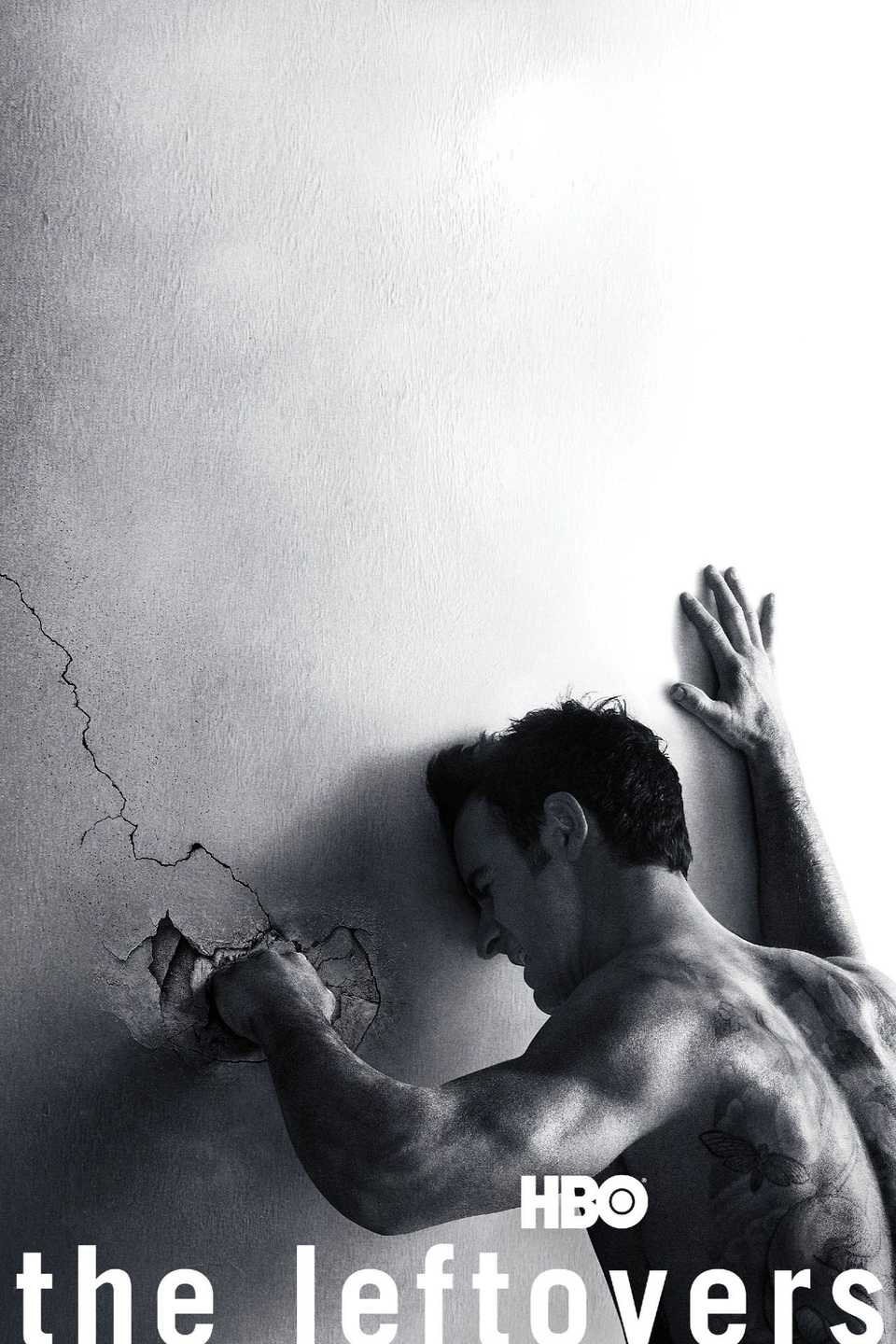
The Leftovers
Release Date 2014 - 2017-00-00
Showrunner Damon Lindelof
Writers Damon Lindelof, Tom Perrotta







 English (US) ·