


Published Mar 7, 2026, 4:00 PM EST
Kyle is a senior writer at ScreenRant and has been part of the team for over two years. Having led coverage on The Walking Dead projects alongside Rick & Morty, Kyle is well versed in numerous genres.
Born in Glasgow, Scotland, Kyle is a passionate journalist who has a keen interest in TV and film. He has six years of experience studying journalism including a HND in Practical Journalism and a BA Honours in Journalism, Media and Communication and History. Alongside his love for TV and film, Kyle enjoys video games, football and Formula 1.
Sign in to your ScreenRant account
Having debuted over 30 years ago, Batman: The Animated Series is still widely considered one of the highest-quality superhero shows ever made, with its dark and gritty tone helping the project stand out. Although there were certain lines it refused to cross, the 90s hit wasn't afraid to get uncomfortable, resulting in some truly horrifying episodes.
Many other superhero shows have tried to be Batman: The Animated Series' successor, either by replicating its style or taking its strengths and making them their own. However, despite being a show marketed towards a younger audience, there are very few competitors that match BTAS' unsettling nature when it opts to depict a darker story.
As a result, this beloved gem is rightfully recognized as one of the best animated shows ever made, and it wouldn't have been possible without its ambitious approach. Sure, the series does feature some heartfelt outings full of heroism and important lessons, but some of its greatest episodes are the epitome of horror, hence why they're so memorable.
"It's Never Too Late"
Season 1, Episode 12
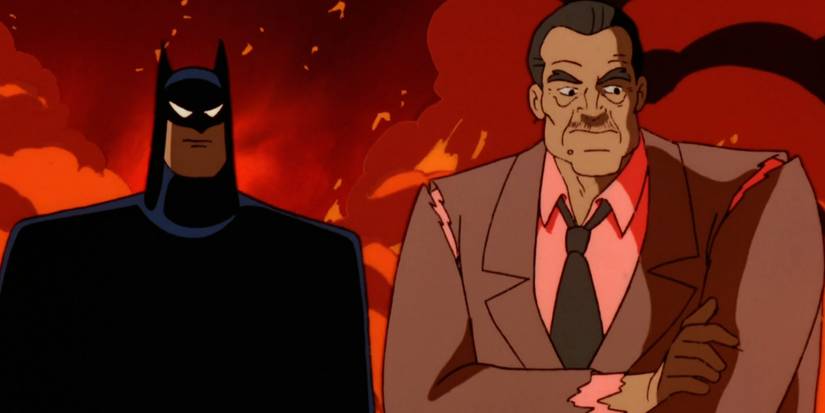
Throughout Batman's history, fans have gotten used to seeing the Dark Knight take on numerous unhinged villains, but while they're usually cooking up elaborate schemes to get rich or blow-up Gotham, there is another side to the criminal underworld — mobs. In "It's Never Too Late", BTAS demonstrated a more realistic take on how drug gangs would impact people.
The episode centers around Batman confronting a drug dealer and manufacturer named Arnold Stromwell, as he attempts to take down Rupert Thorne's organization. However, rather than beating or threatening his enemies for information, Batman took Arnold to the hospital to see his son, who nearly died after becoming hooked on drugs.
It was an impactful reveal that elevated this story from gritty to horrifying, as it felt grounded in reality. It may not have been the type of adventure to have viewers quaking in their boots, but seeing the effects of Gotham's drug trade was far more terrifying than Batman: The Animated Series' usual style, making it a true classic.
"House & Garden"
Season 2, Episode 5
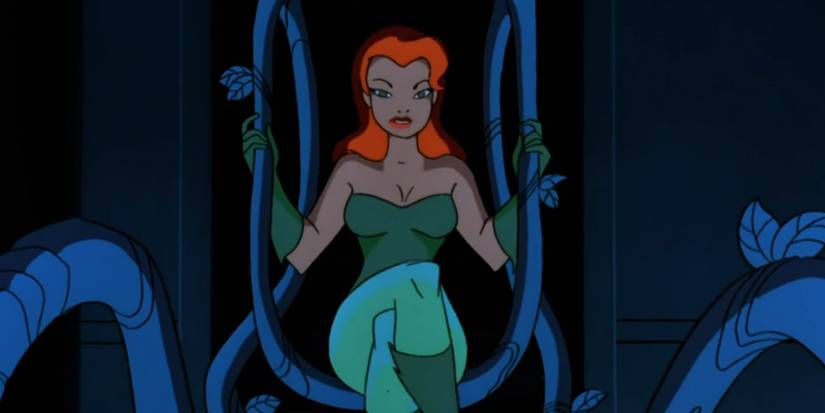
At first, "House & Garden" didn't seem like anything out of the ordinary for this animated show, but as the episode unfolded, it featured one of Batman: The Animated Series' darkest moments. The plot revolved around a variety of crimes taking place that were associated with Poison Ivy, yet she wasn't a suspect after reforming and settling down with her family.
She had alibis and seemed to have genuinely changed, until Batman and Robin uncovered the truth. Rather than falling for Dr. Carlyle, Poison Ivy actually used her powers to manipulate the doctor into freeing her from Arkham before subsequently kidnapping him, using plant monsters to pose as Carlyle and his children.
This made it seem like Ivy was a changed woman, when in actuality, she was continuing her spree of crimes as normal. The twist that her family wasn't real was already disturbing, but Ivy's monsters also had frightening designs that made this outing feel more like a horror than a children's superhero show, all of which perfectly displayed Ivy's wickedness.
"On Leather Wings"
Season 1, Episode 1
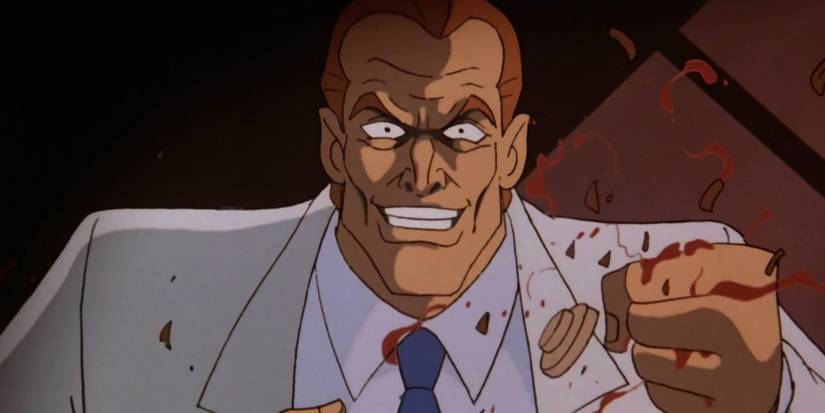
The very first episode of Batman: The Animated Series really set the tone for how twisted this project could be, as "On Leather Wings" certainly didn't ease into things. Man-Bat was the story's main antagonist — a villain who has gained a reputation for being terrifying — and each sighting left a constant feeling of fear and dread.
Every moment this creature remained at large created an even more unsettling atmosphere, which all culminated in a horrifying conclusion. It was revealed that Dr. Kirk Langstrom was Man-Bat all along, capable of transforming from his human state into this winged monster that possessed numerous threatening abilities.
The sinister look on Kirk's face as the beast took over is still hard to forget, and the sequence of his transformation is also rather disturbing. Opening the entire series with such a gloomy story made a massive statement, and while BTAS had darker episodes as time went on, this one was the definition of pure horror.
"Dreams In Darkness"
Season 1, Episode 28
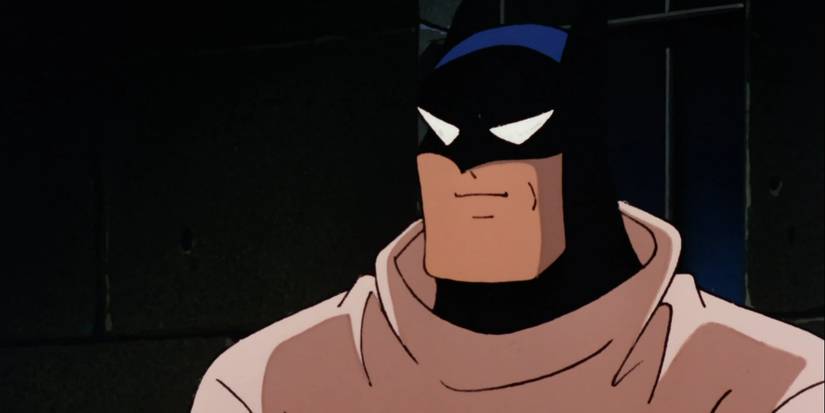
Most Batman fans will be used to seeing the vigilante sending others to Arkham, but he rarely ends up there himself. However, "Dreams in Darkness" plays into this idea by having Batman committed to the asylum as a result of the Scarecrow's fear toxin, and it makes for a pretty uncomfortable viewing experience.
The team did a great job of making Arkham Asylum feel unbearable, and each visit from doctors and psychiatrists only added to how mentally taxing being in such a facility would actually be. Even Batman struggles, with this Batman: The Animated Series episode being comic book-inspired, capturing the Caped Crusader's mindset particularly well.
Unfortunately for the hero, the horror didn't end there, as his hallucinations forced him to confront his parents' death once again, while he even battled his common enemies, as well as his allies. The entire thing felt like psychological torture at times, and it's easily one of the show's most haunting outings, despite Batman eventually overcoming this nightmare.
"Feat Of Clay"
Season 1, Episode 21
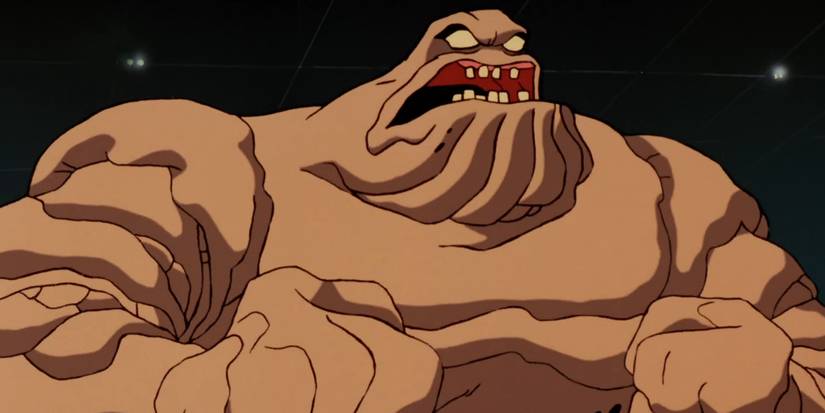
"Feat of Clay" provides the first sighting of Clayface in Batman: The Animated Series, and alongside giving him an intentionally hideous design, the show also provided a tragic backstory. Centering around Matt Hagen — a popular actor — the story follows his addiction to a face cream that allows him to alter his appearance, which also hides his scars.
Unfortunately, his reliance on this chemical pushes him to the extreme, and after being caught breaking into Daggett Laboratories, Daggett's henchmen force an excessive amount of the substance down his throat. This event is what caused Hagen to become Clayface, and while this two-part episode is entertaining, it also has a lot of frightening themes going on.
Although Clayface is the most notable villain in this story, Batman: The Animated Series created a new DC character, Roland Daggett, who acts as the true antagonist. His ruthless nature is terrifying, and the way he's willing to exploit people like Matt offers a greater commentary on wealthy companies taking advantage of desperate consumers.
Likewise, there is a deeper conversation about body dysmorphia, with Matt's attempts to cover up his scars only leading to a far worse fate. It's not just the imagery that's scary regarding "Feat of Clay", it's also how it plays into the real world that cements this as one of the show's most chilling narratives.
"Mad Love"
The New Batman Adventures, Season 1, Episode 21
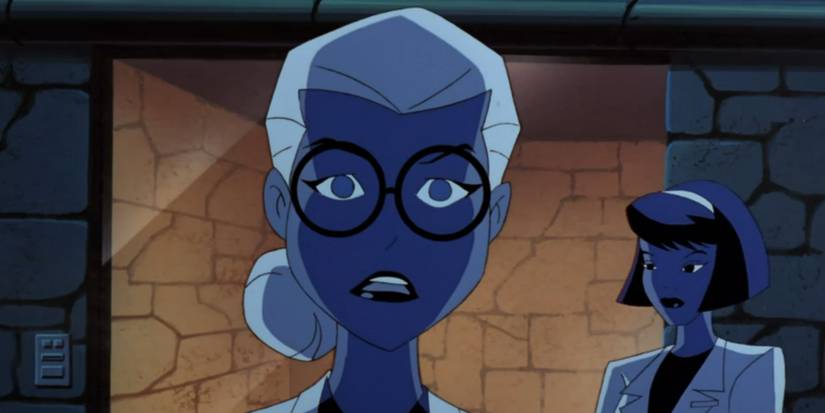
By now, most Batman fans know all about the Joker and Harley Quinn's abusive relationship, but "Mad Love" was the first time audiences truly got to witness it. When Harley was first introduced to the animated classic, she was essentially the Joker's right-hand girl, doing his bidding without receiving much praise or affection.
This didn't prevent her from falling head over heels for him, but the episode explained just how much the iconic villain manipulated her. Through his undeniable charm, the Joker convinced Harley to throw away a promising career to help him escape Arkham, only to mistreat her ever since.
Taking advantage of her emotions and using her merely as a sidekick to help with his real fascination for Batman highlighted how twistedly cruel the Joker is at his core, and it helped add an edge to Harley's character.
Furthermore, hearing Batman tell Harley the cold, hard facts about the nature of their relationship felt every bit as emotional as it was horrifying, and it hit pretty deep for a so-called kids' show. Finally, the Joker knocking Harley out a window showed how little he cared for her all along, the perfect demonstration of how dark "Mad Love" really is.
"Over The Edge"
The New Batman Adventures, Season 1, Episode 12
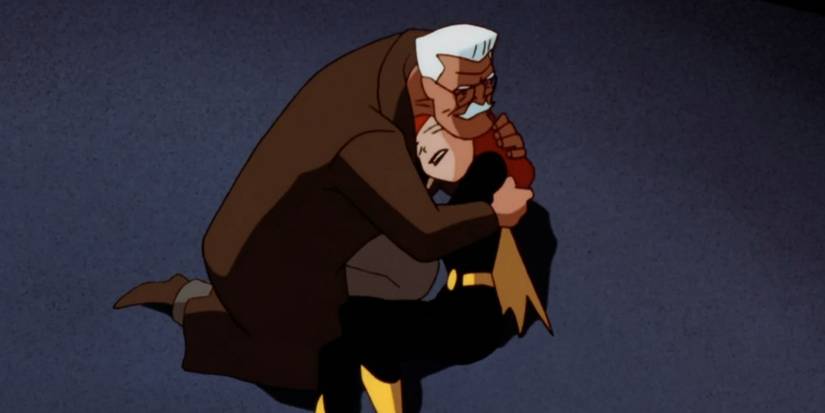
Of all the Batman: The Animated Series episodes that are hard to watch, "Over the Edge" is arguably the most horrifying. Once again, the Scarecrow is a key part of this storyline, but other than his menacing design, there isn't a lot of disturbing imagery of eerie environments in this one. Instead, it's the premise itself that is haunting.
"Over the Edge" opens with the GCPD hunting Batman and Robin, even shooting to kill, before unveiling the reason why. During a fight with the Scarecrow, Batgirl is knocked off a roof and dies in her father's arms. However, it's not until Jim lifts her mask that he realizes his daughter is the victim, causing him to blame Batman for her death.
Seeing these two on opposite sides makes for an unsettling ride throughout, as the viewers are essentially choosing between the misunderstood protagonist and a grieving father. In addition, death is very rarely tackled in this show due to its target audience, which made killing off a member of the Bat-Family all the more shocking.
Of course, the ending revealed that this was all Barbara's hallucination due to Scarecrow's fear toxin, but the young hero having to go through that herself is still a terrifying prospect. This episode of Batman: The Animated Series is undoubtedly a masterpiece, but it's also a horrifying watch, a testament to the show's excellent writing.
Release Date 1992 - 1995-00-00
Network FOX, Fox Kids
Showrunner Bruce Timm
Directors Kevin Altieri, Boyd Kirkland, Frank Paur, Dan Riba, Dick Sebast
Writers Michael Reaves, Brynne Stephens, Randy Rogel, David Wise, Len Wein, Marty Isenberg, Richard Mueller, Sam Graham, Peter Morwood, Dennis O'Neil, Carl Swenson, Beth Bornstein, Steve Hayes, Chris Hubbell, Martin Pasko, Henry Gilroy, Elliot S. Maggin, Eddie Gorodetsky, Diane Duane
-

-

Efrem Zimbalist Jr.
Alfred Pennyworth (voice)






 English (US) ·