
Jason Voorhees is one of horror’s most iconic villains, but the hockey-masked killer audiences know today wasn't fully formed when Friday the 13th was released in 1980. Over the course of 12 Friday the 13th films, Jason underwent several significant transformations, with different filmmakers adding new details to his appearance, mythology, and increasingly supernatural abilities. Some of the franchise's most important developments happened in sequels that are often overlooked.
The legendary killer is preparing for another big-screen appearance in Jason, the 13th film in the franchise, directed by Friday the 13th veteran filmmaker Steve Miner. Miner previously directed Friday the 13th Part II and Part III, making his return particularly exciting. Jason follows Crystal Lake, the A24 prequel series created by Brad Caleb Kane. Starring Linda Cardellini as Pamela Voorhees, the eight-episode series explored the events surrounding young Jason and his mother before the original film.
With Jason returning to cinemas, it's worth revisiting the sequels that established the character's most important characteristics. From his first appearance as an adult killer to the increasingly bizarre supernatural mythology, these films helped turn a supporting character into a horror icon.
Friday The 13th Part II (1981)

The original Friday the 13th made Pamela Voorhees the killer, with Jason appearing only as a supposedly drowned child in the film's famous final jump scare. Its sequel finally gave audiences the adult Jason Voorhees who would become one of horror's most enduring villains.
Set five years after the original massacre, Friday the 13th Part II follows a new group of counselors preparing to work at a training center near Camp Crystal Lake. Their arrival attracts the attention of Jason, who has survived his childhood drowning and grown into a formidable killer living in the surrounding woods.
Jason covers his deformed face with a burlap sack featuring a single eyehole. The sequel also establishes Jason's fixation with his mother, revealing his woodland shack with a shrine featuring Pamela's severed head, alongside her clothes. It suggests that her murderous legacy has become central to his identity.
That psychological connection would become an important part of Jason's character, particularly in later films that explored his childhood and motivations. Part II is also responsible for establishing the basic formula of Jason stalking counselors around Crystal Lake, something the franchise would revisit repeatedly.
Friday The 13th Part III (1982)

If Part II established Jason as the franchise's primary killer, Friday the 13th Part III gave him his defining appearance. The story moves to Higgins Haven, where another group of young people encounter the killer while staying at a lakeside property.
Among them is Shelly (Larry Zerner), a practical joker whose collection of props and disguises inadvertently provides Jason with his most famous accessory. The hockey mask that became synonymous with the Friday the 13th franchise was initially used by Shelly in a prank. However, after Jason kills him, the killer takes the mask for himself, completing his legendary look.
It's a relatively minor moment in the film, yet it fundamentally changes the character's visual identity. Part III was also originally released in 3D, with numerous sequences designed to make objects appear to fly towards the audience. Spears, knives, and other weapons become part of the visual spectacle, though it often feels prioritized over the narrative.
Regardless, there are plenty of reasons to revisit Part III and its historical importance is difficult to overstate. Jason's hockey mask became the defining image of the entire franchise, appearing in promotional material, merchandise, video games, and countless horror parodies. Vitally, it allowed Jason to be instantly recognizable regardless of which actor is underneath the mask.
Friday The 13th Part VI: Jason Lives (1986)

After the wayward disappointment of Friday the 13th: A New Beginning, the franchise needed to bring Jason back in spectacular fashion. Part VI: Jason Lives did exactly that, transforming Voorhees into something considerably more formidable than the typical slasher villain in a mask.
Tommy Jarvis (Thom Mathews), the survivor who killed Jason in The Final Chapter (1984), remains haunted by the experience. Determined to ensure the killer cannot return, Tommy visits Jason's grave to cremate his body. Unfortunately, a lightning strike hits the metal fence post impaling the corpse, resurrecting Jason as an unstoppable supernatural monster.
This is perhaps the franchise's most important transformation. Previously, Jason had been presented as an exceptionally resilient human being. In Jason Lives, he's effectively a zombie, possessing superhuman strength, extraordinary durability, and no apparent sensitivity to physical pain.
The change is immediately apparent when he punches his hand straight through the chest of Tommy's companion Allen. Later, bullets, explosions, and other injuries prove ineffective against him.
Jason Lives also introduces a more playful tone, incorporating self-aware humor and gothic horror influences without sacrificing the violence. The film's Alice Cooper soundtrack, particularly the song "He's Back (The Man Behind the Mask)," adds to this distinctive tongue-in-cheek personality.
Most importantly, Jason Lives establishes the supernatural rules that allow subsequent sequels to become increasingly extravagant. Jason no longer needs a plausible explanation for surviving injuries that would kill anyone else. He's effectively a walking corpse, and the franchise is free to experiment with just how difficult he is to destroy.
Friday The 13th Part VII: The New Blood (1988)
 Image via MovieStillsDB
Friday the 13th Part VII: The New Blood is often overshadowed by the earlier sequels, but it introduced one of the most important contributors to Jason's screen identity: Kane Hodder. The 1988 installment was Hodder’s first appearance as the killer, beginning a run of four films that made him the longest-running and most celebrated Jason ever.
The New Blood introduces Tina Shepard (Lar Park Lincoln), a teenager with telekinetic abilities who accidentally resurrects Jason while visiting Crystal Lake. Her powers eventually bring her into direct conflict with the killer, providing an unusual opponent who can challenge him physically.
Hodder's casting was particularly significant because he was capable of handling the extensive stunt work while wearing elaborate prosthetic makeup. The resulting performance gives Jason a distinctive physicality for the first time. Hodder introduced the characteristic heaving-chest movement, the slow head turn, and the slightly robotic walking movement.
Hodder’s movements are more aggressive and deliberate than those of several previous performers, helping establish a recognizable interpretation that continued through Jason Takes Manhattan, Jason Goes to Hell, and Jason X.
Jason's makeup also developed post-zombification. Jason's body is now heavily decomposed, with exposed bone, damaged flesh, and remnants of his previous franchise injuries visible beneath his clothing.
Although the heavily censored violence prevents The New Blood from reaching the heights of the strongest sequels, Hodder's introduction makes it essential viewing. His interpretation would influence how Jason was portrayed for the next 13 years.
Jason Goes To Hell: The Final Friday (1993)
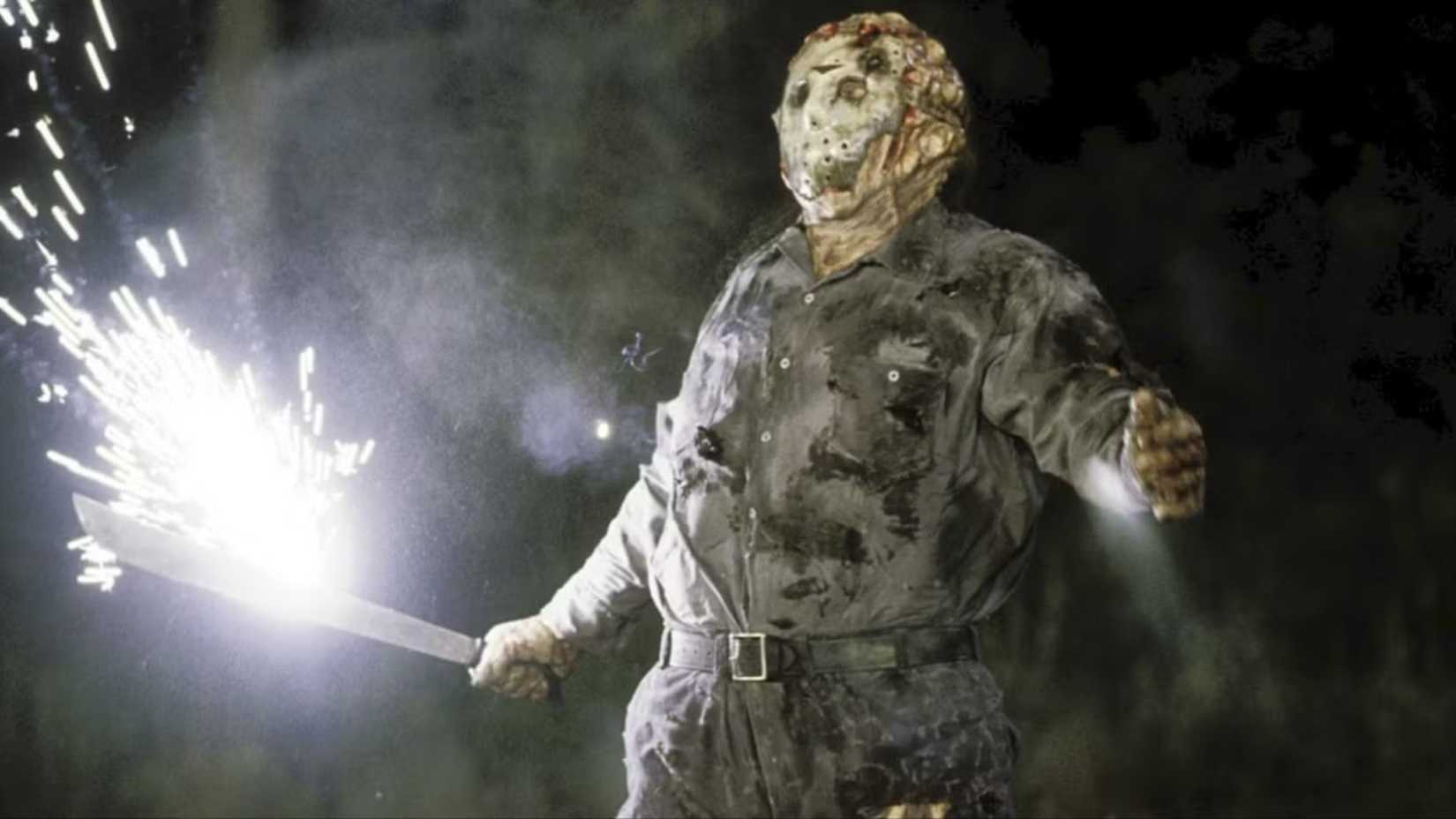
Jason Goes to Hell: The Final Friday introduces an entirely different supernatural explanation for the killer's survival, revealing that his evil can exist independently of his physical body. After Jason is seemingly destroyed during an FBI operation at Crystal Lake, his malformed heart is discovered still beating and containing a mysterious black substance.
When a coroner eats the heart, he becomes possessed by Jason's spirit, allowing the killer to continue his murderous rampage through different human hosts. Kane Hodder returns as Jason, although the possession storyline means he isn't necessarily the character's physical form throughout the film.
The introduction of the living heart and body-hopping mythology was certainly divisive. Rather than simply resurrecting Jason after another seemingly fatal encounter, the filmmakers introduce an entirely new set of supernatural rules. It's a substantial departure from the straightforward slasher formula, but one that expands the character's mythology considerably.
Even the ending has major franchise implications, with Freddy Krueger's gloved hand emerging from the ground to drag Jason's mask underground, setting up the eventual Freddy vs. Jason crossover.
Friday The 13th (2009)

The 2009 Friday The 13th effectively combines the franchise's first four films into a streamlined reboot. It revisits Jason's origins, unifying the franchise’s many retcons into a more coherent logic while updating his character for a modern audience.
Jason is introduced witnessing his mother's murder as a child rather than drowning at Crystal Lake. It subsequently establishes that he has survived in an extensive network of underground tunnels, using them to move around the camp and capture unsuspecting victims.
This version of Jason is particularly resourceful. He uses traps, hidden passages, and carefully selected weapons to hunt his victims. He's also considerably faster than some previous interpretations.
The film revisits several familiar elements, including Jason's attachment to Pamela, his early burlap-sack disguise, and the eventual acquisition of his hockey mask. The reboot isn't without its shortcomings, particularly when its supporting characters fall into familiar slasher stereotypes. Nevertheless, it's a surprisingly effective update that demonstrates how Jason can evolve without losing his defining characteristics.
That makes it particularly relevant ahead of the forthcoming Jason. With Steve Miner returning to direct for the first time since Jason Takes Manhattan (1989), the new film has an opportunity to draw upon the character's extensive cinematic history while introducing another generation to the Crystal Lake killer.
Whether it revisits the supernatural mythology, the original woodland setting, or the more resourceful version established in 2009 remains to be seen, but Jason has certainly accumulated enough history throughout Friday The 13th to make another reinvention worthwhile.
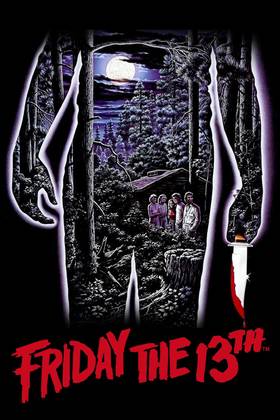
Video Game(s) Friday the 13th (1989), Friday the 13th: The Game




 English (US) ·