
 Image via Scribner Book Company

Published May 11, 2026, 8:41 PM EDT
Jeremy has more than 2500 published articles on Collider to his name, and has been writing for the site since February 2022. He's an omnivore when it comes to his movie-watching diet, so will gladly watch and write about almost anything, from old Godzilla films to gangster flicks to samurai movies to classic musicals to the French New Wave to the MCU... well, maybe not the Disney+ shows.
His favorite directors include Martin Scorsese, Sergio Leone, Akira Kurosawa, Quentin Tarantino, Werner Herzog, John Woo, Bob Fosse, Fritz Lang, Guillermo del Toro, and Yoji Yamada. He's also very proud of the fact that he's seen every single Nicolas Cage movie released before 2022, even though doing so often felt like a tremendous waste of time. He's plagued by the question of whether or not The Room is genuinely terrible or some kind of accidental masterpiece, and has been for more than 12 years (and a similar number of viewings).
When he's not writing lists - and the occasional feature article - for Collider, he also likes to upload film reviews to his Letterboxd profile (username: Jeremy Urquhart) and Instagram account.
He has achieved his 2025 goal of reading all 13,467 novels written by Stephen King, and plans to spend the next year or two getting through the author's 82,756 short stories and 105,433 novellas.
Sign in to your Collider account
IT is that Stephen King book about a scary clown fighting a bunch of kids, except there’s also a lot more to it than that. The clown is actually a shape-shifting entity that emerges every 27 years to do horrific things, and the clown is, furthermore, just one of the appearances it takes on while terrorizing the people of Derry. But the image of a particularly scary (or at least scarier than usual) clown and a gang of young heroes endures, maybe thanks to the miniseries and two-part movie adaptations of IT.
The book is also somewhat infamous for its length and the wild directions it goes in, with one particularly notorious scene taking place right near the end, too. It’s maybe the elephant in the room that has to be addressed, but if IT were a room, then it’s like the biggest room in the world, and the rest of the room is amazing, so that elephant doesn’t actually take up too much space; not like what the elephant might do in a more normal (and regularly-sized) room. All that being said, there are still a few books Stephen King has published that are even better than IT… but not many. Probably just the ones outlined below.
6 'The Shining' (1977)
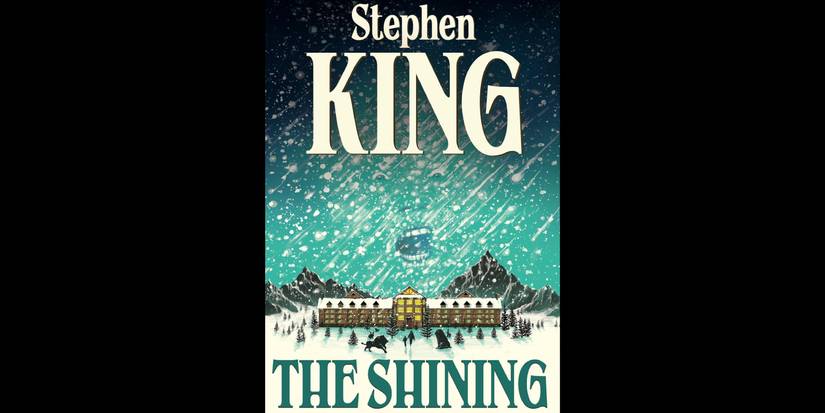 Image via Vintage
Stephen King’s career as a published writer got off to a pretty great start, seeing as his first book was Carrie, and then ‘Salem’s Lot proved a good deal more ambitious in scope, even if it was also something that fit within the horror genre. King didn’t abandon the horror genre, by any means, with his third novel, The Shining, which was more intimate and claustrophobic than the novels that came before, and arguably even better.
If not for Pet Sematary, The Shining would probably be easy to single out as King’s scariest novel, and it says something about how good his very best books are that the likes of Carrie, ‘Salem’s Lot, and Pet Sematary are only getting honorable mentions here. But yeah, The Shining is The Shining. You know the deal (tortured writer, haunted hotel, blend of supernatural and psychological horror, etc.), and it’s all as great and as iconic as pretty much everyone says it is. All of Stephen King’s books from the 1970s that aren’t his Richard Bachman novels are worthy starting points if you're brand new to King and his work (somehow), The Shining very much included.
5 'On Writing: A Memoir of the Craft' (2000)
 Image via Hodder Paperbacks
It might seem a little strange to rank On Writing: A Memoir of the Craft here, since it’s a non-fiction book, and putting it here alongside a good deal of fiction is a bit like ranking a documentary alongside a bunch of feature films, but On Writing is just too good not to mention, whenever there’s an opportunity to bring it up. What you'd expect, based on the full title, is really what you get here, since the book functions as one that’s about writing, and then it’s also a memoir on Stephen King’s part.
It’s easy to feel inspired by the parts of On Writing: A Memoir of the Craft that are about writing, and then there’s also a lot to be said about understanding King, as a person/author, through what he recalls.
You could argue that other books about the craft of writing go into a little more depth, and might thereby be more helpful, and you could also argue that certain memoirs go deeper than King’s does, too. But it does both these things seamlessly, balancing the two different sides of the overall book well, interweaving insight about the creative process and information about the writer himself in a surprisingly seamless manner. It’s easy to feel inspired by the parts of On Writing: A Memoir of the Craft that are about writing (particularly how to find the motivation to keep doing it), and then there’s also a lot to be said about understanding King, as a person/author, through what he recalls – and writes – about his life. Certain things regarding addiction and the struggles of being a writer are also addressed in plenty of works of fiction King’s written, but him tackling the usual thematic subjects so directly feels like something a bit different. You can appreciate this for being one of King’s only works of non-fiction, too (he wrote a book about the horror genre called Danse Macabre, in 1981, and that one’s a pretty compelling read as well… just not as great as On Writing).
4 'Misery' (1987)
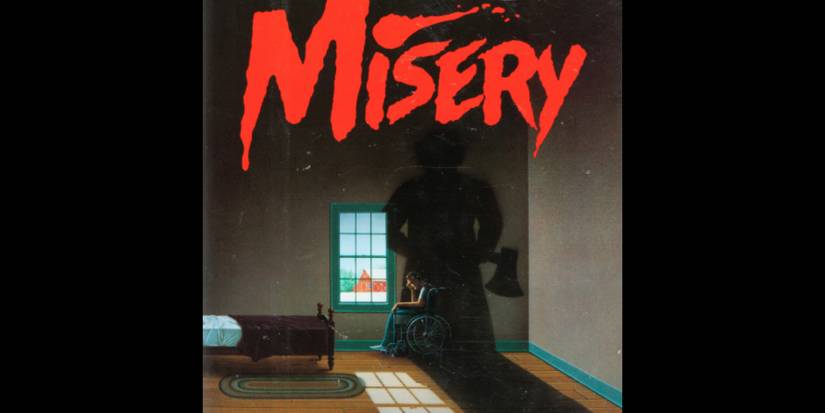 Image via Viking Press
If you're looking at directors who've best handled Stephen King in the past, it’s probably Frank Darabont who’s the king of King, Mike Flanagan who’s perhaps the best (and most noteworthy) currently adapting King, and Rob Reiner who’s also worth noting as an all-time contender. Reiner directed the film adaptation of Misery, and if you like the movie, there’s a very good chance you'll like the book, and the same goes when you flip it, too. The movie changes some things, but if you read the book first, you'll likely be satisfied with the film.
Focusing on the book, though, it’s the more claustrophobic of the two, because you're really not given any substantial opportunities to break free of the confined location the main character is stuck in. He’s held captive by one of Stephen King’s best-ever villains (and probably his best villain who lacks supernatural/fantastical powers), and Misery is about survival and the psychological battle the two wage against each other… and then sometimes things get physical on top of being psychological, too. It’s a fantastically thrilling book that’s successfully horrific at times, too, and is easily one of the best-paced things King’s ever written.
3 'The Dark Tower VII: The Dark Tower' (2004)
You can oversimplify IT by saying it’s a book about a scary clown, and you can also oversimplify Stephen King’s entire The Dark Tower series by saying it’s about a guy trying to locate – and then climb up – a tower. Actually, with The Dark Tower, that’s not wrong, but it’s the journey that keeps things interesting for hundreds and hundreds (more like thousands, really) of pages. The destination is reached in book #7, just called The Dark Tower (2004), and people are divided on that literal destination, as in the ending.
It’s bold, but regardless, The Dark Tower VII is being included here because the rest of the book’s pretty phenomenal, and that ending is being considered by this particular writer as over-hated (but take what he has to say with at least a few grains of salt, because he likes the Lost ending). The seventh book in this series fluctuates between delivering immense payoffs and thematically appropriate anticlimaxes, and the writing here showcases King at both his best and most reckless. It’s impossible not to feel something at the end of this momentous series, and the seventh book, as the overall grand finale, is a big reason for that.
2 'Different Seasons' (1982)
 Image via Viking Press
A little earlier, On Writing: A Memoir of the Craft was sneakily included, and maybe some amount of sneakiness is also needed to place Different Seasons on this ranking. Like, it’s a collection of novellas rather than a full-blown novel, but all four of the novellas here have so much to offer, despite being pretty easy to get through, with maybe two to three hours needed for each… or it depends on your reading speed. And, actually, “The Breathing Method” is a good bit shorter, but it’s still more than solid, not to mention potentially underappreciated, seeing as it’s the only story here that hasn’t received a film adaptation (at least not yet).
If you want to compare this to all of Stephen King’s collections, including those that are more short story collections than novella ones, then Different Seasons is easily the best and most consistent. Put simply, it has "Rita Hayworth and Shawshank Redemption" and "The Body" in it, and the source material in both those cases is just as great as the movies that adapted them (The Shawshank Redemption and Stand by Me). That leaves "Apt Pupil," which got a not-so-great and also fairly loose movie adaptation, with the novella, as it appears in Different Seasons, being so much better, and almost as good as those two stories that are more well-known, thanks to the beloved movie adaptations. Different Seasons is just great vintage Stephen King, and up there among his works that most earn the right to be called “must-reads.”
1 'The Stand' (1978)
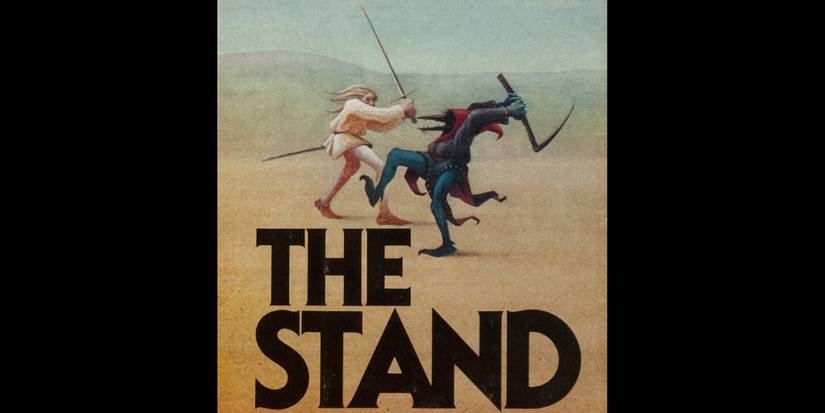 Image via Doubleday
The Stand is the easiest book here to compare to IT, because both have somewhat controversial endings that occur after a great many pages. You need a good bit of time to burn either IT or The Stand, and especially so regarding the latter if you read the uncut version that was published in 1990. A sizable 800-ish pages is expanded to something well over 1000, but both versions of The Stand feel like epics, since the premise is, either way, about society rebuilding itself – and two factions going to war, in effect – after a deadly flu outbreak kills most of the world’s population.
King wasn’t shy about saying The Stand was his attempt at doing an epic in the style of The Lord of the Rings, but with a very different setting… more just that the scope is comparable, and sure, not everyone’s going to think it’s on the same level as J.R.R. Tolkien’s novel quality-wise. If you're after the most impressive and ambitious thing Stephen King’s ever written, though (not counting The Dark Tower, which has its story told over multiple installments), then look no further than The Stand. It’s so huge and thrilling a book that any shortcomings feel pretty easy to overlook, and while – as mentioned earlier – you might need many hours to get through a book of this size, when the book’s so good, you don’t necessarily feel those hours. They just fly right the hell on by.

The Stand
Release Date 1994 - 1994-00-00
Directors Mick Garris








 English (US) ·