
 Image via Universal Studios

Published Feb 15, 2026, 12:23 PM EST
Gabrielle Ulubay is a Music writer at Collider. She has previously been published in The New York Times, Bustle, HuffPost Personal, and other magazines, and wrote at Marie Claire for nearly three years. Her interests have spanned film, politics, women's lifestyle, and, of course, music. She has a BA in history from Northeastern University and a MA in Film and Screen Media from University College Cork, Ireland, which have facilitated her passion for using art and media to analyze the sociopolitical landscape. Born and raised in New Jersey, she has since spent time in Boston, Ireland, Cuba, and Montreal, and currently lives in New York City. You can find highlights of her work at gabrielleulubay.com.
Sign in to your Collider account
Alfred Hitchcock is known for many things. Honored as “Master of Suspense,” he helped establish the modern horror and thriller genres. Plus, with his television show, Alfred Hitchcock Presents…, he set the stage for contemporary hits like Black Mirror and American Horror Story. In addition to his work, however, he’s known for several unusual proclivities, one of them being his fixation on blonde women. And Hitchcock’s attitude went beyond personal preference: In his aptly titled book, Hitchcock’s Blondes, Laurence Leamer writes about Hitchcock’s “dark obsession,” delving into the complex and often fraught working relationships he had with his stars. He even supposedly said, “Blondes make the best victims. They’re like virgin snow that shows up the bloody footprints.”
With 53 feature films to his name, Hitchcock employed too many women to explore in a single article, among them Janet Leigh, June Tripp, Madeleine Carroll, and Anny Ondra. But of his famous blondes, a handful stand out as the most immediately recognizable and influential. Ahead, the six Hitchcock blondes who changed Hitchcock’s career as much as he changed theirs.
6 Kim Novak
 Universal Pictures
Hitchcock’s relationships with his female stars tended to be polarizing. On one hand, he revered Grace Kelly, while on the other, he made Tippi Hedren’s life hell. Vertigo (1958) star Kim Novak, however, seemed to be right in the middle. In Vertigo, Novak plays Judy Barton (AKA Madeleine Elster) in a complex exploration of identity, fear, and spirituality. The role involved Novak delving into the three fraught psyches, pushing the actress beyond her limits and culminating in a masterful performance that helped make Vertigo the ninth-greatest American film of all time, per the American Film Institute.
But while Hitchcock and Novak brought each other’s careers to new heights, their relationship behind the scenes was marked by coldness and uncertainty. In an interview for Roger Ebert, Novak admitted, “I don't know if he ever liked me. I never sat down with him for dinner or tea or anything, except one cast dinner, and I was late to that. It wasn't my fault, but I think he thought I had delayed [myself] to make a star entrance, and he held that against me. During the shooting, he never really told me what he was thinking.” Later, she discovered that Hitchcock had wanted Vera Miles to be the star of the film all along, and he carried resentment against Novak for that reason.
Nevertheless, Novak remains one of the most iconic and recognizable Hitchcock blondes of all time. She made history not only in Vertigo, but in other dramas like The Man with the Golden Arm (1955) and Of Human Bondage (1964). Now 93 years old, she's gone on to have a successful painting career after leaving Hollywood.
5 Tippi Hedren
 Image via Universal-International Pictures
Of Hitchcock’s actresses, Tippi Hedren seems to have had the most challenging relationship with the filmmaker. Their first collaboration was on The Birds (1963), which remains one of Hitchcock’s most iconic and suspenseful pieces. What audiences didn’t realize at the time, however, was that Hedren was attacked just as savagely behind the scenes as her character was on the silver screen.
According to Hedren, Hitchcock sexually assaulted Hedren on the set of the film, which was Hedren’s first. She has alleged that he threw himself onto her and tried to kiss her, and that he refused to allow other cast members—particularly men— speak to her. Furthermore, he threw real birds at her and attached them to her with elastic bands. In one instance, she was almost pecked in the eye; in another, a mechanical bird shattered the glass of a phone booth, covering her face in jagged shards. The following year, Hedren worked with Hitchcock on another film, Marnie, in which her character is raped by her husband. Hedren has stated that she believes the rape scene was one of Hitchcock’s fantasies about her. He continued to make sexual advances to her throughout their time together, during which she was trapped in a two-year contract with him.
In the end, Hitchcock refused to allow other directors to work with Hedren, according to the actress. Because Hitchcock was one of the most powerful men in Hollywood at the time, producers were reticent to offend him, and they distanced themselves. Hedren’s career never fully recovered, but her daughter, Melanie Griffith, and granddaughter, Dakota Johnson, went on to have successful acting careers.
4 Carole Lombard
 Universal
Carole Lombard may have only starred in one of Hitchcock’s films, but she’s a Hitchcock blonde all the same. The two worked together in 1941 on Mr. & Mrs. Smith, which was the only true comedy that Hitchcock ever made. Lombard was the perfect choice for the role, too, having been known for screwball comedies such as My Man Godfrey (1936) and Fools for Scandal (1938).
If a Hitchcock screwball comedy seems uncharacteristic, that’s because it is. In fact, Hitchcock only agreed to make the film as a favor to Lombard. The two had formed a close friendship since his arrival in the United States, with Lombard even going so far as to rent her Bel Air house to him after she married Clark Gable. Eventually, she asked Hitchcock to direct her in a film, and he agreed as a “friendly gesture.” In conversation with François Truffaut, he called the agreement “a weak moment,” explaining that because he didn’t understand comedy as well as he did suspense, he simply “photograph[ed] the scenes as written” rather than injecting them with his signature finesse. Indeed, the British director seemed eager to finish the film while working on it, because it was on Mr. and Mrs. Smith’s set that he reportedly compared actors to cattle—a quote that Lombard herself told the world.
While Hitchcock might have regretted making Mr. and Mrs. Smith, it was, perhaps, good for the two to immortalize their friendship with a film. Lombard tragically died in a plane crash in 1942, just a year after the film was released. She has gone down in history as one of the greatest actresses of the twentieth century, with her Hitchcock collaboration ranking among her most popular projects.
3 Ingrid Bergman
 Image via RKO
Ingrid Bergman is one of Hitchcock’s most well-known stars. The Swedish-born actress worked with him on Notorious (1946), Under Capricorn (1949), and Spellbound (1945), the first of which was a runaway success. The two even made history together with Notorious: At the time, the strict Hays Code prevented overt imagery of sexuality or violence in Hollywood movies, with censors going so far as to limit how long kisses could be. Hitchcock, however, found a way around the censors in Notorious, filming an especially long kissing scene between Bergman and Cary Grant by having the two pause every few seconds to speak, cross the room, and touch each other’s faces.
While other Hitchcock actresses have detailed the abuse and cruelty the director leveled against them, Bergman always spoke highly of him. When Hitchcock won an American Film Institute Life Achievement Award in 1979, Bergman made a speech in his honor in which she detailed the best acting advice he ever gave her. Supposedly, while the two were filming Spellbound, she told Hitchcock that she wasn’t sure she’d be able to show the level of emotion needed for the scene, to which the director simply replied, “Ingrid, fake it.”
After working with Hitchcock, Bergman would find herself blacklisted in Hollywood and subjected to endless verbal abuse for her affair with Italian director Roberto Rossellini. While Cary Grant was among those who came to her defense, her career suffered throughout the 1950s, only to be revitalized at the end of the decade, around the time of her divorce from Rossellini.
2 Grace Kelly
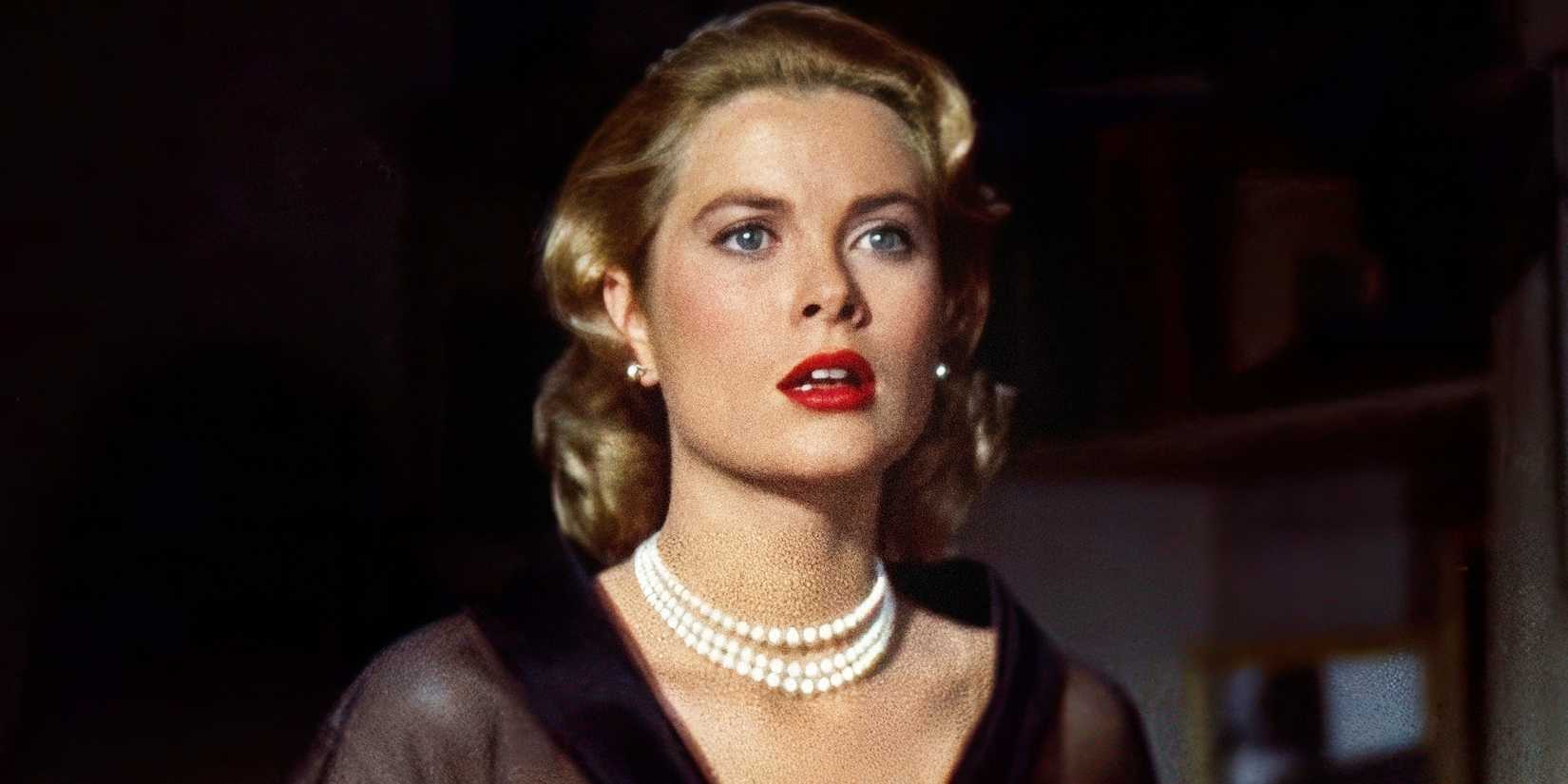 Image via Paramount Pictures
Grace Kelly was another of Hitchcock’s favorite actresses, starring in Rear Window (1954), Dial M for Murder (1954), and To Catch a Thief (1955). He admired her looks and acting style, citing her as the epitome of his favorite “type” of actress for her iciness and “potential for restraint.” Supposedly, he even nicknamed her “the snow princess.” It’s no wonder that he consistently cast her in such glamorous roles. In Rear Window, specifically, she plays a model whose haute couture outfits and high-class sense of propriety stand in contrast to her rugged partner’s interests.
But Kelly’s partnership with Hitchcock—and with Hollywood in general—wasn’t destined to last. In 1956, she married Prince Rainier III of Monaco, effectively ending her acting career. Hitchcock had even wanted her to star in his 1964 film Marnie, and was disappointed when she rejected the role out of fear that it would cause a scandal (her character would have been a kleptomaniac). Tippi Hedren was cast in the role instead.
Even though their collaboration was cut short, Kelly and Hitchcock continued to speak highly of each other for the rest of their lives. Furthermore, Kelly remains known as the quintessential Hitchcock blonde, embodying all the characteristics the director would try replicating in the actresses that followed her. Kelly never returned to acting, choosing instead to focus on her duties as a royal. She died in 1982.
1 Eva Marie Saint
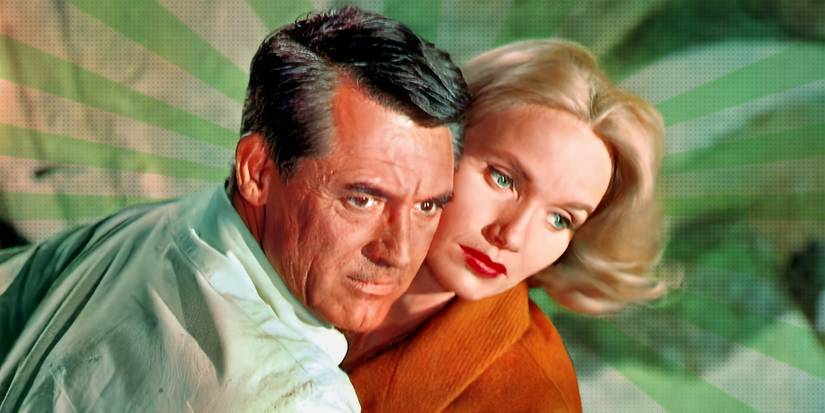 Image by Gabriel Bell
Of all Hitchcock’s Blondes, Eva Marie Saint leaves the most lasting impression. In North by Northwest, in which she starred alongside Cary Grant, Saint plays Eve Kendall, an American spy who seduces and eventually falls in love with Grant’s character, Roger Thornhill. Kendall’s identity and intentions are constantly shifting throughout the film: At first, she seems to be an innocent bystander that shares the night with Thornhill and covers for him when the authorities try to catch him. Then, she’s a duplicitous backstabber, a cheat, a hero, and, finally, a quintessential damsel in distress.
It’s a testament to Saint’s acting skills that the audience feels as bewildered and surprised by Saint’s changing identities as Thornhill is. Through her dialogue delivery, physicality, and smoldering looks, she’s able to communicate her character’s complex feelings masterfully. She inspires suspicion, admiration, attraction all at once—a challenging feat for an actress working under such a notoriously misogynistic director.
Saint was a seasoned professional, having studied acting at the Actors Studio in New York City and at the Stella Adler School of Acting. However, she admitted that Hitchcock did give her three pieces of advice that proved invaluable during the filming of North by Northwest. At the TCM Classic Film Festival in 2010, she told Robert Osbourne that Hitchcock advised her, “Lower your voice, don’t use your hands, and look directly into Cary Grant’s eyes at all times.” Combined with Saint’s own talent for crafting a distinct character, Hitchcock’s advice helped shape the unforgettable Eve Kendall.
Over the course of her seven-decade career, Saint has won an Academy Award and a Primetime Emmy Award, and has been nominated for several others. In addition to North by Northwest, she’s starred in On the Waterfront (1954), Exodus (1960), and more. Now 101 years old, she resides in Los Angeles.
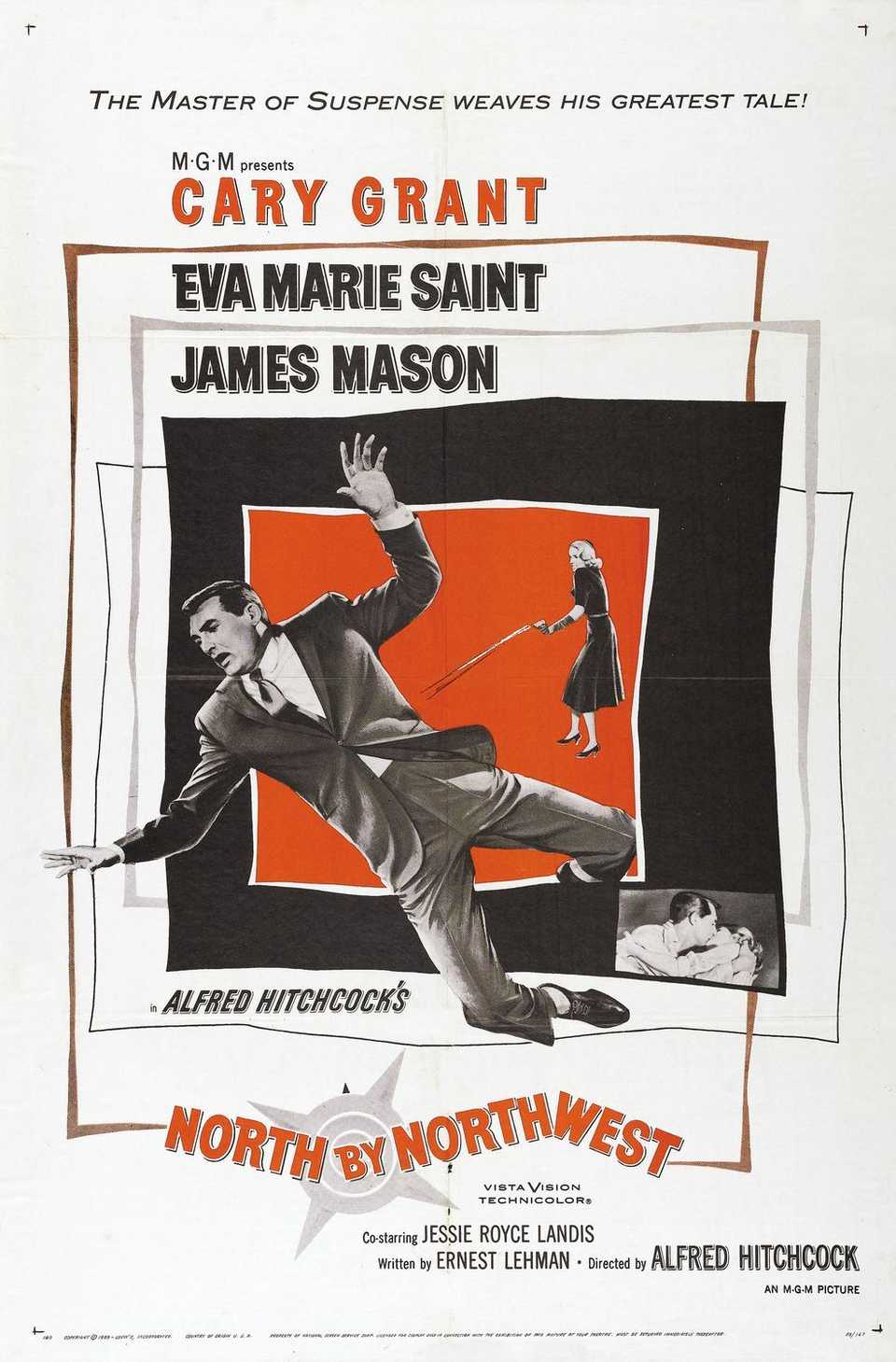
North By Northwest
Release Date September 8, 1959
Runtime 136 minutes
Writers Ernest Lehman





 English (US) ·