
 Image via Paramount Pictures

Published Oct 24, 2026, 9:33 PM EDT
Sign in to your Collider account
A great mystery movie turns the audience into an active participant and forces them to spend the entire runtime deciding who to trust and what information might prove to be important later on. That involvement is where the excitement comes from. Mystery movies live and die by this formula, and the best part is that finding the answers doesn’t make a movie less interesting.
In fact, it often makes the audience want to watch the whole thing again, just to see the clues they might have missed the first time around. Hollywood has produced plenty of memorable mystery movies built around one great surprise. However, the best ones know that the entire journey toward that reveal has to be just as exciting. The six movies on this list do exactly that.
6 ‘Rear Window’ (1954)
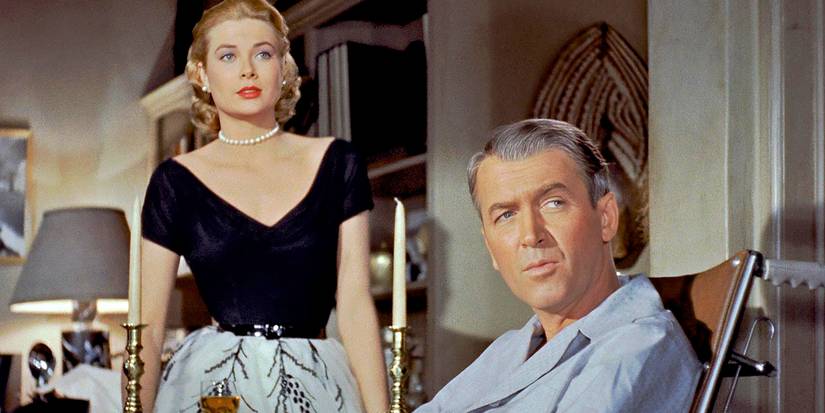 Image via Paramount Pictures
Rear Window is an Alfred Hitchcock masterpiece and a masterclass in creating tension. The film follows photographer L.B. “Jeff” Jefferies (James Stewart), who is stuck at home with a broken leg and passes the time watching the neighbors across his Greenwich Village courtyard. At first, their lives are just entertainment for him. He gives them nicknames, follows their routines, and fills in the gaps himself. That changes when his neighbor Lars Thorwald’s (Raymond Burr) wife suddenly disappears after the couple has an argument, and Jeff notices Thorwald making several suspicious late-night trips with a suitcase. Now, Jeff never actually sees a murder, and neither does the audience. However, from there, the entire story is built from whatever fragments the viewer gets to see through Jeff’s perspective, as the protagonist becomes increasingly convinced that Thornwald killed his wife.
Jeff’s girlfriend, Lisa (Grace Kelly), initially thinks he has spent far too long spying on strangers. Once she starts believing him, though, the mystery becomes much more dangerous because Lisa can go places Jeff physically cannot. The limitation of the story is what makes it so exciting. Hitchcock traps the audience in Jeff’s apartment and refuses to give us information he could not realistically see or hear himself. The viewers become just as nosy, suspicious, and impatient as he is. By the time Lisa enters Thorwald’s apartment while Jeff watches helplessly from across the way, the movie has turned simple observation into unbearable suspense. Rear Window makes the simple act of looking feel dangerous, and yet still addictive.
5 ‘Vertigo’ (1958)
 Image via Paramount Pictures
Vertigo is another Hitchcock film that keeps the audience hooked until the very last minute. The story follows former police detective John “Scottie” Ferguson (James Stewart), who has retired after developing a severe fear of heights. Then, an old friend convinces him to follow his wife, Madeleine (Kim Novak), who has been behaving strangely, visiting the grave of a dead woman and disappearing for hours without explanation. Her husband believes Madeleine may somehow be possessed by the spirit of an ancestor who died decades earlier, and Scottie initially treats the idea with obvious skepticism. The longer he follows her around San Francisco, though, the harder her behavior becomes to explain.
Things get even more complicated when Scottie ends up falling in love with the woman he is supposed to be investigating. This is where the nature of the mystery completely changes. Hitchcock deliberately gives the audience information Scottie does not have, so the suspense eventually comes from watching him move closer to the truth and knowing what will happen once he finally figures things out. Vertigo becomes the kind of mystery that is difficult to shake once it is over, with a payoff that makes one immediately want to go back and watch the whole thing all over again.
Collider Exclusive · Oscar Best Picture Quiz
Which Oscar Best Picture
Is Your Perfect Movie?
Parasite · Everything Everywhere · Oppenheimer · Birdman · No Country
Five Oscar Best Picture winners. Five completely different visions of what cinema can be — and what it can do to you. One of them is the film that was made for the way your mind works. Ten questions will figure out which one.
🪜Parasite
🌀Everything Everywhere
☢️Oppenheimer
🐦Birdman
🪙No Country for Old Men
FIND YOUR FILM →
01
What kind of film experience do you actually want? The best movies don't just entertain — they leave something behind.
ASomething that pulls the rug out — that makes me think I'm watching one kind of film and then reveals I'm watching another entirely. BSomething overwhelming — funny, sad, absurd, and genuinely moving, all at once. CSomething grand and weighty — a film that makes me feel the full scale of what I'm watching. DSomething formally daring — a film that pushes what cinema can even do. ESomething lean and relentless — pure tension with no wasted frame.
NEXT QUESTION →
02
Which idea grabs you most in a film? Great films are driven by a central obsession. What's yours?
AClass, inequality, and what people are willing to do when desperation meets opportunity. BIdentity, family, and the chaos of trying to hold your life together when everything is falling apart. CGenius, moral responsibility, and the catastrophic weight of a decision you can never take back. DEgo, legacy, and the terror of becoming irrelevant while you're still alive to watch it happen. EEvil, chance, and whether moral order actually exists or if we just tell ourselves it does.
NEXT QUESTION →
03
How do you like your story told? Form is content. The way a story is shaped changes what it means.
AGenre-twisting — I want it to start in one lane and migrate into something completely different. BMaximalist and genre-blending — comedy, action, drama, sci-fi, all in one ride. CEpic and non-linear — cutting between timelines, building a mosaic of cause and consequence. DA single unbroken flow — I want to feel like I'm living it in real time, no cuts to safety. ESpare and precise — every scene doing exactly what it needs to do and nothing more.
NEXT QUESTION →
04
What makes a truly great antagonist? The opposition defines the protagonist. What kind of opposition fascinates you?
AA system — invisible, structural, and almost impossible to fight because it has no single face. BThe self — the ways we sabotage, abandon, and fail the people we love most. CHistory — the unstoppable momentum of events that no single person can stop or redirect. DThe industry — the machinery of culture that chews up talent and spits out irrelevance. EPure, implacable evil — a force so certain of itself it becomes almost philosophical.
NEXT QUESTION →
05
What do you want from a film's ending? The final note is the one that lingers. What do you want it to sound like?
AShock and inevitability — a conclusion that recontextualises everything that came before it. BEarned emotion — I want to cry, laugh, and feel genuinely hopeful, even if the world is a mess. CDevastation and grandeur — an ending that makes me sit in silence for a few minutes after. DAmbiguity — something that leaves enough open that I'm still thinking about it days later. EBleakness — an honest refusal to pretend the world is tidier than it actually is.
NEXT QUESTION →
06
Which setting pulls you in most? Where a film takes place shapes everything — mood, stakes, what's even possible.
AA gleaming modern city with a hidden underside — beauty masking rot, wealth masking desperation. BA collapsing suburban life that opens onto something infinite — the multiverse of a single ordinary person. CThe corridors of power and science at a world-historical turning point — where decisions echo for decades. DThe grimy, alive chaos of New York and Hollywood — fame as both destination and trap. EVast, indifferent landscape — desert and highway where violence arrives without warning or reason.
NEXT QUESTION →
07
What cinematic craft impresses you most? Every great film has a signature — a technical or artistic element that makes it unmistakable.
AProduction design and mise-en-scène — every frame composed to carry meaning beneath the surface. BEditing and tonal control — the ability to move between registers without losing the audience. CScore and sound design — music that becomes inseparable from the dread and awe of what you're watching. DCinematography as performance — the camera not recording events but participating in them. ESilence and restraint — what's left unsaid and unshown doing more work than any dialogue could.
NEXT QUESTION →
08
What kind of main character do you root for? The protagonist is the lens. Who you choose to follow says something about you.
ASomeone smart and resourceful who makes increasingly dangerous decisions under pressure. BSomeone overwhelmed and ordinary who turns out to be capable of something extraordinary. CA brilliant, tortured figure whose gifts and flaws are inseparable from each other. DA self-destructive artist whose ego is both their superpower and their undoing. EA quiet, principled person trying to make sense of a world that has stopped making sense.
NEXT QUESTION →
09
How do you feel about a film that takes its time? Pace is a choice. Some films sprint; others let tension accumulate slowly, deliberately.
AI love a slow build when I know the payoff is going to be seismic — patience for a devastating reveal. BGive me relentless momentum — I want to feel breathless and emotionally spent by the end. CEpic runtime doesn't scare me — if the material demands three hours, give me three hours. DI want it to feel propulsive even when nothing is technically happening — restless energy throughout. EDeliberate and unhurried — I want dread to accumulate in the spaces between the action.
NEXT QUESTION →
10
What do you want to feel walking out of the cinema? The best films leave a mark. What kind of mark do you want?
AUnsettled — like I've just seen something I can't fully explain but can't stop thinking about. BMoved and energised — like the film reminded me what actually matters and gave me something to hold onto. CHumbled — like I've been in the presence of something genuinely important and overwhelming. DExhilarated — like I've just seen cinema doing something it's never quite done before. EHaunted — like a cold, quiet dread that stays with me for days.
REVEAL MY FILM →
The Academy Has Decided Your Perfect Film Is…
Your answers have pointed to one Oscar Best Picture winner above all others. This is the film that was made for the way your mind works.
Parasite
You are drawn to films that operate on multiple levels simultaneously — that begin in one genre and quietly, brilliantly migrate into another. Bong Joon-ho's Parasite is a film about class, desire, and the architecture of inequality that manages to be darkly funny, deeply suspenseful, and genuinely shocking across a single extraordinary running time. Your instinct is for cinema that hides its true intentions until the moment it's ready to reveal them. Parasite is exactly that — a film that rewards close attention and punishes assumptions, right up to its devastating final image.
Everything Everywhere All at Once
You want it all — and this film gives you all of it. The Daniels' Everything Everywhere All at Once is one of the most maximalist films ever made: action comedy, multiverse sci-fi, family drama, existential crisis, and a genuinely earned emotional core that sneaks up on you amid the chaos. You are someone who responds to ambition, who doesn't want cinema to choose between being entertaining and being meaningful. This film refuses that choice entirely. It is overwhelming by design, and its overwhelming nature is precisely the point — because the feeling of being crushed by infinite possibility is exactly what it's about.
Oppenheimer
You are drawn to cinema on a grand scale — films that understand history not as a backdrop but as a force, and that place their characters inside that force and watch what happens. Christopher Nolan's Oppenheimer is a film about the terrifying gap between what we can do and what we should do, told with the full weight of one of the most consequential moments in human history behind it. You want your films to feel important without feeling self-important — to earn their ambition through sheer craft and the gravity of their subject. Oppenheimer does exactly that. It is enormous, complicated, and refuses easy comfort.
Birdman
You are drawn to films that foreground their own construction — that make the how of the filmmaking part of the what it's about. Alejandro González Iñárritu's Birdman, shot to appear as a single continuous take, is cinema examining itself through the cracked mirror of a fading actor's ego. You respond to formal daring, to the feeling that a film is doing something that probably shouldn't be possible. Michael Keaton's performance and Emmanuel Lubezki's restless camera create something genuinely unlike anything else — a film that is simultaneously about creativity, relevance, self-destruction, and the impossibility of ever truly knowing if your work means anything at all.
No Country for Old Men
You are drawn to cinema that trusts silence, that refuses to explain itself, and that treats dread as a form of meaning. The Coen Brothers' No Country for Old Men is a film about the arrival of a new kind of evil — implacable, arbitrary, and utterly indifferent to the moral frameworks we use to make sense of the world. It is one of the most formally controlled films ever made, and its controlled restraint is what makes it so terrifying. You want your films to haunt you, not comfort you. You are not interested in resolution if resolution would be dishonest. No Country for Old Men is honest in a way that most cinema never dares to be.
↻ RETAKE THE QUIZ
4 ‘Psycho’ (1960)
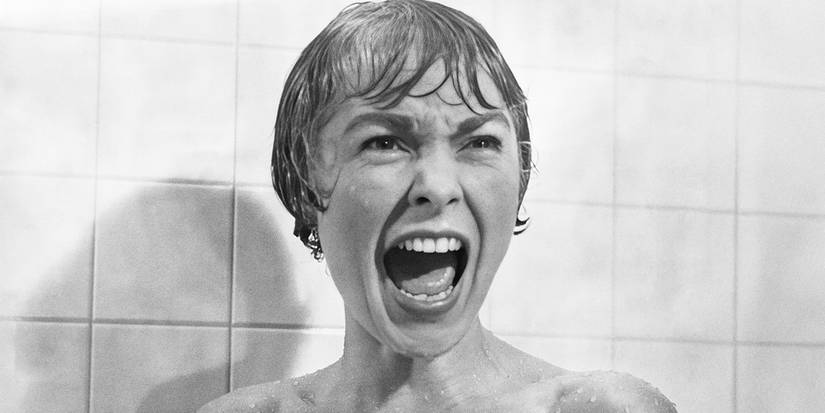 Image via Paramount Pictures
Psycho spends its opening act making the audience worry about the wrong crime, and that trick remains unmatched to this day. The story begins with Marion Crane (Janet Leigh) stealing $40,000 from her employer and fleeing Phoenix with a growing sense of paranoia that she might get caught any second. Her escape eventually leads her to the isolated Bates Motel, where she meets the awkward but strangely likable Norman Bates (Anthony Perkins). Norman lives beside the motel with his controlling mother, and one uncomfortable conversation with him is enough to suggest that something about this place is deeply wrong. Then Hitchcock completely changes the movie with the iconic shower scene where Marion is brutally stabbed to death, and the person who was supposed to be the protagonist disappears from the story altogether.
From that moment, the real story becomes all about the dark things happening at Bates Motel — more specifically, the relationship Norman actually has with his mother. Marion’s disappearance eventually brings her sister Lila (Vera Miles), boyfriend Sam (John Gavin), and private investigator Arbogast (Martin Balsam) to the motel, and every answer seems to make Norman’s situation even stranger. Psycho is exciting because Hitchcock keeps changing what the audience should be afraid of. By the time someone finally enters the Bates house and discovers the truth, the movie has already reinvented itself several times, before delivering an iconic reveal that completely changes everything that came before it. The film is a classic for all the right reasons, one that deserves to be watched over and over again for decades to come.
3 ‘Chinatown’ (1974)
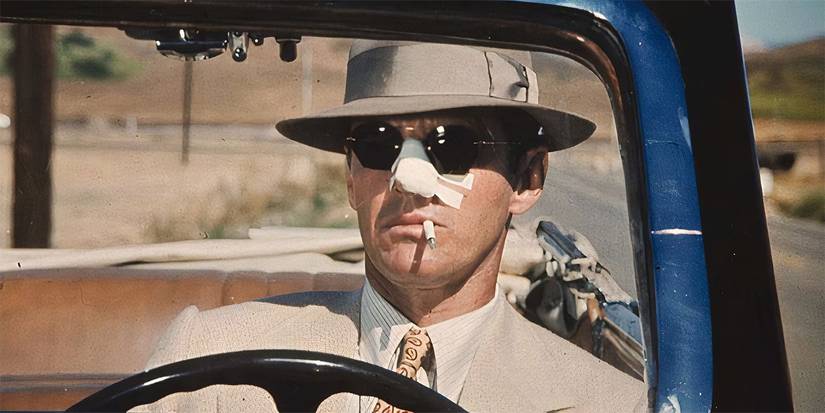 Image via Paramount Pictures
Chinatown begins with a case so ordinary that private detective Jake Gittes (Jack Nicholson) almost seems bored by it. A woman hires him to follow her husband, Hollis Mulwray (Darrell Zwerling), because she suspects he is having an affair. Jake gets the photographs he needs, and the job seems to be done. Then the real Evelyn Mulwray (Faye Dunaway) walks into his office and tells him she never hired him. Suddenly, Jake realizes that somebody has deliberately used him, and finding out why becomes far more important than the affair itself. The deeper he digs, though, the stranger the case becomes. Things take a turn when Hollis is found dead, and Jake begins uncovering evidence that huge amounts of water in the city are being secretly diverted while powerful people buy up land that should be worthless.
The opening domestic scandal gradually becomes a much larger conspiracy, but Chinatown never lets the mystery become purely political. Every new piece of the case brings Jake closer to Evelyn and her father, Noah Cross (John Huston), until the investigation becomes disturbingly personal. This constant escalation in Chinatown is the best part of the film. The audience learns the truth almost exactly as Jake does, so every answer feels drastic. The movie keeps tightening the mystery until one revelation completely changes how the audience sees Evelyn, Cross, and everything Jake thought he was investigating.
2 ‘Memento’ (2000)
 Image via Newmarket Films
Memento turns forgetting into the entire mystery. The story begins with Leonard Shelby (Guy Pearce) hunting the man he believes murdered his wife. However, a head injury has left him unable to form new long-term memories. He can hold onto information for only a short time before it disappears, so he relies on Polaroid photographs, handwritten notes, and tattoos across his body to remind himself who people are and what he is supposed to be doing. The problem is that Leonard has no reliable way of knowing whether the information he leaves for himself is actually true.
Christopher Nolan makes that uncertainty even worse by telling much of the story backwards. Each scene begins after the one that follows it chronologically, which means the audience enters every situation without knowing what Leonard just forgot. A person who appears trustworthy in one moment can look completely different once the previous piece of the story is revealed, and eventually, the audience starts wondering whether Leonard is manipulating himself too. Memento’s experimental structure takes a while to understand, but it turns the story into one of the most exciting mystery movies ever made.
1 ‘Seven’ (1995)
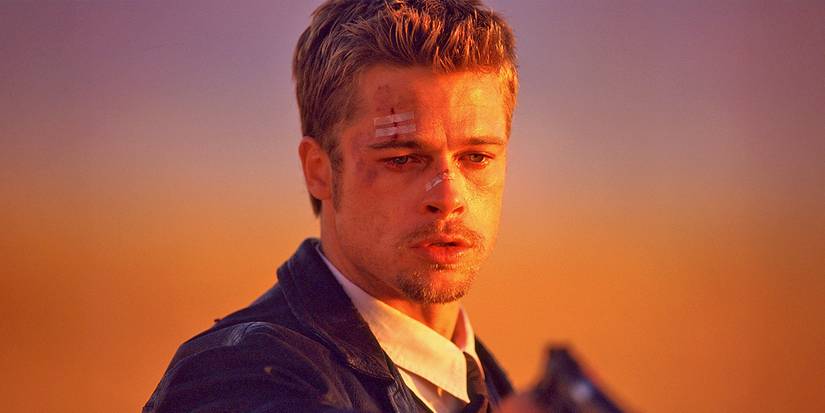 Image via New Line Cinema
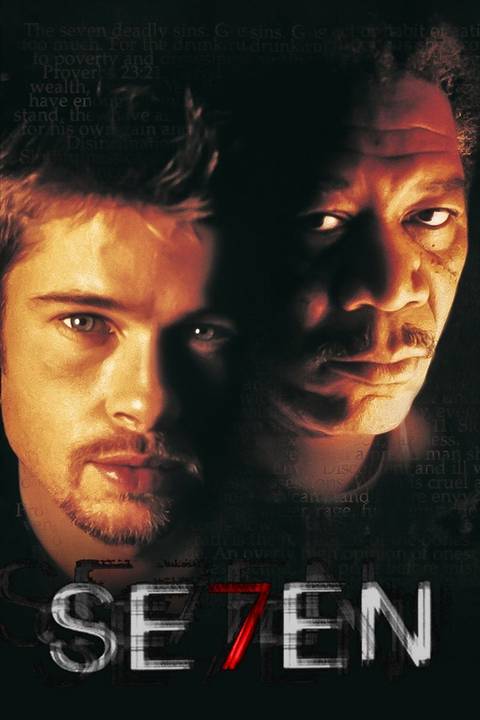
Seven is essential viewing for mystery thriller enthusiasts because so much of what came after it still feels indebted to this movie. The story follows veteran detective William Somerset (Morgan Freeman) and his younger, more impulsive partner David Mills (Brad Pitt) as they investigate a series of murders inspired by the seven deadly sins. Each crime is staged with disturbing precision, and every new victim reveals a little more about the killer’s twisted worldview. It doesn’t take long for the detectives to realize that the criminal isn’t avoiding attention. In fact, he wants them to understand exactly what he is doing, which turns a simple manhunt into something much darker.
David Fincher adds to this sense of anxiety through the film’s constant rainy setting and crime scenes that are deliberately visceral and difficult to look at. The contrast between Somerset’s exhaustion and Mills’s desperation to solve the case is one of the most important parts of the story, turning Seven from just a well-made procedural to one of the defining mystery films of its era. What makes Seven so exciting despite its darkness is the constant feeling that the detectives are racing to catch someone who is always one step ahead of them. The investigation keeps getting darker without relying on cheap twists, and the final act has gone down in film history for letting the killer complete his plan in a way that leaves the investigators completely helpless.
Se7en
Release Date September 22, 1995
Runtime 127 minutes
Writers Andrew Kevin Walker







 English (US) ·