6 Modern Mystery Books That Are Perfect From the First Page to the Last
4 weeks ago
29
Image via Penguin Books
Published Jul 24, 2026, 8:02 PM EDT
Andrea M. Ciriaco is a long-time script reader and former entertainment editor who specializes in classic movies and Hollywood history. She was a student film critic at Kent State University for three years and worked at Warner Bros Studio in Burbank and The Safran Company for several years. Based on her vast taste and range of knowledge, many consider Andrea to be a walking IMDb who knows dozens of underrated movies and is a vital assesst to any trivia night. While movies are her expertise, Andrea is also a diehard fan of iconic shows including The Sopranos, Boardwalk Empire, Rod Serling's The Twilight Zone, Will & Grace and South Park. Some of her favorite filmmakers are Walt Disney,John Huston, Fritz Lang, Alfred Hitchcock, John Ford, Mel Brooks, Quentin Tarantino, Martin Scorsese and Howard Hawks.
Modern mystery novels have transformed the classic detective story and the customary whodunit with an alluring blend of intriguing plots and complex characters mixed with a combination of suspense, anticipation, and psychological depth. Unlike traditional mysteries that focus primarily on solving a crime, today's best mystery books, such as Mystic River, The 7 1/2 Deaths of Evelyn Hardcastle,and The Shadow of the Wind, often explore thought-provoking themes while still keeping readers engaged with unexpected twists and compelling investigations.
From fast-paced thrillers to character-driven crime fiction, modern mystery authors like Gillian Flynn, Dennis Lehane, and Jane Harper continue to push the boundaries of the genre, creating stories that are both intellectually stimulating and emotionally resonant. While there have been many notable mystery books published over the years, these are the best modern mystery books that appeal to a wide range of readers, offering unforgettable plots, memorable detectives, and gripping narratives that keep audiences guessing until the very last page.
'In the Woods' (2007)
Image via Penguin Books
In the Woods is the first installment in Tana French's Dublin Murder Squad series and follows two Irish detectives, Adam Ryan and Cassie Maddox, who are investigating the recent murder of a twelve-year-old girl who was found in the same woods where two of Ryan's friends had disappeared years ago. As the detectives dig further into the brutal crime, Ryan begins to remember moments of his childhood, leading him down a dark path of depravity, regret, and self-destruction. Compared to other murder mysteries, In the Woods is almost a mystery within a mystery and combines a curious murder investigation with an in-depth exploration of unaddressed trauma, giving the story a psychological element that heightens the overall story.
French creates richly developed characters, atmospheric settings, and realistic relationships that make the story feel deeply immersive, elevating In the Woods beyond a conventional detective story. The book earned several notable literary awards, including the Edgar Award for Best First Novel by an American Author, the Barry Award for Best First Novel, and the Macavity Award for Best First Mystery Novel. In 2019, In the Woods and The Likeness, the second installment in French's book series, served as the inspiration for the BBC eight-part miniseries, Dublin Murders, starring Killian Scott and Sarah Greene.
'Gone Girl' (2012)
Image via Phoenix
Gillian Flynn's 2012 best-selling novel, Gone Girl, is one of the best psychological thrillers of the 21st century and has more than likely come across everyone's radar at one time or another. The book follows a unique narrative structure that alternates between the perspective of a writer, Amy Dunne, who suddenly goes missing, and her husband, Nick, who becomes the prime suspect in his wife's disappearance. Gone Girl takes an unusual but effective approach to unraveling a mystery by gradually piecing together clues that leave readers with more questions than answers, making it a unique contribution to the mystery genre.
Gone Girl became a New York Times bestseller and earned immense praise from the literary world for its unwavering suspense, unpredictability, and never-ending twists and turns. In 2014, David Fincher directed the film adaptation of Gone Girl, starring Rosamund Pike and Ben Affleck, with Flynn penning the screenplay herself. Like the novel, Gone Girl was both a major critical and commercial success and earned overall rave reviews, with many critics noting Pike's performance and Flynn's sharp screenplay. It went on to receive several award nominations, including the Golden Globe Award for Best Director, Best Actress, and Best Original Screenplay, and an Academy Award nomination for Best Actress for Pike.
'The Lost Man' (2018)
Image via Flatiron Books
The 2018 mystery novel, The Lost Man, was the first standalone novel written by Jane Harper, and, according to the Kirkus Review, is "a twisty, slow burner by an author at the top of her game." The book takes place in the Australian outback and follows Nathan, the black sheep of his family, who begins to suspect foul play in the strange death of his younger brother, Cameron. As Nathan begins to dig around his brother's life and his family, he unknowingly uncovers secrets of abuse and the extreme lengths they took to survive an unimaginable nightmare.
Initially, The Lost Man seems to be a typical case of foul play that claimed an innocent life, but as the story progresses, it grows into something far more sinister and disturbing, leaving many readers uneasy but also hooked on every word. What makes the novel stand out is Harper's ability to create suspense through atmosphere as much as through the mystery itself. The unforgiving landscape becomes almost a character in its own right, shaping the lives and choices of everyone involved. Combined with well-developed characters, emotional depth, and a carefully paced plot, The Lost Man offers more than a traditional whodunit, ultimately solidifying its place on this exclusive list.
Collider Exclusive · Horror Survival QuizWhich Horror Villain Do You Have the Best Chance of Surviving?Jason Voorhees · Michael Myers · Freddy Krueger · Pennywise · Chucky
Five killers. Five completely different ways to die — if you're not smart enough, fast enough, or self-aware enough to avoid it. Only one of them is the villain your particular set of instincts gives you a fighting chance against. Eight questions will figure out which one.
🏕️Jason
🔪Michael
💤Freddy
🎈Pennywise
🪆Chucky
TEST YOUR SURVIVAL →
01
Something feels wrong. You can't explain it — you just know. What do you do?First instincts are the difference between the survivor and the first act casualty.
ALeave immediately. I don't need to understand a threat to respect it.
BStay quiet and observe. If I can see it, I can understand it. If I can understand it, I can avoid it.
CStay awake. Whatever this is, I am not going to sleep until I feel safe again.
DConfront it directly. Fear grows in the dark — I'd rather know what I'm dealing with.
ECheck everything, trust nothing. The threat might be closer than I think — and smaller.
NEXT QUESTION →
02
Where are you most likely to find yourself when things go wrong?Setting is everything in horror. Where you are determines which rules apply.
ASomewhere remote — a cabin, a campsite, off the grid and away from people.
BA quiet suburban neighbourhood where nothing ever happens. Except tonight.
CIn my own head — the most dangerous place of all, depending on what's already in there.
DWherever children are — because something about this place attracts the worst things.
ESomewhere ordinary — a house, a toy store, a place where the last thing you'd expect is a threat.
NEXT QUESTION →
03
What is your most reliable survival asset?Every survivor has a quality the villain didn't account for. What's yours?
APhysical fitness — I can run, I can swim, I can outlast something that relies on brute persistence.
BSpatial awareness — I always know the exits, the hiding spots, the fastest route out.
CPsychological resilience — I've faced my worst fears before. They don't have the same power over me.
DEmotional steadiness — I don't panic. Panic is what gets you caught.
EScepticism — I don't underestimate threats because of how they look. Size is irrelevant.
NEXT QUESTION →
04
What kind of fear is hardest for you to fight through?Knowing your weakness is the first step to not dying because of it.
AThe unstoppable — something that will not stop, cannot be reasoned with, and is always getting closer.
BThe invisible — a threat I can feel but can't locate, watching from somewhere I can't see.
CThe psychological — something that uses my own mind and memories against me.
DThe unknowable — something ancient, shapeless, that feeds on the fear itself.
EThe mundane — a threat so ordinary-looking that no one will believe me until it's too late.
NEXT QUESTION →
05
You're with a group when things start going wrong. What's your role?Horror movies are brutally clear about who survives group situations and who doesn't.
AThe one who says "we need to leave" first — and means it, even when no one listens.
BThe one who stays quiet, watches the others, and figures out the pattern before anyone else does.
CThe one who holds the group together when panic sets in — because someone has to.
DThe one who asks the questions nobody wants to ask — because ignoring them gets people killed.
EThe one who takes the threat seriously when everyone else is laughing it off.
NEXT QUESTION →
06
What's the horror movie mistake you're most likely to make?Honest self-assessment is a survival skill. Denial is not.
AGoing back for someone — I know I shouldn't, but I can't leave them behind.
BAssuming I'm safe once I've found a hiding spot. That's when it finds me.
CFalling asleep when I absolutely cannot afford to. Exhaustion is its own enemy.
DLetting my curiosity override my instincts — I always need to understand what I'm dealing with.
EDismissing the threat because of how it looks. That's exactly what it wants.
NEXT QUESTION →
07
What's your best weapon against something that can't be stopped by conventional means?Every horror villain has a weakness. The survivors are always the ones who find it.
AThe environment itself — I use the terrain, the water, the geography against it.
BPatience — I wait, I watch, and I strike at the one moment it doesn't expect.
CLucidity — if I can stay in control of my own mind, it loses its primary weapon.
DCourage — facing it directly, refusing to run, taking away the fear it feeds on.
EImprovisation — I use whatever's at hand, however unconventional. Creativity over brute force.
NEXT QUESTION →
08
It's the final scene. You're the last one standing. How did you make it?The final survivor always has a reason. What's yours?
AI kept moving. I never stopped, never hid for too long, never let it corner me.
BI figured out the pattern before anyone else did — and I used it against the thing following it.
CI stayed awake, stayed lucid, and refused to give it the one thing it needed most.
DI stopped being afraid of it. And the moment I did, everything changed.
EI took it seriously from the start — and I never once made the mistake of underestimating it.
REVEAL MY VILLAIN →
Your Survival Odds Have Been CalculatedYour Best Chance Is Against…
Your instincts, your strengths, and your particular way of thinking under pressure point to one villain you actually have a fighting chance against. Everyone else — good luck.
Jason Voorhees
Jason is relentless, but he is also predictable — and that is the gap you would exploit.
He moves in straight lines toward his target. He doesn't strategise, doesn't adapt, doesn't outsmart. He simply pursues.
Your ability to keep moving, use the environment, and resist the panic that freezes most victims gives you a genuine edge.
The Crystal Lake survivors were always the ones who stopped running in circles and started thinking about terrain, water, and distance.
You think like that. Which means Jason, for all his indestructibility, would face someone who simply refused to be where he expected.
Michael Myers
Michael watches before he moves. He is patient, methodical, and almost impossible to detect — until it's too late for anyone who isn't paying close enough attention.
But you are paying attention. You notice the shape in the window, the car parked slightly wrong, the silence where there should be sound.
Michael's power lies in the invisibility of ordinary suburbia — the fact that nothing ever looks wrong until it already is.
Your spatial awareness and instinct to map every room, every exit, and every shadow before you need them is precisely the quality Laurie Strode had.
You are not a victim waiting to happen. You are someone who already suspects something is wrong — and acts on it.
Freddy Krueger
Freddy wins by getting inside your head — using your own fears, your own memories, your own subconscious as weapons against you. That strategy requires a target who can be destabilised.
You are harder to destabilise than most. You've faced uncomfortable truths about yourself and you haven't looked away.
The survivors on Elm Street were always the ones who understood what was happening and chose to face it rather than flee from it.
Freddy's greatest weakness is that his power evaporates in the presence of someone who refuses to give him the fear he feeds on.
Your psychological resilience — the ability to stay grounded when reality itself becomes unreliable — is exactly the quality that keeps you alive here.
Pennywise
Pennywise is ancient, shapeshifting, and feeds on terror — but it has one critical vulnerability: it cannot function against someone who genuinely stops being afraid of it.
The Losers Club didn't survive because they were braver than everyone else. They survived because they faced their fears together, and faced them honestly.
You ask the questions others avoid. You look directly at what frightens you rather than turning away.
That directness — the refusal to let fear fester in the dark — is Pennywise's worst nightmare.
It chose the wrong target when it chose you. You are exactly the kind of person whose fear tastes like nothing at all.
Chucky
Chucky's greatest advantage is that nobody takes him seriously until it's already too late. He exploits the gap between how something looks and what it actually is.
You don't have that gap. You take threats seriously regardless of how they present — and you never make the mistake of underestimating something because of its size or appearance.
Chucky relies on surprise, on the delay between recognition and response. You close that delay faster than almost anyone.
Your instinct to treat every unfamiliar thing with appropriate scepticism — rather than dismissing it because it seems absurd — is the exact quality that keeps you breathing.
Against Chucky, not laughing is already winning. You are very good at not laughing.
↻ RETAKE THE QUIZ
'The 7 1/2 Deaths of Evelyn Hardcastle' (2018)
Image via Sourcebooks Landmark
Stuart Turton's 2018 novel, The 7 1/2 Deaths of Evelyn Hardcastle, also known as The Seven Deaths of Evelyn Hardcastle, is an unconventional murder mystery that has been described as a cross between an Agatha Christie novel and the 1993 movie Groundhog Day, starring Bill Murray, with a hint of Quantum Leap. The book follows a notorious criminal, Aiden Bishop, who becomes trapped in Blackhearth Manor, where he relives the day an heiress, Evelyn Hardcastle, is murdered during a masquerade ball. As Aiden wakes up each day in the body of a different guest, he realizes the only way to break the time loop is to solve the mysterious murder in eight days.
Turton combines classic elements of a Golden Age murder mystery with psychological suspense, speculative fiction, and intricate plotting, making The 7 1/2 Deaths of Evelyn Hardcastle stand out from the crowd. Each new perspective reveals additional clues and hidden motivations, creating a layered narrative that rewards close attention. Despite its complexity, the novel maintains strong character development and steadily builds tension toward a satisfying conclusion that every reader will find worthwhile. Its creativity and fresh approach to the mystery genre have earned widespread critical acclaim, making The 7 1/2 Deaths of Evelyn Hardcastleone of the most innovative and memorable modern mystery novels to date.
'The Shadow of the Wind' (2001)
Image via Penguin Books
The Shadow of the Wind is a worldwide best-selling mystery written by Carlos Ruiz Zafón and was the first installment in Zafón's book series, Cemetery of Forgotten Books. Set in post–Spanish Civil War Barcelona, the novel follows Daniel Sempere, a young bookseller's son who becomes fascinated by a forgotten novel and begins investigating the life of its mysterious author, Julián Carax. His search uncovers long-hidden secrets, dangerous enemies, and tragic connections that span generations. The Shadow of the Wind was translated into English in 2004 and sold over a million copies in the United Kingdom after already topping other bestseller lists in Europe. The book has since sold fifteen million copies worldwide, making it one of the best-selling books of all time.
Zafón creates a vivid portrait of Barcelona while weaving together multiple timelines and interconnected mysteries that keep readers captivated from the first to the last page. The novel is also noted for brilliantly exploring relatable themes such as love, loss, memory, and the enduring power of literature, giving the mystery emotional and intellectual depth. With its enchanting prose, compelling plot, and uncanny sense of place, The Shadow of the Wind transcends the conventions of a typical detective story and rightfully stands as one of the finest examples of modern mystery fiction.
'Mystic River' (2001)
Image via William Morrow
Dennis Lehane's award-winning novel, Mystic River, is considered to be one of the best modern mystery novels that combines a gripping murder investigation with a profound exploration of trauma, guilt, and justice. Set in Boston, Massachusetts, the story follows three childhood friends, Jimmy Marcus, Sean Devine, and Dave Boyle, whose lives are forever changed after Dave is abducted by child molesters. When Jimmy's daughter is murdered years later, the crime results in Jimmy, a now-notorious criminal, conducting his own investigation and eventually forcing the men to confront their shared past as suspicion, grief, and long-buried secrets threaten to destroy all of them. The novel was a major success, and in 2002, Lehane was presented with the Dilys Award by the Independent Mystery Booksellers Association.
Instead of relying on plot twists and shock value, Lehane creates a deeply emotional and character-driven mystery that examines how past experiences can unintentionally influence present choices, making it a one-of-a-kind modern mystery. The novel's realistic dialogue, moral complexity, and richly developed characters give the story lasting emotional impact, while its suspenseful investigation keeps readers engaged until the powerful conclusion. In 2003, Clint Eastwood directed the film adaptation of Mystic River, which features an all-star cast including Sean Penn, Tim Robbins, and Kevin Bacon, and is one mystery movie that is worth watching over and over again. Mystic River was a monumental hit with both critics and the box office and earned six Academy Award nominations, including Best Picture, Best Director, and Best Adapted Screenplay, and went on to win for Best Actor for Penn and Best Supporting Actor for Robbins.

 Image via Penguin Books
 Image via Penguin Books
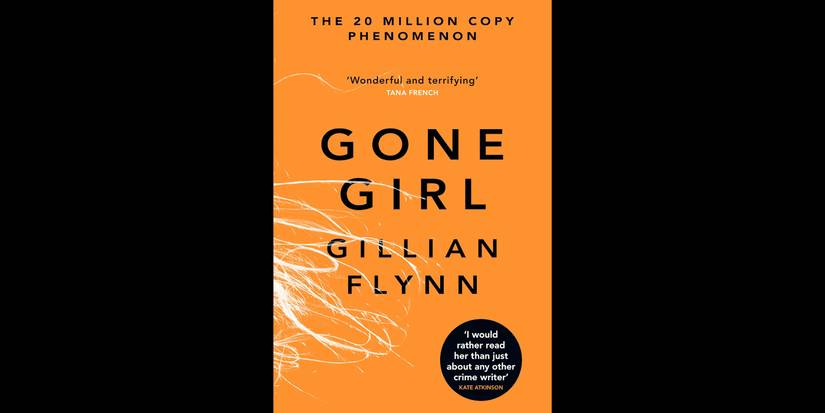 Image via Phoenix
 Image via Flatiron Books
 Image via Sourcebooks Landmark
 Image via Penguin Books
 Image via William Morrow




 English (US) ·