
 Image via HBO

Published Oct 25, 2026, 11:22 PM EDT
Christine is a freelance writer for Collider with two decades of experience covering all types of TV shows and movies spanning every genre. With a particular affinity for dramas, true crime, sitcoms, and thrillers, if it's a top TV show, Christine has likely watched it and is eager to share her thoughts. When she's not furiously writing away, you can find her enjoying the next binge obsession with a glass of wine in front of the TV.
Sign in to your Collider account
HBO has offered some of the best TV miniseries on television of the last 20+ years. From beginning to end, the best of the best keep you intrigued. You'd be hard-pressed to find anything to complain about when it comes to the stories. But the miniseries that really stand out are the ones that end so strongly that you feel a rush of relief wave over you. This isn't because it's over, not even because it's a satisfying happy ending. It's because the ending wrapped up the way it should. It's as if you're closing the final page of a book after finishing the last chapter and have time to think about what you just read or, in this case, watched.
The best HBO miniseries endings date all the way back to one of its earliest shows in 2001 and fast-forward to the 2020s with two entries from that year. Not surprisingly, they are all dramas, an area where HBO especially excels. Finally, they all feature A-list casts, including many with traditional movie actors who deliver incredible small-screen performances.
'The Night Of' (2016)
 Image via HBO
The Night Of remains one of the best HBO miniseries ever. The eight-part crime drama is emotionally charged and thought-provoking, exploring ideas of race, justice, and being innocent until proven guilty. It's a complicated situation when young college student Nasir "Naz" Khan (Riz Ahmed) is accused of murdering a young woman. He met her the night before, they had a fun one-night stand, and he woke up next to her dead body. But he swears he did not kill her. It's a tough case to take on, especially as the public sentiment about Naz leaves him questioning his own innocence at times. But lawyer John Stone (John Turturro) does his best to help.
The story follows Naz's descent from a promising young student to a defeated, hardened man who is slowly changing into someone else in jail. What's so great about the ending of The Night Of is that though it keeps things ambiguous, this is intentional. The real focus is on a young man whose life is turned upside down. Even if he's released and presumed innocent, his life will never be the same again. That isn't just because of the accusations, but because of the environment he is placed in, the person he evolves into becoming. It's a raw and real ending instead of a typical Hollywood "wrapped up in a red bow" one. In this sense, then, the ending is not necessarily satisfying, but it leaves you to ponder and discuss the state of the criminal justice system. And that's arguably more powerful than a resolution that lets you leave this series in the back of your memory. Rather than never think of it again, The Night Of is a story you won't be able to get out of your head.
'Chernobyl' (2019)
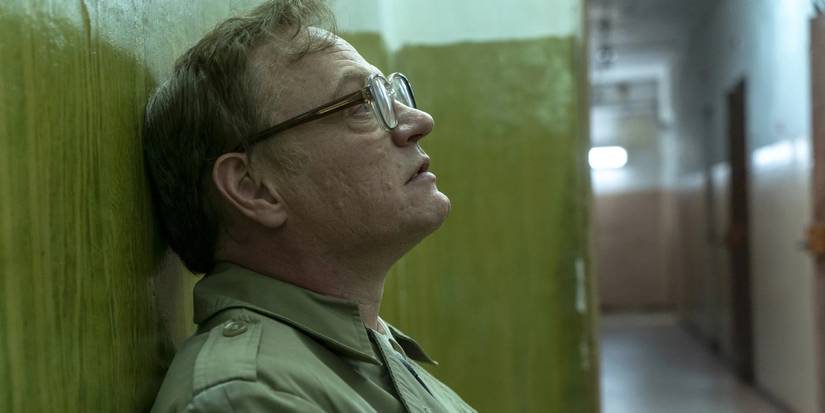 Image via HBO
Throughout the entire story, Chernobyl doesn't gloss over the horrifying results of the 1986 nuclear disaster and the clean-up efforts after it. In fact, what viewers love so much about the historical drama is that it focuses on the brave individuals who risked their lives for the clean-up efforts, not so much on the politics. While Chernobyl has been criticized for some historical inaccuracies, it's one of few stories that paint a picture of what happened. It acquaints viewers who may not have been alive at the time of the story of the situation and gives those who were a fresh perspective.
What's so great about the ending is that it rises to a climax, revealing what caused the reactors to explode in the first place, and purporting who might be to blame for this. It shifts blame from workers to the larger corrupt institution and takes us through the emotional journey of Valery Legasov (Jared Harris), deputy director of the Kurchatov Institute, who heads up the clean-up effort and finds himself in a precarious position. The ending is a tragic one, even though most of the story is uplifting, highlighting those who saved lives and prevented further catastrophe. It delivers a powerful message: "Every lie we tell incurs a debt to the truth. Sooner or later, that debt is paid."
'The Undoing' (2020)
 Image via HBO
In The Undoing, Grace Fraser (Nicole Kidman) and Jonathan Fraser (Hugh Grant) are a well-to-do couple whose life is upended when a young woman named Elena Alves (Matilda De Angelis) winds up dead and Jonathan is a suspect. But why? What did he have to do with her? As Grace looks into his involvement, she uncovers secrets and lies. You're left to wonder throughout if Jonathan is really guilty and what truly happened. Bit by bit, the truth unravels.
As the title of the masterpiece mystery psychological thriller miniseries suggests, the ending grows to a crescendo, a true undoing. The final moments are tense and fast-paced, exploring concepts of narcissism, self-delusion, and institutional power. People aren't always who they seem, and as you peel back layers, their true selves are revealed. Grace's strength serves as an anchor for the narrative. While some feel that the ending was rushed, it brings into focus how what is once a calm situation can intensify and become terrifying and dangerous.
'The Outsider' (2020)
 Image via HBO
Based on the Stephen King novel, The Outsider begins as a typical crime drama but morphs into a supernatural story. Father, husband, and Little League coach, Terry Maitland (Jason Bateman), is accused of the horrifying murder of a young local boy. There's video evidence he did it, but he swears he did not, and those who know him believe him. At their wit's end, the police call in eccentric savant private detective Holly Gibney (Cynthia Erivo), who connects the murder to other recent strange events. And her verdict throws everyone for a loop.
The story, as noted, goes in unbelievable directions, asking that you suspend belief while watching. But it provides a fitting resolution for every character. Detective Ralph Anderson (Ben Mendelsohn) finally accepts that there are things he can't explain with logic, while Gibney's brilliance at dealing with complicated situations is highlighted. And though there's a resolution, there's still no way to explain to the general population what really happened. This leaves loose ends that are better indicative of the real world than the nice, clean ending you would expect from a fictional tale. The unsettling nature of the final moments also leaves fans wanting more. While The Outsider was not intended to return, the ending has resulted in six years (and counting) of viewers begging for a follow-up.
'Band of Brothers' (2001)
 Image via HBO
One of the best war dramas of all time, Band of Brothers is based on the Stephen E. Ambrose non-fiction book. Created by Steven Spielberg and Tom Hanks following the success of Saving Private Ryan, Band of Brothers is like an extension of that film. It follows the "Easy" Company Battalion in World War II, from D-Day to their occupation of Berchtesgaden. Based on extensive research with actual veterans, it's raw and real, with characters based on actual people and stories from their accounts of what happened. It follows not only their work in defending the country, but the emotional weight and toll of war.
In fact, it's the latter perspective that makes the ending of the 10-part, Emmy-winning series so good. With the war having concluded, we see the impact it had on the lives of the soldiers as they now try to survive back in civilian life. It brings the story full circle in the most beautiful way as well. The beginning of every episode shows interviews with the real men, but their names and faces aren't revealed until the end. It's a powerful way to bring into focus the fact that these actors were portraying real people with real stories, legitimizing everything we just witnessed. It's one of the most emotional miniseries endings ever made.
'Angels in America' (2003)
 Image via HBO
There's massive star power behind Angels in America, based on the Tony Kushner play, including Al Pacino, Meryl Streep, Patrick Wilson, Mary-Louise Parker, Emma Thompson, and Jeffrey Wright. Set during the Ronald Reagan administration, the AIDS epidemic is rampant and Prior Walter (Justin Kirk) is a gay man with AIDS. As he works to reconcile this reality, he is visited by an angel who tries to convince him to become a prophet. Meanwhile, other characters, like Mormon Republican attorney Joe Pitt (Wilson) and right-wing fixer Roy Cohn (Pacino), are both gay but in the closet for different reasons, further delivering social commentary on judgment, hypocrisy, and lies.
Angels in America is a genuinely perfect HBO miniseries, and a huge piece of social and political commentary. It uses the AIDS crisis to frame a much bigger story that comes into focus in the end. Walter becomes a symbol of hope and truth, of being proud of who you are, versus hiding in the shadows while loudly judging others. It reinforces the idea of found family and of never giving up, because something beautiful is always on the other side. But it's also a story about change versus stagnation, and the need to evolve in order to survive.




 English (US) ·